Evidence of 'lost' river that ran through Thar Desert 172,000 years ago found

Agencies
October 21, 2020

desert-1603274441.jpg

Bikaner, Oct 21: Researchers have found the evidence of a "lost" river that ran through the central Thar Desert, near Bikaner, as early as 172 thousand years ago, and may have been a life-line to human populations enabling them to inhabit the region.

The findings, published in the journal Quaternary Science Reviews, represent the oldest directly dated phase of river activity at Nal Quarry in the central Thar Desert.

The study by researchers from The Max Planck Institute for the Science of Human History in Germany, Anna University in Tamil Nadu, and IISER Kolkata indicates that Stone Age populations lived in a distinctly different Thar Desert landscape than we encounter today.

This evidence indicates a river flowed with phases of activity dating to approximately up to 172 thousand years ago, nearby to Bikaner, Rajasthan, which is over 200 kilometres away from the nearest modern river.

These findings predate evidence for activity in modern river courses across the Thar Desert as well as dried up course of the Ghaggar-Hakra River, the researchers said.

The presence of a river running through the central Thar Desert would have offered a life-line to Paleolithic populations, and potentially an important corridor for migrations, they said.

The researchers noted that the potential importance of 'lost' rivers for earlier inhabitants of the Thar Desert have been overlooked.

"The Thar Desert has a rich prehistory, and we've been uncovering a wide range of evidence showing how Stone Age populations not only survived but thrived in these semi-arid landscapes," said Jimbob Blinkhorn from The Max Planck Institute for the Science of Human History.

"We know how important rivers can be to living in this region, but we have little detail on what river systems were like during key periods of prehistory," Blinkhorn said.

Studies of satellite imagery have shown a dense network of river channels crossing the Thar Desert, according to the researchers.

"These studies can indicate where rivers and streams have flowed in the past, but they can't tell us when," explained Professor Hema Achyuthan of Anna University.

"To demonstrate how old such channels are, we had to find evidence on the ground for river activity in the middle of the desert," Achyuthan said.

The team studied a deep deposit of river sands and gravels, which had been exposed by quarrying activity near the village of Nal.

The researchers were able to document different phases of river activity by studying the different deposits.

"We immediately saw evidence for a substantial and very active river system from the bottom of the fluvial deposits, which gradually decreased in power through time," Achyuthan said.

The researchers used a method called luminescence dating to understand when quartz grains in the river sands were buried.

The results indicated that the strongest river activity at Nal occurred at approximately 172 and 140 thousand years ago, at a time when the monsoon was much weaker than today in the region.

River activity continued at the site between 95 to 78 thousand years ago, after which only limited evidence for the presence of a river at the site, with evidence for a brief reactivation of the channel 26 thousand years ago, the study found.

The river was flowing at its strongest during a phase of weak monsoonal activity in the region, and may have been a life-line to human populations enabling them to inhabit the Thar Desert, the researchers said.

The timeframe over which this river was active also overlaps with significant changes in human behaviour in the region, which have been linked with the earliest expansions of Homo sapiens from Africa into India, they said.

"This river flowed at a critical timeframe for understanding human evolution in the Thar Desert, across South Asia and beyond," said Blinkhorn.

"This suggests a landscape in which the earliest members of our own species, Homo sapiens, first encountered the monsoons and crossed the Thar Desert may have been very different to the landscape we can see today," he added.

Comments

Add new comment

  • Coastaldigest.com reserves the right to delete or block any comments.
  • Coastaldigset.com is not responsible for its readers’ comments.
  • Comments that are abusive, incendiary or irrelevant are strictly prohibited.
  • Please use a genuine email ID and provide your name to avoid reject.
News Network
December 3,2025

indigo.jpg

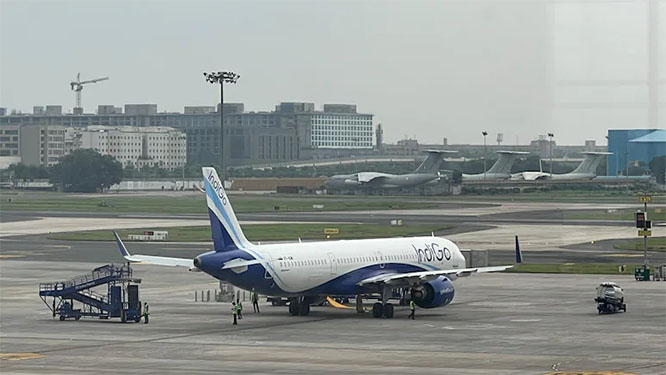
IndiGo, India’s largest airline, is battling one of its worst operational disruptions in recent years, with hundreds of delays and cancellations throwing domestic travel into chaos.

Government data on Tuesday showed its on-time performance plunging to 35%, an unusual dip for a carrier long associated with punctuality.

By Wednesday afternoon, airports in Delhi, Mumbai, Bengaluru and Hyderabad had collectively reported close to 200 cancellations, stranding travellers across the country.

Crew Shortage After New Duty Norms

A major trigger behind the meltdown is a severe crew shortage, especially among pilots, following the rollout of revised Flight Duty Time Limitation (FDTL) norms last month.

The rules mandate longer rest hours and more humane rosters — a shift IndiGo has struggled to incorporate across its vast network.

Sources said several flights were grounded due to lack of cabin crew, while some delays stretched upwards of eight hours.

With IndiGo controlling over 60% of India’s domestic aviation market, the ripple effect has impacted airports nationwide.

IndiGo Issues Apology, Lists “Compounding Factors”

In a statement, IndiGo acknowledged the large-scale disruption:

“We sincerely apologise to customers. A series of unforeseen operational challenges — technology glitches, winter schedule changes, adverse weather, system congestion and updated FDTL norms — created a compounding impact that could not have been anticipated.”

To stabilise operations, the airline has begun calibrated schedule adjustments for the next 48 hours, aiming to restore punctuality. Affected passengers are being offered refunds or alternate travel arrangements, IndiGo said.

What the FDTL Rules Require

The FDTL norms, designed to reduce pilot fatigue, cap duty and flying hours as follows:
•    Maximum 8 hours of flying per day
•    35 hours per week
•    125 hours per month
•    1,000 hours per year

Crew must also receive rest equalling twice the flight duration, with a minimum 10-hour rest period in any 24-hour window.

The DGCA introduced these limits to enhance flight safety.

Hyderabad: 33 Flights Cancelled, Long Queues Reported

Hyderabad’s Rajiv Gandhi International Airport saw heavy early-morning crowds as 33 IndiGo flights (arrivals and departures) were cancelled.

The airport clarified on X that operations were normal, advising passengers to contact IndiGo directly for latest flight status.

Cancellations included flights to and from Visakhapatnam, Goa, Ahmedabad, Delhi, Bengaluru, Chennai, Madurai, Hubli, Bhopal and Bhubaneswar.

Bengaluru: 42 Flights Disrupted

Bengaluru’s Kempegowda International Airport recorded 42 cancellations — 22 arrivals and 20 departures — affecting routes to Delhi, Mumbai, Chennai, Hyderabad, Goa, Kolkata and Lucknow.

Passengers Vent on Social Media

Irate travellers took to X to share their experiences. One passenger stranded in Hyderabad wrote: “I have been here since 3 a.m. and missed an important meeting.”

Another said: “My flight was pushed from 1:55 PM to 2:55 PM and now 4:35 PM. I was informed only three minutes before entering the airport.”

Delhi Airport Hit by Tech Glitch

At Delhi Airport, the disruption deepened due to a slowdown in the Amadeus system — used for reservations, check-ins and departure control.

The technical issue led to longer queues and sluggish processing, adding to delays already worsened by staff shortages.

Comments

Add new comment

  • Coastaldigest.com reserves the right to delete or block any comments.
  • Coastaldigset.com is not responsible for its readers’ comments.
  • Comments that are abusive, incendiary or irrelevant are strictly prohibited.
  • Please use a genuine email ID and provide your name to avoid reject.
coastaldigest.com news network
November 29,2025

health1.jpg

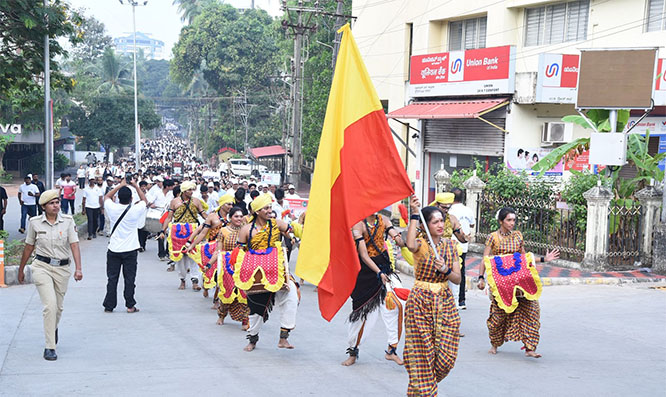
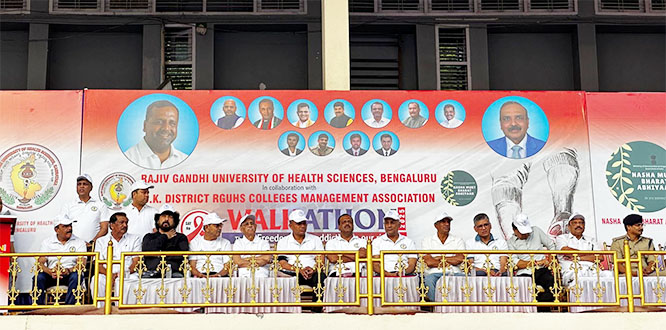
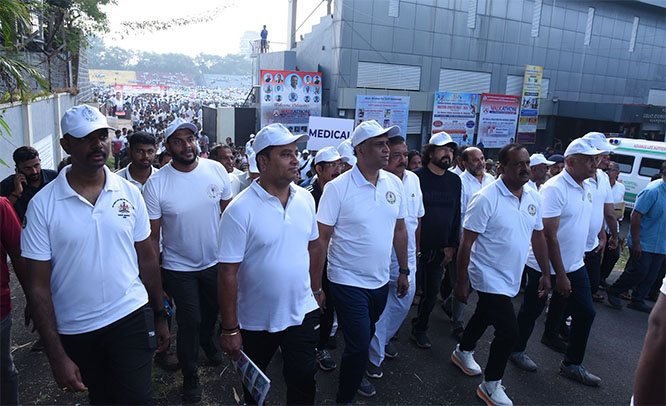
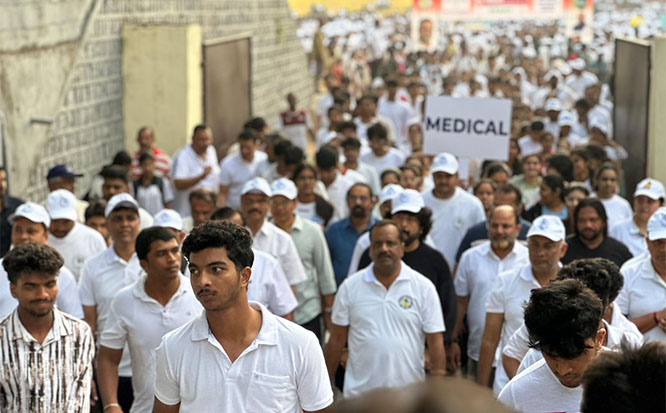
Mangaluru, Nov 29: Around 12,500 healthcare students from Medical, Dental, AYUSH, Pharmacy, Nursing, Physiotherapy and Allied Health Sciences colleges of Dakshina Kannada, affiliated to Rajiv Gandhi University of Health Sciences (RGUHS), took part in a massive walkathon to promote awareness on Organ Donation and Nasha Mukth Bharat.

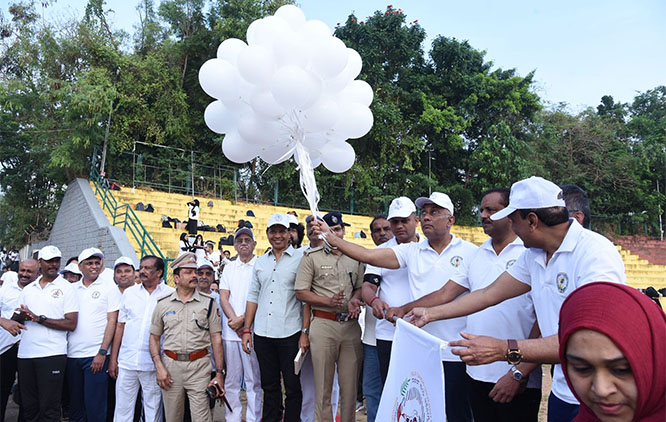
The inaugural ceremony was held at Mangala Stadium. Dr Bhagavan B C, Hon’ble Vice-Chancellor of RGUHS, delivered the welcome address. The walkathon was flagged off by Shri U T Khader, Hon’ble Speaker of the Karnataka Legislative Assembly, and presided over by Shri Dinesh Gundu Rao, Hon’ble Minister for Health, Family Welfare and Dakshina Kannada District In-charge. Dakshina Kannada MP Shri Brijesh Chowta also addressed the students.

Music director Guru Kiran, MLA Dr Bharat Shetty (Mangalore North), Police Commissioner Shri Sudheer Kumar Reddy, Shri Manjunath Bhandary and Shri Harish Kumar were among those present.

Institution heads including Dr Haji U K Monu (Kanachur Colleges), Dr Shantharam Shetty (Tejaswini College), Dr Bhaskar Shetty (City Group of Colleges), Mr Abdul Rahiman (Kanachur Institute of Medical Sciences), and the District Health Officer, Mangalore, also participated.

The vote of thanks was delivered by Prof U T Ifthikar Fareed, Syndicate Member, RGUHS.

The event was organised by Dr U T Ifthikar Ali and Dr Shiva Sharan (Syndicate Members), Prof Vaishali (Senate Member), Prof Mohammad Suhail (Chairman, BOS Physiotherapy), Dr Sharan Shetty (Former Senate Member), along with principals and faculty of various colleges.

Students marched from Mangala Stadium to Karavali Grounds via MCC and Lalbagh signal. The event set a record as one of the largest gatherings of healthcare students for a social cause in the RGUHS Dakshina Kannada Zone.

health7.jpg

health6.jpg

health5.jpg

health4.jpg

health3.jpg

health2.jpg

Comments

Add new comment

  • Coastaldigest.com reserves the right to delete or block any comments.
  • Coastaldigset.com is not responsible for its readers’ comments.
  • Comments that are abusive, incendiary or irrelevant are strictly prohibited.
  • Please use a genuine email ID and provide your name to avoid reject.
News Network
December 2,2025

Mangaluru, Dec 2: Mangaluru International Airport responded to a medical emergency late on Monday night. Air India Express flight IX 522, travelling from Riyadh to Thiruvananthapuram, was diverted to Mangaluru Airport after a passenger in his late 30s experienced a medical emergency on board.

The Airport’s Operations Control Centre received an alert regarding the passenger’s health condition. The airport activated its emergency response protocol, mobilising the airport medical team and coordinating with stakeholders including CISF, immigration, and customs. 

Upon landing, airport medical personnel attended to the passenger, assessed his condition, and arranged to shift him to a local tertiary-care hospital for further treatment. The passenger’s relatives accompanied the passenger, who incidentally received necessary medical care on board, which helped stabilise the situation.

Following the handling of the emergency, the flight departed for Thiruvananthapuram at 2:05 am on Tuesday.

"We appreciate the cooperation of all parties involved, and this incident reaffirms our ongoing commitment to prioritising passenger safety and readiness to respond to unforeseen emergencies with professionalism and care," the Airport spokesperson said. 

Comments

Add new comment

  • Coastaldigest.com reserves the right to delete or block any comments.
  • Coastaldigset.com is not responsible for its readers’ comments.
  • Comments that are abusive, incendiary or irrelevant are strictly prohibited.
  • Please use a genuine email ID and provide your name to avoid reject.