



Modi, Xi hold 'forward-looking' talks, call for peace in border areas

Agencies
September 5, 2017

Xiamen, (China), Sep 5: Prime Minister Narendra Modi and Chinese President Xi Jinping today held their first substantive bilateral meeting after the Dokalam standoff and reaffirmed that maintaining peace and tranquillity in the border areas was a pre-requisite for ties to move forward.

Modi, who attended the BRICS Emerging Markets and Developing Countries Dialogue earlier in the day, met Xi on the sidelines of the 9th BRICS Summit here.

There was a forward-looking and constructive approach taken by both sides during the over an hour-long meeting between the two leaders, Foreign Secretary S Jaishankar said while briefing reporters on the Modi-Xi bilateral meet.

Prime Minister Modi and president Xi felt that there should be closer communication between the defence and security personnel of India and China, Jaishankar said. The two leaders reaffirmed that it is in the interest of both India and China to have good relations, he said.

During the meeting, both Modi and Xi reaffirmed the understanding reached earlier this year at Astana between them to not allow differences to become disputes. They felt that peace and tranquillity in the border areas is a pre-requisite for ties to move forward, Jaishankar said.

Asked if the Dokalam standoff had been left behind by the two sides, he said, "It was a forward-looking conversation and not a backward-looking one." In his initial remarks during the meeting, Modi congratulated Xi on a "very successful" BRICS Summit, saying the conference had been a success in making the grouping more relevant in a fast-changing world.

Xi told Modi that the two countries should pursue "healthy, stable bilateral ties", China's state-run Xinhua news agency reported. China is willing to work with India on the basis of the Five Principles of Peaceful Coexistence (Panchsheel), which were put forward by both the countries, to improve political mutual trust, promote mutually beneficial cooperation, and push Sino-India ties along the right track, Xi was quoted as saying.

The meeting came amid diplomatic efforts by the two sides to overcome the bitterness caused by the 73-day face-off between their troops in the Dokalam area of the Sikkim sector.

The Chinese and the Indian troops were engaged in a standoff since June 16 after the Indian side stopped the construction of a road by the Chinese Army. On August 28, India's External Affairs Ministry announced that New Delhi and Beijing have decided on "expeditious disengagement" of their border troops in the disputed Dokalam area.

Comments

Add new comment

  • Coastaldigest.com reserves the right to delete or block any comments.
  • Coastaldigset.com is not responsible for its readers’ comments.
  • Comments that are abusive, incendiary or irrelevant are strictly prohibited.
  • Please use a genuine email ID and provide your name to avoid reject.
News Network
November 24,2025

israelsyra.jpg

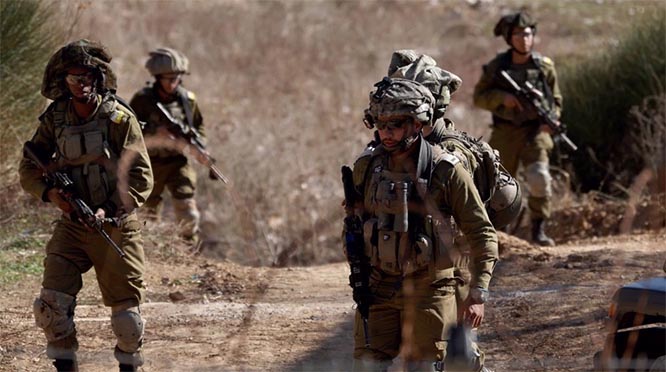
Israeli forces have pushed over the Syrian frontier, erecting a checkpoint and stopping vehicles in the southwestern city of Quneitra, in yet another breach of the Arab country’s sovereignty.

The violation took place on Sunday, when the troops made their way across the border, setting up the outpost near the Ain al-Bayda junction in northern Quneitra, Syrian outlets reported.

According to the al-Ikhbariya paper, an Israeli detachment positioned itself at the junction, halting cars and conducting searches.

The Syrian Arab News Agency (SANA) reported that three Israeli military vehicles then moved further into the northern countryside, deploying between the town of Jubata al-Khashab and the villages of Ofaniya and Ain al-Bayda. The agency added that a separate Israeli unit mounted a new incursion in the central region, approaching the villages of Umm Batina and al-Ajraf.

Residents said such activities have surged in recent months, pointing to Israeli advances onto farmland, leveling of extensive forested areas, arrests, and spread of mobile checkpoints.

The Israeli regime began markedly increasing its military aggression against Syria last year.

The escalation coincided with increasingly ferocious onslaughts throughout the country by the so-called Hay'at Tahrir al-Sham (HTS) Takfiri terrorist group, which the government of President Bashar al-Assad had confined to northwestern Syria. The HTS, however, managed to overthrow the government as the Israeli attacks would pummel the country’s civilian and defensive infrastructure.

Various reports have shown that, during the escalation, the regime conducted more than 1,000 airstrikes on the Syrian territory and over 400 ground raids into the south.

Following the collapse of the Assad government, Tel Aviv also widened its grip over the occupied Golan Heights by taking control of a demilitarized buffer zone, in defiance of a 1974 Disengagement Agreement. Earlier this month, senior Israeli officials, including Prime Minister Benjamin Netanyahu, visited the buffer zone, prompting expressions of alarm on the part of the United Nations.

The United States, the regime’s biggest ally, has, meanwhile, been fraternizing the HTS head Abu Mohammed al-Jolani amid the widely reported prospect of rapprochement with Tel Aviv.

Comments

Add new comment

  • Coastaldigest.com reserves the right to delete or block any comments.
  • Coastaldigset.com is not responsible for its readers’ comments.
  • Comments that are abusive, incendiary or irrelevant are strictly prohibited.
  • Please use a genuine email ID and provide your name to avoid reject.