The myth of the Indian vegetarian nation

Soutik Biswas for BBC
April 7, 2018

What are the most common myths and stereotypes about what Indians eat?

The biggest myth, of course, is that India is a largely vegetarian country.

But that's not the case at all. Past "non-serious" estimates have suggested that more than a third of Indians ate vegetarian food.

If you go by three large-scale government surveys, 23%-37% of Indians are estimated to be vegetarian. By itself this is nothing remarkably revelatory.

But new research by US-based anthropologist Balmurli Natrajan and India-based economist Suraj Jacob, points to a heap of evidence that even these are inflated estimations because of "cultural and political pressures". So people under-report eating meat - particularly beef - and over-report eating vegetarian food.

Taking all this into account, say the researchers, only about 20% of Indians are actually vegetarian - much lower than common claims and stereotypes suggest.

Hindus, who make up 80% of the Indian population, are major meat-eaters. Even only a third of the privileged, upper-caste Indians are vegetarian.

The government data shows that vegetarian households have higher income and consumption - are more affluent than meat-eating households. The lower castes, Dalits (formerly known as untouchables) and tribes-people are mainly meat eaters.

Vegetarian cities in India

             Indore: 49%

             Meerut: 36%

             Delhi: 30%

             Nagpur: 22%

             Mumbai: 18%

             Hyderabad: 11%

             Chennai: 6%

             Kolkata: 4%

(Average incidence of vegetarianism. Source: National Family Health Survey)

On the other hand, Dr Natrajan and Dr Jacob find the extent of beef eating is much higher than claims and stereotypes suggest.

At least 7% of Indians eat beef, according to government surveys.

But there is evidence to show that some of the official data is "considerably" under-reported because beef is "caught in cultural political and group identity struggles in India".

Narendra Modi's ruling Hindu nationalist BJP promotes vegetarianism and believes that the cow should be protected, because the country's majority Hindu population considers them holy. More than a dozen states have already banned the slaughter of cattle. And during Mr Modi's rule, vigilante cow protection groups, operating with impunity, have killed people transporting cattle.

The truth is millions of Indians, including Dalits, Muslims and Christians, consume beef. Some 70 communities in Kerala, for example, prefer beef to the more expensive goat meat.

Dr Natrajan and Dr Jacob conclude that in reality, closer to 15% of Indians - or about 180 million people - eat beef. That's a whopping 96% more than the official estimates.

And then there are the stereotypes of Indian food.

Delhi, where only a third of residents are thought to be vegetarian, may well deserve its reputation for being India's butter chicken capital.

But, the stereotype of Chennai as the hub of India's "south Indian vegetarian meal" is completely misplaced. Reason: only 6% of the city's residents are vegetarian, one survey suggests.

Many continue to believe that Punjab is "chicken loving" country. But the truth is that 75% of people in the northern state are vegetarian.

So how has the myth that India is a largely vegetarian country been spread so successfully?

For one, Dr Natrajan and Dr Jacob told me, in a "highly diverse society with food habits and cuisines changing every few kilometres and within social groups, any generalisation about large segments of the population is a function of who speaks for the group".

"This power to represent communities, regions, or even the entire country is what makes the stereotypes."

Also, they say, "the food of the powerful comes to stand in for the food of the people".

"The term non-vegetarian is a good case in point. It signals the social power of vegetarian classes, including their power to classify foods, to create a 'food hierarchy' wherein vegetarian food is the default and is having a higher status than meat. Thus it is akin to the term 'non-whites' coined by 'whites' to capture an incredibly diverse population who they colonised."

Migration

Secondly, the researchers say, some of the stereotype is enabled by migration.

So when south Indians migrate to northern and central India, their food comes to stand in for all south Indian cuisine. This is similarly true for north Indians who migrate to other parts of the country.

Finally, some of the stereotypes are perpetuated by the outsider - north Indians stereotype south Indians just by meeting a few of them without thinking about the diversity of the region and vice versa.

The foreign media, say the researchers, is also complicit "as it seeks to identify societies by a few essential characteristics".

Also, the study shows up the differences in food habits among men and women. More women, for example, say they are vegetarian than men.

The researchers say this could be partly explained by the fact that more men eat outside their homes and with "greater moral impunity than women", although eating out may not by itself result in eating meat.

Patriarchy - and politics - might have something to do with it.

"The burden of maintaining a tradition of vegetarianism falls disproportionately on the women," say Dr Natrajan and Dr Jacob.

Couples are meat eaters in about 65% of the surveyed households and vegetarians only in 20%. But in 12% of the cases the husband was a meat eater, while the wife was a vegetarian. Only in 3% cases was the reverse true.

Clearly, the majority of Indians consume some form of meat - chicken and mutton, mainly - regularly or occasionally, and eating vegetarian food is not practiced by the majority.

So why does vegetarianism exert a far greater influence on representations of India and Indians around the world? Does it have to do with "policing" of food choices and perpetuating food stereotypes in a vastly complex and multicultural society?

Comments

Add new comment

  • Coastaldigest.com reserves the right to delete or block any comments.
  • Coastaldigset.com is not responsible for its readers’ comments.
  • Comments that are abusive, incendiary or irrelevant are strictly prohibited.
  • Please use a genuine email ID and provide your name to avoid reject.
News Network
December 2,2025

Mangaluru, Dec 2: Mangaluru International Airport responded to a medical emergency late on Monday night. Air India Express flight IX 522, travelling from Riyadh to Thiruvananthapuram, was diverted to Mangaluru Airport after a passenger in his late 30s experienced a medical emergency on board.

The Airport’s Operations Control Centre received an alert regarding the passenger’s health condition. The airport activated its emergency response protocol, mobilising the airport medical team and coordinating with stakeholders including CISF, immigration, and customs. 

Upon landing, airport medical personnel attended to the passenger, assessed his condition, and arranged to shift him to a local tertiary-care hospital for further treatment. The passenger’s relatives accompanied the passenger, who incidentally received necessary medical care on board, which helped stabilise the situation.

Following the handling of the emergency, the flight departed for Thiruvananthapuram at 2:05 am on Tuesday.

"We appreciate the cooperation of all parties involved, and this incident reaffirms our ongoing commitment to prioritising passenger safety and readiness to respond to unforeseen emergencies with professionalism and care," the Airport spokesperson said. 

Comments

Add new comment

  • Coastaldigest.com reserves the right to delete or block any comments.
  • Coastaldigset.com is not responsible for its readers’ comments.
  • Comments that are abusive, incendiary or irrelevant are strictly prohibited.
  • Please use a genuine email ID and provide your name to avoid reject.
News Network
November 30,2025

girlnomore.jpg

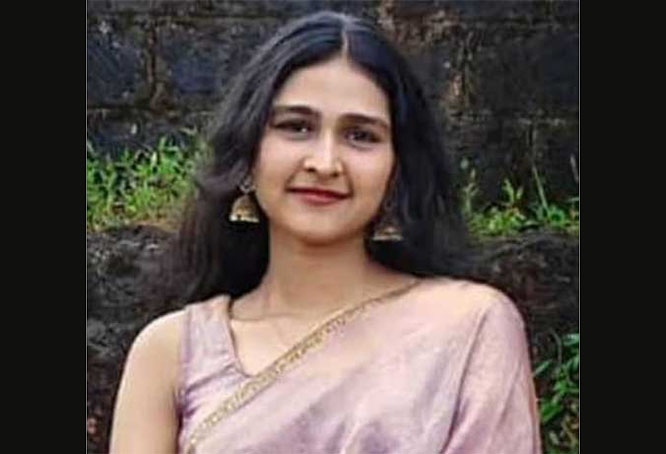
Mangaluru, Nov 30: A 22-year-old college student succumbed to her injuries at a private hospital in Mangaluru today, days after she was hit by a goods tempo while crossing a road in Padubidri.

The deceased has been identified as Preksha, a resident of Nadsalu Billitota in Padubidri. The fatal incident occurred as Preksha, who was returning home after completing her examination, attempted to cross the service road towards Mangaluru. She was struck by a goods tempo approaching from the Udupi side, causing her to fall and sustain a severe head injury.

Prompt action from local residents ensured she received immediate first aid before being rushed to a hospital in Mangaluru for specialised treatment. Despite medical efforts, she passed away while undergoing care.

Preksha was a student at Karavali College, Vamanjoor on the outskirts of Mangaluru city. The tragedy is compounded by the fact that she belonged to a financially vulnerable family, having previously lost her father. She is survived by her mother and brother.

A case related to the accident has been registered at the Padubidri police station, and an investigation is underway to determine the exact circumstances that led to the collision. The incident highlights the growing concerns over road safety, particularly on busy service roads, and serves as a tragic reminder of the human cost of traffic accidents.

Comments

Add new comment

  • Coastaldigest.com reserves the right to delete or block any comments.
  • Coastaldigset.com is not responsible for its readers’ comments.
  • Comments that are abusive, incendiary or irrelevant are strictly prohibited.
  • Please use a genuine email ID and provide your name to avoid reject.
News Network
November 24,2025

israelsyra.jpg

Israeli forces have pushed over the Syrian frontier, erecting a checkpoint and stopping vehicles in the southwestern city of Quneitra, in yet another breach of the Arab country’s sovereignty.

The violation took place on Sunday, when the troops made their way across the border, setting up the outpost near the Ain al-Bayda junction in northern Quneitra, Syrian outlets reported.

According to the al-Ikhbariya paper, an Israeli detachment positioned itself at the junction, halting cars and conducting searches.

The Syrian Arab News Agency (SANA) reported that three Israeli military vehicles then moved further into the northern countryside, deploying between the town of Jubata al-Khashab and the villages of Ofaniya and Ain al-Bayda. The agency added that a separate Israeli unit mounted a new incursion in the central region, approaching the villages of Umm Batina and al-Ajraf.

Residents said such activities have surged in recent months, pointing to Israeli advances onto farmland, leveling of extensive forested areas, arrests, and spread of mobile checkpoints.

The Israeli regime began markedly increasing its military aggression against Syria last year.

The escalation coincided with increasingly ferocious onslaughts throughout the country by the so-called Hay'at Tahrir al-Sham (HTS) Takfiri terrorist group, which the government of President Bashar al-Assad had confined to northwestern Syria. The HTS, however, managed to overthrow the government as the Israeli attacks would pummel the country’s civilian and defensive infrastructure.

Various reports have shown that, during the escalation, the regime conducted more than 1,000 airstrikes on the Syrian territory and over 400 ground raids into the south.

Following the collapse of the Assad government, Tel Aviv also widened its grip over the occupied Golan Heights by taking control of a demilitarized buffer zone, in defiance of a 1974 Disengagement Agreement. Earlier this month, senior Israeli officials, including Prime Minister Benjamin Netanyahu, visited the buffer zone, prompting expressions of alarm on the part of the United Nations.

The United States, the regime’s biggest ally, has, meanwhile, been fraternizing the HTS head Abu Mohammed al-Jolani amid the widely reported prospect of rapprochement with Tel Aviv.

Comments

Add new comment

  • Coastaldigest.com reserves the right to delete or block any comments.
  • Coastaldigset.com is not responsible for its readers’ comments.
  • Comments that are abusive, incendiary or irrelevant are strictly prohibited.
  • Please use a genuine email ID and provide your name to avoid reject.