‘Economically most backward’: Caste census reveals livelihood crisis among Karnataka’s Muslims

coastaldigest.com news network
May 18, 2025

muslimsbackward.jpg

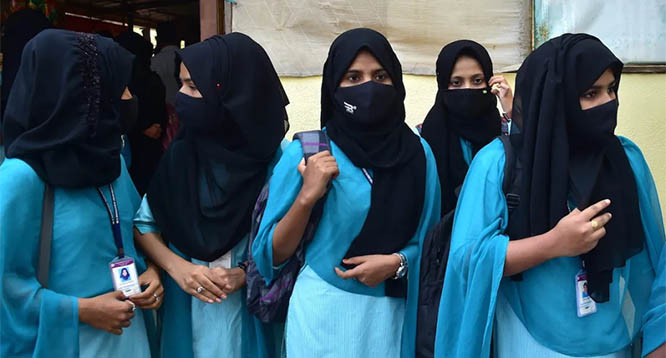
The recent caste census in Karnataka has revealed a sobering truth: while the state's Muslim community enjoys strong social standing, it remains among the most economically marginalized. The report suggests a widening gap between societal perception and lived reality for the state's largest religious minority.

Despite being socially respected, Karnataka’s Muslims face significant hardships in education, jobs, and overall livelihood—pushing the government to consider doubling their reservation from 4% to 8%.
_____________________

A Conflicting Reality: Respected Yet Struggling

Karnataka’s Social and Educational Survey paints a contrasting picture of the Muslim community. On one hand, they have a social score of 19.71 out of 100—almost identical to Jains, one of the most forward groups in the state. This reflects a relatively high level of societal acceptance, respect, and integration.

But this status masks deeper vulnerabilities.

The overall backwardness score for Muslims stands at 89.25 out of 200, putting them among the “more backward” communities, just a fraction below the threshold that would classify them as “most backward.”

_____________________

The Real Struggle: Education and Employment

Education

Education continues to be a major challenge:

•    Only 11.7% of Muslims reported having passed Class 10.

•    Just 5.5% said they had attended college or university.

This is reflected in their education score of 42.60 out of 68, indicating significant gaps in access, attainment, and opportunity.

Livelihood

It’s in livelihood, however, that the crisis is most severe. With a score of 26.94 out of 32, Muslims rank as the most economically backward community in the state.

Key findings:

•    Only 1.03% of Muslims have a government job.

•    Just 1.39% work in the private sector.

•    A large section relies on family-run businesses or informal jobs—puncture repair, petty retail, scrap trading, etc.

“Unlike other communities, we don’t have a specific traditional occupation,” said Congress MLA Tanveer Sait. “We are scattered across trades, many of which offer no long-term security.”
_____________________

How Do Other Communities Compare?

The contrast becomes sharper when placed against other groups:

•    Jains have a total score of 34.99, making them one of the most forward.

•    Christians, with 24.68, are the second-most progressed after Brahmins.

•    In stark contrast, Muslims hover just below the “most backward” threshold at 89.25.

_____________________

What the Data Means for Policy

The findings give fresh momentum to Chief Minister Siddaramaiah’s proposal to raise the Muslim reservation quota from 4% to 8% under Category 2B. The BJP opposes the move, claiming that religion-based quotas are unconstitutional.

But government officials argue that the demand is not about religion, but deprivation.

“The Sachar Committee had already warned about the low socio-economic status of Muslims,” said Tanveer Sait. “We’re not asking for the same schemes as SC/STs—just fair support in education, jobs, and health.”

____________________

Categories Explained:

•    Communities scoring 90+: Most Backward (Category 1A & 1B)

•    50–89: More Backward (Category 2A & 2B) → Muslims fall here

•    20–49: Backward (Category 3A & 3B)

_____________________

Beyond the Numbers

The numbers tell a story of contradiction. Muslims in Karnataka have social recognition, but no corresponding economic empowerment. They are not invisible—but they are clearly underserved.

As debates around reservation intensify, one thing is clear: if dignity is not matched by opportunity, social respect becomes a hollow achievement.

Comments

Add new comment

  • Coastaldigest.com reserves the right to delete or block any comments.
  • Coastaldigset.com is not responsible for its readers’ comments.
  • Comments that are abusive, incendiary or irrelevant are strictly prohibited.
  • Please use a genuine email ID and provide your name to avoid reject.
News Network
November 29,2025

DKSsiddu.jpg

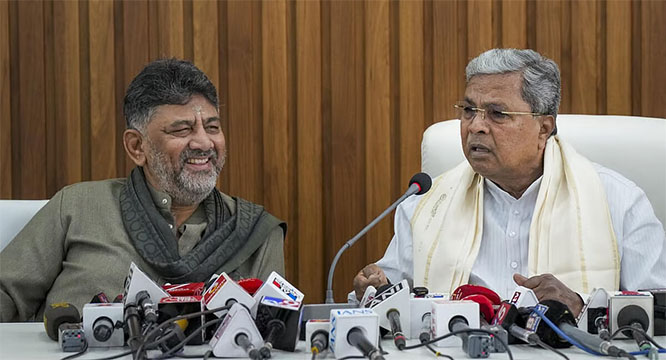
New Delhi: Karnataka chief minister Siddaramaiah and deputy CM DK Shivakumar on Saturday put up a dramatic display of unity at a closely watched joint press briefing, firmly dismissing weeks of speculation about a power-sharing tussle within the Congress. With the high command nudging both leaders to sit together and settle the dust, the meeting became a political spectacle, ending with the duo declaring that there was “no confusion, no differences.”

Calling the reports of a rift “manufactured confusion,” Siddaramaiah said the talks had gone smoothly, even joking about their breakfast. “Breakfast was very good. All three of us enjoyed it,” he said. “We want to end this confusion once and for all. For local elections and for 2028, our mission is clear — Congress must return to power. There is no difference between me and DKS, not now, not before.”

He blamed the media for fuelling rumours and reiterated absolute adherence to the party leadership. “From tomorrow, let there be no confusion. What the high command says, we will follow.”

Siddaramaiah also assured that the Assembly session starting December 8 would run smoothly and vowed that Congress would take on the BJP and JD(S) “together.”

Shivakumar echoed the chief minister word for word, stressing loyalty and discipline. “People have given us a massive mandate. It is our duty to deliver,” he said. “This government was formed under Siddaramaiah’s leadership. We both have complete trust in the high command. If they tell me to wait, I will wait.”

He added that the two leaders had discussed strategy for the 2028 Assembly elections. “Whatever the CM says, I agree. We are loyal soldiers of the party. The party may be facing challenges nationally, but we will keep it strong in Karnataka.”

Shivakumar also said Siddaramaiah would soon visit his home for lunch or dinner — another symbolic gesture meant to underline their unity.

Both leaders later posted on social media describing the breakfast meeting as “productive” and focused on “Karnataka’s priorities.”

The BJP, however, rejected the show of camaraderie as “pure bunkum,” accusing Congress of trying to paper over an internal power struggle. But Siddaramaiah and Shivakumar insisted their united front would continue — and that there was “no confusion” within the state leadership.

Comments

Add new comment

  • Coastaldigest.com reserves the right to delete or block any comments.
  • Coastaldigset.com is not responsible for its readers’ comments.
  • Comments that are abusive, incendiary or irrelevant are strictly prohibited.
  • Please use a genuine email ID and provide your name to avoid reject.
coastaldigest.com news network
December 2,2025

karkala.jpg

Udupi, Dec 2: A wave of regional pride is sweeping through Udupi district as Shagun S Verma Hegde, a talented Class 9 student from Christ King English Medium High School, Karkala, has been named the captain of the Indian National Team for the Under-15 Girls’ Volleyball Championship.

Shagun holds the unique distinction of being the sole player from Karnataka selected to represent the country in the prestigious international tournament. The championship, organized by the School Games Federation, is scheduled to take place in Shangluo, China, from December 3 to 13, where Shagun will lead the national squad.

A Remarkable Journey to the Top

Shagun’s selection is a testament to her dedication and exceptional skill on the court. Her journey included several rigorous rounds of selection:

•    She was the only player from Udupi district to qualify for the state-level selection camp.

•    Out of eight players from Karnataka who advanced to the national selection camp in Pune, Maharashtra, Shagun was the only one to secure a place in the final national squad.

•    The national camp saw participation from approximately 200 players, which was shortlisted to 23. Shagun not only made the final cut but was also ranked as the second-best player overall, solidifying her leadership role.

Shagun, who is the daughter of Sandesh Verma and Shruthiraj of Kallotte, Karkala, has trained under experienced coaches Santosh D’Souza, Jeevan D’Silva, Jairaj Poojary, and Ramesh. Her selection as the team captain has brought profound honour to her family, school, the Udupi district, and the entire state of Karnataka.

Comments

Add new comment

  • Coastaldigest.com reserves the right to delete or block any comments.
  • Coastaldigset.com is not responsible for its readers’ comments.
  • Comments that are abusive, incendiary or irrelevant are strictly prohibited.
  • Please use a genuine email ID and provide your name to avoid reject.
News Network
December 4,2025

indigocrisis.jpg

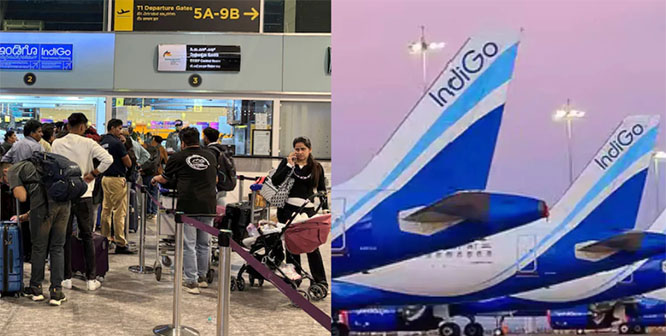
Angry outbursts, long queues, and desperate appeals filled airports across India today as IndiGo grappled with a severe operational breakdown. Hundreds of flights have been cancelled or delayed, leaving thousands of passengers stranded through the night and forcing many to spend long hours at helpdesks.

Social media was flooded with videos of fliers pleading for assistance, accusing the airline of misleading updates, and demanding accommodation after being stuck for 10 to 12 hours at airports such as Hyderabad and Bengaluru.

What Triggered the Meltdown?

IndiGo has attributed the widespread disruption to “a multitude of unforeseen operational challenges.” These include:

•    Minor technology glitches
•    Winter-season schedule adjustments
•    Bad weather
•    Congestion in the aviation network
•    New crew rostering rules (Flight Duty Time Limitations or FDTL)

Among these, the most disruptive has been the implementation of the updated FDTL norms introduced by the Directorate General of Civil Aviation (DGCA) in January 2024.

These rules were designed to reduce pilot fatigue and improve passenger safety. Key changes include:

•    Longer weekly rest periods for flight crew
•    A revised definition of “night,” extending it by an extra hour
•    Tighter caps on flight duty timing and night landings
•    Cutting night shifts for pilots and crew from six per roster cycle to just two

Once these norms became fully enforceable, airlines were required to overhaul rosters well in advance. For IndiGo, this triggered a sudden shortage of crew available for duty, leading to cascading delays and cancellations.

Why IndiGo Was Hit the Hardest

IndiGo is India’s largest airline by a wide margin, operating over 2,200 flights daily. That’s roughly double the number operated by Air India.

When an airline of this size experiences even a 10–20% disruption, it translates to 200–400 flights being delayed or grounded — producing massive spillover effects across the country.

IndiGo also relies heavily on high-frequency overnight operations, a model typical of low-cost carriers that aim to maximise aircraft utilisation and reduce downtime. The stricter FDTL norms clash with these overnight-heavy schedules, forcing the airline to pull back services.

Aviation bodies have also criticised IndiGo’s preparedness. The Airline Pilots' Association of India (ALPA) said airlines were given a two-year window to plan for the new rules but “started preparing rather late.” IndiGo, it said, failed to rebuild crew rosters 15 days in advance as required.

The Federation of Indian Pilots (FIP) went further, calling the crisis the result of IndiGo’s “prolonged and unorthodox lean manpower strategy,” and alleging that the airline adopted a hiring freeze even as it knew the new rules would require more careful staffing.

How Many Flights Are Affected?

In the past 48 hours, over 300 flights have been cancelled. At least 100 more are expected to be cancelled today.

City-wise impact:

•    Hyderabad: 33 expected cancellations; several fliers stranded overnight
•    Bengaluru: over 70 expected cancellations
•    Delhi, Mumbai, Chennai, Kolkata: widespread delays and missed connections

Passengers shared distressing accounts online.

One customer at Hyderabad airport said they waited from 6 PM to 9 AM with “no action taken” regarding their delayed Pune flight. Another said IndiGo repeatedly told them the crew was “arriving soon,” only for the delay to stretch over 12 hours.

IndiGo has apologised for the disruption and promised that operations will stabilise within 48 hours, adding that “calibrated adjustments” are being made to contain the chaos.

What Should Passengers Do Now?

For those flying in the next few days, especially with IndiGo, here are key precautions:

1. Keep Checking Flight Status
Monitor your flight closely before leaving for the airport, as delays may be announced last-minute.

2. Arrive Early
Expect long queues at counters and security due to crowding and rescheduling.

3. Carry Essentials
Pack snacks, water, basic medicines, chargers, and items for children or senior citizens. Extended waiting times should be anticipated.

4. Use Flexible Booking Options
If you booked tickets with a free-date-change or cancellation option, consider using them.
If you haven’t booked yet, prefer refundable or flexible fares, or even consider alternate airlines.

5. Follow IndiGo’s Updates
Keep an eye on IndiGo’s official social media channels and contact customer support for rebooking and refund queries.

What Needs to Change?

Pilot groups have raised concerns not just about staffing but also the planning practices behind it.
The Federation of Indian Pilots accused IndiGo of:

•    Imposing an unexplained hiring freeze despite knowing the FDTL changes were coming
•    Entering non-poaching agreements that limited talent movement
•    Keeping pilot pay frozen
•    Underestimating the need to restructure operations in advance

They have urged DGCA to approve seasonal schedules only after airlines prove they have adequate pilot strength under the new norms.

ALPA also warned that some airlines might be using the delays as an “immature pressure tactic” to push DGCA for relaxations in the new rules — which, if granted, could compromise the very safety standards the norms were meant to protect.

Both pilot bodies stressed that no exemption should dilute safety, and any deviations should be based solely on scientific risk assessment.

Is a Solution in Sight?

While IndiGo says normalcy will return within two days, aviation experts believe that fully stabilising operations could take longer, depending on how quickly the airline can:
•    Re-align rosters
•    Mobilise rested crew
•    Boost staffing
•    Adjust its winter schedule to match regulatory requirements
Passengers are advised to remain prepared for continued delays over the next few days as the airline works through its backlog. 

Comments

Add new comment

  • Coastaldigest.com reserves the right to delete or block any comments.
  • Coastaldigset.com is not responsible for its readers’ comments.
  • Comments that are abusive, incendiary or irrelevant are strictly prohibited.
  • Please use a genuine email ID and provide your name to avoid reject.