Here are key takeaways from Karnataka Budget 2024

News Network
February 16, 2024

budget.jpg

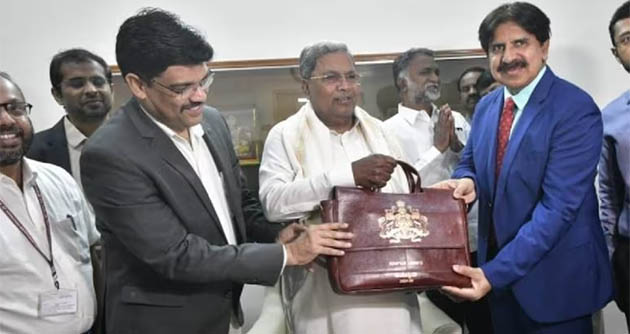
Karnataka Chief Minister Siddaramaiah on Friday presented his record 15th Budget as Finance Minister, and the second under the present Congress regime. In his address to the Karnataka Assembly, he emphasised that his government was striving to establish a new standard of development, known as the 'Karnataka Model of Development,' based on the principles of justice, equality, and fraternity enshrined in the Constitution.

Agriculture:

1) Siddaramaiah announced the implementation of ‘Karnataka Raitha Samruddhi Yojane’ to encourage integrated farming by consolidating various pro-farmer schemes.

2) He also announced the formation of Agriculture Development Authority to facilitate effective implementation of policies related to agriculture and allied activities coming under various departments.

3) Establishment of food parks at airports in Sogane of Shivamogga, Ittangihala of Vijayapura and Pujenahalli of Bengaluru Rural district.

Horticulture:

1) Setting up of Kissan Malls in select districts to provide farmers with horticulture-related technical guidance, market connectivity, farming implements and agro-products under one roof.

2) State-of-the-art international floriculture market to be established in Bengaluru city under Public-Private Partnership.

Animal Husbandry:

1) Construction of new building to 200 veterinary institutions which are in dilapidated condition at a cost of Rs 100 crore.

Fisheries:

1) Rs 7 crore for purchase of sea ambulance for protection of fishermen.
2) Financial assistance to 10,000 houseless fishermen for construction of houses under various housing schemes.

Co-operation:

1) Target of providing record crop loan of Rs 27,000 crore to more than 36 lakh famers in the state.

2) The Karnataka government will also urge the Centre to announce MSP for important crops such as arecanut, onion, grapes, mango, banana and other horticultural crops and to fix MSP based on the formula of cost of cultivation plus 50 per cent profit as per the report by Swaminathan panel.

Water resource:

1) Rs 365 crore project of flowing water from Bhima and Kagina Rivers to Bennetora reservoir to provide drinking water to Kalaburagi city.

School Education and Literacy:

1) 2000 Government Primary Schools to be converted as bi-lingual medium schools to enhance quality of education.

2) NEET/ JEE/ CET coaching to be imparted to 20,000 science students of Government PU Colleges.

Higher Education Department:

1) Rs 100 crore to develop University Visveswaraya College of Engineering on the lines of IIT.

2) Rs 30 crore to upgrade 30 women’s colleges and government women’s polytechnics.

Health:

1) Rs 187 crore to construct critical care block buildings in seven districts.

2) 50 new blood storage units to be established in North Karnataka in next two years.

Medical Education:

1) Rs 20 crore for robotic surgery facility in Institute of Nephro-Urology in Bengaluru.

2) Health repository to be created under Digital Health Society to make treatment details available from single source.

Woman and Child Development:

1) Rs 28,608 crore allocated for Gruhalakshmi gurarantee scheme.

2) Rs 90 crore to be spent on providing 75,938 smartphones to Anganwadi workers and supervisors.

3) Rs 200 crore to construct 1,000 Anganwadis.

4) Enhancement of Pension under Maithri scheme to the linguistic minorities from Rs 800 to Rs 1,200.

Social Welfare:

1) Monthly food allowance to be enhanced by Rs 100 per student for students studying in residential schools and hostels under the social welfare, tribal welfare, backward classes and minority welfare departments.

2) A corpus fund of Rs 35 crore to be set up to bear the cost for treatment of rare diseases and expensive treatments for SC and ST communities.

Scheduled Tribe Welfare:

1) The Ashram schools working under Scheduled Tribe Welfare Department to be re-named as Maharshi Valmiki Adivasi Budakattu Vasathi Shale, and Class 6 & 8 will be started in schools with Class 5 and 7 respectively. The student strength to be enhanced from 25 to 40 in each class.

2) Rs 15,000 stipend to be paid to 200 engineering graduates who got admission in IISc, IIT and NIT for short term professional training courses.

Minorities Welfare:

1) Rs 50 crore for Jain pilgrimage centres and Rs 200 crore for the development of Christian community.

2) Rs 2 crore for the welfare of Sikligar Sikh community, Rs 1 crore to gurudwara in Bidar.

3) Rs 10 crore to encourage minority women SHGs to take up self- employment activities

Housing:

1) Target of construction of three lakh houses this year.

Food, Civil Supplies and Consumer Affairs:

1) Rs 4,595 transferred to 4.02 crore beneficiaries under Annabhagya till January, 2024.

2) Anna-Suvidha programme to be launched to facilitate senior citizens above the age of 80 by door delivery of food grains.

Skill Development:

1) Café Sanjeevini, rural canteens and 2,500 coffee kiosks to be established for women.

2) 50,000 Women SHG owned micro-enterprises to be developed in next two years.

Rural Development and Panchayath Raj:

1) Solar street lights to be installed in 50 panchayaths and systematic metering to be done in 200 panchayaths to reduce electricity charges.

2) Circular economy to be encouraged for sustainable solid waste management in rural areas.

3) The monthly incentive to freed persons from bonded labour system to be increased to Rs 2,000.

Urban Development:

1) Brand Bengaluru launched to develop Bengaluru as a world class city.

2) Efforts to ease traffic congestion will be made by completing white topping works, tunnel to be constructed in Hebbal Junction on pilot basis and installing Area Traffic Signal Control System in 28 importance junctions of the city.

3) Peripheral ring road to be developed under new concept as Bengaluru Business Corridor.

4) 250 meter tall sky-deck to be built in Bengaluru city.

5) 44-km length to be added for the Bengaluru Metro Rail network by March 2025.

6) Feasibility report to extend Metro to Tumkur from BIEC and to Devanahalli from KIAL.

7) 1,334 new electric buses and 820 BS VI diesel buses to be added to the fleet of buses in BMTC.

8) The Cauvery Stage 5 project at a cost of Rs 5,550 crore providing drinking water to 12 lakh people will be commissioned by May 2024.

9) The curbs on businesses during night time to be extended till 1 am in Bengaluru and 10 city corporations in the state.

10) The towns on the outskirts of Bengaluru such as Devanahalli, Nelamangala, Hosakote, Doddaballapura, Magadi and Bidadi will be developed as satellite towns with road and train connectivity.

Energy:

1) 1.65 crore consumers registered under Gruha Jyoti Scheme.

2) Under Phase II of solarisation of IP set feeder, 4.30 lakh IP sets to be solarised by implementing solar projects of 1,192 MW.

PWD:

1) 875-km state highway development at a cost of Rs 5,736 crore with the assistance of external financial institutes under KSHIP-4 in the current year.

2) Construction of six railway overbridges at a cost of Rs 350 crore.

3) Action to construct dedicated economic corridors from Mangaluru port to Bengaluru and Bidar to Bengaluru.

Commerce and Industries:

1) A grant of Rs 50 crore for supplemental infrastructure to the mega textile park project establishing in Kalburgi district in collaboration with state and central government.

Kannada and Culture:

1) A grant of Rs one crore to undertake literature survey, collection, publication and propagation programmes including Tatvapada, Keerthana Sahitya and Bhakti movement through Saintpoet Kanakadasa Study Centre.

2) Steps will be taken to ensure that 60 per cent of signage is in Kannada in the nameplates of all offices, shops and various commercial enterprises under Kannada Language Comprehensive Development Act.

Forest, Ecology and Environment:

1) To address man-animal conflict, measures to form one new task force in Bandipur this year. Allocation of Rs 10 crore to strengthen these task forces.

Excise:

1) IML and beer slab to be revised by rationalising the declared slabs of liquor.

 

Comments

Add new comment

  • Coastaldigest.com reserves the right to delete or block any comments.
  • Coastaldigset.com is not responsible for its readers’ comments.
  • Comments that are abusive, incendiary or irrelevant are strictly prohibited.
  • Please use a genuine email ID and provide your name to avoid reject.
News Network
December 5,2025

indigoCEO.jpg

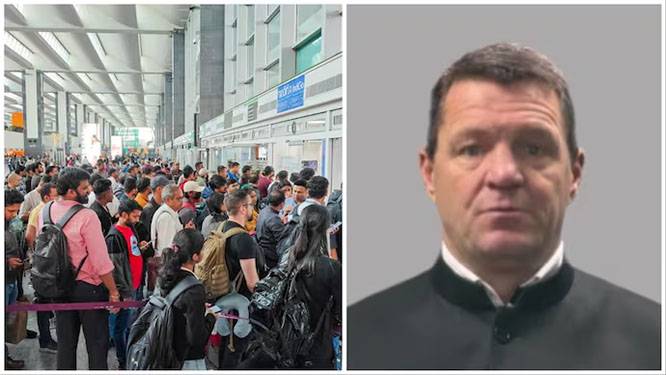
New Delhi, Dec 5: IndiGo CEO Pieter Elbers issued a public apology this evening after more than a thousand flights were cancelled today, making it the "most severely impacted day" in terms of cancellations. The biggest airline of the country cancelled "more than half" of its daily number of flights on Friday, said Elbers. He also said that even though the crisis will persist on Saturday, the airline anticipates fewer than 1,000 flight cancellations.

"Full normalisation is expected between December 10 and 15, though IndiGo cautions that recovery will take time due to the scale of operations," the IndiGo CEO said. 

IndiGo operates around 2,300 domestic and international flights daily.

Pieter Elbers, while apologising for the major inconvenience due to delays and cancellations, said the situation is a result of various causes.

The crisis at IndiGo stems from new regulations that boost pilots' weekly rest requirements by 12 hours to 48 and allow only two night-time landings per week, down from six. IndiGo has attributed the mass cancellations to "misjudgment and planning gaps".

Elbers also listed three lines of action that the airline will adopt to address the issue.

"Firstly, customer communication and addressing your needs, for this, messages have been sent on social media. And just now, a more detailed communication with information, refunds, cancellations and other customer support measures was sent," he said.

The airline has also stepped up its call centre capacity.

"Secondly, due to yesterday's situation, we had customers stranded mostly at the nation's largest airports. Our focus was for all of them to be able to travel today itself, which will be achieved. For this, we also ask customers whose flights are cancelled not to come to the airports as notifications are sent," the CEO said.

"Thirdly, cancellations were made for today to align our crew and planes to be where they need to start tomorrow morning afresh. Earlier measures of the last few days, regrettable, have proven not to be enough, but we have decided today to reboot all our systems and schedules, resulting in the highest numbers of cancellations so far, but imperative for progressive improvements starting from tomorrow," he added.

As airports witnessed chaotic scenes, the Directorate General of Civil Aviation (DGCA) stepped in to grant IndiGo a temporary exemption from stricter night duty rules for pilots. It also allowed substitution of leaves with a weekly rest period. 

Civil Aviation Minister Ram Mohan Naidu has said a high-level inquiry will be ordered and accountability will be fixed.

Comments

Add new comment

  • Coastaldigest.com reserves the right to delete or block any comments.
  • Coastaldigset.com is not responsible for its readers’ comments.
  • Comments that are abusive, incendiary or irrelevant are strictly prohibited.
  • Please use a genuine email ID and provide your name to avoid reject.
coastaldigest.com news network
November 29,2025

health1.jpg

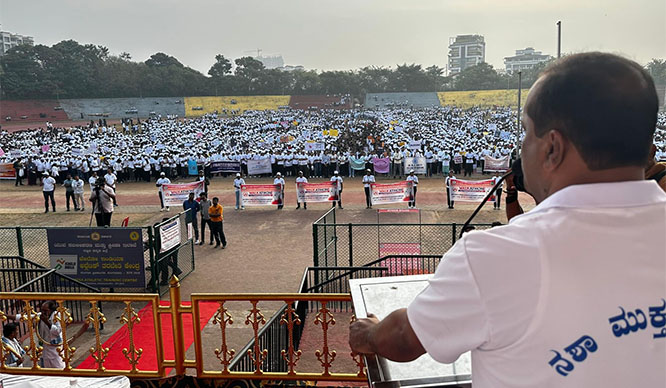
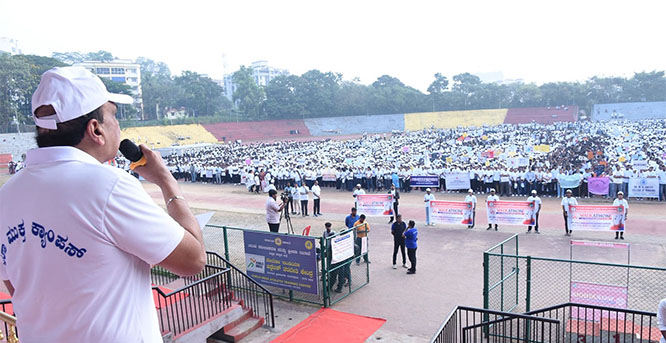
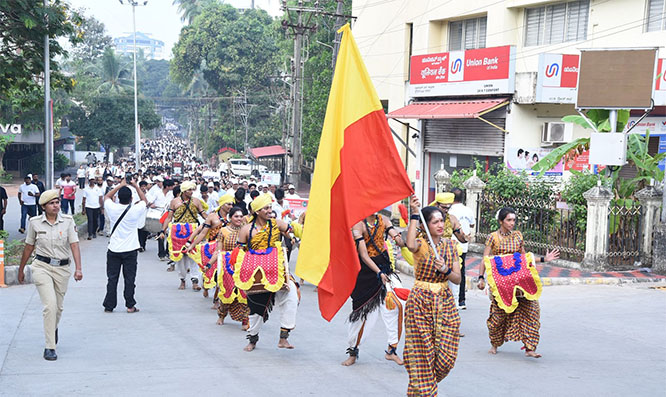
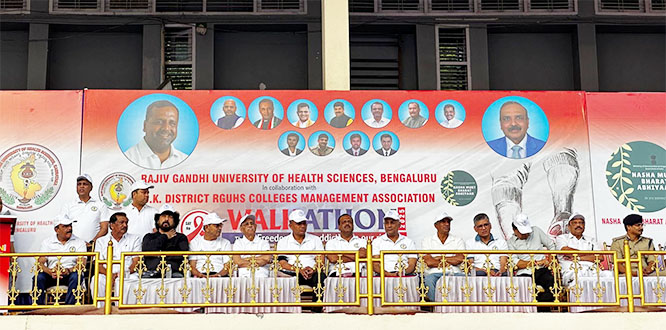
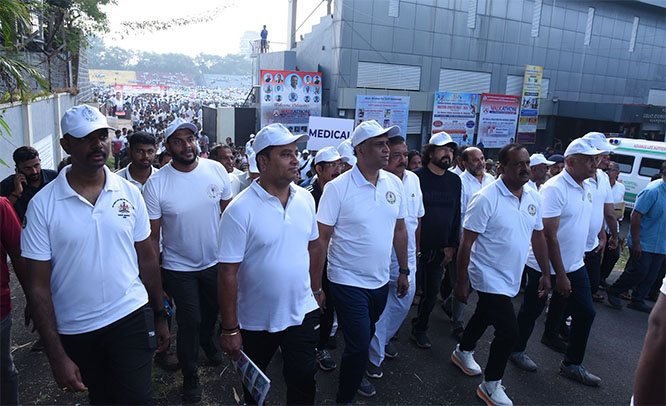
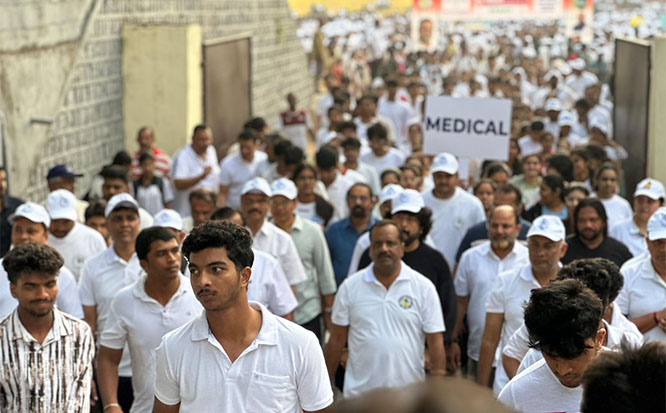
Mangaluru, Nov 29: Around 12,500 healthcare students from Medical, Dental, AYUSH, Pharmacy, Nursing, Physiotherapy and Allied Health Sciences colleges of Dakshina Kannada, affiliated to Rajiv Gandhi University of Health Sciences (RGUHS), took part in a massive walkathon to promote awareness on Organ Donation and Nasha Mukth Bharat.

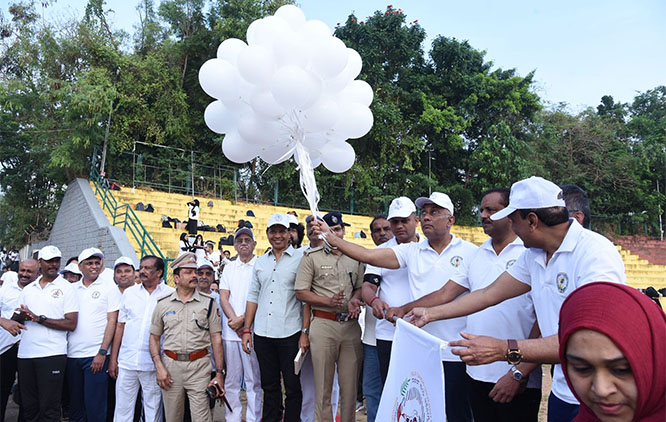
The inaugural ceremony was held at Mangala Stadium. Dr Bhagavan B C, Hon’ble Vice-Chancellor of RGUHS, delivered the welcome address. The walkathon was flagged off by Shri U T Khader, Hon’ble Speaker of the Karnataka Legislative Assembly, and presided over by Shri Dinesh Gundu Rao, Hon’ble Minister for Health, Family Welfare and Dakshina Kannada District In-charge. Dakshina Kannada MP Shri Brijesh Chowta also addressed the students.

Music director Guru Kiran, MLA Dr Bharat Shetty (Mangalore North), Police Commissioner Shri Sudheer Kumar Reddy, Shri Manjunath Bhandary and Shri Harish Kumar were among those present.

Institution heads including Dr Haji U K Monu (Kanachur Colleges), Dr Shantharam Shetty (Tejaswini College), Dr Bhaskar Shetty (City Group of Colleges), Mr Abdul Rahiman (Kanachur Institute of Medical Sciences), and the District Health Officer, Mangalore, also participated.

The vote of thanks was delivered by Prof U T Ifthikar Fareed, Syndicate Member, RGUHS.

The event was organised by Dr U T Ifthikar Ali and Dr Shiva Sharan (Syndicate Members), Prof Vaishali (Senate Member), Prof Mohammad Suhail (Chairman, BOS Physiotherapy), Dr Sharan Shetty (Former Senate Member), along with principals and faculty of various colleges.

Students marched from Mangala Stadium to Karavali Grounds via MCC and Lalbagh signal. The event set a record as one of the largest gatherings of healthcare students for a social cause in the RGUHS Dakshina Kannada Zone.

health7.jpg

health6.jpg

health5.jpg

health4.jpg

health3.jpg

health2.jpg

Comments

Add new comment

  • Coastaldigest.com reserves the right to delete or block any comments.
  • Coastaldigset.com is not responsible for its readers’ comments.
  • Comments that are abusive, incendiary or irrelevant are strictly prohibited.
  • Please use a genuine email ID and provide your name to avoid reject.
News Network
December 4,2025

indigocrisis.jpg

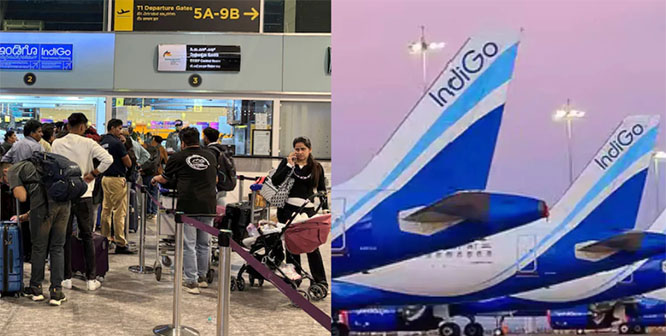
Angry outbursts, long queues, and desperate appeals filled airports across India today as IndiGo grappled with a severe operational breakdown. Hundreds of flights have been cancelled or delayed, leaving thousands of passengers stranded through the night and forcing many to spend long hours at helpdesks.

Social media was flooded with videos of fliers pleading for assistance, accusing the airline of misleading updates, and demanding accommodation after being stuck for 10 to 12 hours at airports such as Hyderabad and Bengaluru.

What Triggered the Meltdown?

IndiGo has attributed the widespread disruption to “a multitude of unforeseen operational challenges.” These include:

•    Minor technology glitches
•    Winter-season schedule adjustments
•    Bad weather
•    Congestion in the aviation network
•    New crew rostering rules (Flight Duty Time Limitations or FDTL)

Among these, the most disruptive has been the implementation of the updated FDTL norms introduced by the Directorate General of Civil Aviation (DGCA) in January 2024.

These rules were designed to reduce pilot fatigue and improve passenger safety. Key changes include:

•    Longer weekly rest periods for flight crew
•    A revised definition of “night,” extending it by an extra hour
•    Tighter caps on flight duty timing and night landings
•    Cutting night shifts for pilots and crew from six per roster cycle to just two

Once these norms became fully enforceable, airlines were required to overhaul rosters well in advance. For IndiGo, this triggered a sudden shortage of crew available for duty, leading to cascading delays and cancellations.

Why IndiGo Was Hit the Hardest

IndiGo is India’s largest airline by a wide margin, operating over 2,200 flights daily. That’s roughly double the number operated by Air India.

When an airline of this size experiences even a 10–20% disruption, it translates to 200–400 flights being delayed or grounded — producing massive spillover effects across the country.

IndiGo also relies heavily on high-frequency overnight operations, a model typical of low-cost carriers that aim to maximise aircraft utilisation and reduce downtime. The stricter FDTL norms clash with these overnight-heavy schedules, forcing the airline to pull back services.

Aviation bodies have also criticised IndiGo’s preparedness. The Airline Pilots' Association of India (ALPA) said airlines were given a two-year window to plan for the new rules but “started preparing rather late.” IndiGo, it said, failed to rebuild crew rosters 15 days in advance as required.

The Federation of Indian Pilots (FIP) went further, calling the crisis the result of IndiGo’s “prolonged and unorthodox lean manpower strategy,” and alleging that the airline adopted a hiring freeze even as it knew the new rules would require more careful staffing.

How Many Flights Are Affected?

In the past 48 hours, over 300 flights have been cancelled. At least 100 more are expected to be cancelled today.

City-wise impact:

•    Hyderabad: 33 expected cancellations; several fliers stranded overnight
•    Bengaluru: over 70 expected cancellations
•    Delhi, Mumbai, Chennai, Kolkata: widespread delays and missed connections

Passengers shared distressing accounts online.

One customer at Hyderabad airport said they waited from 6 PM to 9 AM with “no action taken” regarding their delayed Pune flight. Another said IndiGo repeatedly told them the crew was “arriving soon,” only for the delay to stretch over 12 hours.

IndiGo has apologised for the disruption and promised that operations will stabilise within 48 hours, adding that “calibrated adjustments” are being made to contain the chaos.

What Should Passengers Do Now?

For those flying in the next few days, especially with IndiGo, here are key precautions:

1. Keep Checking Flight Status
Monitor your flight closely before leaving for the airport, as delays may be announced last-minute.

2. Arrive Early
Expect long queues at counters and security due to crowding and rescheduling.

3. Carry Essentials
Pack snacks, water, basic medicines, chargers, and items for children or senior citizens. Extended waiting times should be anticipated.

4. Use Flexible Booking Options
If you booked tickets with a free-date-change or cancellation option, consider using them.
If you haven’t booked yet, prefer refundable or flexible fares, or even consider alternate airlines.

5. Follow IndiGo’s Updates
Keep an eye on IndiGo’s official social media channels and contact customer support for rebooking and refund queries.

What Needs to Change?

Pilot groups have raised concerns not just about staffing but also the planning practices behind it.
The Federation of Indian Pilots accused IndiGo of:

•    Imposing an unexplained hiring freeze despite knowing the FDTL changes were coming
•    Entering non-poaching agreements that limited talent movement
•    Keeping pilot pay frozen
•    Underestimating the need to restructure operations in advance

They have urged DGCA to approve seasonal schedules only after airlines prove they have adequate pilot strength under the new norms.

ALPA also warned that some airlines might be using the delays as an “immature pressure tactic” to push DGCA for relaxations in the new rules — which, if granted, could compromise the very safety standards the norms were meant to protect.

Both pilot bodies stressed that no exemption should dilute safety, and any deviations should be based solely on scientific risk assessment.

Is a Solution in Sight?

While IndiGo says normalcy will return within two days, aviation experts believe that fully stabilising operations could take longer, depending on how quickly the airline can:
•    Re-align rosters
•    Mobilise rested crew
•    Boost staffing
•    Adjust its winter schedule to match regulatory requirements
Passengers are advised to remain prepared for continued delays over the next few days as the airline works through its backlog. 

Comments

Add new comment

  • Coastaldigest.com reserves the right to delete or block any comments.
  • Coastaldigset.com is not responsible for its readers’ comments.
  • Comments that are abusive, incendiary or irrelevant are strictly prohibited.
  • Please use a genuine email ID and provide your name to avoid reject.