Suicide pact: Aggrieved editor blames quarrelsome wife after death of 5 family members

News Network
September 19, 2021

Hallegere Family.jpg

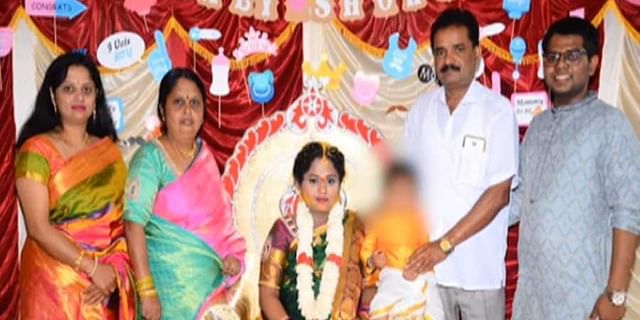
Bengaluru, Sept 19: Hallegere Shankar, the aggrieved editor of a Kannada newspaper has held his deceased wife responsible for his family tragedy, wherein four members committed suicide and allowed a child to starve to death. 

In an eight-page police complaint on Saturday, Hallegere Shankar stated that his wife, Bharathi, 51, was the root cause of endless disputes in the family. He alleged that she didn’t allow their daughters to live with their husbands, thereby wrecking their marital lives. 

On Friday evening, Shankar’s wife, daughters Sinchana, 34, Sindhurani, 31, and son Madhusagar, 25, were found hanging in the family’s home in Thigalarapalya, off Magadi Road. Sindhurani’s nine-month-old baby boy was found dead on a bed, apparently starved to death. Sinchana’s two-and-a-half-year-old daughter was rescued from a state of near-starvation. 

Police suspect that the three women killed themselves on September 13 and Madhusagar ended his life two days later because his body was not as decomposed as the other three corpses. 

In the complaint, Shankar made several allegations against his family members but laid the most blame on his deceased wife. 

He stated that she often egged their daughters to stay away from their husbands. Whenever the daughters complained of petty issues in their marital lives, Bharathi supported them instead of counselling them. Both Sinchana and Sindhurani had been living with their parents for the past one and a half years. Twenty days ago, Sindhurani allegedly consumed some pills and later filed a police complaint against her husband, Srikanth. Sinchana had similar fights with her husband Praveen Kumar. 

A fight for Rs 10 lakh

Madhusagar wanted to open a bar in Ittamadu and had spent lakhs on setting up the business. He got the excise licence and had asked for his father’s signature on some papers. Shankar refused, resulting in another fight. 

On September 12, Shankar had a heated argument with his family over two issues. He had asked his wife and son to give him Rs 10 lakh for building an ashram. They said no. All the money was in his wife’s custody, and she gave it to him whenever needed. 

The same day, Bharathi and Sindhurani quarrelled with Shankar over holding the sacramental ear-piercing ceremony for the infant. Fed up with these issues, Shankar left home in a huff and returned on Friday evening only to discover the deaths. 

After his father left home, Madhusagar tried calling him and texted him, promising to pay Rs 10 lakh but Shankar chose not to respond. 

All the five bodies were handed over to the family on Saturday after the post mortem at Victoria Hospital. The last rites were performed at the Sumanahalli crematorium. 

While police are waiting for autopsy reports, a senior officer quoted doctors as saying that the nine-month-old baby had starved to death. 

IAS/IPS dreams

Shankar’s deceased daughters, Sinchana and Sindhurani, had been preparing for UPSC exams and aspired to get into IAS/IPS, police sources say. 

Sinchana was an MBA graduate while Sindhurani had studied engineering. Their brother, Madhusagar, also an engineer, worked for a nationalised bank. 

Police are checking the text messages and phone calls of the four deceased persons and questioning the relatives to verify Shankar’s allegations. 

Investigators questioned Shankar’s sons-in-law, Kumar and Srikanth, about when and why their wives left them and what they had done to bring them back. 

Surviving child stable 

Sinchana and Kumar’s daughter, rescued from a state of near-starvation, is recovering in a hospital. Kumar was horrified to learn that the child went without food for days. Madhusagar, who the police believe took his life two days later, had fed something to the child. The child may not have eaten anything after he also ended his life. 

Comments

Add new comment

  • Coastaldigest.com reserves the right to delete or block any comments.
  • Coastaldigset.com is not responsible for its readers’ comments.
  • Comments that are abusive, incendiary or irrelevant are strictly prohibited.
  • Please use a genuine email ID and provide your name to avoid reject.
News Network
February 3,2026

manjeshwar.jpg

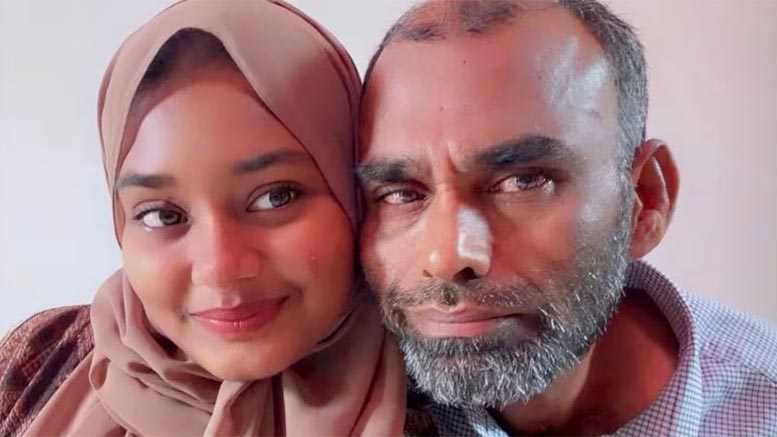
Kasaragod: An 18-year-old girl was stabbed to death at Thuminad in Manjeshwar panchayat on Monday, allegedly by her father following a domestic dispute. 

The victim has been identified as K U Mariyamath Jumaila. Her father, Umar Farooq, has been taken into police custody, Manjeshwar Station House Officer Inspector Ajith Kumar P said.

According to the police, Umar Farooq had been working in a West Asian country and returned home about three months ago. 

Family tensions reportedly escalated after his wife, Thahira (41), decided to seek a divorce and asked him to leave her life. Kasaragod district panchayat member Harshad Vorkady alleged that Umer was addicted to marijuana and frequently caused disturbances at home.

On Monday, Thahira asked Umar to come to her sister’s house in Thuminad to discuss the dispute. Jumaila accompanied her mother. 

Manjeshwar panchayat member Illiyas Thuminad said Umar arrived along with his brother, following which Thahira handed over gold ornaments and property documents to him and asked him to sever ties with her.

However, the police said a property dispute had been ongoing between Umar Farooq and his sister-in-law’s husband. During a heated argument, Umar allegedly attempted to attack the man with a sharp weapon. When Jumaila intervened to stop the assault, she was stabbed in the neck.

The teenager collapsed after bleeding profusely and was rushed to a private hospital in Mangaluru, where doctors declared her dead. Her body was later shifted to Mangalpady Taluk Hospital for post-mortem examination.

Jumaila was a former student of Sirajul Huda English Medium Higher Secondary School, Manjeshwar. 

Comments

Add new comment

  • Coastaldigest.com reserves the right to delete or block any comments.
  • Coastaldigset.com is not responsible for its readers’ comments.
  • Comments that are abusive, incendiary or irrelevant are strictly prohibited.
  • Please use a genuine email ID and provide your name to avoid reject.
News Network
January 23,2026

Mangaluru: The Karnataka Government Polytechnic (KPT), Mangaluru, has achieved autonomous status from the All India Council for Technical Education (AICTE), becoming the first government polytechnic in the country to receive such recognition in its 78-year history. The status was granted by AICTE, New Delhi, and subsequently approved by the Karnataka Board of Technical Education in October last year.

Officials said the autonomy was conferred a few months ago. Until recently, AICTE extended autonomous status only to engineering colleges, excluding diploma institutions. However, with a renewed national focus on skill development, several government polytechnics across India have now been granted autonomy.

KPT, the second-largest polytechnic in Karnataka, was established in 1946 with four branches and has since expanded to offer eight diploma programmes, including computer science and polymer technology. The institution is spread across a 19-acre campus.

Ravindra M Keni, the first dean of the institution, told The Times of India that AICTE had proposed autonomous status for polytechnic institutions that are over 25 years old. “Many colleges applied. In the first round, 100 institutions were shortlisted, which was further narrowed down to 15 in the second round. We have already completed one semester after becoming an autonomous institution,” he said. He added that nearly 500 students are admitted annually across eight three-year diploma courses.

Explaining the factors that helped KPT secure autonomy, Keni said the institution has consistently recorded 100 per cent admissions and placements for its graduates. He also noted its strong performance in sports, with the college emerging champions for 12 consecutive years, along with active student participation in NCC and NSS activities.

Autonomous status allows KPT to design industry-oriented curricula, conduct examinations, prepare question papers, and manage academic documentation independently. The institution can also directly collaborate with industries and receive priority funding from AICTE or the Ministry of Education. While academic autonomy has been granted, financial control will continue to rest with the state government.

“There will be separate committees for examinations, question paper setting, boards of studies, and boards of examiners. The institution will now have the freedom to conduct admissions without government notifications and issue its own marks cards,” Keni said, adding that new academic initiatives would be planned after a year of functioning under the autonomous framework.

Comments

Add new comment

  • Coastaldigest.com reserves the right to delete or block any comments.
  • Coastaldigset.com is not responsible for its readers’ comments.
  • Comments that are abusive, incendiary or irrelevant are strictly prohibited.
  • Please use a genuine email ID and provide your name to avoid reject.
News Network
January 20,2026

Mangaluru: In a major step towards strengthening rural innovation, the Office of the Principal Scientific Adviser (PSA) to the Government of India is supporting the establishment of RuTAGe Smart Village Centres (RSVCs) across the country through collaborations with academic institutions, civil society organisations and philanthropic partners.

As part of this national initiative, Nitte (Deemed to be University) will set up the first RSVCs in the region at Nitte GP in Udupi district and at the Nitte Health Centre, Sevanjali Trust, Farangipete, in Dakshina Kannada district. The centres will be inaugurated on January 21. In South India, the programme is being implemented by the Section Infin-8 Foundation (SI-8).

Speaking to reporters on Monday, SI-8 founder-director Vishwas US said experts from Nitte University and SI-8 would work closely with farmers, students, youth and local entrepreneurs to adapt and deploy technologies tailored to local needs.

Project head Prof Iddya Karunasagar, representing Nitte DU, said the RSVCs at Nitte and Farangipete would serve as demonstration hubs for a wide range of agriculture, energy, skill-development and assistive technologies. These include solar dryers for fruits, vegetables and crops; soil-testing solutions; power weeders and women-friendly farm tools; wind-powered devices for rural artisans; grain storage systems; grass-cutting and tree-climbing equipment; and liquid fertiliser production using cowshed waste.

SI-8 CEO Aravind C Kumar said the centres would also provide access to digital and knowledge-based platforms such as ISRO applications, government scheme portals, market linkage tools and gamified learning resources, along with assistive technologies for persons with visual impairments.

Highlighting the broader impact of the initiative, Principal Scientific Adviser Prof Ajay Kumar Sood said it demonstrated how applied research could bridge the rural–urban divide and help create self-reliant, technology-enabled villages.

The initiative has been made possible through philanthropic support from Dr NC Murthy of ACM Business Solutions, LLC, USA. Dr Sapna Poti, Director (Strategic Alliances) at the Office of the Principal Scientific Adviser, said the long-term objective is to build self-sufficient, technology-driven communities capable of generating sustainable livelihoods on their own.

Comments

Add new comment

  • Coastaldigest.com reserves the right to delete or block any comments.
  • Coastaldigset.com is not responsible for its readers’ comments.
  • Comments that are abusive, incendiary or irrelevant are strictly prohibited.
  • Please use a genuine email ID and provide your name to avoid reject.