Why Siddaramaiah govt still hesitant to release Karnataka caste census?

News Network
October 3, 2023

siddu.jpg

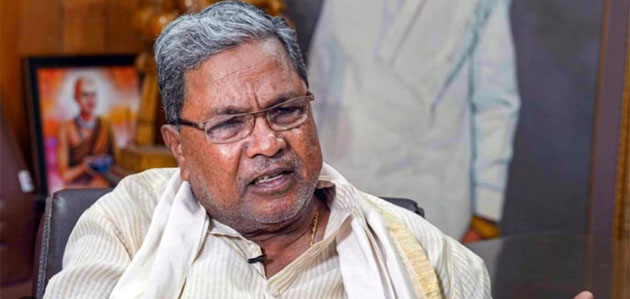
Bengaluru, Oct 3: The freshly released caste census data of Bihar has to a certain extent mounted on Chief Minister Siddaramaiah led congress of Karnataka to formally release the date of caste census it had conducted during its previous tenure nearly a decade ago. 

Officially labelled socio-economic survey, Siddaramaiah had commissioned the census in 2015, during his first stint as CM, with the aim of ensuring reservation benefits for castes in proportion to their population. Entrusted with the responsibility, the backward classes commission then headed by Justice Kantharaj completed the census in 2018.

The report, which cost the exchequer a staggering Rs 262 crore, has been gathering dust since for various reasons, including political. Cases are also pending in courts.

Ironically, the delay in accepting the report comes at a time when former AICC president and Congress MP Rahul Gandhi has been going hammer and tongs after the Narendra Modi government at the Centre for not releasing the findings of a similar exercise carried out across the country.

Successive state governments — there have been two besides the current government — have refused to accept the report on the pretext that it was not signed and validated by the then member secretary of the commission. The permanent backward classes Act makes the member secretary’s validation mandatory.

But the real reason, politicians say, is strong opposition by politically dominant communities like Lingayats and Vokkaligas who believe the findings will end their political hegemony. Alleged key findings of the report, that were leaked just before the 2018 assembly elections, challenged the popular political narrative that Lingayats and Vokkaligas are numerically dominant castes in the state.

The leaked reports shows Scheduled Castes form the largest community at 19% followed by Muslims (16%). It pegged the population of Lingayats and Vokkaligas at 14% and 11% — way lower than current estimates. While Lingayats claim they form 20% of the state’s population, Vokkaligas say they account for 17%. Both communities — besides Brahmins — have opposed the findings.

“The opposition comes from the perceived fear of losing political preference, be it in distribution of tickets for assembly and Lok Sabha polls or cabinet berths both communities enjoyed all these years,” said a former BJP minister.

After the alleged leak in 2018, the Siddaramaiah gov- ernment is said to have got the commission to delay submitting the report since assembly elections were around the corner. The JD(S)-Congress coalition and the BJP government that followed also dragged their feet on accepting the report since it was seen as politically imprudent.

But after the Congress government returned to office with a thumping majority, Siddaramaiah, in June this year, announced his government will accept the report. “Caste census will help the government make appropriate decisions on facilities including the quantum of reservation to be provided to different castes and communities,” Siddaramaiah had said then.

But nothing has happened since and there have been rumblings in the state Congress unit over the intended move.

When contacted, chairpersons of the backward classes commission Jayaprakash Hegde said the report will be submitted to the government soon. “We are collating the data and we will submit it to the government at the earliest,” he said.

Backward classes welfare minister Shivraj Tangadagi said the government is committed to make the findings public and it will do so soon.

 

Comments

Add new comment

  • Coastaldigest.com reserves the right to delete or block any comments.
  • Coastaldigset.com is not responsible for its readers’ comments.
  • Comments that are abusive, incendiary or irrelevant are strictly prohibited.
  • Please use a genuine email ID and provide your name to avoid reject.
News Network
February 1,2026

Bengaluru: Karnataka Deputy Chief Minister D K Shivakumar on Sunday criticised the Union Budget presented by Finance Minister Nirmala Sitharaman, claiming it offered no tangible benefit to the state.

Though he said he was yet to study the budget in detail, Shivakumar asserted that Karnataka had gained little from it. “There is no benefit for our state from the central budget. I was observing it. They have now named a programme after Mahatma Gandhi, after repealing the MGNREGA Act that was named after him,” he said.

Speaking to reporters here, the Deputy Chief Minister demanded the restoration of MGNREGA, and made it clear that the newly enacted rural employment scheme — VB-G RAM G — which proposes a 60:40 fund-sharing formula between the Centre and the states, would not be implemented in Karnataka.

“I don’t see any major share for our state in this budget,” he added.

Shivakumar, who also holds charge of Bengaluru development, said there were high expectations for the city from the Union Budget. “The Prime Minister calls Bengaluru a ‘global city’, but what has the Centre done for it?” he asked.

He also drew attention to the problems faced by sugar factories, particularly those in the cooperative sector, alleging a lack of timely decisions and support from the central government.

Noting that the Centre has the authority to fix the minimum support price (MSP) for agricultural produce, Shivakumar said the Union government must take concrete steps to protect farmers’ interests.

Comments

Add new comment

  • Coastaldigest.com reserves the right to delete or block any comments.
  • Coastaldigset.com is not responsible for its readers’ comments.
  • Comments that are abusive, incendiary or irrelevant are strictly prohibited.
  • Please use a genuine email ID and provide your name to avoid reject.
News Network
February 1,2026

Bengaluru, Feb 1: For travelers landing at Kempegowda International Airport (KIA), the sleek, wood-paneled curves of Terminal 2 promise a world-class welcome. But the famed “Garden City” charm quickly withers at the curb. As India’s aviation sector swells to record numbers—handling over 43 million passengers in Bengaluru alone this past year—the “last mile” has turned into a marathon of frustration.

The Bengaluru Logjam: Rules vs Reality

While the city awaits the 2027 completion of the Namma Metro Blue Line, the interim has been chaotic. Recent “decongestion” rules at Terminal 1 have pushed app-based cab pickups to distant parking zones, forcing weary passengers into a 20-minute walk with luggage.

“I landed after ten months away and felt like a stranger in my own city,” says Ruchitha Jain, a Koramangala resident. “My driver couldn’t find me, staff couldn’t guide me, and the so-called ‘Premium’ lane is just a fancy tax on convenience.”

•    The Cost of Distance: A 40-km cab ride can now easily cross ₹1,500, driven by demand pricing and airport surcharges.

•    The Bus Gap: While Vayu Vajra remains a lifeline, its ₹300–₹400 fare is often cited as the most expensive airport bus service in the country.

A National Pattern of Disconnect

The struggle is not unique to Karnataka. From Chennai’s coast to Hyderabad’s plateau, India’s airports tell a familiar story: brilliant runways, broken exits.

City:    Primary Issue   |    Recent Development

Bengaluru:    Cab pickup restrictions & distance  |    App-based taxis shifted to far parking zones; long walks and fare spikes reported

Chennai:    Multi-Level Parking (MLCP) hike  |    Passengers report 40-minute walks to reach cab pickup points

Hyderabad:    “Taxi mafia” & touting  |    Over 440 touting cases reported; security presence intensified

Mumbai:    Fare scams  |     Tourists charged ₹18,000 for just 400 metres, triggering police action

In Hyderabad, travelers continue to battle entrenched local groups that intimidate Uber and Ola drivers, pushing passengers toward overpriced private taxis. Chennai flyers, meanwhile, complain that reaching the designated pickup zones now takes longer than short-haul flights from cities like Coimbatore.

The ‘Budget Day’ Hope

As Finance Minister Nirmala Sitharaman presents the Union Budget 2026 today, the aviation sector is watching closely. With the government’s renewed emphasis on multimodal integration, there is cautious hope for funding toward seamless airport-metro-bus hubs.

The vision is clear: a future where planes, trains, and metros speak the same language. Until then, passengers at KIA—and airports across India—will continue to discover that the hardest part of flying isn’t the thousands of kilometres in the air, but the last few on the ground.

Comments

Add new comment

  • Coastaldigest.com reserves the right to delete or block any comments.
  • Coastaldigset.com is not responsible for its readers’ comments.
  • Comments that are abusive, incendiary or irrelevant are strictly prohibited.
  • Please use a genuine email ID and provide your name to avoid reject.
coastaldigest.com news network
January 19,2026

badriya.jpg

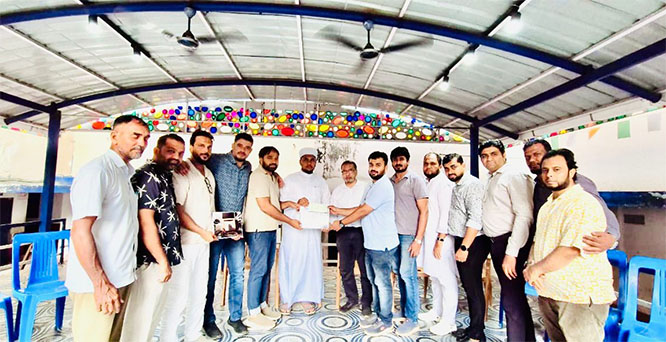
Mangaluru: The Phase I project of Badria Vision 2028 was formally launched at a ceremony held at the Badria Campus on January 17, marking an important step in the institution’s long-term development roadmap.

The programme was attended by P.B. Abdul Hameed, Secretary of the MEA, and P.C. Hasir, Correspondent of the MEA, who presided over the event and underscored the institution’s commitment to growth and academic excellence.

Office-bearers of the Badria Alumni Association were present in large numbers, including A.K. Sajid (President), Shamsuddin and S.M. Farooq (Vice-Presidents), Shaheed (General Secretary), and Khaleel (Treasurer), reflecting strong alumni engagement in the initiative.

The gathering was blessed by Sayyid Shamsuddeen Basith Thangal Kukkaje, Qateeb of Zeenat Yatheem Bakshi, who led a special dua seeking divine guidance and success for the project.

The ceremony also witnessed the participation of prominent alumnus and local corporate professional Abdul Latheef, along with alumni members Naushad, Kalandar, Safwan, members of the core committee, and several other former students.

A key moment of the event was the formal handover of a cheque to Ameen Woodland Architect, signalling the immediate commencement of construction work under Phase I of the project.

Organisers said the launch of Phase I reflects a shared vision, institutional unity, and collective resolve to realise the objectives of Badria Vision 2028.

Comments

Add new comment

  • Coastaldigest.com reserves the right to delete or block any comments.
  • Coastaldigset.com is not responsible for its readers’ comments.
  • Comments that are abusive, incendiary or irrelevant are strictly prohibited.
  • Please use a genuine email ID and provide your name to avoid reject.