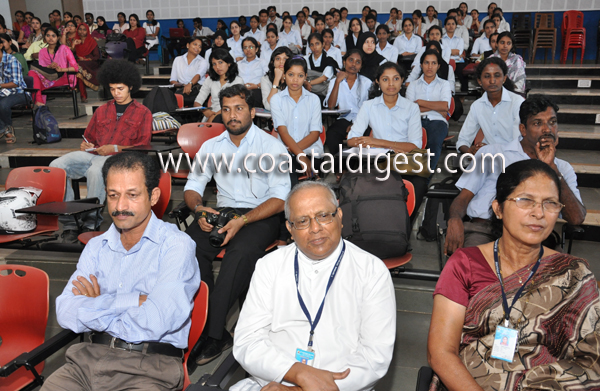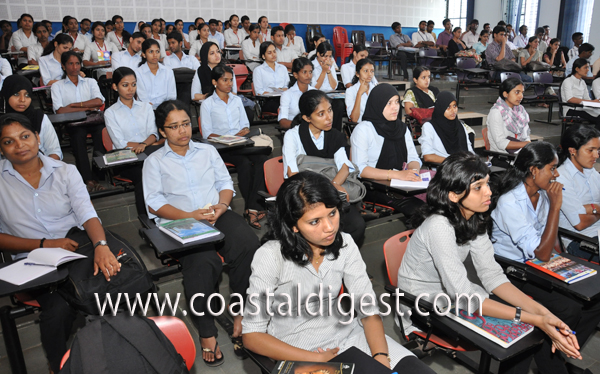
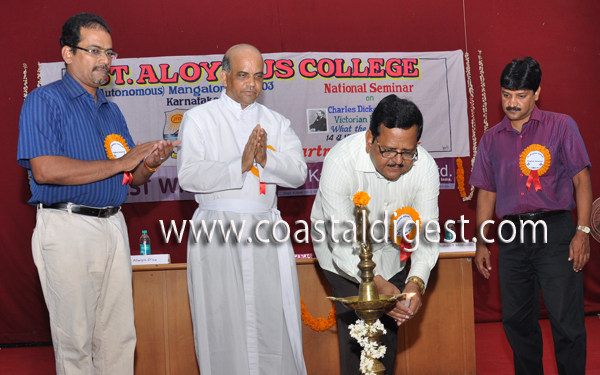
National seminar on Charles Dickens begins at St Aloysius College

December 14, 2012

Aloys_7


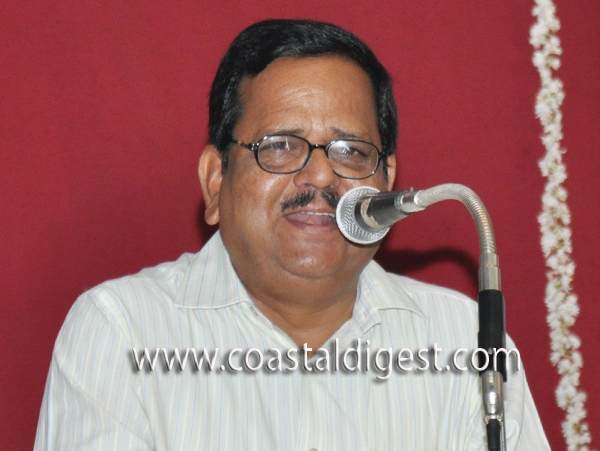
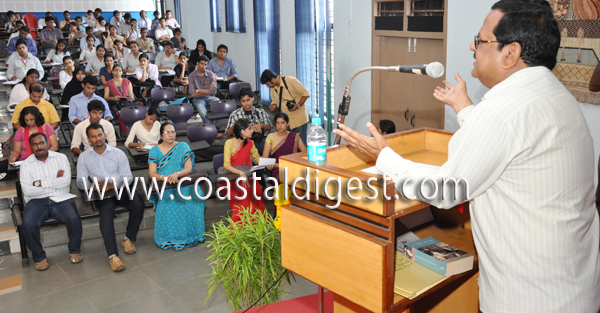
Mangalore, December 14: The achievement of Charles Dickens was to use the enormous power of popular fiction to communicate the largely negative critique of the transformation of British society through industrialisation, said Professor of English at Kuvempu University Dr Rajendra Chenni.


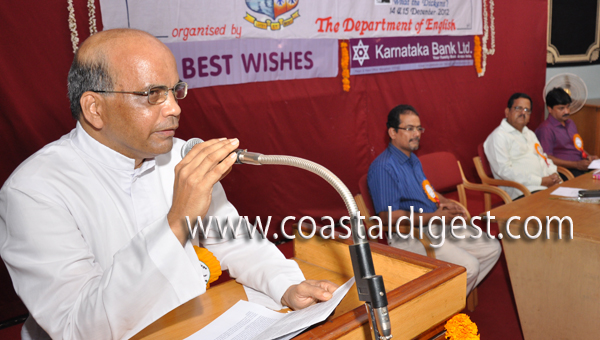
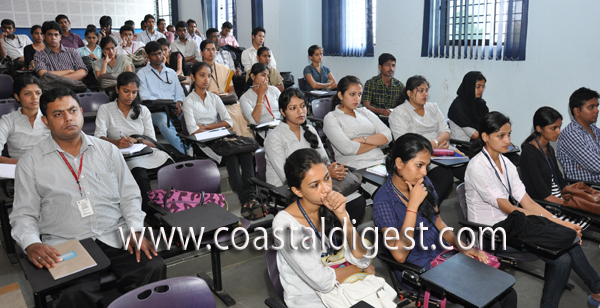
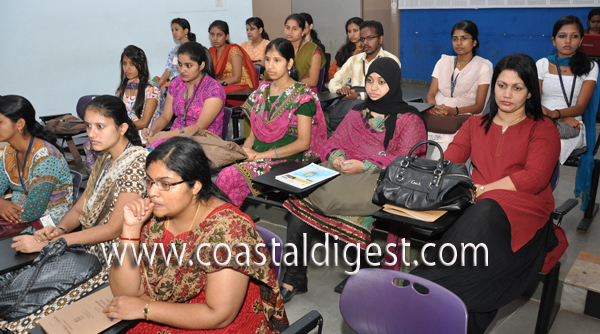
Delivering the keynote address at the inaugural ceremony of the two-day national seminar on 'Charles Dickens and Victorian England: What the Dickens?' organised by the Department of English, St Aloysius College (Autonomous), Mangalore, at Eric Mathais Hall on Friday, he said that writers were hugely aware of the social suffering among farmers, migrant workers and child labour during the Victorian times. Charles Dickens had a social conscience which made him use his writing to tell the evidence of untold human suffering and horrors of his time. He used the power of popular fiction to disseminate the critique of materialism, inequality and the affiliation between wealth and crime, which was evident during this period of prosperity, and shaped the attitude of his readers, he said.


Talking about how the society moulded his writing, he said that Dickens was a product of his age. The confluence of the unique historical and political factors created an environment for an author to emerge. It made Dickens not only possible, but also inevitable. He was a major representative and critic of his social times; inseparable from the society and his readers. His writing not only shaped the readers and himself, but his writing was also constantly shaped by his times, he said.


He said that it was then in the 18th century that a new kind of writing called 'fiction' emerged for the satisfaction of a new readership which was generated by the growing literacy.


In a life strewn with contradictions, Dickens had the will to participate and overcome them, which brought an end to his life, by burying himself in work, he added.


In his presidential address, principal of the college Fr Swebert D'Silva said that English took predominance over other languages in today's globalised world. Knowledge and proficiency over English is important for communication, especially for job interviews. It must be the focus of all activities in modern times. But sadly, the knowledge of English is decimally low in students today, he said.


Calling Charles Dickens as 'greatest novelist of the Victorian period', he said that it was only in the 20th century that his literary genius was fully recognised. His writing highlights the poverty of his time and brings contrast between the rich and the poor. Likewise, it is only when we write something relevant to the times, relevant to the poor and the downtrodden in the society, will our stories have takers. However, there is no point in lifting research material from other sources (for thesis). There should be an intellectual honesty and personal integrity within ourselves, he stressed.


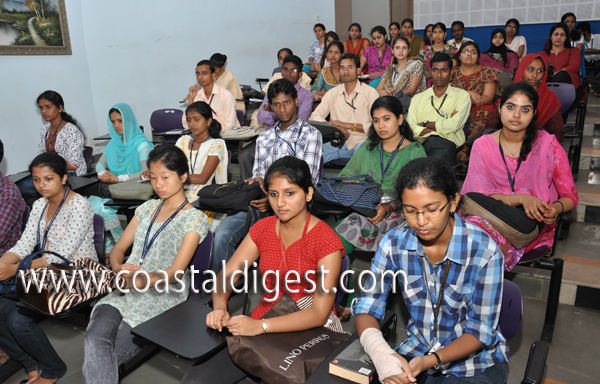
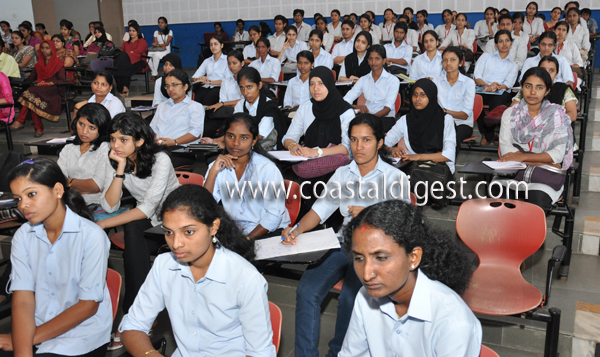
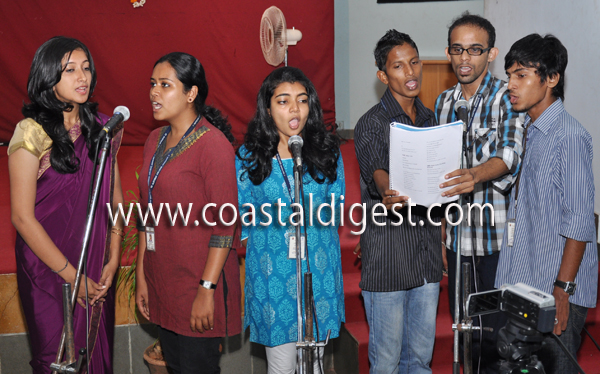
Organising secretary of the seminar Prof Alwyn D'Sa welcomed the gathering. Head of English Department Prof Ratan Tilak Mohunta made the introductory remarks. Joachim D'Silva delivered a vote of thanks.


Vice Principal Dr Ronald Pinto, Prof Judith Pinto, Dr A Lourduswamy, and Mr Girish were present on the occasion.

Aloys_1

Aloys_2

Aloys_3

Aloys_8

Aloys_10

Aloys_4

Aloys_11

Aloys_12

Aloys_13

Aloys_5

Aloys_6

Aloys_9

Comments

Add new comment

  • Coastaldigest.com reserves the right to delete or block any comments.
  • Coastaldigset.com is not responsible for its readers’ comments.
  • Comments that are abusive, incendiary or irrelevant are strictly prohibited.
  • Please use a genuine email ID and provide your name to avoid reject.
News Network
December 1,2025

hindutvaboy.jpg

Udupi, Dec 1: A horrific case of alleged rape has unfolded in Udupi, where a worker from a Hindutva organisation, previously arrested and released on bail for harassing a young woman, is now accused of waylaying and sexually assaulting her.

The arrested individual has been identified as Pradeep Poojary (26), a member of the Hindu Jagarana Vedike's Nairkode unit in Perdur.

Poojary had allegedly been relentlessly harassing the young woman, pressuring her to marry him. When she bravely stood up to him and refused his demands, she filed a formal complaint at the Hiriyadka police station. He was subsequently arrested in that initial harassment case but was later granted bail.

According to police reports, driven by the same malicious grudge, Poojary allegedly intercepted the woman again on November 29. While she was walking through a deserted area, the accused is claimed to have threatened her by grabbing her neck. When she again refused to marry him, he allegedly proceeded to rape her.

The survivor immediately informed her family about the traumatic assault. Following this, her parents lodged a complaint at the Udupi women’s police station.

Police arrested Poojary again and produced him before the court. He has since been remanded to judicial custody.

Comments

Add new comment

  • Coastaldigest.com reserves the right to delete or block any comments.
  • Coastaldigset.com is not responsible for its readers’ comments.
  • Comments that are abusive, incendiary or irrelevant are strictly prohibited.
  • Please use a genuine email ID and provide your name to avoid reject.
News Network
December 7,2025

SHRIMP.jpg

Mangaluru, Dec 7: A rare bamboo shrimp has been rediscovered on mainland India more than 70 years after it was last reported, confirming for the first time the presence of Atyopsis spinipes in the country. The find was made by researchers from the Centre for Climate Change Studies at Sathyabama Institute of Science and Technology, Chennai, during surveys in Karnataka and Odisha.

The team — shrimp expert Dr S Prakash, PhD scholar K Kunjulakshmi, and Mangaluru-based researcher Maclean Antony Santos — combined field surveys, ecological assessments and DNA analysis to identify the elusive species. Their findings, published in Zootaxa, resolve decades of taxonomic confusion stemming from a 1951 report that misidentified the species as Atyopsis moluccensis without strong evidence.

The shrimp has now been confirmed at two locations: the Mulki–Pavanje estuary near Mangaluru and the Kuakhai River in Bhubaneswar. Historical specimens from the Andaman Islands, previously labelled as A. moluccensis, were also found to be misidentified and actually belong to A. spinipes.

The rediscovery began after an aquarium hobbyist in Odisha spotted a shrimp in 2022, prompting systematic surveys across Udupi, Karwar and Mangaluru. Four female specimens were collected in Mulki and one in Odisha, all genetically matching.

Researchers warn the species may exist in very small, vulnerable populations as freshwater habitats face increasing pressure from pollution, sand mining and infrastructure development. All verified specimens have been deposited with the Zoological Survey of India for future reference.

Comments

Add new comment

  • Coastaldigest.com reserves the right to delete or block any comments.
  • Coastaldigset.com is not responsible for its readers’ comments.
  • Comments that are abusive, incendiary or irrelevant are strictly prohibited.
  • Please use a genuine email ID and provide your name to avoid reject.
News Network
December 4,2025

Mangaluru: Chaos erupted at Mangaluru International Airport (MIA) after IndiGo flight 6E 5150, bound for Mumbai, was repeatedly delayed and ultimately cancelled, leaving around 100 passengers stranded overnight. The incident highlights the ongoing country-wide operational disruptions affecting the airline, largely due to the implementation of new Flight Duty Time Limitations (FDTL) norms for crew.

The flight was initially scheduled for 9:25 PM on Tuesday but was first postponed to 11:40 PM, then midnight, before being cancelled around 3:00 AM. Passengers expressed frustration over last-minute communication and the lack of clarity, with elderly and ailing travellers particularly affected. “Though the airline arranged food, there was no proper communication, leaving us confused,” said one family member.

An IndiGo executive at MIA cited the FDTL rules, designed to prevent pilot fatigue by limiting crew working hours, as the cause of the cancellation. While alternative arrangements, including hotel stays, were offered, about 100 passengers chose to remain at the airport, creating tension. A replacement flight was arranged but also faced delays due to the same constraints, finally departing for Mumbai around 1:45 PM on Wednesday. Passengers either flew, requested refunds, or postponed their travel.

The Mangaluru delay is part of a broader crisis for IndiGo. The airline has been forced to make “calibrated schedule adjustments”—a euphemism for widespread cancellations and delays—after stricter FDTL norms came into effect on November 1.

While an IndiGo spokesperson acknowledged unavoidable flight disruptions due to technology issues, operational requirements, and the updated crew rostering rules, the DGCA has intervened, summoning senior airline officials to explain the chaos and outline corrective measures.

The ripple effect has been felt across the country, with major hubs like Bengaluru and Mumbai reporting numerous cancellations. The Mangaluru incident underscores the systemic operational strain currently confronting India’s largest carrier, leaving passengers nationwide grappling with uncertainty and delays.

Comments

Add new comment

  • Coastaldigest.com reserves the right to delete or block any comments.
  • Coastaldigset.com is not responsible for its readers’ comments.
  • Comments that are abusive, incendiary or irrelevant are strictly prohibited.
  • Please use a genuine email ID and provide your name to avoid reject.