Innovative treatment for blocked arteries now available in Mangalore

[email protected] (Press Release)
October 24, 2013
Aj_Hospital_Mangalore_1

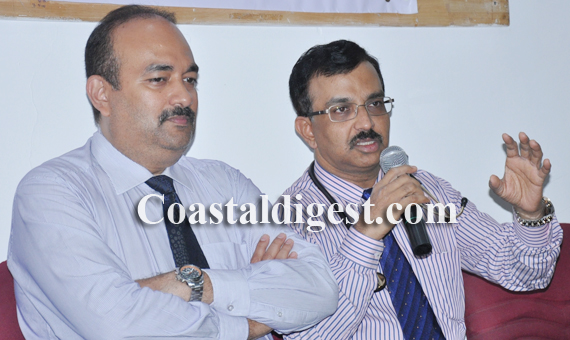
Mangalore, Oct 24: 29 year old Raakesh Shetty(name changed) recently married, is a smoker with no previous history of heart condition. He was wheeled into emergency at A.J.Hospital and Research Centre when he complained of uneasiness and chest pain. He was immediately taken to Cathlab when doctors confirmed he had a heart attack and needed immediate surgery. Doctors decided to implant novel treatment for clogged arteries – Bioresorbable Vascular Scaffold (BVS). Patient was discharged the next day and feels healthier today.

BVS is a groundbreaking device designed to restore blood flow by opening a clogged vessel and providing support while it heals. Once the vessel can remain open without the extra support, the bioresorbable scaffold is designed to be slowly metabolized and eventually dissolves into carbon dioxide and water in the body.

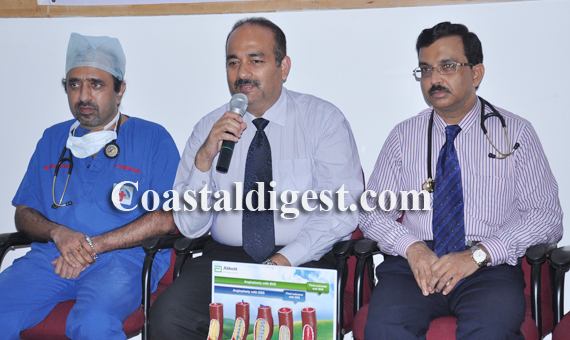
"Treatments for coronary artery disease have come a long way from the days of balloon angioplasties and metal stents. However, a dissolving stent like BVS is interesting as the clogged artery can be enlarged and supported effectively without the stent leaving any fragments behind in the blood stream." Explained Interventional Cardiologist, A.J.Hospital and Research Centre, Dr. B.V.Manjunath.”

For the first time in India, insurance is being provided to the patient with BVS. Insurance covers against the risk of re-do procedure: Percutaneous Transluminal Coronary Angioplasty(PTCA), Coronary Artery Bypass Graft (CABG)and Plain Old Balloon Angioplasty(POBA) in a patient where BVS is deployed. The sum assured per scaffold is 2 lakh which will cover hospitalization expenses. The cover is valid for 2 years from the date of implant.

Interventional Cardiologist, A.J.Hospital and Research Centre, Dr. R. Purushotham added “The device is made of polylactide, a proven biocompatible material that is commonly used in medical implants such as dissolving sutures. Since a permanent implant is not left behind, a vessel treated with a BVS ultimately may have the ability to move, flex and pulsate similar to an untreated vessel. The potential to restore these naturally occurring vessel functions, or vascular restoration, is one of the features that will make BVS unique in the treatment of coronary artery disease.”

Cardiovascular disease remains the leading cause of death globally and By 2030, almost 23.6 million people will die from cardiovascular disease every year. The largest increase in number of deaths will occur in the South- East Asia Region.

The average age of people with heart ailments is coming down. We are getting patients as young as 25 confirm Dr. B.V.Manjunath and Dr. R. Purushotham. With an ever-increasing number of young Indians suffering from heart diseases, a drastic change in lifestyle and eating habits is the need of the hour to tackle the alarming situation. Many of the young professionals today have odd working hours that leads to stress, and not many of them have the privilege of savouring home cooked meals. On top of it, the indulgence in smoking and drinking to “reduce the stress” worsens the situation. Such a lifestyle results in high blood pressure, obesity, diabetes, etc. leading to heart ailments.

About BVS (Bioresorbable Vascular Scaffold):

BVS is a first-of-its-kind device for the treatment of coronary artery disease (CAD). It works by restoring blood flow to the heart similar to a metallic stent, but then dissolves into the body, leaving behind a treated vessel that may resume more natural function and movement because it is free of a permanent metallic stent. The potential long-term benefits of a scaffold that dissolves are significant. The vessel may expand and contract as needed to increase the flow of blood to the heart in response to normal activities such as exercising; treatment and diagnostic options are broadened; the need for long-term treatment with anti-clotting medications may be reduced; and future interventions would be unobstructed by a permanent implant.

Aj_Hospital_Mangalore_2

Comments

Add new comment

  • Coastaldigest.com reserves the right to delete or block any comments.
  • Coastaldigset.com is not responsible for its readers’ comments.
  • Comments that are abusive, incendiary or irrelevant are strictly prohibited.
  • Please use a genuine email ID and provide your name to avoid reject.
News Network
December 4,2025

Udupi: A 40-year-old NRI from Udupi has reportedly lost more than Rs 12.25 lakh in an online investment scam operated through Telegram.

According to a complaint filed at the CEN police station, Leo Jerome Mendonsa, who has been working in Dubai for the past 15 years in computer accessories sales, maintains NRI accounts in Karkala and Nitte.

On November 12, 2025, Mendonsa was added to a Telegram group called Instaflow Earnings by unknown individuals. Users identified as Priya and Dipannita persuaded him to invest in “Revenue Tasks.” Initially, Mendonsa transferred Rs 1,100 multiple times and received the promised returns, encouraging him to continue.

On November 14, another user, Nishmitha Shetty, directed him to register on a website, digitvisionuoce.cc, and invest Rs 4 lakh in various shares. Over the next few days, he made multiple transfers totaling Rs 12,25,000, including Rs 50,000 via Google Pay, believing the scheme was legitimate.

After receiving the money, the alleged handlers stopped responding, and neither the invested amount nor the promised profits were returned.

The CEN police have registered a case under Sections 66(C) and 66(D) of the IT Act and Section 318(4) of the Bharatiya Nyaya Sanhita (BNS), and investigations are ongoing.

Comments

Add new comment

  • Coastaldigest.com reserves the right to delete or block any comments.
  • Coastaldigset.com is not responsible for its readers’ comments.
  • Comments that are abusive, incendiary or irrelevant are strictly prohibited.
  • Please use a genuine email ID and provide your name to avoid reject.
News Network
December 7,2025

SHRIMP.jpg

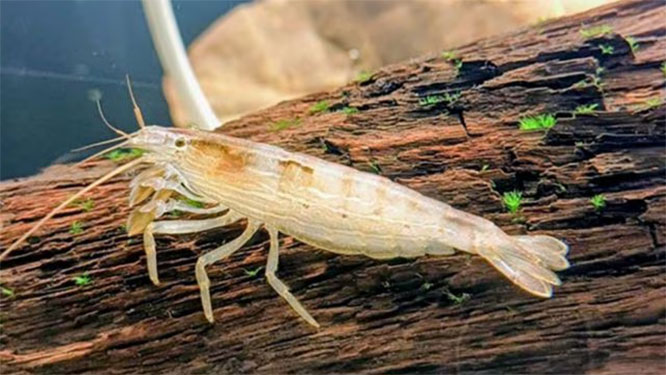
Mangaluru, Dec 7: A rare bamboo shrimp has been rediscovered on mainland India more than 70 years after it was last reported, confirming for the first time the presence of Atyopsis spinipes in the country. The find was made by researchers from the Centre for Climate Change Studies at Sathyabama Institute of Science and Technology, Chennai, during surveys in Karnataka and Odisha.

The team — shrimp expert Dr S Prakash, PhD scholar K Kunjulakshmi, and Mangaluru-based researcher Maclean Antony Santos — combined field surveys, ecological assessments and DNA analysis to identify the elusive species. Their findings, published in Zootaxa, resolve decades of taxonomic confusion stemming from a 1951 report that misidentified the species as Atyopsis moluccensis without strong evidence.

The shrimp has now been confirmed at two locations: the Mulki–Pavanje estuary near Mangaluru and the Kuakhai River in Bhubaneswar. Historical specimens from the Andaman Islands, previously labelled as A. moluccensis, were also found to be misidentified and actually belong to A. spinipes.

The rediscovery began after an aquarium hobbyist in Odisha spotted a shrimp in 2022, prompting systematic surveys across Udupi, Karwar and Mangaluru. Four female specimens were collected in Mulki and one in Odisha, all genetically matching.

Researchers warn the species may exist in very small, vulnerable populations as freshwater habitats face increasing pressure from pollution, sand mining and infrastructure development. All verified specimens have been deposited with the Zoological Survey of India for future reference.

Comments

Add new comment

  • Coastaldigest.com reserves the right to delete or block any comments.
  • Coastaldigset.com is not responsible for its readers’ comments.
  • Comments that are abusive, incendiary or irrelevant are strictly prohibited.
  • Please use a genuine email ID and provide your name to avoid reject.
News Network
December 4,2025

Mangaluru: Chaos erupted at Mangaluru International Airport (MIA) after IndiGo flight 6E 5150, bound for Mumbai, was repeatedly delayed and ultimately cancelled, leaving around 100 passengers stranded overnight. The incident highlights the ongoing country-wide operational disruptions affecting the airline, largely due to the implementation of new Flight Duty Time Limitations (FDTL) norms for crew.

The flight was initially scheduled for 9:25 PM on Tuesday but was first postponed to 11:40 PM, then midnight, before being cancelled around 3:00 AM. Passengers expressed frustration over last-minute communication and the lack of clarity, with elderly and ailing travellers particularly affected. “Though the airline arranged food, there was no proper communication, leaving us confused,” said one family member.

An IndiGo executive at MIA cited the FDTL rules, designed to prevent pilot fatigue by limiting crew working hours, as the cause of the cancellation. While alternative arrangements, including hotel stays, were offered, about 100 passengers chose to remain at the airport, creating tension. A replacement flight was arranged but also faced delays due to the same constraints, finally departing for Mumbai around 1:45 PM on Wednesday. Passengers either flew, requested refunds, or postponed their travel.

The Mangaluru delay is part of a broader crisis for IndiGo. The airline has been forced to make “calibrated schedule adjustments”—a euphemism for widespread cancellations and delays—after stricter FDTL norms came into effect on November 1.

While an IndiGo spokesperson acknowledged unavoidable flight disruptions due to technology issues, operational requirements, and the updated crew rostering rules, the DGCA has intervened, summoning senior airline officials to explain the chaos and outline corrective measures.

The ripple effect has been felt across the country, with major hubs like Bengaluru and Mumbai reporting numerous cancellations. The Mangaluru incident underscores the systemic operational strain currently confronting India’s largest carrier, leaving passengers nationwide grappling with uncertainty and delays.

Comments

Add new comment

  • Coastaldigest.com reserves the right to delete or block any comments.
  • Coastaldigset.com is not responsible for its readers’ comments.
  • Comments that are abusive, incendiary or irrelevant are strictly prohibited.
  • Please use a genuine email ID and provide your name to avoid reject.