Eid-ul-Fitr 2019: A few facts you need to know

News Network
June 5, 2019

As Muslims around the world bid Ramadan farewell, they also prepare for Eid-ul-Fitr, the festival marking the end of the Muslim holy month.

Depending on the sighting of the moon, Eid celebrations will begin either on Tuesday (June 4) or Wednesday (June 5).

Saudi Arabia, Kuwait, Qatar and the UAE started Eid on Tuesday, whereas Egypt, Syria, Jordan, Indonesia, Japan, Malaysia, Thailand, Pakistan and Australia and others won't start till Wednesday.

What is Eid-ul-Fitr?

Eid al-Fitr means "festival of breaking the fast" and marks the end of the fasting month of Ramadan.

Traditionally, Eid is celebrated for three days as an official holiday in all Muslim-majority countries. However, the number of vacation days varies by country.

How is the start of Eid determined?

Like Ramadan, Eid-ul-Fitr begins with the first sighting of the new moon, so usually Muslims have to wait until the night before Eid to verify its date. 

If the new moon is not visible, the month lasts 30 days. 

Because it is a lunar occurrence, the date of Eid changes annually on the Gregorian calendar and varies from country to country depending on geographical location.

To declare the start of Eid, Muslim-majority countries depend on the testimonies of local moon sighters. The Judicial High Court then decides if Eid has arrived.

When the sighting has been verified, Eid is declared on televisions, radio stations and at mosques.

How do Muslims celebrate Eid?

Muslims across the world begin Eid celebrations by partaking in communal dawn prayers, followed by a short sermon. 

While in some countries the prayers take place in mosques or large halls, in many countries it is also held in the open.

People congratulate one another as they head home after Eid prayers. They spend the day visiting relatives and neighbours and accepting sweets as they move around from house to house. Children, dressed in new clothes, are offered gifts and money to celebrate the joyous occasion.

This is preceded by the giving of alms to the poor, or zakat, which is one of the five pillars of Islam.

It is common for the capitals of Muslim-majority countries to decorate their streets with festive lights and hold carnivals to commemorate the end of the holy month. 

Each country has traditional desserts and sweets that are prepared before Eid or on the morning of the first day. These foods range from special biscuits and bread to cakes and puddings.

On the first day of Eid-ul-Fitr, voluntary fasting is not allowed as Muslims are encouraged to feast and celebrate the completion of a month of worship and abstinence from food.

In some countries, families visit graveyards to offer their respects to family members who have departed.

What are common Eid greetings?

The most popular greeting is "Eid Mubarak" (Blessed Eid) or "Eid sa'id" (Happy Eid).

Eid greetings also vary depending on the country and language.

For instance, in Indonesia, Eid is called Lebaran, so Indonesians would say, "Selamat Lebaran", which means Happy Eid. Other variations of Happy Eid are "Mutlu Bayramlar" in Turkish and "Barka da Sallah" in Hausa, a Nigerian language.

What are other traditions associated with Eid?

Each country has a set of customs associated with Eid. 

Generally, Muslims prepare for Eid prayer by bathing, preparing themselves and dressing in new clothes.

Clothes are an important marker of Eid. Whether people choose to wear traditional or modern, Western, clothes, all must be well turned-out.

Muslims are also encouraged to eat something sweet, usually dates, before heading to the Eid prayers.

On their way to the prayer, traditionally held in an open area, Muslims recite takbeerat, praising God by saying "Allahu Akbar", meaning God is great.

Throughout the day, family elders distribute cash or gifts to the children.

Comments

Add new comment

  • Coastaldigest.com reserves the right to delete or block any comments.
  • Coastaldigset.com is not responsible for its readers’ comments.
  • Comments that are abusive, incendiary or irrelevant are strictly prohibited.
  • Please use a genuine email ID and provide your name to avoid reject.
News Network
December 15,2025

Udupi, Dec 15: What was meant to be a post-pilgrimage gathering turned tragic in Padukere village of Brahmavar taluk, Udupi district, late Sunday night, when a clash among youths escalated into a fatal assault, leaving one man dead.

The victim has been identified as 30-year-old Santosh Mogaveera, a resident of Padukere.

According to preliminary information, the incident took place during a late-night drinking party involving a group of local youths who had recently returned after completing their pilgrimage to the Sabarimala shrine. An argument reportedly broke out among the group and soon escalated into a violent confrontation.

During the ensuing brawl, Santosh Mogaveera was allegedly assaulted and collapsed at the spot after sustaining serious injuries. He was rushed by local residents to a private hospital in Brahmavar, where doctors declared him dead.

On receiving information, senior police officials, including Brahmavar Circle Inspector Gopikrishna, Kota Police Sub-Inspector Praveen Kumar T, Station ASI Manthesh Jabagoudar, and head constables Pradeep and Ashok, visited the spot and conducted an inspection.

Police have taken four youths into custody in connection with the incident. A case has been registered at the Kota police station, and further investigation is underway to ascertain the exact sequence of events leading to the death.

Comments

Add new comment

  • Coastaldigest.com reserves the right to delete or block any comments.
  • Coastaldigset.com is not responsible for its readers’ comments.
  • Comments that are abusive, incendiary or irrelevant are strictly prohibited.
  • Please use a genuine email ID and provide your name to avoid reject.
News Network
December 15,2025

Mangaluru police have arrested a 27-year-old NRI on his return from Saudi Arabia in connection with an Instagram post allegedly containing derogatory and provocative remarks about the Hindu religion, officials said on Monday.

The accused, Abdul Khader Nehad, a resident of Ulaibettu in Mangaluru, was working in Saudi Arabia when the post was uploaded, police said.

A suo motu case was registered at the Bajpe police station on October 11 after an allegedly offensive post circulated from the Instagram account ‘team_sdpi_2025’. Police said the content was flagged for being provocative and derogatory in nature.

During the investigation, technical analysis traced the Instagram post to Nehad, who was residing abroad at the time, a senior police officer said. Based on these findings, a Look Out Circular (LOC) was issued against him.

On December 14, Nehad arrived from Saudi Arabia at Calicut International Airport in Kerala, where he was taken into custody on arrival. Police said further investigation is underway.

Comments

Add new comment

  • Coastaldigest.com reserves the right to delete or block any comments.
  • Coastaldigset.com is not responsible for its readers’ comments.
  • Comments that are abusive, incendiary or irrelevant are strictly prohibited.
  • Please use a genuine email ID and provide your name to avoid reject.
News Network
December 7,2025

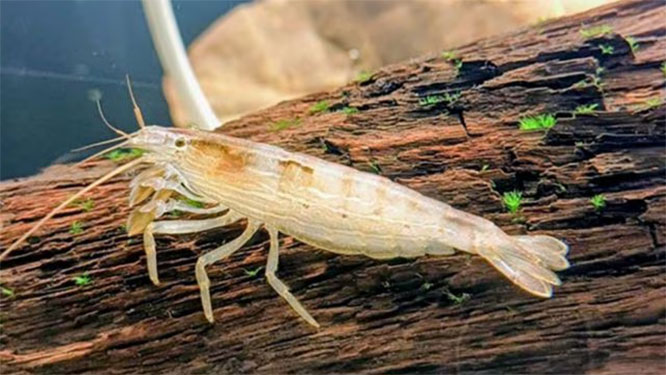
SHRIMP.jpg

Mangaluru, Dec 7: A rare bamboo shrimp has been rediscovered on mainland India more than 70 years after it was last reported, confirming for the first time the presence of Atyopsis spinipes in the country. The find was made by researchers from the Centre for Climate Change Studies at Sathyabama Institute of Science and Technology, Chennai, during surveys in Karnataka and Odisha.

The team — shrimp expert Dr S Prakash, PhD scholar K Kunjulakshmi, and Mangaluru-based researcher Maclean Antony Santos — combined field surveys, ecological assessments and DNA analysis to identify the elusive species. Their findings, published in Zootaxa, resolve decades of taxonomic confusion stemming from a 1951 report that misidentified the species as Atyopsis moluccensis without strong evidence.

The shrimp has now been confirmed at two locations: the Mulki–Pavanje estuary near Mangaluru and the Kuakhai River in Bhubaneswar. Historical specimens from the Andaman Islands, previously labelled as A. moluccensis, were also found to be misidentified and actually belong to A. spinipes.

The rediscovery began after an aquarium hobbyist in Odisha spotted a shrimp in 2022, prompting systematic surveys across Udupi, Karwar and Mangaluru. Four female specimens were collected in Mulki and one in Odisha, all genetically matching.

Researchers warn the species may exist in very small, vulnerable populations as freshwater habitats face increasing pressure from pollution, sand mining and infrastructure development. All verified specimens have been deposited with the Zoological Survey of India for future reference.

Comments

Add new comment

  • Coastaldigest.com reserves the right to delete or block any comments.
  • Coastaldigset.com is not responsible for its readers’ comments.
  • Comments that are abusive, incendiary or irrelevant are strictly prohibited.
  • Please use a genuine email ID and provide your name to avoid reject.