



Standard and poor? SCs, STs in Kerala, Tamil Nadu better off than others

May 6, 2012
TH14_census_NET_jpg_950870f
New Delhi, May 6: New census data on asset ownership among different social groups has shown that a far higher proportion of scheduled castes and higher still of scheduled tribes do not own basic consumer durables like a phone or bicycle as compared to "others".

Three states however buck this trend; across caste groupings in Punjab, Kerala and Tamil Nadu, the rate of ownership of basic consumer durables is high. In fact, the asset ownership rate for scheduled castes in these three states is better than that of OBCs and upper castes in all other states.

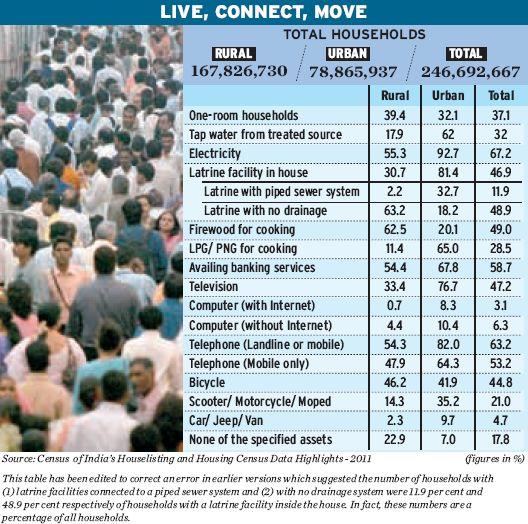
Newly released census 2011 data shows that while 17.8% of households across India do not own a phone, computer, TV, radio, bicycle or any vehicle, this proportion is 22.6% for scheduled castes, 37.3% for scheduled tribes and 14% for "others".

While more than half of "others" own a television, less than a quarter of scheduled tribes own a TV. Less than 2% of SC families own a TV, phone, computer and some mode of transportation, the usual signifiers of a "middle class" Indian family.

This new data fits in with the argument that economist and Indian Council of Social Science Research chairman Sukhadeo Thorat has been making. Thorat is critical of the view that economic liberalization has narrowed the gap between scheduled castes and others.

Yes, poverty is declining, but the rate of decline of poverty is much lower for the Scheduled Castes and Scheduled Tribes than for upper castes. There has undoubtedly been growth, but SCs and STs are not getting to participate equally in it," Thorat says.

There is considerable regional variation in the new census data.

Scheduled tribes are worst off in Madhya Pradesh, followed by in Rajasthan, Tripura and Maharashtra, where over 40% of STs do not own any basic consumer durable. Dalits are worst off in Bihar, Madhya Pradesh, Jharkhand and Orissa, where a third do not own any such asset. Unlike with the SCs, asset ownership for STs is worse than other social groups in all states.

While poverty among STs is fairly widespread across all states with a significant ST population, Kerala, Tamil Nadu and Punjab are the only states where the proportion of SCs who do not own basic assets is around 10% or lower, lowest of all in Tamil Nadu. Asset ownership among SCs in these three states is higher than that among "others" in all other states.

While part of the explanation for Tamil Nadu's status as the best state for dalit asset ownership might be that the previous state government ran a scheme giving free television sets to poor households, this is not the only explanation, as ownership of other consumer durables like phones and computers is also among the highest in TN. In comparison, in Bihar, where the state government ran a scheme to give all school-going girls a free cycle, less than half of all households own a bicycle.

Research by Institute of Applied Manpower Research director-general Santosh Mehrotra has shown that the human development indicators of SCs and OBCs in Kerala and Tamil Nadu are better than those of upper castes in Uttar Pradesh and Bihar. Moreover, all four states have a similar proportion of 'backward castes' in their population: so the key determinant of each of these states' human development situation is not its caste composition, but its politics and governance, Mehrotra says.

"A combination of social mobilization and good governance has lifted all boats in Kerala and Tamil Nadu," Mehrotra said. Social mobilization alone is not enough, Mehrotra adds, or the last twenty years in Uttar Pradesh would have led to tangible outcomes like improvement in health and nutrition, and not just intangibles like dignity and a sense of empowerment, as important as they are.

Comments

Add new comment

  • Coastaldigest.com reserves the right to delete or block any comments.
  • Coastaldigset.com is not responsible for its readers’ comments.
  • Comments that are abusive, incendiary or irrelevant are strictly prohibited.
  • Please use a genuine email ID and provide your name to avoid reject.
News Network
December 3,2025

indigo.jpg

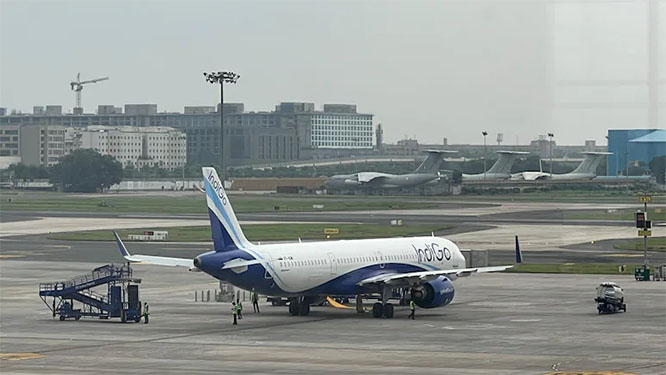
IndiGo, India’s largest airline, is battling one of its worst operational disruptions in recent years, with hundreds of delays and cancellations throwing domestic travel into chaos.

Government data on Tuesday showed its on-time performance plunging to 35%, an unusual dip for a carrier long associated with punctuality.

By Wednesday afternoon, airports in Delhi, Mumbai, Bengaluru and Hyderabad had collectively reported close to 200 cancellations, stranding travellers across the country.

Crew Shortage After New Duty Norms

A major trigger behind the meltdown is a severe crew shortage, especially among pilots, following the rollout of revised Flight Duty Time Limitation (FDTL) norms last month.

The rules mandate longer rest hours and more humane rosters — a shift IndiGo has struggled to incorporate across its vast network.

Sources said several flights were grounded due to lack of cabin crew, while some delays stretched upwards of eight hours.

With IndiGo controlling over 60% of India’s domestic aviation market, the ripple effect has impacted airports nationwide.

IndiGo Issues Apology, Lists “Compounding Factors”

In a statement, IndiGo acknowledged the large-scale disruption:

“We sincerely apologise to customers. A series of unforeseen operational challenges — technology glitches, winter schedule changes, adverse weather, system congestion and updated FDTL norms — created a compounding impact that could not have been anticipated.”

To stabilise operations, the airline has begun calibrated schedule adjustments for the next 48 hours, aiming to restore punctuality. Affected passengers are being offered refunds or alternate travel arrangements, IndiGo said.

What the FDTL Rules Require

The FDTL norms, designed to reduce pilot fatigue, cap duty and flying hours as follows:
•    Maximum 8 hours of flying per day
•    35 hours per week
•    125 hours per month
•    1,000 hours per year

Crew must also receive rest equalling twice the flight duration, with a minimum 10-hour rest period in any 24-hour window.

The DGCA introduced these limits to enhance flight safety.

Hyderabad: 33 Flights Cancelled, Long Queues Reported

Hyderabad’s Rajiv Gandhi International Airport saw heavy early-morning crowds as 33 IndiGo flights (arrivals and departures) were cancelled.

The airport clarified on X that operations were normal, advising passengers to contact IndiGo directly for latest flight status.

Cancellations included flights to and from Visakhapatnam, Goa, Ahmedabad, Delhi, Bengaluru, Chennai, Madurai, Hubli, Bhopal and Bhubaneswar.

Bengaluru: 42 Flights Disrupted

Bengaluru’s Kempegowda International Airport recorded 42 cancellations — 22 arrivals and 20 departures — affecting routes to Delhi, Mumbai, Chennai, Hyderabad, Goa, Kolkata and Lucknow.

Passengers Vent on Social Media

Irate travellers took to X to share their experiences. One passenger stranded in Hyderabad wrote: “I have been here since 3 a.m. and missed an important meeting.”

Another said: “My flight was pushed from 1:55 PM to 2:55 PM and now 4:35 PM. I was informed only three minutes before entering the airport.”

Delhi Airport Hit by Tech Glitch

At Delhi Airport, the disruption deepened due to a slowdown in the Amadeus system — used for reservations, check-ins and departure control.

The technical issue led to longer queues and sluggish processing, adding to delays already worsened by staff shortages.

Comments

Add new comment

  • Coastaldigest.com reserves the right to delete or block any comments.
  • Coastaldigset.com is not responsible for its readers’ comments.
  • Comments that are abusive, incendiary or irrelevant are strictly prohibited.
  • Please use a genuine email ID and provide your name to avoid reject.