



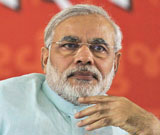
Gujarat riots: Probe Modi, says Supreme Court amicus curiae

May 7, 2012

narendra-modi

New Delhi/Ahmedabad, May 7: Gujarat Chief Minister Narendra Modi's role in the 2002 riots in the state should be probed, Raju Ramachandran, the amicus curiae appointed by the Supreme Court in the case, has said in his final report.

According to the report dated July 25, 2011 which was released Monday, there was a need for examining Modi's role in the wake of the Godhra train burning to find out whether a message was mesage was conveyed that the state machinery would not step in to prevent the communal riots that followed.

Ramachandran says the chairman of the Supreme Court-appointed Special Investigation Team (SIT) had found that a meeting had indeed taken place at Modi's residence at 11 p.m. on February 27, 2002 that was attended by senior bureaucrats and police officers.

The report terms as incorrect the claim of Indian Police Service officer Sanjiv Bhatt, the then Deputy Commissioner of Police (Intelligence), that he was present at the meeting.

Meanwhile, a court in Ahmedabad on Monday handed over a copy of the SIT report on the Gulbarg Society massacre to Zakia Jafri, a month after the SIT found no prosecutable evidence against Modi. The report is 25,000-pages long.

The court has asked Jafri to file an application on May 10 if she feels there are discrepancies in the report or that documents are incomplete. Jafri has asked for two months' time before arguments can begin in the case.

The SIT report had sought a closure in the probe as it found no evidence against Modi.

Zakia Jafri is the widow of former Congress MP Ehsan Jafri who was among 69 persons killed in the Gulbarg society carnage. She had named Modi and 57 others for alleged criminal conspiracy in the 2002 riots. Zakia has also been given a copy of the amicus curiae's report.

Comments

Add new comment

  • Coastaldigest.com reserves the right to delete or block any comments.
  • Coastaldigset.com is not responsible for its readers’ comments.
  • Comments that are abusive, incendiary or irrelevant are strictly prohibited.
  • Please use a genuine email ID and provide your name to avoid reject.
News Network
December 3,2025

indigo.jpg

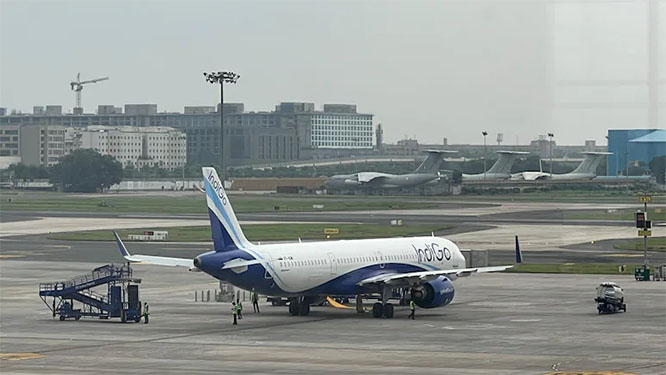
IndiGo, India’s largest airline, is battling one of its worst operational disruptions in recent years, with hundreds of delays and cancellations throwing domestic travel into chaos.

Government data on Tuesday showed its on-time performance plunging to 35%, an unusual dip for a carrier long associated with punctuality.

By Wednesday afternoon, airports in Delhi, Mumbai, Bengaluru and Hyderabad had collectively reported close to 200 cancellations, stranding travellers across the country.

Crew Shortage After New Duty Norms

A major trigger behind the meltdown is a severe crew shortage, especially among pilots, following the rollout of revised Flight Duty Time Limitation (FDTL) norms last month.

The rules mandate longer rest hours and more humane rosters — a shift IndiGo has struggled to incorporate across its vast network.

Sources said several flights were grounded due to lack of cabin crew, while some delays stretched upwards of eight hours.

With IndiGo controlling over 60% of India’s domestic aviation market, the ripple effect has impacted airports nationwide.

IndiGo Issues Apology, Lists “Compounding Factors”

In a statement, IndiGo acknowledged the large-scale disruption:

“We sincerely apologise to customers. A series of unforeseen operational challenges — technology glitches, winter schedule changes, adverse weather, system congestion and updated FDTL norms — created a compounding impact that could not have been anticipated.”

To stabilise operations, the airline has begun calibrated schedule adjustments for the next 48 hours, aiming to restore punctuality. Affected passengers are being offered refunds or alternate travel arrangements, IndiGo said.

What the FDTL Rules Require

The FDTL norms, designed to reduce pilot fatigue, cap duty and flying hours as follows:
•    Maximum 8 hours of flying per day
•    35 hours per week
•    125 hours per month
•    1,000 hours per year

Crew must also receive rest equalling twice the flight duration, with a minimum 10-hour rest period in any 24-hour window.

The DGCA introduced these limits to enhance flight safety.

Hyderabad: 33 Flights Cancelled, Long Queues Reported

Hyderabad’s Rajiv Gandhi International Airport saw heavy early-morning crowds as 33 IndiGo flights (arrivals and departures) were cancelled.

The airport clarified on X that operations were normal, advising passengers to contact IndiGo directly for latest flight status.

Cancellations included flights to and from Visakhapatnam, Goa, Ahmedabad, Delhi, Bengaluru, Chennai, Madurai, Hubli, Bhopal and Bhubaneswar.

Bengaluru: 42 Flights Disrupted

Bengaluru’s Kempegowda International Airport recorded 42 cancellations — 22 arrivals and 20 departures — affecting routes to Delhi, Mumbai, Chennai, Hyderabad, Goa, Kolkata and Lucknow.

Passengers Vent on Social Media

Irate travellers took to X to share their experiences. One passenger stranded in Hyderabad wrote: “I have been here since 3 a.m. and missed an important meeting.”

Another said: “My flight was pushed from 1:55 PM to 2:55 PM and now 4:35 PM. I was informed only three minutes before entering the airport.”

Delhi Airport Hit by Tech Glitch

At Delhi Airport, the disruption deepened due to a slowdown in the Amadeus system — used for reservations, check-ins and departure control.

The technical issue led to longer queues and sluggish processing, adding to delays already worsened by staff shortages.

Comments

Add new comment

  • Coastaldigest.com reserves the right to delete or block any comments.
  • Coastaldigset.com is not responsible for its readers’ comments.
  • Comments that are abusive, incendiary or irrelevant are strictly prohibited.
  • Please use a genuine email ID and provide your name to avoid reject.