



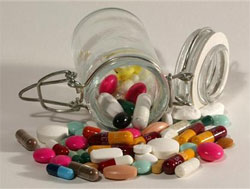
India to give free medicine to hundreds of millions

July 5, 2012

free-medicine

Mumbai, July 5: India has put in place a $5.4 billion policy to provide free medicine to its people, a decision that could change the lives of hundreds of millions, but a ban on branded drugs stands to cut Big Pharma out of the windfall.

e price of drugs is just one factor in access to healthcare and that the scheme need not be detrimental to manufacturers of branded drugs.

"I think this will hasten overall growth of the pharmaceutical industry, as poor patients who could not afford will now have access to essential medicines," said Tapan Ray, director general of OPPI.

About 600 billion rupees in drugs are sold each year in India, or 482 billion at wholesale. Drugs covered under the new policy account for about 60 percent of existing sales, or 290 billion rupees at wholesale cost.

The government's annual cost is likely to be lower due to bulk purchasing and because patients at private clinics would still pay for their own drugs. States will pay for 25 percent of the free drugs and the central government will cover the rest.

Under various existing programmes, around 250 million people, or less than a quarter of India's population, now receive free medicines, according to the health ministry.

India's new policy, to be implemented by the end of 2012 and rolled out nationwide within two years, is expected to provide 52 percent of the population with free drugs by April 2017, at a cumulative cost of 300 billion rupees.

That requires a major funding ramp-up from a deficit-strapped government. The scheme has been granted just 1 billion rupees thus far from central government coffers.

STRICT INSTRUCTIONS

Public doctors will be able to spend 5 percent of the budget, equivalent to around $50 million a year, on drugs outside of the government's list, on branded drugs or on medicines that are not on the list. Beyond that, they can be punished, said Goyal, the health ministry official.

"If doctors are found to be prescribing medicines which are not on the list, or which are branded, then disciplinary action will be initiated," he said.

Free medicine is just one solution to better healthcare in India, where just getting to a state clinic can require a long journey.

Swapnil Yadav, who runs a clinic in Ambegaon, a village 170 km (105 miles) southeast of Mumbai, said India should set up free drug retailers instead of government clinics.

"Patients can approach a private clinic and then get free medicines from government-run medicine shops," he said.

The free generics scheme, which mirrors policies in the states of Tamil Nadu and Rajasthan, is expected to be fully operational by the time voters go to the polls for the 2014 general election, when the populist Congress party will seek a third straight victory.

Indian makers of generics such as Dr Reddy's and Cipla are best placed to benefit.

"The move will please the generics manufacturers who stand to gain substantially in competing for contracts," said KPMG's Stirling.

Comments

Add new comment

  • Coastaldigest.com reserves the right to delete or block any comments.
  • Coastaldigset.com is not responsible for its readers’ comments.
  • Comments that are abusive, incendiary or irrelevant are strictly prohibited.
  • Please use a genuine email ID and provide your name to avoid reject.
News Network
December 5,2025

indigoCEO.jpg

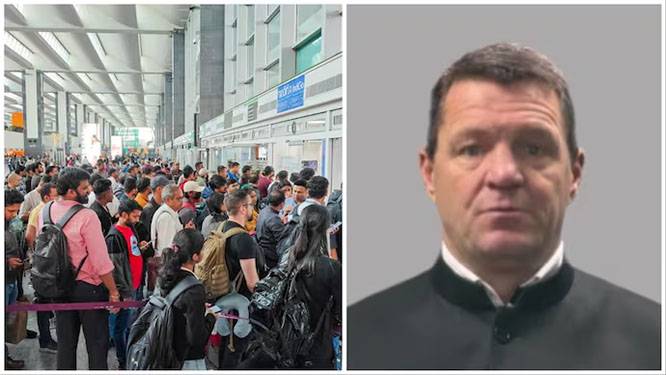
New Delhi, Dec 5: IndiGo CEO Pieter Elbers issued a public apology this evening after more than a thousand flights were cancelled today, making it the "most severely impacted day" in terms of cancellations. The biggest airline of the country cancelled "more than half" of its daily number of flights on Friday, said Elbers. He also said that even though the crisis will persist on Saturday, the airline anticipates fewer than 1,000 flight cancellations.

"Full normalisation is expected between December 10 and 15, though IndiGo cautions that recovery will take time due to the scale of operations," the IndiGo CEO said. 

IndiGo operates around 2,300 domestic and international flights daily.

Pieter Elbers, while apologising for the major inconvenience due to delays and cancellations, said the situation is a result of various causes.

The crisis at IndiGo stems from new regulations that boost pilots' weekly rest requirements by 12 hours to 48 and allow only two night-time landings per week, down from six. IndiGo has attributed the mass cancellations to "misjudgment and planning gaps".

Elbers also listed three lines of action that the airline will adopt to address the issue.

"Firstly, customer communication and addressing your needs, for this, messages have been sent on social media. And just now, a more detailed communication with information, refunds, cancellations and other customer support measures was sent," he said.

The airline has also stepped up its call centre capacity.

"Secondly, due to yesterday's situation, we had customers stranded mostly at the nation's largest airports. Our focus was for all of them to be able to travel today itself, which will be achieved. For this, we also ask customers whose flights are cancelled not to come to the airports as notifications are sent," the CEO said.

"Thirdly, cancellations were made for today to align our crew and planes to be where they need to start tomorrow morning afresh. Earlier measures of the last few days, regrettable, have proven not to be enough, but we have decided today to reboot all our systems and schedules, resulting in the highest numbers of cancellations so far, but imperative for progressive improvements starting from tomorrow," he added.

As airports witnessed chaotic scenes, the Directorate General of Civil Aviation (DGCA) stepped in to grant IndiGo a temporary exemption from stricter night duty rules for pilots. It also allowed substitution of leaves with a weekly rest period. 

Civil Aviation Minister Ram Mohan Naidu has said a high-level inquiry will be ordered and accountability will be fixed.

Comments

Add new comment

  • Coastaldigest.com reserves the right to delete or block any comments.
  • Coastaldigset.com is not responsible for its readers’ comments.
  • Comments that are abusive, incendiary or irrelevant are strictly prohibited.
  • Please use a genuine email ID and provide your name to avoid reject.
News Network
December 2,2025

A major upgrade in safety and monitoring is planned for Haj 2026, with every Indian pilgrim set to receive a Haj Suvidha smart wristband linked to the official Haj Suvidha mobile app. The initiative aims to support pilgrims—especially senior citizens—who may struggle with smartphones during the 45-day journey.

What the Smart Wristband Will Do

Officials said the device will come with:
•    Location tracking
•    Pedometer
•    SOS emergency button
•    Qibla compass
•    Prayer timings
•    Basic health monitoring

SP Tiwari, secretary of the UP State Haj Committee, said the goal is to make the pilgrimage safer and more comfortable.

“Most Hajis are elderly and not comfortable with mobile apps,” he said. “The smartwatch will help locate pilgrims who forget their way or cannot communicate their location.”

The wristbands will be monitored by the Consulate General of India in Saudi Arabia, similar to mobile tracking via the Haj Suvidha App.

Free Distribution and Training

•    Smart wristbands will be given free of cost.
•    Training for pilgrims will be conducted between January and February 2026.
•    Sample units will reach state Haj committees soon.
•    Final devices will be distributed as pilgrims begin their journey.

New Rules for Accommodation

Two major decisions have also been finalised for Haj 2026:
1.    Separate rooms for men and women – including married couples. They may stay on the same floor but must occupy different rooms, following stricter Saudi guidelines.
2.    Cooking banned – gas cylinders will not be allowed; all meals will be provided through official catering services arranged by the Haj Committee of India.

These decisions were finalised during a meeting of the Haj Committee of India and state representatives in Mumbai.

Haj Suvidha App Launched Earlier

The government launched the Haj Suvidha App in 2024, offering:

•    Training modules
•    Accommodation and flight details
•    Baggage information
•    SOS and translation tools
•    Grievance redressal

Haj 2026 Quota and Key States

•    India’s total Haj quota for 2026: 1,75,025 pilgrims
•    70% (1,25,000) allotted to the Haj Committee of India
•    30% (around 50,000) reserved for Haj Group Organisers

Uttar Pradesh has the largest allocation (around 30,000 seats), though approximately 18,000 pilgrims are expected to go this year. States with high pilgrim numbers include Kerala, Maharashtra and Gujarat.

Dates of Haj 2026

The pilgrimage is scheduled to take place from 24 May to 29 May, 2026 (tentative).
Haj is one of the five pillars of Islam and is mandatory for Muslims who meet the required conditions.

Comments

Add new comment

  • Coastaldigest.com reserves the right to delete or block any comments.
  • Coastaldigset.com is not responsible for its readers’ comments.
  • Comments that are abusive, incendiary or irrelevant are strictly prohibited.
  • Please use a genuine email ID and provide your name to avoid reject.