Northern India hit by one of the worst power breakdowns

July 30, 2012

power

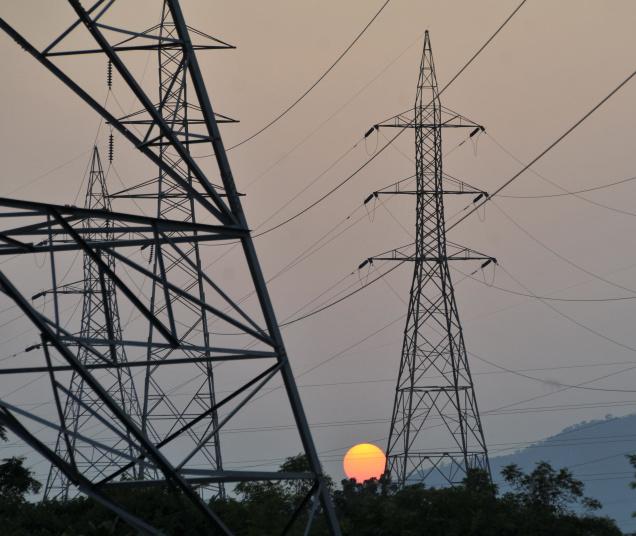
New Delhi, July 30: In what was one of the worst power breakdowns in the country, the Northern Grid crashed early Monday morning plunging eight states into complete darkness, disrupting inter-state train services, adversely hitting health services and impacting millions of lives.

The tripping of the 400 KV Bina-Gwalior line, which flows into Agra-Bareilly at 2.35 a.m. wreaked havoc on the power generation and transmission systems leading to shut down of all major power plants including hydro power stations in the States of Punjab, Haryana, Rajasthan, Delhi, Uttrakhand, Himachal Pradesh, Jammu and Kashmir and the Union Territory of Chandigarh, which are all a part of the Northern Grid.

The immediate impact of the grid collapse was the shortage of around 32,000 MW of power. The last such collapse of the Northern Grid, which caters to around 28 per cent of the country’s population, took place in 2001. India currently faces around 8 to 12 per cent peak power deficit, according to the Central Electricity Authority (CEA).

The massive shutdown had a crippling effect on inter-state passenger and goods trains that came to a screeching halt. Early morning office goers and school children had a harrowing time as traffic signals went on the blink leading to traffic chaos in the affected States including the Capital Delhi.

Hospitals too had to scurry around for alternatives and back up supply. A majority of the hospitals claimed to have alternate supply arrangements, yet reports of services being disrupted trickled in from several places.

Operations at the major oil refineries in Panipat, Mathura and Bhatinda remained unaffected as these facilities have their own captive power plants and do not rely on the grid for supply.

While Power Minister, Sushil Kumar Shinde said he could not pin point the exact reason for the collapse, PGCIL and Northern Region Load Despatch Centre officials said that it was rampant overdrawal by Uttar Pradesh, Punjab and Haryana that led to the collapse that in turn paralysed services.

The last time the grid collapse occurred was in 2001, it has happened now after 10 years. At that time, the power breakdown took place at midnight and normalcy was restored by 4.30 pm.

PGCIL chairman and managing director, R.N. Nayak said the situation had been restored to normal by 4 pm. The Northern grid was generating around 29000 MW of power by late evening, which was about 2000 MW of the peak demand.

Hit by the sudden collapse of the grid system, the Power Grid Corporation of India Limited (PGCIL) officials swung into action with Mr. Nayak and his team of officials reaching their monitoring centre at 3 a.m. to assess the situation and work on a rescue package. By 8 a.m., PGCIL officials claimed to have restored around 40 per cent of power.

To run essential services, supply was diverted from the Western and Eastern Grids to the Northern region. Hydro power was also imported from the mountain kingdom of Bhutan to meet the deficit.

While he could not offer an explanation on what caused the collapse, Mr. Nayak said the agencies involved were at least “quick at restoring normalcy in a record time”.

Comments

Add new comment

  • Coastaldigest.com reserves the right to delete or block any comments.
  • Coastaldigset.com is not responsible for its readers’ comments.
  • Comments that are abusive, incendiary or irrelevant are strictly prohibited.
  • Please use a genuine email ID and provide your name to avoid reject.
News Network
December 4,2025

indigoflight.jpg

Domestic carrier IndiGo has cancelled over 180 flights from three major airports — Mumbai, Delhi and Bengaluru — on Thursday, December 4, as the airline struggles to secure the required crew to operate its flights in the wake of new flight-duty and rest-period norms for pilots.

While the number of cancellations at Mumbai airport stands at 86 (41 arrivals and 45 departures) for the day, at Bengaluru, 73 flights have been cancelled, including 41 arrivals, according to a PTI report that quoted sources.

"IndiGo cancelled over 180 flights on Thursday at three airports-Mumbai, Delhi and Bengaluru," the source told the news agency.

Besides, it had cancelled as many as 33 flights at Delhi airport for Thursday, the source said, adding, "The number of cancellations is expected to be higher by the end of the day."

The Gurugram-based airline's On-Time Performance (OTP) nosedived to 19.7 per cent at six key airports — Delhi, Mumbai, Chennai, Kolkata, Bengaluru and Hyderabad — on December 3, as it struggled to get the required crew to operate its services, down from almost half of December 2, when it was 35 per cent.

"IndiGo has been facing acute crew shortage since the implementation of the second phase of the FDTL (Flight Duty Time Limitations) norms, leading to cancellations and huge delays in its operations across the airports," a source had told PTI on Wednesday.

Chaos continued at several major airports for the third day on Thursday because of the cancellations.

A spokesperson for the Kempegowda International Airport (KIA) in Bengaluru said that 73 IndiGo flights had been cancelled on Thursday.

At least 150 flights were cancelled and dozens of others delayed on Wednesday, airport sources said, leaving thousands of travellers stranded, according to news agency Reuters.

The Directorate General of Civil Aviation (DGCA) has said it is investigating IndiGo flight disruptions and has asked the airline to submit the reasons for the current situation, as well as its plans to reduce flight cancellations and delays.

It may be mentioned here that the pilots' body, Federation of Indian Pilots (FIP), has alleged that IndiGo, despite getting a two-year preparatory window before the full implementation of new flight duty and rest period norms for cockpit crew, "inexplicably" adopted a "hiring freeze".

The FIP said it has urged the safety regulator, the DGCA, not to approve airlines' seasonal flight schedules unless they have adequate staff to operate their services "safely and reliably" in accordance with the New Flight Duty Time Limitations (FDTL) norms.

In a letter to the DGCA late on Wednesday, the FIP urged the DGCA to consider re-evaluating and reallocating slots to other airlines, which have the capacity to operate them without disruption during the peak holiday and fog season if IndiGo continues to "fail in delivering on its commitments to passengers due to its own avoidable staffing shortages."

Comments

Add new comment

  • Coastaldigest.com reserves the right to delete or block any comments.
  • Coastaldigset.com is not responsible for its readers’ comments.
  • Comments that are abusive, incendiary or irrelevant are strictly prohibited.
  • Please use a genuine email ID and provide your name to avoid reject.
News Network
December 5,2025

indigoCEO.jpg

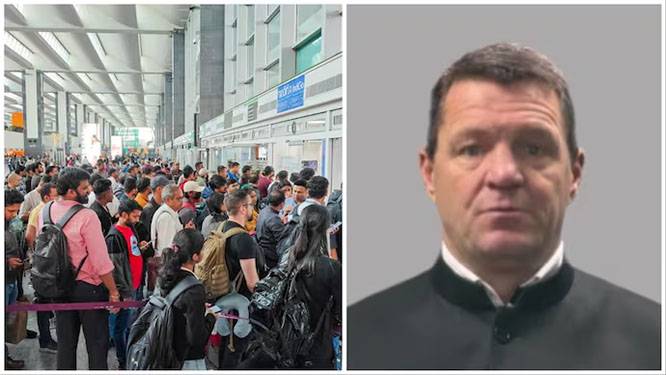
New Delhi, Dec 5: IndiGo CEO Pieter Elbers issued a public apology this evening after more than a thousand flights were cancelled today, making it the "most severely impacted day" in terms of cancellations. The biggest airline of the country cancelled "more than half" of its daily number of flights on Friday, said Elbers. He also said that even though the crisis will persist on Saturday, the airline anticipates fewer than 1,000 flight cancellations.

"Full normalisation is expected between December 10 and 15, though IndiGo cautions that recovery will take time due to the scale of operations," the IndiGo CEO said. 

IndiGo operates around 2,300 domestic and international flights daily.

Pieter Elbers, while apologising for the major inconvenience due to delays and cancellations, said the situation is a result of various causes.

The crisis at IndiGo stems from new regulations that boost pilots' weekly rest requirements by 12 hours to 48 and allow only two night-time landings per week, down from six. IndiGo has attributed the mass cancellations to "misjudgment and planning gaps".

Elbers also listed three lines of action that the airline will adopt to address the issue.

"Firstly, customer communication and addressing your needs, for this, messages have been sent on social media. And just now, a more detailed communication with information, refunds, cancellations and other customer support measures was sent," he said.

The airline has also stepped up its call centre capacity.

"Secondly, due to yesterday's situation, we had customers stranded mostly at the nation's largest airports. Our focus was for all of them to be able to travel today itself, which will be achieved. For this, we also ask customers whose flights are cancelled not to come to the airports as notifications are sent," the CEO said.

"Thirdly, cancellations were made for today to align our crew and planes to be where they need to start tomorrow morning afresh. Earlier measures of the last few days, regrettable, have proven not to be enough, but we have decided today to reboot all our systems and schedules, resulting in the highest numbers of cancellations so far, but imperative for progressive improvements starting from tomorrow," he added.

As airports witnessed chaotic scenes, the Directorate General of Civil Aviation (DGCA) stepped in to grant IndiGo a temporary exemption from stricter night duty rules for pilots. It also allowed substitution of leaves with a weekly rest period. 

Civil Aviation Minister Ram Mohan Naidu has said a high-level inquiry will be ordered and accountability will be fixed.

Comments

Add new comment

  • Coastaldigest.com reserves the right to delete or block any comments.
  • Coastaldigset.com is not responsible for its readers’ comments.
  • Comments that are abusive, incendiary or irrelevant are strictly prohibited.
  • Please use a genuine email ID and provide your name to avoid reject.