‘But for Kasab’s capture, blame might have fallen on Indian Muslims’

August 31, 2012

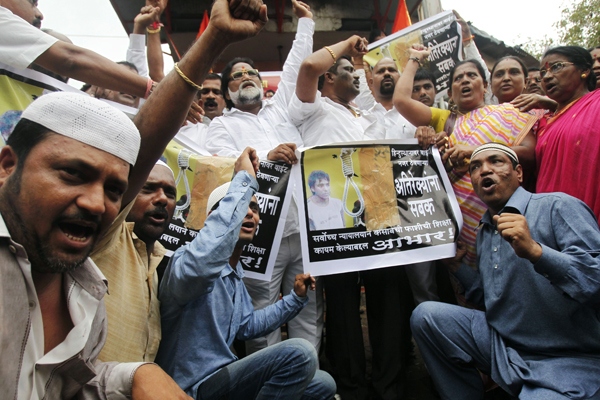
New Delhi, August 30: While lauding police efforts in apprehending gunman Ajmal Kasab alive during the 26/11 attacks in Mumbai, the Supreme Court on Wednesday said “the deception, the falsehood that the terrorists were Indian Muslims coming from Hyderabad connected with some fictitious organisation called Mujahideen, Hyderabad Deccan, is one of the most ominous and distressing parts of the conspiracy.”

A Bench of Justices Aftab Alam and C.K. Prasad said, “If the appellant [Kasab] had not been caught alive and the investigating agencies had not been able to unravel the conspiracy fully and in all its devious ways, the terrorists might have passed [off] as Indian Muslims and that would have led to devastating short-term and equally debilitating long-term consequences. It would have caused… distrust and suspicion between communities and disturbed the communal peace and harmony of the country. It is not impossible that conflagrations would have erupted in different parts of the country, which the governments would have found difficult to contain.”

The Bench said: “In this regard, the selection of the CST [Chhatrapati Shivaji Terminus] as one of the targets for carnage assumes great importance. Trains leave for many parts of the country from the CST. Thus, as news of the carnage spread across the country through the media, travellers would start arriving in different parts of the country, some having lost their near and dear ones at CST, some with a wounded companion and others shell-shocked by the experience of a terrorist attack on the railway station. Their first-hand, eyewitness accounts of the carnage, added to reports in the print media and visuals in the electronic media, could be highly inflammatory and could easily evoke communal violence that would be difficult to contain.”

The Bench said the deception was “ominous because it aimed at destabilising Indian society and its governments. But it was equally distressing for being so deeply untruthful. Indian Muslims may have a long list of grievances against the establishment. Some of the grievances may be fanciful, some may be of their own making and some may be substantive. Nevertheless, no Indian Muslim would even think of venting his grievance like an animal, killing, maiming and wounding innocent people, his own countrymen. This is because he is not only loyal to his faith and community but equally loves his country and fellow countrymen.

“The case presents the element of previous planning and preparation as no other case. For execution of the conspiracy, the appellant and the nine other dead accused, his accomplices were given rigorous and extensive training as combatants. The planning for the attack was meticulous and greatly detailed. The route from Karachi to Mumbai, the landing site at Mumbai, the different targets at Mumbai were all predetermined.”

The court said: “All the terrorists, including the appellant, actually acted according to the previous planning. A channel of communication between the attacking terrorists and their handlers and collaborators from across the border, based on advanced computer technology and procured through deception, was already arranged and put in place before the attack was launched. We are unable to accept the submission that the appellant was a mere tool in the hands of the Lashkar-e-Taiba. He joined the LeT around December 2007 and continued as its member till the end, despite a number of opportunities to leave it. This shows his clear and unmistakable intention to be a part of the organisation and participate in its designs. Even after his arrest he regarded himself as a ‘watan parast’, a patriotic Pakistani at war with this country.”

“The saddest and most disturbing part of the case,” the Bench said, “was that the appellant never showed any remorse for the terrible things he did.”

It rejected the charge that the confession of Kasab was not voluntary and it could not be accepted. “As for his knowing the names of many people in LeT, their respective positions in the hierarchy and their roles in the organisation, again there is nothing unusual about it. It is to be noted that the appellant was not a mercenary hired for the operation. He was a highly committed and devoted member of the organisation and, therefore, there is nothing strange or wrong in his coming to know many people in the organisation during the course of his training. Further, it is to be kept in mind that his being caught alive was not part of the plan of the handlers.”

No rights violation

In view of these facts, the Bench said, “We are firmly of the view that there is no question of any violation of any of the rights of the appellant under the Indian Constitution.”

On the acquittal of Fahim Ansari and Sabauddin Ahamed, who had been linked with the 26/11 attacks, the Bench said: “We are in full agreement with the reasons assigned by the trial court and the High Court for acquitting the two accused of all the charges. The view taken by the trial court and the High Court is not only correct but on the facts of the case, that is the only possible view.”

indian_muslims


Comments

Add new comment

  • Coastaldigest.com reserves the right to delete or block any comments.
  • Coastaldigset.com is not responsible for its readers’ comments.
  • Comments that are abusive, incendiary or irrelevant are strictly prohibited.
  • Please use a genuine email ID and provide your name to avoid reject.
News Network
December 4,2025

indigoflight.jpg

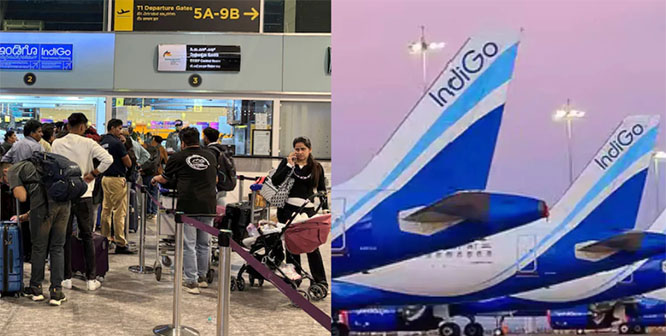
Domestic carrier IndiGo has cancelled over 180 flights from three major airports — Mumbai, Delhi and Bengaluru — on Thursday, December 4, as the airline struggles to secure the required crew to operate its flights in the wake of new flight-duty and rest-period norms for pilots.

While the number of cancellations at Mumbai airport stands at 86 (41 arrivals and 45 departures) for the day, at Bengaluru, 73 flights have been cancelled, including 41 arrivals, according to a PTI report that quoted sources.

"IndiGo cancelled over 180 flights on Thursday at three airports-Mumbai, Delhi and Bengaluru," the source told the news agency.

Besides, it had cancelled as many as 33 flights at Delhi airport for Thursday, the source said, adding, "The number of cancellations is expected to be higher by the end of the day."

The Gurugram-based airline's On-Time Performance (OTP) nosedived to 19.7 per cent at six key airports — Delhi, Mumbai, Chennai, Kolkata, Bengaluru and Hyderabad — on December 3, as it struggled to get the required crew to operate its services, down from almost half of December 2, when it was 35 per cent.

"IndiGo has been facing acute crew shortage since the implementation of the second phase of the FDTL (Flight Duty Time Limitations) norms, leading to cancellations and huge delays in its operations across the airports," a source had told PTI on Wednesday.

Chaos continued at several major airports for the third day on Thursday because of the cancellations.

A spokesperson for the Kempegowda International Airport (KIA) in Bengaluru said that 73 IndiGo flights had been cancelled on Thursday.

At least 150 flights were cancelled and dozens of others delayed on Wednesday, airport sources said, leaving thousands of travellers stranded, according to news agency Reuters.

The Directorate General of Civil Aviation (DGCA) has said it is investigating IndiGo flight disruptions and has asked the airline to submit the reasons for the current situation, as well as its plans to reduce flight cancellations and delays.

It may be mentioned here that the pilots' body, Federation of Indian Pilots (FIP), has alleged that IndiGo, despite getting a two-year preparatory window before the full implementation of new flight duty and rest period norms for cockpit crew, "inexplicably" adopted a "hiring freeze".

The FIP said it has urged the safety regulator, the DGCA, not to approve airlines' seasonal flight schedules unless they have adequate staff to operate their services "safely and reliably" in accordance with the New Flight Duty Time Limitations (FDTL) norms.

In a letter to the DGCA late on Wednesday, the FIP urged the DGCA to consider re-evaluating and reallocating slots to other airlines, which have the capacity to operate them without disruption during the peak holiday and fog season if IndiGo continues to "fail in delivering on its commitments to passengers due to its own avoidable staffing shortages."

Comments

Add new comment

  • Coastaldigest.com reserves the right to delete or block any comments.
  • Coastaldigset.com is not responsible for its readers’ comments.
  • Comments that are abusive, incendiary or irrelevant are strictly prohibited.
  • Please use a genuine email ID and provide your name to avoid reject.
News Network
December 4,2025

indigocrisis.jpg

Angry outbursts, long queues, and desperate appeals filled airports across India today as IndiGo grappled with a severe operational breakdown. Hundreds of flights have been cancelled or delayed, leaving thousands of passengers stranded through the night and forcing many to spend long hours at helpdesks.

Social media was flooded with videos of fliers pleading for assistance, accusing the airline of misleading updates, and demanding accommodation after being stuck for 10 to 12 hours at airports such as Hyderabad and Bengaluru.

What Triggered the Meltdown?

IndiGo has attributed the widespread disruption to “a multitude of unforeseen operational challenges.” These include:

•    Minor technology glitches
•    Winter-season schedule adjustments
•    Bad weather
•    Congestion in the aviation network
•    New crew rostering rules (Flight Duty Time Limitations or FDTL)

Among these, the most disruptive has been the implementation of the updated FDTL norms introduced by the Directorate General of Civil Aviation (DGCA) in January 2024.

These rules were designed to reduce pilot fatigue and improve passenger safety. Key changes include:

•    Longer weekly rest periods for flight crew
•    A revised definition of “night,” extending it by an extra hour
•    Tighter caps on flight duty timing and night landings
•    Cutting night shifts for pilots and crew from six per roster cycle to just two

Once these norms became fully enforceable, airlines were required to overhaul rosters well in advance. For IndiGo, this triggered a sudden shortage of crew available for duty, leading to cascading delays and cancellations.

Why IndiGo Was Hit the Hardest

IndiGo is India’s largest airline by a wide margin, operating over 2,200 flights daily. That’s roughly double the number operated by Air India.

When an airline of this size experiences even a 10–20% disruption, it translates to 200–400 flights being delayed or grounded — producing massive spillover effects across the country.

IndiGo also relies heavily on high-frequency overnight operations, a model typical of low-cost carriers that aim to maximise aircraft utilisation and reduce downtime. The stricter FDTL norms clash with these overnight-heavy schedules, forcing the airline to pull back services.

Aviation bodies have also criticised IndiGo’s preparedness. The Airline Pilots' Association of India (ALPA) said airlines were given a two-year window to plan for the new rules but “started preparing rather late.” IndiGo, it said, failed to rebuild crew rosters 15 days in advance as required.

The Federation of Indian Pilots (FIP) went further, calling the crisis the result of IndiGo’s “prolonged and unorthodox lean manpower strategy,” and alleging that the airline adopted a hiring freeze even as it knew the new rules would require more careful staffing.

How Many Flights Are Affected?

In the past 48 hours, over 300 flights have been cancelled. At least 100 more are expected to be cancelled today.

City-wise impact:

•    Hyderabad: 33 expected cancellations; several fliers stranded overnight
•    Bengaluru: over 70 expected cancellations
•    Delhi, Mumbai, Chennai, Kolkata: widespread delays and missed connections

Passengers shared distressing accounts online.

One customer at Hyderabad airport said they waited from 6 PM to 9 AM with “no action taken” regarding their delayed Pune flight. Another said IndiGo repeatedly told them the crew was “arriving soon,” only for the delay to stretch over 12 hours.

IndiGo has apologised for the disruption and promised that operations will stabilise within 48 hours, adding that “calibrated adjustments” are being made to contain the chaos.

What Should Passengers Do Now?

For those flying in the next few days, especially with IndiGo, here are key precautions:

1. Keep Checking Flight Status
Monitor your flight closely before leaving for the airport, as delays may be announced last-minute.

2. Arrive Early
Expect long queues at counters and security due to crowding and rescheduling.

3. Carry Essentials
Pack snacks, water, basic medicines, chargers, and items for children or senior citizens. Extended waiting times should be anticipated.

4. Use Flexible Booking Options
If you booked tickets with a free-date-change or cancellation option, consider using them.
If you haven’t booked yet, prefer refundable or flexible fares, or even consider alternate airlines.

5. Follow IndiGo’s Updates
Keep an eye on IndiGo’s official social media channels and contact customer support for rebooking and refund queries.

What Needs to Change?

Pilot groups have raised concerns not just about staffing but also the planning practices behind it.
The Federation of Indian Pilots accused IndiGo of:

•    Imposing an unexplained hiring freeze despite knowing the FDTL changes were coming
•    Entering non-poaching agreements that limited talent movement
•    Keeping pilot pay frozen
•    Underestimating the need to restructure operations in advance

They have urged DGCA to approve seasonal schedules only after airlines prove they have adequate pilot strength under the new norms.

ALPA also warned that some airlines might be using the delays as an “immature pressure tactic” to push DGCA for relaxations in the new rules — which, if granted, could compromise the very safety standards the norms were meant to protect.

Both pilot bodies stressed that no exemption should dilute safety, and any deviations should be based solely on scientific risk assessment.

Is a Solution in Sight?

While IndiGo says normalcy will return within two days, aviation experts believe that fully stabilising operations could take longer, depending on how quickly the airline can:
•    Re-align rosters
•    Mobilise rested crew
•    Boost staffing
•    Adjust its winter schedule to match regulatory requirements
Passengers are advised to remain prepared for continued delays over the next few days as the airline works through its backlog. 

Comments

Add new comment

  • Coastaldigest.com reserves the right to delete or block any comments.
  • Coastaldigset.com is not responsible for its readers’ comments.
  • Comments that are abusive, incendiary or irrelevant are strictly prohibited.
  • Please use a genuine email ID and provide your name to avoid reject.