



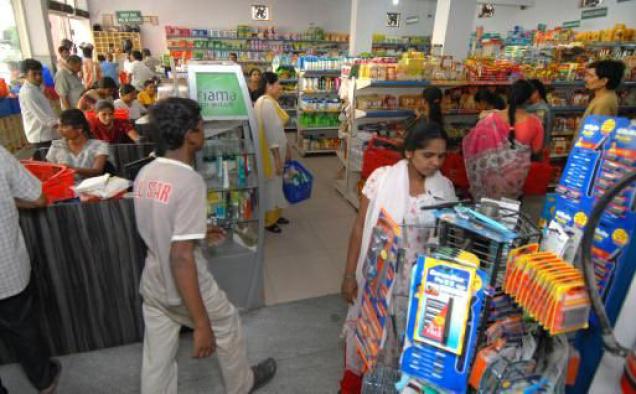
FDI in retail and aviation sectors set to become a reality now

September 21, 2012

FDI_Retail

New Delhi, September 21: The government on Thursday evening braved intense political opposition and a nationwide bandh to notify the rules for allowing foreign retailers such as Walmart and Carrefour to set up stores in India.

The government also notified the relaxed conditions for single-brand retail as well as the norms for allowing 49% investment by foreign airlines in Indian carriers and permitting greater foreign investment in some sections of the broadcasting sector, sending out a clear message that it will not be cowed down by protests and effectively severing its relations with Trinamool Congress.

These notifications give effect to the decisions taken by the Cabinet last Friday, which have resulted in a political uproar and possibly threatened the long-term stability of the Manmohan Singh government.

Industry was quick to welcome the government's move. "...the notifications have been issued quite promptly, reflecting the government's strong commitment towards the reforms process. This will put to rest all apprehension on whether there would be any turnaround," said CII Director-General Chandrajit Banerjee.

The policy says foreign retailers can only open stores in states that have agreed to allow FDI in multi-brand retail. "The above policy is an enabling policy only," said the press note issued by the Department of Industrial Policy & Promotion.

Bar on Online Retail Trading

"State governments and Union Territories would be free to take their own decisions in regard to implementation of the policy," said the DIPP press note. The policy prohibits retail trading through e-commerce by companies with FDI engaged in multibrand retailing. This means the ban on FDI in B2C e-commerce continues, preventing Amazon and others from entering India.

The states that have agreed to allow foreign investment in multibrand retail, according to the press note, are Andhra, Assam, Delhi, Haryana, J&K, Maharashtra, Manipur, Rajasthan, Uttarakhand and the UTs like Daman & Diu and Dadra and Nagar Haveli.

The new rules stipulate that foreign retailers will have to invest a minimum of $100 million, and at least 50% of the total FDI brought in will have to be invested in backend infrastructure. They will have to source 30% of products from small industry within five years of operations, and every year subsequently.

Moreover, if a small industry crosses the $1-million investment mark in plant and machinery, purchases from it will not be counted towards the 30% mandatory sourcing requirement. If a state does not have a city with one million population, an exemption can be made.

The DIPP has also notified the relaxed rules for single-brand retail trading, allowing foreign retailers with more than 51% FDI the freedom to locally source 30% of the value of goods sold over a five-year period initially, and every year subsequently.

It also relaxed the condition that the single-brand retailer has to own the brand, allowing any one entity to retail the brand. Even FDI-funded single-brand retailers will not be allowed to sell their goods through e-commerce.

"The guidelines will allow many single-brand retail companies to come to India," said Diljeet Titus, senior partner at Titus & Co, which is working with foreign retailers looking to enter India.

Comments

Add new comment

  • Coastaldigest.com reserves the right to delete or block any comments.
  • Coastaldigset.com is not responsible for its readers’ comments.
  • Comments that are abusive, incendiary or irrelevant are strictly prohibited.
  • Please use a genuine email ID and provide your name to avoid reject.
News Network
December 4,2025

indigoflight.jpg

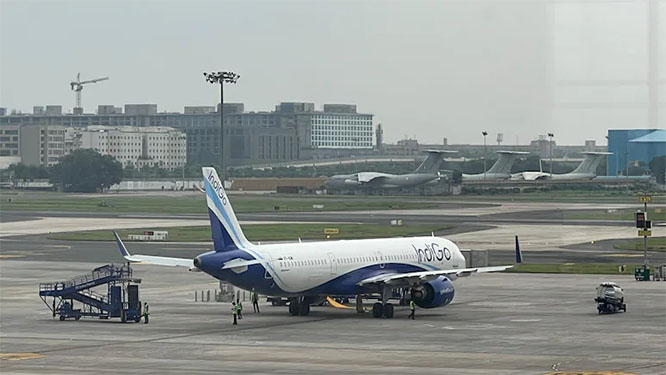
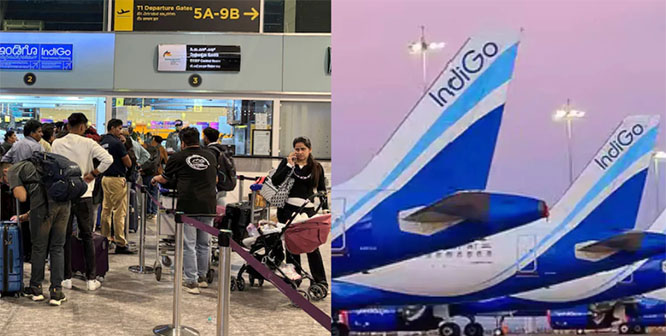
Domestic carrier IndiGo has cancelled over 180 flights from three major airports — Mumbai, Delhi and Bengaluru — on Thursday, December 4, as the airline struggles to secure the required crew to operate its flights in the wake of new flight-duty and rest-period norms for pilots.

While the number of cancellations at Mumbai airport stands at 86 (41 arrivals and 45 departures) for the day, at Bengaluru, 73 flights have been cancelled, including 41 arrivals, according to a PTI report that quoted sources.

"IndiGo cancelled over 180 flights on Thursday at three airports-Mumbai, Delhi and Bengaluru," the source told the news agency.

Besides, it had cancelled as many as 33 flights at Delhi airport for Thursday, the source said, adding, "The number of cancellations is expected to be higher by the end of the day."

The Gurugram-based airline's On-Time Performance (OTP) nosedived to 19.7 per cent at six key airports — Delhi, Mumbai, Chennai, Kolkata, Bengaluru and Hyderabad — on December 3, as it struggled to get the required crew to operate its services, down from almost half of December 2, when it was 35 per cent.

"IndiGo has been facing acute crew shortage since the implementation of the second phase of the FDTL (Flight Duty Time Limitations) norms, leading to cancellations and huge delays in its operations across the airports," a source had told PTI on Wednesday.

Chaos continued at several major airports for the third day on Thursday because of the cancellations.

A spokesperson for the Kempegowda International Airport (KIA) in Bengaluru said that 73 IndiGo flights had been cancelled on Thursday.

At least 150 flights were cancelled and dozens of others delayed on Wednesday, airport sources said, leaving thousands of travellers stranded, according to news agency Reuters.

The Directorate General of Civil Aviation (DGCA) has said it is investigating IndiGo flight disruptions and has asked the airline to submit the reasons for the current situation, as well as its plans to reduce flight cancellations and delays.

It may be mentioned here that the pilots' body, Federation of Indian Pilots (FIP), has alleged that IndiGo, despite getting a two-year preparatory window before the full implementation of new flight duty and rest period norms for cockpit crew, "inexplicably" adopted a "hiring freeze".

The FIP said it has urged the safety regulator, the DGCA, not to approve airlines' seasonal flight schedules unless they have adequate staff to operate their services "safely and reliably" in accordance with the New Flight Duty Time Limitations (FDTL) norms.

In a letter to the DGCA late on Wednesday, the FIP urged the DGCA to consider re-evaluating and reallocating slots to other airlines, which have the capacity to operate them without disruption during the peak holiday and fog season if IndiGo continues to "fail in delivering on its commitments to passengers due to its own avoidable staffing shortages."

Comments

Add new comment

  • Coastaldigest.com reserves the right to delete or block any comments.
  • Coastaldigset.com is not responsible for its readers’ comments.
  • Comments that are abusive, incendiary or irrelevant are strictly prohibited.
  • Please use a genuine email ID and provide your name to avoid reject.
News Network
December 2,2025

A major upgrade in safety and monitoring is planned for Haj 2026, with every Indian pilgrim set to receive a Haj Suvidha smart wristband linked to the official Haj Suvidha mobile app. The initiative aims to support pilgrims—especially senior citizens—who may struggle with smartphones during the 45-day journey.

What the Smart Wristband Will Do

Officials said the device will come with:
•    Location tracking
•    Pedometer
•    SOS emergency button
•    Qibla compass
•    Prayer timings
•    Basic health monitoring

SP Tiwari, secretary of the UP State Haj Committee, said the goal is to make the pilgrimage safer and more comfortable.

“Most Hajis are elderly and not comfortable with mobile apps,” he said. “The smartwatch will help locate pilgrims who forget their way or cannot communicate their location.”

The wristbands will be monitored by the Consulate General of India in Saudi Arabia, similar to mobile tracking via the Haj Suvidha App.

Free Distribution and Training

•    Smart wristbands will be given free of cost.
•    Training for pilgrims will be conducted between January and February 2026.
•    Sample units will reach state Haj committees soon.
•    Final devices will be distributed as pilgrims begin their journey.

New Rules for Accommodation

Two major decisions have also been finalised for Haj 2026:
1.    Separate rooms for men and women – including married couples. They may stay on the same floor but must occupy different rooms, following stricter Saudi guidelines.
2.    Cooking banned – gas cylinders will not be allowed; all meals will be provided through official catering services arranged by the Haj Committee of India.

These decisions were finalised during a meeting of the Haj Committee of India and state representatives in Mumbai.

Haj Suvidha App Launched Earlier

The government launched the Haj Suvidha App in 2024, offering:

•    Training modules
•    Accommodation and flight details
•    Baggage information
•    SOS and translation tools
•    Grievance redressal

Haj 2026 Quota and Key States

•    India’s total Haj quota for 2026: 1,75,025 pilgrims
•    70% (1,25,000) allotted to the Haj Committee of India
•    30% (around 50,000) reserved for Haj Group Organisers

Uttar Pradesh has the largest allocation (around 30,000 seats), though approximately 18,000 pilgrims are expected to go this year. States with high pilgrim numbers include Kerala, Maharashtra and Gujarat.

Dates of Haj 2026

The pilgrimage is scheduled to take place from 24 May to 29 May, 2026 (tentative).
Haj is one of the five pillars of Islam and is mandatory for Muslims who meet the required conditions.

Comments

Add new comment

  • Coastaldigest.com reserves the right to delete or block any comments.
  • Coastaldigset.com is not responsible for its readers’ comments.
  • Comments that are abusive, incendiary or irrelevant are strictly prohibited.
  • Please use a genuine email ID and provide your name to avoid reject.
