



Khan favours reservation for backward Muslims

October 30, 2012
Minister_K_Rahman_Khan

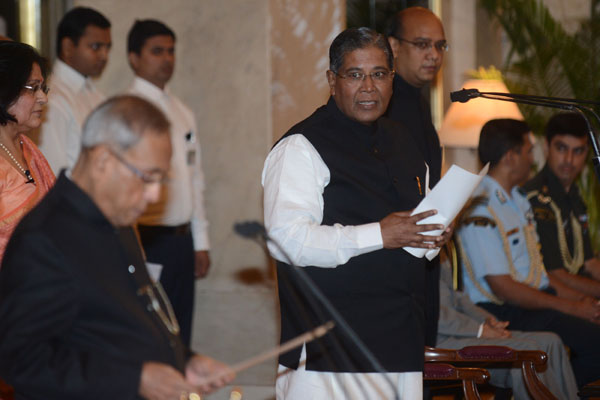
New Delhi, October 30: New Minority Affairs Minister K Rahman Khan strongly favours reservation for backward Muslims as well as for Dalits among Christians and Muslims notwithstanding the Supreme Court's observation on the sub- quota issue.

The minister also intends to carry forward reforms in the administration of Wakfs across the country and bring a revised bill for this in the Winter Session of Parliament.

Khan, who took charge of the ministry yesterday, told PTI that though reservation is "not a panacea", it is a "right" for people who are backward or discriminated.

Unfazed by the adverse court judgements on 4.5 per cent sub-quota for Muslims, Khan is confident that the orders merely reflect some "technical lapses" on part of Government and does not amount to rejection of the sub-quota as such.

On the issue of minority sub quota rejected by the Andhra Pradesh High Court, Khan said, "That is the misunderstanding. The court has not rejected the quota. The court has only said that the procedure adopted to ascertain backwardness is not satisfactory."

Pointing out that reservation for minorities exist in Karnataka and Kerala, he said that reservation for minorities in Karnataka was based on the extensive surveys done to ascertain backwardness of Muslims.

"I feel that there was some technical lapses, which have been pointed out ìn the Supreme Court and the Andhra Pradesh High Court judgements (on 4.5 percent sub quota). My ministry will study in detail the judgements. What are the technical reasons on which the Supreme Court questioned the order?

"We will try to address those issues and come out with a response.....Lack of sufficient data as to explain the socio-economic backwardness of the country has led to the Court coming to the conclusion that it is a political move," Khan said.

Congress had promised to carve out a separate sub-quota for Muslims from the 27 OBC reservation quota, an order which did not find favour by the courts.

Khan stressed that the rejection of the sub quota by Supreme Court and the High Court was on "technical grounds".

"They have not said it was unconstitutional. The method adopted may be technically wrong. My ministry will try to set right the technical grounds on which it has been struck down," Khan said.

He, however, refrained from commenting on whether his ministry will make a fresh appeal in the Supreme Court on the issue, saying that he will take a decision after examining the matter in detail.

The Supreme Court has refused to stay the Andhra Pradesh High Court order quashing the December 2011 Office Memorandum (OM) of the government on the sub-quota.

The apex court also said that OM on the sub-quota issue did not have legislative support.

The SC bench had also questioned the calculation of providing sub-quota, wanted to know whether there was any constitutional and statutory support for granting 4.5 per cent sub-quota.

Besides, it had questioned the government for not consulting statutory bodies like the National Commission for Minorities (NCM) and the National Commission for Backward Classes (NCBC) in determining the sub-quota.

Replying to questions about efficacy of reservation as a tool to address discrimination, Khan said though he believes that "reservation is not a panacea" that will solve all problems plaguing a community, he believes "reservation is a right".

"If any section of the society remains backward or is discriminated, the Constitution has given the government the right under Articles 15 (4) and Articles 16 (4) under the Constitution to set right this discrimination or the unequal treatment.

"Once the government is convinced that a particular section has been discriminated or did not get equal opportunity, then that has to be set right through these Articles," he reasoned.

Stressing that reservation is a "Constitutional right," Khan said, "It cannot be ruled out because once you have taken this route to set right discrimination faced by one section of the society then the other will also demand it."

On the vexatious issue of providing reservation to Dalit Christians and Dalit Muslims, he made it clear that he will work to see that this is done.

Noting that Dalits among Hindus converted to Buddhism, Sikhism, Islam and Christianity, he pointed out that benefits of reservation for the Schedules Castes were extended to converts among the first two religious groups in 1950 through a government order as it was felt their socio-economic conditions did not change after conversion.

"So probity and equality demand that there should not be any discrimination. If few people converted to a particular religion, they get benefits and others who convert to some other religions should not get. That is what has been challenged in the Supreme Court. It is a Constitutional right of those who have gone to the court," Khan said.

To a question on whether he will support the demand, the Union Minister said, "I will definitely....I will definitely look towards it".

He was, however, quick to add "the matter is before the Supreme Court.

"The government has left it to the court to decide...so let us wait for the Supreme Court order," he said when asked about allegations that the government was not keen on providing reservation to Dalit Christians and Dalit Muslims.

On the contentious issue of Wakf reforms, Khan said his priority would be to bring the revised bill to strengthen the management of Wakf boards across the country in the Winter Session starting from November 21.

"The select committee has submitted its recommendations. The new bill has to be there. I will try my best to pass the Wakf bill in the coming session of Parliament. That is my first priority," Khan said.

Khan said that it is necessary that the Muslim community invests in infrastructure development for education and "Wakf is an area, where resources are available".

The Minority Affairs Minister said that a scientific study has not been done to identify schemes required for development of minorities.

"As the Deputy Chairman of Rajya Sabha also, I had spoken in Parliament about schemes not reaching people. Government is sincere about implementing schemes but there is some difficulty. All the schemes are implemented by the state government. If the state government fails, the blame comes on us that we have failed definitely. I am aware of the problems why it is not happening.

"I will try to see that schemes reach people and review if they are really helping people," Khan said, adding more stress should be given to develop infrastructure of education for minorities and for this, the community must come forward and invest.

"Motivating the community for this is a priority for me," he said, adding that even the Sachar Commission, which went into the issue of the backwardness of minorities, had suggested this.

"Whatever assurance my party has given to minorities in its election manifesto, I would like to implement them...in letter and spirit," he said, adding there is a need for a "scientific study" to find out what exactly is required to be done regarding the schemes for uplift of minorities.

Comments

Add new comment

  • Coastaldigest.com reserves the right to delete or block any comments.
  • Coastaldigset.com is not responsible for its readers’ comments.
  • Comments that are abusive, incendiary or irrelevant are strictly prohibited.
  • Please use a genuine email ID and provide your name to avoid reject.
News Network
December 4,2025

indigocrisis.jpg

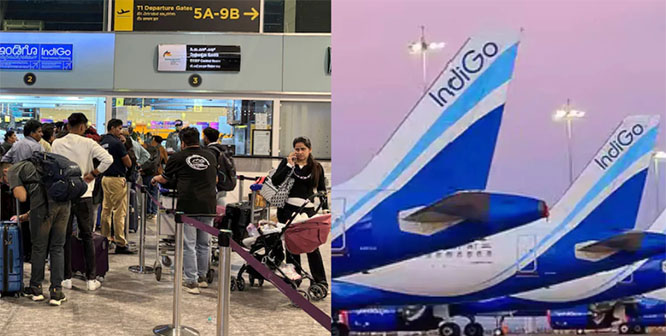
Angry outbursts, long queues, and desperate appeals filled airports across India today as IndiGo grappled with a severe operational breakdown. Hundreds of flights have been cancelled or delayed, leaving thousands of passengers stranded through the night and forcing many to spend long hours at helpdesks.

Social media was flooded with videos of fliers pleading for assistance, accusing the airline of misleading updates, and demanding accommodation after being stuck for 10 to 12 hours at airports such as Hyderabad and Bengaluru.

What Triggered the Meltdown?

IndiGo has attributed the widespread disruption to “a multitude of unforeseen operational challenges.” These include:

•    Minor technology glitches
•    Winter-season schedule adjustments
•    Bad weather
•    Congestion in the aviation network
•    New crew rostering rules (Flight Duty Time Limitations or FDTL)

Among these, the most disruptive has been the implementation of the updated FDTL norms introduced by the Directorate General of Civil Aviation (DGCA) in January 2024.

These rules were designed to reduce pilot fatigue and improve passenger safety. Key changes include:

•    Longer weekly rest periods for flight crew
•    A revised definition of “night,” extending it by an extra hour
•    Tighter caps on flight duty timing and night landings
•    Cutting night shifts for pilots and crew from six per roster cycle to just two

Once these norms became fully enforceable, airlines were required to overhaul rosters well in advance. For IndiGo, this triggered a sudden shortage of crew available for duty, leading to cascading delays and cancellations.

Why IndiGo Was Hit the Hardest

IndiGo is India’s largest airline by a wide margin, operating over 2,200 flights daily. That’s roughly double the number operated by Air India.

When an airline of this size experiences even a 10–20% disruption, it translates to 200–400 flights being delayed or grounded — producing massive spillover effects across the country.

IndiGo also relies heavily on high-frequency overnight operations, a model typical of low-cost carriers that aim to maximise aircraft utilisation and reduce downtime. The stricter FDTL norms clash with these overnight-heavy schedules, forcing the airline to pull back services.

Aviation bodies have also criticised IndiGo’s preparedness. The Airline Pilots' Association of India (ALPA) said airlines were given a two-year window to plan for the new rules but “started preparing rather late.” IndiGo, it said, failed to rebuild crew rosters 15 days in advance as required.

The Federation of Indian Pilots (FIP) went further, calling the crisis the result of IndiGo’s “prolonged and unorthodox lean manpower strategy,” and alleging that the airline adopted a hiring freeze even as it knew the new rules would require more careful staffing.

How Many Flights Are Affected?

In the past 48 hours, over 300 flights have been cancelled. At least 100 more are expected to be cancelled today.

City-wise impact:

•    Hyderabad: 33 expected cancellations; several fliers stranded overnight
•    Bengaluru: over 70 expected cancellations
•    Delhi, Mumbai, Chennai, Kolkata: widespread delays and missed connections

Passengers shared distressing accounts online.

One customer at Hyderabad airport said they waited from 6 PM to 9 AM with “no action taken” regarding their delayed Pune flight. Another said IndiGo repeatedly told them the crew was “arriving soon,” only for the delay to stretch over 12 hours.

IndiGo has apologised for the disruption and promised that operations will stabilise within 48 hours, adding that “calibrated adjustments” are being made to contain the chaos.

What Should Passengers Do Now?

For those flying in the next few days, especially with IndiGo, here are key precautions:

1. Keep Checking Flight Status
Monitor your flight closely before leaving for the airport, as delays may be announced last-minute.

2. Arrive Early
Expect long queues at counters and security due to crowding and rescheduling.

3. Carry Essentials
Pack snacks, water, basic medicines, chargers, and items for children or senior citizens. Extended waiting times should be anticipated.

4. Use Flexible Booking Options
If you booked tickets with a free-date-change or cancellation option, consider using them.
If you haven’t booked yet, prefer refundable or flexible fares, or even consider alternate airlines.

5. Follow IndiGo’s Updates
Keep an eye on IndiGo’s official social media channels and contact customer support for rebooking and refund queries.

What Needs to Change?

Pilot groups have raised concerns not just about staffing but also the planning practices behind it.
The Federation of Indian Pilots accused IndiGo of:

•    Imposing an unexplained hiring freeze despite knowing the FDTL changes were coming
•    Entering non-poaching agreements that limited talent movement
•    Keeping pilot pay frozen
•    Underestimating the need to restructure operations in advance

They have urged DGCA to approve seasonal schedules only after airlines prove they have adequate pilot strength under the new norms.

ALPA also warned that some airlines might be using the delays as an “immature pressure tactic” to push DGCA for relaxations in the new rules — which, if granted, could compromise the very safety standards the norms were meant to protect.

Both pilot bodies stressed that no exemption should dilute safety, and any deviations should be based solely on scientific risk assessment.

Is a Solution in Sight?

While IndiGo says normalcy will return within two days, aviation experts believe that fully stabilising operations could take longer, depending on how quickly the airline can:
•    Re-align rosters
•    Mobilise rested crew
•    Boost staffing
•    Adjust its winter schedule to match regulatory requirements
Passengers are advised to remain prepared for continued delays over the next few days as the airline works through its backlog. 

Comments

Add new comment

  • Coastaldigest.com reserves the right to delete or block any comments.
  • Coastaldigset.com is not responsible for its readers’ comments.
  • Comments that are abusive, incendiary or irrelevant are strictly prohibited.
  • Please use a genuine email ID and provide your name to avoid reject.
News Network
December 2,2025

A major upgrade in safety and monitoring is planned for Haj 2026, with every Indian pilgrim set to receive a Haj Suvidha smart wristband linked to the official Haj Suvidha mobile app. The initiative aims to support pilgrims—especially senior citizens—who may struggle with smartphones during the 45-day journey.

What the Smart Wristband Will Do

Officials said the device will come with:
•    Location tracking
•    Pedometer
•    SOS emergency button
•    Qibla compass
•    Prayer timings
•    Basic health monitoring

SP Tiwari, secretary of the UP State Haj Committee, said the goal is to make the pilgrimage safer and more comfortable.

“Most Hajis are elderly and not comfortable with mobile apps,” he said. “The smartwatch will help locate pilgrims who forget their way or cannot communicate their location.”

The wristbands will be monitored by the Consulate General of India in Saudi Arabia, similar to mobile tracking via the Haj Suvidha App.

Free Distribution and Training

•    Smart wristbands will be given free of cost.
•    Training for pilgrims will be conducted between January and February 2026.
•    Sample units will reach state Haj committees soon.
•    Final devices will be distributed as pilgrims begin their journey.

New Rules for Accommodation

Two major decisions have also been finalised for Haj 2026:
1.    Separate rooms for men and women – including married couples. They may stay on the same floor but must occupy different rooms, following stricter Saudi guidelines.
2.    Cooking banned – gas cylinders will not be allowed; all meals will be provided through official catering services arranged by the Haj Committee of India.

These decisions were finalised during a meeting of the Haj Committee of India and state representatives in Mumbai.

Haj Suvidha App Launched Earlier

The government launched the Haj Suvidha App in 2024, offering:

•    Training modules
•    Accommodation and flight details
•    Baggage information
•    SOS and translation tools
•    Grievance redressal

Haj 2026 Quota and Key States

•    India’s total Haj quota for 2026: 1,75,025 pilgrims
•    70% (1,25,000) allotted to the Haj Committee of India
•    30% (around 50,000) reserved for Haj Group Organisers

Uttar Pradesh has the largest allocation (around 30,000 seats), though approximately 18,000 pilgrims are expected to go this year. States with high pilgrim numbers include Kerala, Maharashtra and Gujarat.

Dates of Haj 2026

The pilgrimage is scheduled to take place from 24 May to 29 May, 2026 (tentative).
Haj is one of the five pillars of Islam and is mandatory for Muslims who meet the required conditions.

Comments

Add new comment

  • Coastaldigest.com reserves the right to delete or block any comments.
  • Coastaldigset.com is not responsible for its readers’ comments.
  • Comments that are abusive, incendiary or irrelevant are strictly prohibited.
  • Please use a genuine email ID and provide your name to avoid reject.
News Network
December 4,2025

indigoflight.jpg

Domestic carrier IndiGo has cancelled over 180 flights from three major airports — Mumbai, Delhi and Bengaluru — on Thursday, December 4, as the airline struggles to secure the required crew to operate its flights in the wake of new flight-duty and rest-period norms for pilots.

While the number of cancellations at Mumbai airport stands at 86 (41 arrivals and 45 departures) for the day, at Bengaluru, 73 flights have been cancelled, including 41 arrivals, according to a PTI report that quoted sources.

"IndiGo cancelled over 180 flights on Thursday at three airports-Mumbai, Delhi and Bengaluru," the source told the news agency.

Besides, it had cancelled as many as 33 flights at Delhi airport for Thursday, the source said, adding, "The number of cancellations is expected to be higher by the end of the day."

The Gurugram-based airline's On-Time Performance (OTP) nosedived to 19.7 per cent at six key airports — Delhi, Mumbai, Chennai, Kolkata, Bengaluru and Hyderabad — on December 3, as it struggled to get the required crew to operate its services, down from almost half of December 2, when it was 35 per cent.

"IndiGo has been facing acute crew shortage since the implementation of the second phase of the FDTL (Flight Duty Time Limitations) norms, leading to cancellations and huge delays in its operations across the airports," a source had told PTI on Wednesday.

Chaos continued at several major airports for the third day on Thursday because of the cancellations.

A spokesperson for the Kempegowda International Airport (KIA) in Bengaluru said that 73 IndiGo flights had been cancelled on Thursday.

At least 150 flights were cancelled and dozens of others delayed on Wednesday, airport sources said, leaving thousands of travellers stranded, according to news agency Reuters.

The Directorate General of Civil Aviation (DGCA) has said it is investigating IndiGo flight disruptions and has asked the airline to submit the reasons for the current situation, as well as its plans to reduce flight cancellations and delays.

It may be mentioned here that the pilots' body, Federation of Indian Pilots (FIP), has alleged that IndiGo, despite getting a two-year preparatory window before the full implementation of new flight duty and rest period norms for cockpit crew, "inexplicably" adopted a "hiring freeze".

The FIP said it has urged the safety regulator, the DGCA, not to approve airlines' seasonal flight schedules unless they have adequate staff to operate their services "safely and reliably" in accordance with the New Flight Duty Time Limitations (FDTL) norms.

In a letter to the DGCA late on Wednesday, the FIP urged the DGCA to consider re-evaluating and reallocating slots to other airlines, which have the capacity to operate them without disruption during the peak holiday and fog season if IndiGo continues to "fail in delivering on its commitments to passengers due to its own avoidable staffing shortages."

Comments

Add new comment

  • Coastaldigest.com reserves the right to delete or block any comments.
  • Coastaldigset.com is not responsible for its readers’ comments.
  • Comments that are abusive, incendiary or irrelevant are strictly prohibited.
  • Please use a genuine email ID and provide your name to avoid reject.