



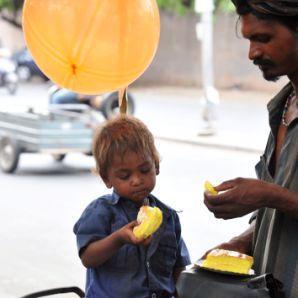
Maharashtra food scam: Private companies eat up Rs 1,000cr meant for poor

November 3, 2012

poor_pay

New Delhi, November 3: Private companies have hijacked the government's flagship scheme to provide food to poor children and their mothers, the Integrated Child Development Scheme (ICDS), with contractors in Maharashtra alone controlling Rs 1,000 crore worth of supplies in contravention of Supreme Court orders, a report of the SC commissioners office has said.

The SC orders bar contractors from supplying rations under the scheme. It only permits village communities, self-help groups and mahila mandals to buy grains and prepare food for children.

The commissioners' report, submitted to the court on Friday, warned that the contractor-corporate lobby had a firm grip over ICDS rations supply business, worth Rs 8,000 crore, in several states. It specifically referred to Karnataka, Uttar Pradesh and Meghalaya, besides Maharashtra.

Detailing Maharashtra's case, the report said private companies had floated fronts in the names of 'mahila mandals' or women's organizations to corner the lucrative Rs 1,000 crore annual supply of rations.

The ICDS is India's primary social welfare scheme to tackle malnutrition and health problems in poor children below 6 years of age and their mothers. It is considered the backbone of government's efforts to improve the dismal family health indices in India - some of the worst even among developing countries.

The commissioners recommended that an independent investigation be conducted under the apex court's supervision to investigate the possible nexus "between politicians, bureaucrats and private contractors in the provisioning of rations to ICDS, leading to largescale corruption and leakages".

The report, prepared by the principle advisor to the commissioners, said the Maharashtra chief minister had been made aware of the scam by the commissioners as well as the National Commission for the Protection of Child Rights. They said the fact that the corrupt system continued unchecked showed the "level of influence" the contractors had over the "levers of power in Maharashtra".

This report lays bare the modus operandi companies used to corner the lucrative contracts in Maharashtra. The state government first changed its rules in 2009 to allow not only community-based organizations but also 'women's institutions' to bid for the supply - a loose enough term to permit any contractor, company or agency with women on board to bid for the contracts.

Only three of these 'women's institutions' got contracts for the entire state's ration supply which is worth over Rs 1,000 crore annually. None of these three mahila mandals - Venkateshwara Mahila Audhyogic Sahakari Sanstha, Mahalaxmi Mahila Grhaudyog & Balvikas Buddhesiya Audhyogic Sahakari Sanstha and Maharashtra Mahila Sahakari Grahudhyog Sanstha Limited -- had any production capacity of their own.

The three mahila mandals each formed sub-committees with select members handling complete control of administration, finances and operations of the organizations. The sub-committees then gained legitimacy by directly contracting with the state government, securing bank guarantees as well as opening separate bank accounts.

The sub-committees went on to contract five companies to supply the rations. But the members on board these sub-committees were all relatives of the owners of the five companies.

In other words, the companies had formed shell agencies to bid for the contracts on the pretext of being community-based women's organizations.

Venkateshwara formed two sub-committees. One sub-committee farmed out contract to Swapnil Agro Limited owned by Ulhas Pagariya. The sub-committee comprised Pagariya's wife and two relatives. The second sub-committee gave a contract to Paras Agro Private Limited, with one Satishrao Munde as managing director. Munde's wife and daughter comprised the sub-committee.

Similarly, Mahalaxmi formed three sub-committees giving out contracts to Indo Allied Protein Foods run by Rajan Shankar Jadhav, Sai Food and Sai Food Products owned by Pradip Auradkar and Sanjay Auradkar and Kota Dal Mill based in Rajasthan.

Maharashtra Mahila Sahkari, which is actually a company and not a society with Rama Agrawal as vice-chairman, gave the contract to Sagar Foods run by her father-in-law Prabhudayala Agarwal.

The principle advisor to the court commissioners, Biraj Patnaik, refused to comment when contacted.

His report said lab reports testing the quality of food grains supplied was also suspect as all three mahila mandals went to the same private lab but government testing found the food lacking. The report said media had earlier highlighted how the ration was of such bad quality that it was at times sold as cattle feed and many times, fungi and termites were found in them. A case on the matter is being heard in the high court as well.

The author added that the report should be seen as a preliminary inquiry and not a comprehensive indictment of the parties. They have asked for court directions for an independent authority carrying out an investigation. The apex court gave the state the opportunity to respond to the report and posted the next hearing for November 23.

Comments

Add new comment

  • Coastaldigest.com reserves the right to delete or block any comments.
  • Coastaldigset.com is not responsible for its readers’ comments.
  • Comments that are abusive, incendiary or irrelevant are strictly prohibited.
  • Please use a genuine email ID and provide your name to avoid reject.
News Network
December 5,2025

indigoCEO.jpg

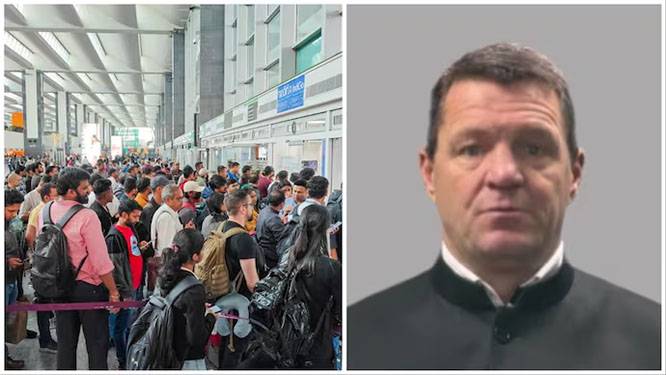
New Delhi, Dec 5: IndiGo CEO Pieter Elbers issued a public apology this evening after more than a thousand flights were cancelled today, making it the "most severely impacted day" in terms of cancellations. The biggest airline of the country cancelled "more than half" of its daily number of flights on Friday, said Elbers. He also said that even though the crisis will persist on Saturday, the airline anticipates fewer than 1,000 flight cancellations.

"Full normalisation is expected between December 10 and 15, though IndiGo cautions that recovery will take time due to the scale of operations," the IndiGo CEO said. 

IndiGo operates around 2,300 domestic and international flights daily.

Pieter Elbers, while apologising for the major inconvenience due to delays and cancellations, said the situation is a result of various causes.

The crisis at IndiGo stems from new regulations that boost pilots' weekly rest requirements by 12 hours to 48 and allow only two night-time landings per week, down from six. IndiGo has attributed the mass cancellations to "misjudgment and planning gaps".

Elbers also listed three lines of action that the airline will adopt to address the issue.

"Firstly, customer communication and addressing your needs, for this, messages have been sent on social media. And just now, a more detailed communication with information, refunds, cancellations and other customer support measures was sent," he said.

The airline has also stepped up its call centre capacity.

"Secondly, due to yesterday's situation, we had customers stranded mostly at the nation's largest airports. Our focus was for all of them to be able to travel today itself, which will be achieved. For this, we also ask customers whose flights are cancelled not to come to the airports as notifications are sent," the CEO said.

"Thirdly, cancellations were made for today to align our crew and planes to be where they need to start tomorrow morning afresh. Earlier measures of the last few days, regrettable, have proven not to be enough, but we have decided today to reboot all our systems and schedules, resulting in the highest numbers of cancellations so far, but imperative for progressive improvements starting from tomorrow," he added.

As airports witnessed chaotic scenes, the Directorate General of Civil Aviation (DGCA) stepped in to grant IndiGo a temporary exemption from stricter night duty rules for pilots. It also allowed substitution of leaves with a weekly rest period. 

Civil Aviation Minister Ram Mohan Naidu has said a high-level inquiry will be ordered and accountability will be fixed.

Comments

Add new comment

  • Coastaldigest.com reserves the right to delete or block any comments.
  • Coastaldigset.com is not responsible for its readers’ comments.
  • Comments that are abusive, incendiary or irrelevant are strictly prohibited.
  • Please use a genuine email ID and provide your name to avoid reject.
News Network
December 4,2025

indigocrisis.jpg

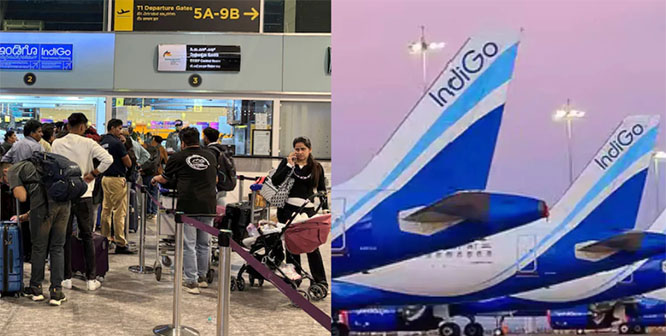
Angry outbursts, long queues, and desperate appeals filled airports across India today as IndiGo grappled with a severe operational breakdown. Hundreds of flights have been cancelled or delayed, leaving thousands of passengers stranded through the night and forcing many to spend long hours at helpdesks.

Social media was flooded with videos of fliers pleading for assistance, accusing the airline of misleading updates, and demanding accommodation after being stuck for 10 to 12 hours at airports such as Hyderabad and Bengaluru.

What Triggered the Meltdown?

IndiGo has attributed the widespread disruption to “a multitude of unforeseen operational challenges.” These include:

•    Minor technology glitches
•    Winter-season schedule adjustments
•    Bad weather
•    Congestion in the aviation network
•    New crew rostering rules (Flight Duty Time Limitations or FDTL)

Among these, the most disruptive has been the implementation of the updated FDTL norms introduced by the Directorate General of Civil Aviation (DGCA) in January 2024.

These rules were designed to reduce pilot fatigue and improve passenger safety. Key changes include:

•    Longer weekly rest periods for flight crew
•    A revised definition of “night,” extending it by an extra hour
•    Tighter caps on flight duty timing and night landings
•    Cutting night shifts for pilots and crew from six per roster cycle to just two

Once these norms became fully enforceable, airlines were required to overhaul rosters well in advance. For IndiGo, this triggered a sudden shortage of crew available for duty, leading to cascading delays and cancellations.

Why IndiGo Was Hit the Hardest

IndiGo is India’s largest airline by a wide margin, operating over 2,200 flights daily. That’s roughly double the number operated by Air India.

When an airline of this size experiences even a 10–20% disruption, it translates to 200–400 flights being delayed or grounded — producing massive spillover effects across the country.

IndiGo also relies heavily on high-frequency overnight operations, a model typical of low-cost carriers that aim to maximise aircraft utilisation and reduce downtime. The stricter FDTL norms clash with these overnight-heavy schedules, forcing the airline to pull back services.

Aviation bodies have also criticised IndiGo’s preparedness. The Airline Pilots' Association of India (ALPA) said airlines were given a two-year window to plan for the new rules but “started preparing rather late.” IndiGo, it said, failed to rebuild crew rosters 15 days in advance as required.

The Federation of Indian Pilots (FIP) went further, calling the crisis the result of IndiGo’s “prolonged and unorthodox lean manpower strategy,” and alleging that the airline adopted a hiring freeze even as it knew the new rules would require more careful staffing.

How Many Flights Are Affected?

In the past 48 hours, over 300 flights have been cancelled. At least 100 more are expected to be cancelled today.

City-wise impact:

•    Hyderabad: 33 expected cancellations; several fliers stranded overnight
•    Bengaluru: over 70 expected cancellations
•    Delhi, Mumbai, Chennai, Kolkata: widespread delays and missed connections

Passengers shared distressing accounts online.

One customer at Hyderabad airport said they waited from 6 PM to 9 AM with “no action taken” regarding their delayed Pune flight. Another said IndiGo repeatedly told them the crew was “arriving soon,” only for the delay to stretch over 12 hours.

IndiGo has apologised for the disruption and promised that operations will stabilise within 48 hours, adding that “calibrated adjustments” are being made to contain the chaos.

What Should Passengers Do Now?

For those flying in the next few days, especially with IndiGo, here are key precautions:

1. Keep Checking Flight Status
Monitor your flight closely before leaving for the airport, as delays may be announced last-minute.

2. Arrive Early
Expect long queues at counters and security due to crowding and rescheduling.

3. Carry Essentials
Pack snacks, water, basic medicines, chargers, and items for children or senior citizens. Extended waiting times should be anticipated.

4. Use Flexible Booking Options
If you booked tickets with a free-date-change or cancellation option, consider using them.
If you haven’t booked yet, prefer refundable or flexible fares, or even consider alternate airlines.

5. Follow IndiGo’s Updates
Keep an eye on IndiGo’s official social media channels and contact customer support for rebooking and refund queries.

What Needs to Change?

Pilot groups have raised concerns not just about staffing but also the planning practices behind it.
The Federation of Indian Pilots accused IndiGo of:

•    Imposing an unexplained hiring freeze despite knowing the FDTL changes were coming
•    Entering non-poaching agreements that limited talent movement
•    Keeping pilot pay frozen
•    Underestimating the need to restructure operations in advance

They have urged DGCA to approve seasonal schedules only after airlines prove they have adequate pilot strength under the new norms.

ALPA also warned that some airlines might be using the delays as an “immature pressure tactic” to push DGCA for relaxations in the new rules — which, if granted, could compromise the very safety standards the norms were meant to protect.

Both pilot bodies stressed that no exemption should dilute safety, and any deviations should be based solely on scientific risk assessment.

Is a Solution in Sight?

While IndiGo says normalcy will return within two days, aviation experts believe that fully stabilising operations could take longer, depending on how quickly the airline can:
•    Re-align rosters
•    Mobilise rested crew
•    Boost staffing
•    Adjust its winter schedule to match regulatory requirements
Passengers are advised to remain prepared for continued delays over the next few days as the airline works through its backlog. 

Comments

Add new comment

  • Coastaldigest.com reserves the right to delete or block any comments.
  • Coastaldigset.com is not responsible for its readers’ comments.
  • Comments that are abusive, incendiary or irrelevant are strictly prohibited.
  • Please use a genuine email ID and provide your name to avoid reject.