



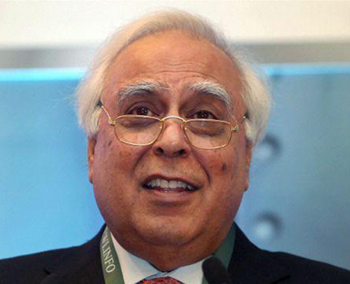
ITU can’t be allowed to regulate content and free speech, says Sibal

[email protected] (The Hindu)
November 23, 2012

sibal

New Delhi, November 23: India’s proposal on the International Telecommunications Regulations (ITRs), submitted to the International Telecommunications Union (ITU), is far from the last word on the matter, Telecom Minister Kapil Sibal has said.

Mr. Sibal’s remark offers immense relief to Indian citizens and the Internet industry, especially Internet and mobile service providers, social media and other companies that are part of the Internet ecosystem.

The proposal, submitted to the United Nations body last month, has drawn opposition from, and sparked fears of content control among, civil society and the industry alike.

Mr. Sibal told The Hindu that the proposal was “a preliminary response rather than a final view. Any imperfections in our stance will be corrected through consultation with the industry and civil society as per my commitment to a multi-stakeholder, consensus-based governance model.”

His comments come at a critical time — immediately after the arrest of two young girls for posting and supporting content linked to the shutdown in Mumbai on the day of Shiv Sena supremo Bal Thackeray’s funeral. The media and civil society groups have expressed outrage over the Maharashtra police’s overreach.

Mr. Sibal recently led an Indian delegation to Baku, Azerbaijan, which hosted the world’s largest multi-stakeholder conference: the Internet Governance Forum. Speaking at the inaugural session on November 6, he said the Internet and governance were oxymorons, and the need of the hour was a process “which is collaborative, consultative, inclusive and consensual for dealing with all public policies involving the Internet.”

However, the Department of Telecom (DoT) simultaneously submitted its proposal, dated November 3, on the ITRs — without any discussion with civil society, the academia or experts.

The industry, whose comments were sought, further claims lack of consensus since the proposal has taken in only a handful of its inputs, while having potentially harmful and restrictive language.

While the ITU discussions fall within the DoT’s domain, the Telecom Regulatory Authority of India (TRAI) has maintained uneasy silence and failed to open any consultation, in sharp contrast to its counterparts worldwide.

In existence since 1998, the ITRs are a binding treaty governing the global telecommunications network and standards, which are being revised after 24 years.

Russia, China, Uzbekistan, Tajikistan and several Arab countries seek to bring major aspects of Internet governance within the jurisdiction of the ITU, sparking fears that the ITRs will slide into content regulation, surveillance and takedowns, while adversely impacting free speech and costs.

Industry bodies such as the Cellular Operators Association of India (COAI), the National Association of Software and Services Companies (NASSCOM), the Internet & Mobile Association of India (IAMAI), the Federation of Indian Chambers of Commerce and Industry (FICCI) and the Association of Competitive Telecom Operators (ACTO) have sought meetings with the government in an attempt to persuade it to reconsider the proposal, which they think could fundamentally and permanently alter the way the sector is governed.

Comments

Add new comment

  • Coastaldigest.com reserves the right to delete or block any comments.
  • Coastaldigset.com is not responsible for its readers’ comments.
  • Comments that are abusive, incendiary or irrelevant are strictly prohibited.
  • Please use a genuine email ID and provide your name to avoid reject.
News Network
December 5,2025

indigoCEO.jpg

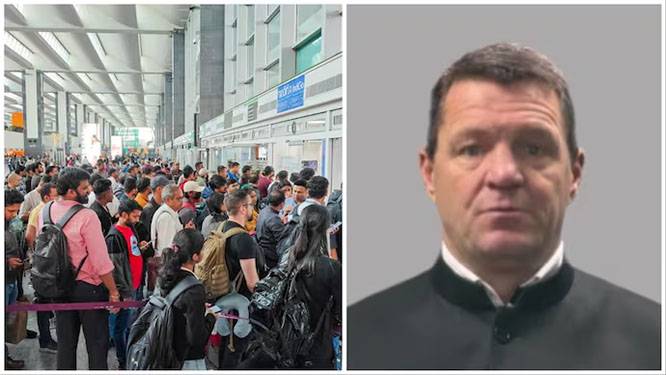
New Delhi, Dec 5: IndiGo CEO Pieter Elbers issued a public apology this evening after more than a thousand flights were cancelled today, making it the "most severely impacted day" in terms of cancellations. The biggest airline of the country cancelled "more than half" of its daily number of flights on Friday, said Elbers. He also said that even though the crisis will persist on Saturday, the airline anticipates fewer than 1,000 flight cancellations.

"Full normalisation is expected between December 10 and 15, though IndiGo cautions that recovery will take time due to the scale of operations," the IndiGo CEO said. 

IndiGo operates around 2,300 domestic and international flights daily.

Pieter Elbers, while apologising for the major inconvenience due to delays and cancellations, said the situation is a result of various causes.

The crisis at IndiGo stems from new regulations that boost pilots' weekly rest requirements by 12 hours to 48 and allow only two night-time landings per week, down from six. IndiGo has attributed the mass cancellations to "misjudgment and planning gaps".

Elbers also listed three lines of action that the airline will adopt to address the issue.

"Firstly, customer communication and addressing your needs, for this, messages have been sent on social media. And just now, a more detailed communication with information, refunds, cancellations and other customer support measures was sent," he said.

The airline has also stepped up its call centre capacity.

"Secondly, due to yesterday's situation, we had customers stranded mostly at the nation's largest airports. Our focus was for all of them to be able to travel today itself, which will be achieved. For this, we also ask customers whose flights are cancelled not to come to the airports as notifications are sent," the CEO said.

"Thirdly, cancellations were made for today to align our crew and planes to be where they need to start tomorrow morning afresh. Earlier measures of the last few days, regrettable, have proven not to be enough, but we have decided today to reboot all our systems and schedules, resulting in the highest numbers of cancellations so far, but imperative for progressive improvements starting from tomorrow," he added.

As airports witnessed chaotic scenes, the Directorate General of Civil Aviation (DGCA) stepped in to grant IndiGo a temporary exemption from stricter night duty rules for pilots. It also allowed substitution of leaves with a weekly rest period. 

Civil Aviation Minister Ram Mohan Naidu has said a high-level inquiry will be ordered and accountability will be fixed.

Comments

Add new comment

  • Coastaldigest.com reserves the right to delete or block any comments.
  • Coastaldigset.com is not responsible for its readers’ comments.
  • Comments that are abusive, incendiary or irrelevant are strictly prohibited.
  • Please use a genuine email ID and provide your name to avoid reject.
News Network
December 2,2025

A major upgrade in safety and monitoring is planned for Haj 2026, with every Indian pilgrim set to receive a Haj Suvidha smart wristband linked to the official Haj Suvidha mobile app. The initiative aims to support pilgrims—especially senior citizens—who may struggle with smartphones during the 45-day journey.

What the Smart Wristband Will Do

Officials said the device will come with:
•    Location tracking
•    Pedometer
•    SOS emergency button
•    Qibla compass
•    Prayer timings
•    Basic health monitoring

SP Tiwari, secretary of the UP State Haj Committee, said the goal is to make the pilgrimage safer and more comfortable.

“Most Hajis are elderly and not comfortable with mobile apps,” he said. “The smartwatch will help locate pilgrims who forget their way or cannot communicate their location.”

The wristbands will be monitored by the Consulate General of India in Saudi Arabia, similar to mobile tracking via the Haj Suvidha App.

Free Distribution and Training

•    Smart wristbands will be given free of cost.
•    Training for pilgrims will be conducted between January and February 2026.
•    Sample units will reach state Haj committees soon.
•    Final devices will be distributed as pilgrims begin their journey.

New Rules for Accommodation

Two major decisions have also been finalised for Haj 2026:
1.    Separate rooms for men and women – including married couples. They may stay on the same floor but must occupy different rooms, following stricter Saudi guidelines.
2.    Cooking banned – gas cylinders will not be allowed; all meals will be provided through official catering services arranged by the Haj Committee of India.

These decisions were finalised during a meeting of the Haj Committee of India and state representatives in Mumbai.

Haj Suvidha App Launched Earlier

The government launched the Haj Suvidha App in 2024, offering:

•    Training modules
•    Accommodation and flight details
•    Baggage information
•    SOS and translation tools
•    Grievance redressal

Haj 2026 Quota and Key States

•    India’s total Haj quota for 2026: 1,75,025 pilgrims
•    70% (1,25,000) allotted to the Haj Committee of India
•    30% (around 50,000) reserved for Haj Group Organisers

Uttar Pradesh has the largest allocation (around 30,000 seats), though approximately 18,000 pilgrims are expected to go this year. States with high pilgrim numbers include Kerala, Maharashtra and Gujarat.

Dates of Haj 2026

The pilgrimage is scheduled to take place from 24 May to 29 May, 2026 (tentative).
Haj is one of the five pillars of Islam and is mandatory for Muslims who meet the required conditions.

Comments

Add new comment

  • Coastaldigest.com reserves the right to delete or block any comments.
  • Coastaldigset.com is not responsible for its readers’ comments.
  • Comments that are abusive, incendiary or irrelevant are strictly prohibited.
  • Please use a genuine email ID and provide your name to avoid reject.