Cultural heritage, military might on display at R-Day parade

January 26, 2013
New Delhi, Jan 26: A kaleidoscopic view of the country's rich cultural heritage and military prowess were on display at the 64th Republic Day parade today on the 8-km stretch from Rajpath to Red Fort.

An eager audience on both sides of the imposing Rajpath, the country's ceremonial boulevard facing the seat of power Raisina Hills, braved the winter chill and cheered loudly as the parade went past them portraying the rich and diverse culture of the country.
RDay_copy

The icing on the cake was the 5,500-5,800 km ballistic Agni-V missile mounted on a road mobile launcher which was paraded by the Defence Research & Development Organisation as the crowd lapped it up with loud cheer.

General Officer Commanding (Delhi) Lt General Subroto Mitra led the synchronised military and police contingents as they marched to the cheerful tunes of bands through the 2-km Rajpath where President Pranab Mukherjee, also the Supreme Commander of the Armed Forces, took the salute for the first time after assuming office in July last year.

The impressive march-past was watched by Chief Guest, Bhutan king Jigme Khesar Namgyel Wangchuck, Vice President Hamid Ansari, Prime Minister Manmohan Singh, Defence Minister A K Antony, UPA Chairperson Sonia Gandhi, and top political and military brass.

Police and other para-military forces turned Delhi into a a virtual fortress for the Republic Day celebrations as helicopters scanned from air, snipers kept a hawk-eye vigil from rooftops and armed personnel at every nook and corner provided a ground-to-air security apparatus.

Minutes before the parade began, Singh, Antony and chiefs of Army, Navy and Air Force laid wreaths at 'Amar Jawan Jyoti', an eternal flame in the memory of those who laid down their lives while defending the nation.

After the customary 21-gun salute and unfurling of the national tricolour by President Mukherjee, the spectacle began with four army helicopters flying above Rajpath carrying the national flag and the three flags of the Army, Navy and Air Force.

The country showed its military strength with the MBT Arjun Tank, Armoured Ambulance Tracked Vehicle, BrahMos missiles and 214 mm Pinaka rockets, 15 Metre Sarvatra Bridging System.

The Army contingent from horse-mounted columns of the 61st Cavalry, Mechanised Infantry Regiment, Maratha Light Infantry, Dogra Regiment, Garhwal Rifles, Ladakh Scouts, 8 Gorkha Training Centre, Army Ordnance Corps and Territorial Army (Punjab) marched to the martial tunes.

The next to follow were smartly-dressed Navy personnel and then the Air Force contingent. The Air Force contingent was led by Flight Lieutenant Heena Pore.

A mini version of INS Vikramaditya which will join the Naval fleet by the end of this year was also part of the parade which highlighted Indian Navy's blue water operating capability.

The DRDO displayed the Armoured Amphibious Dozer (AAD), an indigenously developed versatile Combat Engineer support equipment with excellent earth moving and amphibious capabilities in varied terrain. Airborne Early Warning and Control System and Naval Sonar were also displayed.

Other marching contingents were those of camel-mounted BSF, Assam Rifles, Coast Guard, CRPF, ITBP, CISF, SSB, RPF, Delhi Police, NCC and NSS.

As the country's armed and police forces demonstrated their might, states and different departments put up an impressive show when they showcased their rich cultural diversity in full display in 19 tableaux -- 14 from states and five from ministries. '

This year, the number of tableaux has been reduced to 19 from last year's 23.

The first tableau to roll out was that of West Bengal which paid tributes to the "ethereal thinker-patriot-saint" Swami Vivekananda, whose 150th birth anniversary will be celebrated this year. Vivekananda is depicted as one who is propagating the message "truth is one but the wise call it by different names".

Uttar Pradesh came up with 'Braj ki Holi' -- a social and cultural festival embracing all the social and regional diversities in itself. The tableau depicted a scene where the women of Barsana are trying to fend off the 'gopis' of Nandgaon region of Brijbhumi.

The north-eastern state of Meghalaya, also known as the abode of clouds, came up with post-harvest festival dance Wangala, a thanks giving ceremony to their God 'Misi Saljong' (The Great Giver). The dance is played to beats of 100 drums.

Karnataka tableau was that of 'Kinna', a craft primarily used to carve religious idols and toys. Its main attraction is Kamdhenu, the mythical cow.

One of the interesting concept this year was from Jammu and Kashmir, which showcased a unique blend of tradition and technology with world's first cloned pashmina goat 'Noori' and the pashmina-making process. The clone has come as a good news for the fine fibre-producing pashmina goat, which is only spotted at an altitude of 14,000-ft in Ladakh.

Jharkhand, which participated in the parade after a gap of five years, depicted the Dokra art -- a specialised metal cast technique using wax casting.

While the northern hill state of Himachal Pradesh showcased the craft, architecture and folk life of tribal district of Kinnaur, Kerala came up a miniature landscape of the state with a houseboat.

Chhattisgarh tableau has Shiva, Buddha and Jain temples on board depicting the cultural prosperity and religious tolerance of its ancient city called Sirpur. Odisha tableau was based on the Chandan Yatra of Lord Jagannath.

Earlier:

Tight security in capital for Republic Day celebrations

New Delhi, Jan 26: A thick security blanket was thrown around the capital today with thousands of armed personnel keeping a tight vigil to thwart any possible terror strike or any untoward incident during the Republic Day celebrations.

Snipers with sophisticated arms were on high-rises while hundreds of police personnel kept the eight km parade route from Rajpath to Red Fort under their watch to ensure that the event passed peacefully.

Around 25,000 police personnel, including those from paramilitary forces and sharpshooters from the elite National Security Guards (NSG) were deployed across the city in the run-up to the national celebrations.

Policemen kept a tab on the visuals from over 160 CCTVs between Rajpath and Red Fort, the route of the parade. Mobile hit teams, anti-aircraft guns and sharpshooters of the NSG were also on the job at various places while paramilitary and Delhi Police commandos kept a close watch along the route.

"There was a special emphasis on anti-sabotage checks, access control measures and intelligence coordination. The entire route of the parade was covered by special security and anti-terror arrangements.

"Elaborate air defence measures, including deployment of anti-aircraft guns, were also taken to check intrusion of air space," a senior police official said. Besides the air defence measures, helicopters of the Indian Air Force hovered around Rajpath and all along the route of the parade.

Vehicles entering the city were randomnly checked. As the city witnessed a terror strike only four months ago, the security establishment left no stone unturned to ensure an incident-free celebrations.

No vehicles were allowed to ply on Rajpath from 6 PM yesterday while vehicular movement was restricted on Tilak Marg, Bahadurshah Zafar Marg, Netaji Subhash Marg upto Red Fort from 4 AM.

Comments

Add new comment

  • Coastaldigest.com reserves the right to delete or block any comments.
  • Coastaldigset.com is not responsible for its readers’ comments.
  • Comments that are abusive, incendiary or irrelevant are strictly prohibited.
  • Please use a genuine email ID and provide your name to avoid reject.
News Network
December 4,2025

indigoflight.jpg

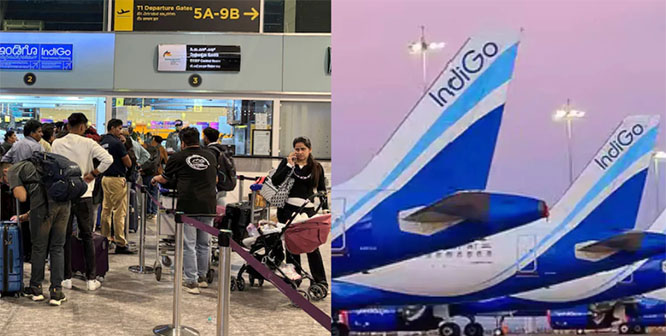
Domestic carrier IndiGo has cancelled over 180 flights from three major airports — Mumbai, Delhi and Bengaluru — on Thursday, December 4, as the airline struggles to secure the required crew to operate its flights in the wake of new flight-duty and rest-period norms for pilots.

While the number of cancellations at Mumbai airport stands at 86 (41 arrivals and 45 departures) for the day, at Bengaluru, 73 flights have been cancelled, including 41 arrivals, according to a PTI report that quoted sources.

"IndiGo cancelled over 180 flights on Thursday at three airports-Mumbai, Delhi and Bengaluru," the source told the news agency.

Besides, it had cancelled as many as 33 flights at Delhi airport for Thursday, the source said, adding, "The number of cancellations is expected to be higher by the end of the day."

The Gurugram-based airline's On-Time Performance (OTP) nosedived to 19.7 per cent at six key airports — Delhi, Mumbai, Chennai, Kolkata, Bengaluru and Hyderabad — on December 3, as it struggled to get the required crew to operate its services, down from almost half of December 2, when it was 35 per cent.

"IndiGo has been facing acute crew shortage since the implementation of the second phase of the FDTL (Flight Duty Time Limitations) norms, leading to cancellations and huge delays in its operations across the airports," a source had told PTI on Wednesday.

Chaos continued at several major airports for the third day on Thursday because of the cancellations.

A spokesperson for the Kempegowda International Airport (KIA) in Bengaluru said that 73 IndiGo flights had been cancelled on Thursday.

At least 150 flights were cancelled and dozens of others delayed on Wednesday, airport sources said, leaving thousands of travellers stranded, according to news agency Reuters.

The Directorate General of Civil Aviation (DGCA) has said it is investigating IndiGo flight disruptions and has asked the airline to submit the reasons for the current situation, as well as its plans to reduce flight cancellations and delays.

It may be mentioned here that the pilots' body, Federation of Indian Pilots (FIP), has alleged that IndiGo, despite getting a two-year preparatory window before the full implementation of new flight duty and rest period norms for cockpit crew, "inexplicably" adopted a "hiring freeze".

The FIP said it has urged the safety regulator, the DGCA, not to approve airlines' seasonal flight schedules unless they have adequate staff to operate their services "safely and reliably" in accordance with the New Flight Duty Time Limitations (FDTL) norms.

In a letter to the DGCA late on Wednesday, the FIP urged the DGCA to consider re-evaluating and reallocating slots to other airlines, which have the capacity to operate them without disruption during the peak holiday and fog season if IndiGo continues to "fail in delivering on its commitments to passengers due to its own avoidable staffing shortages."

Comments

Add new comment

  • Coastaldigest.com reserves the right to delete or block any comments.
  • Coastaldigset.com is not responsible for its readers’ comments.
  • Comments that are abusive, incendiary or irrelevant are strictly prohibited.
  • Please use a genuine email ID and provide your name to avoid reject.
News Network
December 4,2025

indigocrisis.jpg

Angry outbursts, long queues, and desperate appeals filled airports across India today as IndiGo grappled with a severe operational breakdown. Hundreds of flights have been cancelled or delayed, leaving thousands of passengers stranded through the night and forcing many to spend long hours at helpdesks.

Social media was flooded with videos of fliers pleading for assistance, accusing the airline of misleading updates, and demanding accommodation after being stuck for 10 to 12 hours at airports such as Hyderabad and Bengaluru.

What Triggered the Meltdown?

IndiGo has attributed the widespread disruption to “a multitude of unforeseen operational challenges.” These include:

•    Minor technology glitches
•    Winter-season schedule adjustments
•    Bad weather
•    Congestion in the aviation network
•    New crew rostering rules (Flight Duty Time Limitations or FDTL)

Among these, the most disruptive has been the implementation of the updated FDTL norms introduced by the Directorate General of Civil Aviation (DGCA) in January 2024.

These rules were designed to reduce pilot fatigue and improve passenger safety. Key changes include:

•    Longer weekly rest periods for flight crew
•    A revised definition of “night,” extending it by an extra hour
•    Tighter caps on flight duty timing and night landings
•    Cutting night shifts for pilots and crew from six per roster cycle to just two

Once these norms became fully enforceable, airlines were required to overhaul rosters well in advance. For IndiGo, this triggered a sudden shortage of crew available for duty, leading to cascading delays and cancellations.

Why IndiGo Was Hit the Hardest

IndiGo is India’s largest airline by a wide margin, operating over 2,200 flights daily. That’s roughly double the number operated by Air India.

When an airline of this size experiences even a 10–20% disruption, it translates to 200–400 flights being delayed or grounded — producing massive spillover effects across the country.

IndiGo also relies heavily on high-frequency overnight operations, a model typical of low-cost carriers that aim to maximise aircraft utilisation and reduce downtime. The stricter FDTL norms clash with these overnight-heavy schedules, forcing the airline to pull back services.

Aviation bodies have also criticised IndiGo’s preparedness. The Airline Pilots' Association of India (ALPA) said airlines were given a two-year window to plan for the new rules but “started preparing rather late.” IndiGo, it said, failed to rebuild crew rosters 15 days in advance as required.

The Federation of Indian Pilots (FIP) went further, calling the crisis the result of IndiGo’s “prolonged and unorthodox lean manpower strategy,” and alleging that the airline adopted a hiring freeze even as it knew the new rules would require more careful staffing.

How Many Flights Are Affected?

In the past 48 hours, over 300 flights have been cancelled. At least 100 more are expected to be cancelled today.

City-wise impact:

•    Hyderabad: 33 expected cancellations; several fliers stranded overnight
•    Bengaluru: over 70 expected cancellations
•    Delhi, Mumbai, Chennai, Kolkata: widespread delays and missed connections

Passengers shared distressing accounts online.

One customer at Hyderabad airport said they waited from 6 PM to 9 AM with “no action taken” regarding their delayed Pune flight. Another said IndiGo repeatedly told them the crew was “arriving soon,” only for the delay to stretch over 12 hours.

IndiGo has apologised for the disruption and promised that operations will stabilise within 48 hours, adding that “calibrated adjustments” are being made to contain the chaos.

What Should Passengers Do Now?

For those flying in the next few days, especially with IndiGo, here are key precautions:

1. Keep Checking Flight Status
Monitor your flight closely before leaving for the airport, as delays may be announced last-minute.

2. Arrive Early
Expect long queues at counters and security due to crowding and rescheduling.

3. Carry Essentials
Pack snacks, water, basic medicines, chargers, and items for children or senior citizens. Extended waiting times should be anticipated.

4. Use Flexible Booking Options
If you booked tickets with a free-date-change or cancellation option, consider using them.
If you haven’t booked yet, prefer refundable or flexible fares, or even consider alternate airlines.

5. Follow IndiGo’s Updates
Keep an eye on IndiGo’s official social media channels and contact customer support for rebooking and refund queries.

What Needs to Change?

Pilot groups have raised concerns not just about staffing but also the planning practices behind it.
The Federation of Indian Pilots accused IndiGo of:

•    Imposing an unexplained hiring freeze despite knowing the FDTL changes were coming
•    Entering non-poaching agreements that limited talent movement
•    Keeping pilot pay frozen
•    Underestimating the need to restructure operations in advance

They have urged DGCA to approve seasonal schedules only after airlines prove they have adequate pilot strength under the new norms.

ALPA also warned that some airlines might be using the delays as an “immature pressure tactic” to push DGCA for relaxations in the new rules — which, if granted, could compromise the very safety standards the norms were meant to protect.

Both pilot bodies stressed that no exemption should dilute safety, and any deviations should be based solely on scientific risk assessment.

Is a Solution in Sight?

While IndiGo says normalcy will return within two days, aviation experts believe that fully stabilising operations could take longer, depending on how quickly the airline can:
•    Re-align rosters
•    Mobilise rested crew
•    Boost staffing
•    Adjust its winter schedule to match regulatory requirements
Passengers are advised to remain prepared for continued delays over the next few days as the airline works through its backlog. 

Comments

Add new comment

  • Coastaldigest.com reserves the right to delete or block any comments.
  • Coastaldigset.com is not responsible for its readers’ comments.
  • Comments that are abusive, incendiary or irrelevant are strictly prohibited.
  • Please use a genuine email ID and provide your name to avoid reject.
News Network
December 2,2025

A major upgrade in safety and monitoring is planned for Haj 2026, with every Indian pilgrim set to receive a Haj Suvidha smart wristband linked to the official Haj Suvidha mobile app. The initiative aims to support pilgrims—especially senior citizens—who may struggle with smartphones during the 45-day journey.

What the Smart Wristband Will Do

Officials said the device will come with:
•    Location tracking
•    Pedometer
•    SOS emergency button
•    Qibla compass
•    Prayer timings
•    Basic health monitoring

SP Tiwari, secretary of the UP State Haj Committee, said the goal is to make the pilgrimage safer and more comfortable.

“Most Hajis are elderly and not comfortable with mobile apps,” he said. “The smartwatch will help locate pilgrims who forget their way or cannot communicate their location.”

The wristbands will be monitored by the Consulate General of India in Saudi Arabia, similar to mobile tracking via the Haj Suvidha App.

Free Distribution and Training

•    Smart wristbands will be given free of cost.
•    Training for pilgrims will be conducted between January and February 2026.
•    Sample units will reach state Haj committees soon.
•    Final devices will be distributed as pilgrims begin their journey.

New Rules for Accommodation

Two major decisions have also been finalised for Haj 2026:
1.    Separate rooms for men and women – including married couples. They may stay on the same floor but must occupy different rooms, following stricter Saudi guidelines.
2.    Cooking banned – gas cylinders will not be allowed; all meals will be provided through official catering services arranged by the Haj Committee of India.

These decisions were finalised during a meeting of the Haj Committee of India and state representatives in Mumbai.

Haj Suvidha App Launched Earlier

The government launched the Haj Suvidha App in 2024, offering:

•    Training modules
•    Accommodation and flight details
•    Baggage information
•    SOS and translation tools
•    Grievance redressal

Haj 2026 Quota and Key States

•    India’s total Haj quota for 2026: 1,75,025 pilgrims
•    70% (1,25,000) allotted to the Haj Committee of India
•    30% (around 50,000) reserved for Haj Group Organisers

Uttar Pradesh has the largest allocation (around 30,000 seats), though approximately 18,000 pilgrims are expected to go this year. States with high pilgrim numbers include Kerala, Maharashtra and Gujarat.

Dates of Haj 2026

The pilgrimage is scheduled to take place from 24 May to 29 May, 2026 (tentative).
Haj is one of the five pillars of Islam and is mandatory for Muslims who meet the required conditions.

Comments

Add new comment

  • Coastaldigest.com reserves the right to delete or block any comments.
  • Coastaldigset.com is not responsible for its readers’ comments.
  • Comments that are abusive, incendiary or irrelevant are strictly prohibited.
  • Please use a genuine email ID and provide your name to avoid reject.