Uttrakhand floods: death toll nears 600

June 21, 2013
flood
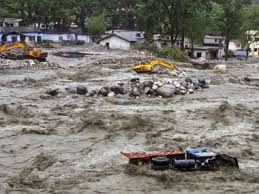
New Delhi, Jun 21: Rescuers found bodies in the Ganga and in the muddy, broken earth left by landslides, raising the death toll from flooding in northern India to nearly 600 on Friday, officials said.

The air force dropped paratroopers, food and medicine for people trapped in up to 100 towns and villages cut off since Sunday in Uttrakhand where thousands of people are stranded.

Uttrakhand Chief Minister Vijay Bahguna told CNN-IBN that 556 bodies had been noticed buried deep in slush and the Army was trying to recover them.

Also on Friday, rescuers found 40 bodies floating in the Ganga near Hardwar, Senior Superintendent of Police Rajeev Swaroop said.

Mr. Bahguna said the eventual toll would be in the hundreds. Uttarakhand Principal Secretary Rakesh Sharma had said on Thursday the death toll might reach the thousands but the exact figure would not be known until the entire region is checked.

Uttrakhand official Amit Chandola said the rescue operation centered on evacuating nearly 27,000 people trapped in the worst-hit Kedarnath shrine area. The shrine escaped major damage, but debris covered the area around it and television images showed the bodies of pilgrims strewn around the area.

Soldiers and other workers reopened dozens of roads by building makeshift bridges, accelerating the evacuation, Mr. Chandola said. More than 2,000 vehicles carrying stranded pilgrims have moved out of the area since late Thursday, he said.

Thousands of soldiers continued efforts to reach the worst-hit towns and villages, Mr. Chandola said.

Thirty-six air force helicopters have been ferrying rescue workers, doctors, equipment, food and medicine to Kedarnath, said Priya Joshi, an IAF spokeswoman. Another seven aircraft carried paratroopers and fuel to the region.

Jasveer Kaur, a 50-year-old housewife, said she and her family survived by taking shelter in a Sikh shrine, which withstood the flood, located in Govind Dham.

“There was destruction all around,” said Ms. Kaur after she was evacuated by an IAF helicopter. “It was a nightmare.”

In New Delhi, Home Minister Sushilkumar Shinde said over 50,000 people were still stranded in different inaccessible parts of Uttarakhand.

“We have evacuated 34,000 people from various parts of Uttarakhand but 50,000 people are still stranded. Our efforts are continuing to rescue all the stranded people,” he said after a review meeting on the situation in Uttarakhand.

In Himachal Pradesh, rescue operations were on to evacuate stranded people in rain-hit Kinnaur district with two dedicated choppers pressed into service even as reports of more people stuck in interior Pooh, Nako and Kaza areas poured in.

Two IAF choppers and one State chopper had been deployed for evacuating the stranded but one chopper has developed some problem.

“So far over 550 people have been airlifted but the number is steadily increasing with reports of more people struck at different places, pouring in.Helicopter sorties have also been planned for Pooh, Nako, Kaza and other interior places,” officials said.

Army patrols were on search and rescue missions to evacuate civilians stranded along the Hindustan Tibet National Highway blocked by landslides.

While 40 people were evacuated till last evening from Nako, Malling, Khab, Dubling, Pooh and Ropa to Army camps, 140 civilians have been airlifted by armed forces’ helicopters from Bhabhanagar, Rekong Peo and Rampur.

The BSNL tower at Pooh is being operated under the aegis of the Army to facilitate communication by civilians stranded in the area.

In Uttar Pradesh, the rivers Ganga and Sharda continue to flow near the danger mark as the government intensified flood relief operations and released Rs 50 lakh for the 13 affected districts.

Chief Minister Akhilesh Yadav, who took stock of the situation in 13 affected districts — Saharanpur, Jhansi, Bijnore, Muzaffarnagar, Amroha, Bahraich, Lakhimpur, Meerut, Barabnki, Pilibhit, Sitapur, Balrampur and Gonda — sanctioned Rs. 50 lakh for each district for flood relief operation.

The rivers Sharda at Palia Kalan and Ghaghra at Elgin Bridge and Ayodhya were still flowing above the danger mark.

The river Sharda was flowing near the red mark at Turtipar and Rapti at Balrampur while the river Ganga was rising all along its route from Fatehgarh to Allahabad.

Meanwhile, the main link between U.P. and Haryana remained cut off for the fourth day today due to closure of the bridge over the river Yamuna at Kairana in Shamli district.

The bridge was closed for traffic as the river Yamuna had crossed the danger mark four days ago.

The Haridwar Senior Superintendent of Police said, “40 bodies have been recovered from different points along the Ganga since last evening and taken to the district hospital where each of them is being given a number and an identification tag.”

An equal number of bodies are likely to be recovered soon from different areas located along the banks of the Ganga in the holy city, Mr. Swaroop said.

Citing difficulties in conducting the autopsy of so many bodies with limited facilities available, the official said additional teams of doctors have been requisitioned for the purpose.

Help is being taken from BHEL, Rishikul Ayurvedic College and State Infrastructure and Industrial Development Corporation of Uttaranchal (SIDCUL) to examine the bodies, he said.

Over 33,000 evacuated

Stepping up relief efforts, the Centre on Friday deployed more aircraft to evacuate thousands stranded in Uttarakhand even as the railways pitched in with free travel to enable those rescued to reach their hometowns.

As many as 33,152 persons have been moved to safer areas in massive relief and rescue operations launched by the Central and state governments in the last few days to tackle the unprecedented situation caused by flash floods.

“The Air Force has deployed 13 more aircraft taking the number of aircraft for relief and rescue operations to 43,” I&B Minister Manish Tewari told reporters in New Delhi.

He said the railways was also operating special trains from Dehradun to Delhi, Ambala and Lucknow to ferry stranded pilgrims and tourists.

Mr. Tewari said the railways along with the Uttarakhand government has also offered to send all stranded passengers free of cost to their respective destinations.

The Indian Air Force has deployed its heavylift Mi-26 helicopters to transport fuel and heavy equipment required by the Border Roads Organisation (BRO) to clear roads closed due to landslide.

The IAF has also activated advanced landing grounds at Dharasu and Gaucher and set up an airbridge to evacuate stranded persons.

Besides the Army, personnel of the Sashastra Seema Bal, Indo-Tibetan Border Police, National Disaster Relief Force, BRO have been engaged in search, rescue and relief efforts.

Efforts were also on to operationalise 207 mobile towers of 739 such installations in the three affected districts of Chamoli, Rudraprayag and Uttarkashi.

More Helipads being built

The rescue teams are focusing on evacuating people stuck in the jungles between Kedarnath and Gaurikund and more helipads were being built, said ITBP chief Ajay Chadha on Friday.

Addressing a press conference, Mr. Chadha said the Indo-Tibetan Border Police (ITBP) and the National Disaster Response Force teams were trying to set up a small helipad in Rambada, near Kedarnath, to enable choppers to land and evacuate people.

“We are trying to evacuate people and trying to create a helipad to help people stuck in the jungles in Kedarnath and Gaurikund,” Mr. Chadha said at a press conference.

The rescue teams were trying to create more roads to evacuate people as roads have been washed away, he added.

Asked if the authorities were trying to press in more choppers to evacuate people, Mr. Chadha said the helipads being used were small and it was difficult for more than one or two choppers to land at a time.

He said the Army authorities are trying to create a big helipad at Gaurikund to enable the big MI-17 choppers to land.

He termed the rescue operations, which have picked up with the weather clearing, as “satisfactory.”

Mr. Chadha visited Uttarakhand along with senior Home Ministry officials on Wednesday.

Comments

Add new comment

  • Coastaldigest.com reserves the right to delete or block any comments.
  • Coastaldigset.com is not responsible for its readers’ comments.
  • Comments that are abusive, incendiary or irrelevant are strictly prohibited.
  • Please use a genuine email ID and provide your name to avoid reject.
News Network
December 3,2025

indigo.jpg

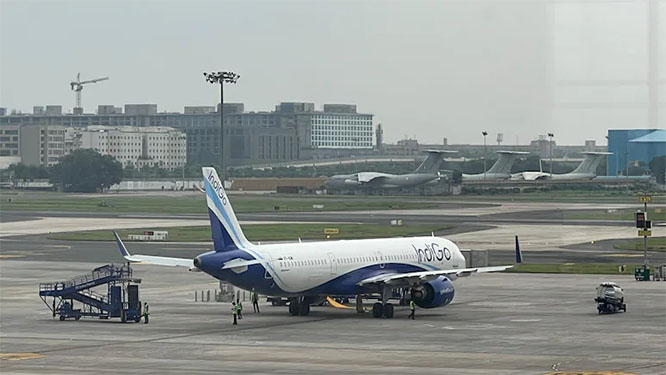
IndiGo, India’s largest airline, is battling one of its worst operational disruptions in recent years, with hundreds of delays and cancellations throwing domestic travel into chaos.

Government data on Tuesday showed its on-time performance plunging to 35%, an unusual dip for a carrier long associated with punctuality.

By Wednesday afternoon, airports in Delhi, Mumbai, Bengaluru and Hyderabad had collectively reported close to 200 cancellations, stranding travellers across the country.

Crew Shortage After New Duty Norms

A major trigger behind the meltdown is a severe crew shortage, especially among pilots, following the rollout of revised Flight Duty Time Limitation (FDTL) norms last month.

The rules mandate longer rest hours and more humane rosters — a shift IndiGo has struggled to incorporate across its vast network.

Sources said several flights were grounded due to lack of cabin crew, while some delays stretched upwards of eight hours.

With IndiGo controlling over 60% of India’s domestic aviation market, the ripple effect has impacted airports nationwide.

IndiGo Issues Apology, Lists “Compounding Factors”

In a statement, IndiGo acknowledged the large-scale disruption:

“We sincerely apologise to customers. A series of unforeseen operational challenges — technology glitches, winter schedule changes, adverse weather, system congestion and updated FDTL norms — created a compounding impact that could not have been anticipated.”

To stabilise operations, the airline has begun calibrated schedule adjustments for the next 48 hours, aiming to restore punctuality. Affected passengers are being offered refunds or alternate travel arrangements, IndiGo said.

What the FDTL Rules Require

The FDTL norms, designed to reduce pilot fatigue, cap duty and flying hours as follows:
•    Maximum 8 hours of flying per day
•    35 hours per week
•    125 hours per month
•    1,000 hours per year

Crew must also receive rest equalling twice the flight duration, with a minimum 10-hour rest period in any 24-hour window.

The DGCA introduced these limits to enhance flight safety.

Hyderabad: 33 Flights Cancelled, Long Queues Reported

Hyderabad’s Rajiv Gandhi International Airport saw heavy early-morning crowds as 33 IndiGo flights (arrivals and departures) were cancelled.

The airport clarified on X that operations were normal, advising passengers to contact IndiGo directly for latest flight status.

Cancellations included flights to and from Visakhapatnam, Goa, Ahmedabad, Delhi, Bengaluru, Chennai, Madurai, Hubli, Bhopal and Bhubaneswar.

Bengaluru: 42 Flights Disrupted

Bengaluru’s Kempegowda International Airport recorded 42 cancellations — 22 arrivals and 20 departures — affecting routes to Delhi, Mumbai, Chennai, Hyderabad, Goa, Kolkata and Lucknow.

Passengers Vent on Social Media

Irate travellers took to X to share their experiences. One passenger stranded in Hyderabad wrote: “I have been here since 3 a.m. and missed an important meeting.”

Another said: “My flight was pushed from 1:55 PM to 2:55 PM and now 4:35 PM. I was informed only three minutes before entering the airport.”

Delhi Airport Hit by Tech Glitch

At Delhi Airport, the disruption deepened due to a slowdown in the Amadeus system — used for reservations, check-ins and departure control.

The technical issue led to longer queues and sluggish processing, adding to delays already worsened by staff shortages.

Comments

Add new comment

  • Coastaldigest.com reserves the right to delete or block any comments.
  • Coastaldigset.com is not responsible for its readers’ comments.
  • Comments that are abusive, incendiary or irrelevant are strictly prohibited.
  • Please use a genuine email ID and provide your name to avoid reject.
News Network
December 6,2025

pilot.jpg

New Delhi: IndiGo, India’s largest airline, faced major operational turbulence this week after failing to prepare for new pilot-fatigue regulations issued by the Directorate General of Civil Aviation (DGCA). The stricter rules—designed to improve flight safety—took effect in phases through 2024, with the latest implementation on November 1. IndiGo has acknowledged that inadequate roster planning led to widespread cancellations and delays.

Below are the key DGCA rules that affected IndiGo’s operations:

1. Longer Mandatory Weekly Rest

Weekly rest for pilots has been increased from 36 hours to 48 hours.

The government says the extended break is essential to curb cumulative fatigue. This rule remains in force despite the current crisis.

2. Cap on Night Landings

Pilots can now perform only two night landings per week—a steep reduction from the earlier limit of six.

Night hours, defined as midnight to early morning, are considered the least alert period for pilots.

Given the disruptions, this rule has been temporarily relaxed for IndiGo until February 10.

3. Reduced Maximum Night Flight Duty

Flight duty that stretches into the night is now capped at 10 hours.

This measure has also been kept on hold for IndiGo until February 10 to stabilize operations.

4. Weekly Rest Cannot Be Replaced With Personal Leave

Airlines can no longer count a pilot’s personal leave as part of the mandatory 48-hour rest.

Pilots say this closes a loophole that previously reduced actual rest time.

Currently, all airlines are exempt from this rule to normalise travel.

5. Mandatory Fatigue Monitoring

Airlines must submit quarterly fatigue reports along with corrective actions to DGCA.

This system aims to create a transparent fatigue-tracking framework across the industry.

The DGCA has stressed that these rules were crafted to strengthen flight safety and align India with global fatigue-management standards. The temporary relaxations are expected to remain until February 2025, giving IndiGo time to stabilise its schedules and restore normal air travel.

Comments

Add new comment

  • Coastaldigest.com reserves the right to delete or block any comments.
  • Coastaldigset.com is not responsible for its readers’ comments.
  • Comments that are abusive, incendiary or irrelevant are strictly prohibited.
  • Please use a genuine email ID and provide your name to avoid reject.
News Network
December 4,2025

indigocrisis.jpg

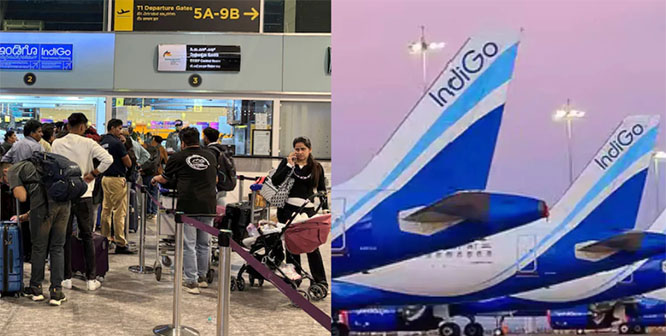
Angry outbursts, long queues, and desperate appeals filled airports across India today as IndiGo grappled with a severe operational breakdown. Hundreds of flights have been cancelled or delayed, leaving thousands of passengers stranded through the night and forcing many to spend long hours at helpdesks.

Social media was flooded with videos of fliers pleading for assistance, accusing the airline of misleading updates, and demanding accommodation after being stuck for 10 to 12 hours at airports such as Hyderabad and Bengaluru.

What Triggered the Meltdown?

IndiGo has attributed the widespread disruption to “a multitude of unforeseen operational challenges.” These include:

•    Minor technology glitches
•    Winter-season schedule adjustments
•    Bad weather
•    Congestion in the aviation network
•    New crew rostering rules (Flight Duty Time Limitations or FDTL)

Among these, the most disruptive has been the implementation of the updated FDTL norms introduced by the Directorate General of Civil Aviation (DGCA) in January 2024.

These rules were designed to reduce pilot fatigue and improve passenger safety. Key changes include:

•    Longer weekly rest periods for flight crew
•    A revised definition of “night,” extending it by an extra hour
•    Tighter caps on flight duty timing and night landings
•    Cutting night shifts for pilots and crew from six per roster cycle to just two

Once these norms became fully enforceable, airlines were required to overhaul rosters well in advance. For IndiGo, this triggered a sudden shortage of crew available for duty, leading to cascading delays and cancellations.

Why IndiGo Was Hit the Hardest

IndiGo is India’s largest airline by a wide margin, operating over 2,200 flights daily. That’s roughly double the number operated by Air India.

When an airline of this size experiences even a 10–20% disruption, it translates to 200–400 flights being delayed or grounded — producing massive spillover effects across the country.

IndiGo also relies heavily on high-frequency overnight operations, a model typical of low-cost carriers that aim to maximise aircraft utilisation and reduce downtime. The stricter FDTL norms clash with these overnight-heavy schedules, forcing the airline to pull back services.

Aviation bodies have also criticised IndiGo’s preparedness. The Airline Pilots' Association of India (ALPA) said airlines were given a two-year window to plan for the new rules but “started preparing rather late.” IndiGo, it said, failed to rebuild crew rosters 15 days in advance as required.

The Federation of Indian Pilots (FIP) went further, calling the crisis the result of IndiGo’s “prolonged and unorthodox lean manpower strategy,” and alleging that the airline adopted a hiring freeze even as it knew the new rules would require more careful staffing.

How Many Flights Are Affected?

In the past 48 hours, over 300 flights have been cancelled. At least 100 more are expected to be cancelled today.

City-wise impact:

•    Hyderabad: 33 expected cancellations; several fliers stranded overnight
•    Bengaluru: over 70 expected cancellations
•    Delhi, Mumbai, Chennai, Kolkata: widespread delays and missed connections

Passengers shared distressing accounts online.

One customer at Hyderabad airport said they waited from 6 PM to 9 AM with “no action taken” regarding their delayed Pune flight. Another said IndiGo repeatedly told them the crew was “arriving soon,” only for the delay to stretch over 12 hours.

IndiGo has apologised for the disruption and promised that operations will stabilise within 48 hours, adding that “calibrated adjustments” are being made to contain the chaos.

What Should Passengers Do Now?

For those flying in the next few days, especially with IndiGo, here are key precautions:

1. Keep Checking Flight Status
Monitor your flight closely before leaving for the airport, as delays may be announced last-minute.

2. Arrive Early
Expect long queues at counters and security due to crowding and rescheduling.

3. Carry Essentials
Pack snacks, water, basic medicines, chargers, and items for children or senior citizens. Extended waiting times should be anticipated.

4. Use Flexible Booking Options
If you booked tickets with a free-date-change or cancellation option, consider using them.
If you haven’t booked yet, prefer refundable or flexible fares, or even consider alternate airlines.

5. Follow IndiGo’s Updates
Keep an eye on IndiGo’s official social media channels and contact customer support for rebooking and refund queries.

What Needs to Change?

Pilot groups have raised concerns not just about staffing but also the planning practices behind it.
The Federation of Indian Pilots accused IndiGo of:

•    Imposing an unexplained hiring freeze despite knowing the FDTL changes were coming
•    Entering non-poaching agreements that limited talent movement
•    Keeping pilot pay frozen
•    Underestimating the need to restructure operations in advance

They have urged DGCA to approve seasonal schedules only after airlines prove they have adequate pilot strength under the new norms.

ALPA also warned that some airlines might be using the delays as an “immature pressure tactic” to push DGCA for relaxations in the new rules — which, if granted, could compromise the very safety standards the norms were meant to protect.

Both pilot bodies stressed that no exemption should dilute safety, and any deviations should be based solely on scientific risk assessment.

Is a Solution in Sight?

While IndiGo says normalcy will return within two days, aviation experts believe that fully stabilising operations could take longer, depending on how quickly the airline can:
•    Re-align rosters
•    Mobilise rested crew
•    Boost staffing
•    Adjust its winter schedule to match regulatory requirements
Passengers are advised to remain prepared for continued delays over the next few days as the airline works through its backlog. 

Comments

Add new comment

  • Coastaldigest.com reserves the right to delete or block any comments.
  • Coastaldigset.com is not responsible for its readers’ comments.
  • Comments that are abusive, incendiary or irrelevant are strictly prohibited.
  • Please use a genuine email ID and provide your name to avoid reject.