Did 'absolutely right thing' in 2002: Narendra Modi

July 12, 2013
modi
Narendra Modi is a polarising figure, evoking visceral reactions across the political spectrum. Critics call him a dictator while supporters believe he could make India an Asian superpower.

Reuters spoke to Modi at his official Gandhinagar residence in a rare interview, the first since he was appointed head of the BJP’s election campaign in June.

Here are edited excerpts from the interview. The questions are paraphrased and some of Modi’s replies have been translated from Hindi.

Is it frustrating that many people still define you by 2002?

People have a right to be critical. We are a democratic country. Everyone has their own view. I would feel guilty if I did something wrong. Frustration comes when you think “I got caught. I was stealing and I got caught.” That’s not my case.

Do you regret what happened?

I’ll tell you. India’s Supreme Court is considered a good court today in the world. The Supreme Court created a special investigative team (SIT) and top-most, very bright officers who overlook the SIT. That report came. In that report, I was given a thoroughly clean chit, a thoroughly clean chit. Another thing, any person if we are driving a car, we are a driver, and someone else is driving a car and we’re sitting behind, even then if a puppy comes under the wheel, will it be painful or not? Of course it is. If I’m a chief minister or not, I’m a human being. If something bad happens anywhere, it is natural to be sad.

Should your government have responded differently?

Up till now, we feel that we used our full strength to set out to do the right thing.

But do you think you did the right thing in 2002?

Absolutely. However much brainpower the Supreme Being has given us, however much experience I’ve got, and whatever I had available in that situation and this is what the SIT had investigated.

Do you believe India should have a secular leader?

We do believe that … But what is the definition of secularism? For me, my secularism is, India first. I say, the philosophy of my party is ‘Justice to all. Appeasement to none.’ This is our secularism.

Critics say you are an authoritarian, supporters say you are a decisive leader. Who is the real Modi?

If you call yourself a leader, then you have to be decisive. If you’re decisive then you have the chance to be a leader. These are two sides to the same coin … People want him to make decisions. Only then they accept the person as a leader. That is a quality, it’s not a negative. The other thing is, if someone was an authoritarian then how would he be able to run a government for so many years? … Without a team effort how can you get success? And that’s why I say Gujarat’s success is not Modi’s success. This is the success of Team Gujarat.

What about the suggestion that you don’t take criticism?

I always say the strength of democracy lies in criticism. If there is no criticism that means there is no democracy. And if you want to grow, you must invite criticism. And I want to grow, I want to invite criticism. But I’m against allegations. There is a vast difference between criticism and allegations. For criticism, you have to research, you’ll have to compare things, you’ll have to come with data, factual information, then you can criticize. Now no one is ready to do the hard work. So the simple way is to make allegations. In a democracy, allegations will never improve situations. So, I’m against allegations but I always welcome criticism.

On his popularity in opinion polls

I can say that since 2003, in however many polls have been done, people have selected me as the best chief minister. And as best chief minister, it wasn’t just people from Gujarat who liked me, not like that. People outside of Gujarat have also voted like that for me. One time, I wrote a letter to the India Today Group’s Aroon Purie. I requested him – “Every time I’m a winner, so next time please drop Gujarat, so someone else gets a chance. Or else I’m just winning. Please keep me out of the competition. And besides me, give someone else a shot at it.”

Allies and people within the BJP say you are too polarizing a figure

If in America, if there’s no polarization between Democrats and Republicans, then how would democracy work? It’s bound (to happen). In a democracy there will be a polarization between Democrats and Republicans.

This is democracy’s basic nature. It’s the basic quality of democracy. If everyone moved in one direction, would you call that a democracy?

But allies and partners still find you controversial

Up till now, no one from my party or the people who are allied with us, I’ve never read nor heard any official statement (about this from them). It might have been written about in the media. They write in a democracy … and if you have any name that this person is there in the BJP who said this, then I can respond.

How will you persuade minorities including Muslims to vote for you?

First thing, to Hindustan’s citizens, to voters, Hindus and Muslims, I’m not in favour of dividing. I’m not in favour of dividing Hindus and Sikhs. I’m not in favour of dividing Hindus and Christians. All the citizens, all the voters, are my countrymen. So my basic philosophy is, I don’t address this issue like this. And that is a danger to democracy also. Religion should not be an instrument in your democratic process.

If you become PM, which leader would you emulate?

The first thing is, my life’s philosophy is and what I follow is: I never dream of becoming anything. I dream of doing something. So to be inspired by my role models, I don’t need to become anything. If I want to learn something from Vajpayee, then I can just implement that in Gujarat. For that, I don’t have to have dreams of (higher office in) Delhi. If I like something about Sardar Patel, then I can implement that in my state. If I like something about Gandhiji, then I can implement that. Without talking about the Prime Minister’s seat, we can still discuss, that yes, from each one we have to learn the good things.

On the goals the next government should achieve

Look, whichever new government comes to power, that government’s first goal will be to fix the confidence that is broken in people.

The government tries to push a policy. Will it continue that policy or not? In two months, if they face pressure, will they change it? Will they do something like — an event happens now and they’ll change a decision from 2000? If you change decisions from the past, you will bring the policy back-effects. Who in the world will come here?

So whichever government comes to power, it would need to give people confidence, it should build the trust in people, “yes, in policies there will be consistency”, if they promise people something, they will honor that promise, they will fulfil. Then you can position yourself globally.

People say economic development in Gujarat is hyped up

In a democracy, who is the final judge? The final judge is the voter. If this was just hype, if this was all noise, then the public would see it every day. “Modi said he would deliver water.” But then he would say “Modi is lying. The water hasn’t reached.” Then why would he like Modi? In India’s vibrant democracy system, and in the presence of vibrant political parties, if someone chooses him for the third time, and he gets close to a two-third majority then people feel what is being said is true. Yes, the road is being paved, yes, work is being done, children are being educated. There are new things coming for health. 108 (emergency number) service is available. They see it all. So that’s why someone might say hype or talk, but the public won’t believe them. The public will reject it. And the public has a lot of strength, a lot.

Should you be doing more for inclusive economic growth?

Gujarat is a state that people have a lot of expectations from. We’re doing a good job, that’s why the expectations are high. As they should be. Nothing is wrong.

On indicators like malnutrition, infant mortality

Infant mortality has improved tremendously in Gujarat, tremendously. Compared to every other state in Hindustan, we are a better performing state. Second thing, malnutrition, in Hindustan today, real-time data is not available. When you don’t have real time data, how are you going to analyse?

We do believe in inclusive growth, we do believe that the benefits of this development must reach to the last person and they must be the beneficiary. So this is what we’re doing.

People want to know who is the real Modi – Hindu nationalist leader or pro-business chief minister?

I’m nationalist. I’m patriotic. Nothing is wrong. I’m a born Hindu. Nothing is wrong. So, I’m a Hindu nationalist so yes, you can say I’m a Hindu nationalist because I’m a born Hindu. I’m patriotic so nothing is wrong in it. As far as progressive, development-oriented, workaholic, whatever they say, this is what they are saying. So there’s no contradiction between the two. It’s one and the same image.

On Brand Modi and people behind the PR strategy

The western world and India – there’s a huge difference between them. Here, India is such a country that a PR agency will not be able to make a person into anything. Media can’t make anything of a person. If someone tries to project a false face in India, then my country reacts badly to it. Here, people’s thinking is different. People won’t tolerate hypocrisy for very long. If you project yourself the way you actually are, then people will accept even your shortcomings. Man’s weaknesses are accepted. And they’ll say, yes, okay, he’s genuine, he works hard. So our country’s thinking is different. As far as a PR agency is concerned, I have never looked at or listened to or met a PR agency. Modi does not have a PR agency. Never have I kept one.

Comments

Add new comment

  • Coastaldigest.com reserves the right to delete or block any comments.
  • Coastaldigset.com is not responsible for its readers’ comments.
  • Comments that are abusive, incendiary or irrelevant are strictly prohibited.
  • Please use a genuine email ID and provide your name to avoid reject.
News Network
December 4,2025

indigoflight.jpg

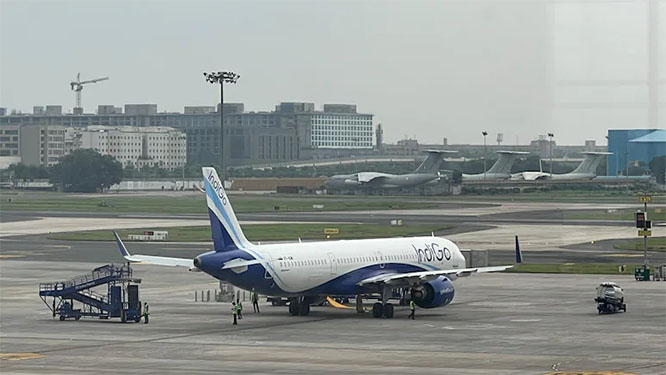
Domestic carrier IndiGo has cancelled over 180 flights from three major airports — Mumbai, Delhi and Bengaluru — on Thursday, December 4, as the airline struggles to secure the required crew to operate its flights in the wake of new flight-duty and rest-period norms for pilots.

While the number of cancellations at Mumbai airport stands at 86 (41 arrivals and 45 departures) for the day, at Bengaluru, 73 flights have been cancelled, including 41 arrivals, according to a PTI report that quoted sources.

"IndiGo cancelled over 180 flights on Thursday at three airports-Mumbai, Delhi and Bengaluru," the source told the news agency.

Besides, it had cancelled as many as 33 flights at Delhi airport for Thursday, the source said, adding, "The number of cancellations is expected to be higher by the end of the day."

The Gurugram-based airline's On-Time Performance (OTP) nosedived to 19.7 per cent at six key airports — Delhi, Mumbai, Chennai, Kolkata, Bengaluru and Hyderabad — on December 3, as it struggled to get the required crew to operate its services, down from almost half of December 2, when it was 35 per cent.

"IndiGo has been facing acute crew shortage since the implementation of the second phase of the FDTL (Flight Duty Time Limitations) norms, leading to cancellations and huge delays in its operations across the airports," a source had told PTI on Wednesday.

Chaos continued at several major airports for the third day on Thursday because of the cancellations.

A spokesperson for the Kempegowda International Airport (KIA) in Bengaluru said that 73 IndiGo flights had been cancelled on Thursday.

At least 150 flights were cancelled and dozens of others delayed on Wednesday, airport sources said, leaving thousands of travellers stranded, according to news agency Reuters.

The Directorate General of Civil Aviation (DGCA) has said it is investigating IndiGo flight disruptions and has asked the airline to submit the reasons for the current situation, as well as its plans to reduce flight cancellations and delays.

It may be mentioned here that the pilots' body, Federation of Indian Pilots (FIP), has alleged that IndiGo, despite getting a two-year preparatory window before the full implementation of new flight duty and rest period norms for cockpit crew, "inexplicably" adopted a "hiring freeze".

The FIP said it has urged the safety regulator, the DGCA, not to approve airlines' seasonal flight schedules unless they have adequate staff to operate their services "safely and reliably" in accordance with the New Flight Duty Time Limitations (FDTL) norms.

In a letter to the DGCA late on Wednesday, the FIP urged the DGCA to consider re-evaluating and reallocating slots to other airlines, which have the capacity to operate them without disruption during the peak holiday and fog season if IndiGo continues to "fail in delivering on its commitments to passengers due to its own avoidable staffing shortages."

Comments

Add new comment

  • Coastaldigest.com reserves the right to delete or block any comments.
  • Coastaldigset.com is not responsible for its readers’ comments.
  • Comments that are abusive, incendiary or irrelevant are strictly prohibited.
  • Please use a genuine email ID and provide your name to avoid reject.
News Network
December 3,2025

indigo.jpg

IndiGo, India’s largest airline, is battling one of its worst operational disruptions in recent years, with hundreds of delays and cancellations throwing domestic travel into chaos.

Government data on Tuesday showed its on-time performance plunging to 35%, an unusual dip for a carrier long associated with punctuality.

By Wednesday afternoon, airports in Delhi, Mumbai, Bengaluru and Hyderabad had collectively reported close to 200 cancellations, stranding travellers across the country.

Crew Shortage After New Duty Norms

A major trigger behind the meltdown is a severe crew shortage, especially among pilots, following the rollout of revised Flight Duty Time Limitation (FDTL) norms last month.

The rules mandate longer rest hours and more humane rosters — a shift IndiGo has struggled to incorporate across its vast network.

Sources said several flights were grounded due to lack of cabin crew, while some delays stretched upwards of eight hours.

With IndiGo controlling over 60% of India’s domestic aviation market, the ripple effect has impacted airports nationwide.

IndiGo Issues Apology, Lists “Compounding Factors”

In a statement, IndiGo acknowledged the large-scale disruption:

“We sincerely apologise to customers. A series of unforeseen operational challenges — technology glitches, winter schedule changes, adverse weather, system congestion and updated FDTL norms — created a compounding impact that could not have been anticipated.”

To stabilise operations, the airline has begun calibrated schedule adjustments for the next 48 hours, aiming to restore punctuality. Affected passengers are being offered refunds or alternate travel arrangements, IndiGo said.

What the FDTL Rules Require

The FDTL norms, designed to reduce pilot fatigue, cap duty and flying hours as follows:
•    Maximum 8 hours of flying per day
•    35 hours per week
•    125 hours per month
•    1,000 hours per year

Crew must also receive rest equalling twice the flight duration, with a minimum 10-hour rest period in any 24-hour window.

The DGCA introduced these limits to enhance flight safety.

Hyderabad: 33 Flights Cancelled, Long Queues Reported

Hyderabad’s Rajiv Gandhi International Airport saw heavy early-morning crowds as 33 IndiGo flights (arrivals and departures) were cancelled.

The airport clarified on X that operations were normal, advising passengers to contact IndiGo directly for latest flight status.

Cancellations included flights to and from Visakhapatnam, Goa, Ahmedabad, Delhi, Bengaluru, Chennai, Madurai, Hubli, Bhopal and Bhubaneswar.

Bengaluru: 42 Flights Disrupted

Bengaluru’s Kempegowda International Airport recorded 42 cancellations — 22 arrivals and 20 departures — affecting routes to Delhi, Mumbai, Chennai, Hyderabad, Goa, Kolkata and Lucknow.

Passengers Vent on Social Media

Irate travellers took to X to share their experiences. One passenger stranded in Hyderabad wrote: “I have been here since 3 a.m. and missed an important meeting.”

Another said: “My flight was pushed from 1:55 PM to 2:55 PM and now 4:35 PM. I was informed only three minutes before entering the airport.”

Delhi Airport Hit by Tech Glitch

At Delhi Airport, the disruption deepened due to a slowdown in the Amadeus system — used for reservations, check-ins and departure control.

The technical issue led to longer queues and sluggish processing, adding to delays already worsened by staff shortages.

Comments

Add new comment

  • Coastaldigest.com reserves the right to delete or block any comments.
  • Coastaldigset.com is not responsible for its readers’ comments.
  • Comments that are abusive, incendiary or irrelevant are strictly prohibited.
  • Please use a genuine email ID and provide your name to avoid reject.
News Network
December 6,2025

pilot.jpg

New Delhi: IndiGo, India’s largest airline, faced major operational turbulence this week after failing to prepare for new pilot-fatigue regulations issued by the Directorate General of Civil Aviation (DGCA). The stricter rules—designed to improve flight safety—took effect in phases through 2024, with the latest implementation on November 1. IndiGo has acknowledged that inadequate roster planning led to widespread cancellations and delays.

Below are the key DGCA rules that affected IndiGo’s operations:

1. Longer Mandatory Weekly Rest

Weekly rest for pilots has been increased from 36 hours to 48 hours.

The government says the extended break is essential to curb cumulative fatigue. This rule remains in force despite the current crisis.

2. Cap on Night Landings

Pilots can now perform only two night landings per week—a steep reduction from the earlier limit of six.

Night hours, defined as midnight to early morning, are considered the least alert period for pilots.

Given the disruptions, this rule has been temporarily relaxed for IndiGo until February 10.

3. Reduced Maximum Night Flight Duty

Flight duty that stretches into the night is now capped at 10 hours.

This measure has also been kept on hold for IndiGo until February 10 to stabilize operations.

4. Weekly Rest Cannot Be Replaced With Personal Leave

Airlines can no longer count a pilot’s personal leave as part of the mandatory 48-hour rest.

Pilots say this closes a loophole that previously reduced actual rest time.

Currently, all airlines are exempt from this rule to normalise travel.

5. Mandatory Fatigue Monitoring

Airlines must submit quarterly fatigue reports along with corrective actions to DGCA.

This system aims to create a transparent fatigue-tracking framework across the industry.

The DGCA has stressed that these rules were crafted to strengthen flight safety and align India with global fatigue-management standards. The temporary relaxations are expected to remain until February 2025, giving IndiGo time to stabilise its schedules and restore normal air travel.

Comments

Add new comment

  • Coastaldigest.com reserves the right to delete or block any comments.
  • Coastaldigset.com is not responsible for its readers’ comments.
  • Comments that are abusive, incendiary or irrelevant are strictly prohibited.
  • Please use a genuine email ID and provide your name to avoid reject.