



Bangla migration to India largest in developing world

September 13, 2013

Social_Affairs

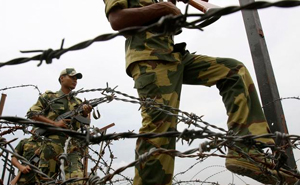
London, Sep 13: The exodus from Bangladeshis into India has for the first time been termed by the United Nations as "the single largest bilateral stock of international migrants" in the eastern hemisphere and also in the developing world.

Data revealed on Thursday by the UN Department of Economic and Social Affairs (UN-DESA) shows that in 2013, India was home to 3.2 million Bangladeshi residents who had migrated into the country and settled there.

Not surprisingly, India was the favourite destination for Bangladeshi migrants in 2013, the report said.

For Indians, however, it was the Middle East that was the clear favourite for migration. Two countries in the Middle East were the main destinations - UAE, having 2.9 million Indian migrants, and Saudi Arabia which had 1.8 million.

However the biggest rise in the number of Indians migrating to a single country was to the US. In 2013, 2.1 million Indians were in the US, which was also home to 2.2 million foreign-born from China and 2 million from the Philippines.

The UN-DESA report said that since 2000, the number of international migrants born in China or India and living in the US had doubled, whereas the number of Mexican foreign-born had only risen by about 31%.

South Asians were the largest group of international migrants living outside their home region. Of the 36 million international migrants from south Asia, 13.5 million resided in the oil-producing countries of west Asia.

The report said more people were living abroad than ever before. In 2013, 232 million people, or 3.2% of the world's population, were international migrants, compared with 175 million in 2000 and 154 million in 1990. The developed countries were home to 136 million migrants, compared to 96 million in the developing countries.

Most international migrants were of working age (20 to 64 years) and accounted for 74% of the total. Globally, women accounted for 48% of all international migrants.

Asians and Latin Americans living outside their home regions formed the largest global diaspora groups. In 2013, Asians represented the largest group, accounting for about 19 million migrants living in Europe, some 16 million in north America and about 3 million in Oceania.

The report, released by UN-DESA's population division, said Europe and Asia combined hosted nearly two-thirds of all international migrants.

Europe remained the most popular destination region with 72 million international migrants in 2013, compared to 71 million in Asia.

Compared to other regions, Asia has seen the largest increase of international migrants since 2000, adding some 20 million migrants in 13 years.

John Wilmoth, director of the division, said, "This growth was mainly fuelled by the increasing demand for foreign labour in the oil-producing countries of western Asia and in south-eastern Asian countries with rapidly growing economies, such as Malaysia, Singapore and Thailand."

In 2013, half of all international migrants lived in 10 countries, with the US hosting the largest number (45.8 million), followed by the Russian Federation (11 million); Germany (9.8 million); Saudi Arabia (9.1 million); United Arab Emirates (7.8 million); United Kingdom (7.8 million); France (7.4 million); Canada (7.3 million); Australia (6.5 million); and Spain (6.5 million).

The US gained the largest absolute number of international migrants between 1990 and 2013 — nearly 23 million, equal to one million additional migrants per year. The United Arab Emirates recorded the second largest gain with seven million, followed by Spain with six million.

Mr Wilmoth said, "Most international migrants settle in developing countries but in recent years they have been settling in almost equal number in developed and developing regions."

The figures are released ahead of a high-level global summit on migration and development to be held by the General Assembly in New York on October 3 and 4.

Comments

Add new comment

  • Coastaldigest.com reserves the right to delete or block any comments.
  • Coastaldigset.com is not responsible for its readers’ comments.
  • Comments that are abusive, incendiary or irrelevant are strictly prohibited.
  • Please use a genuine email ID and provide your name to avoid reject.
News Network
December 6,2025

indigoticket.jpg

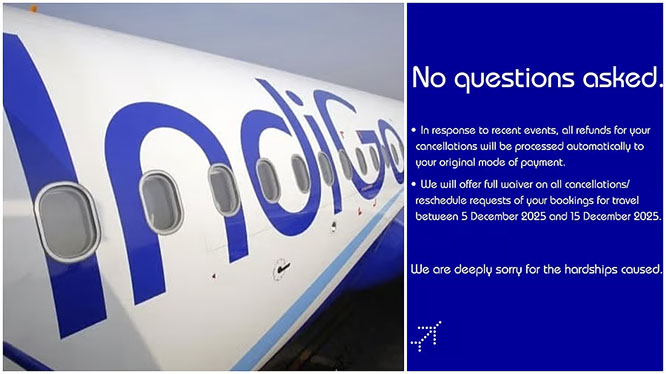
With IndiGo flight disruptions impacting thousands of passengers, the airline on Saturday said that it will offer full waiver on all cancellations/reschedule requests for travel bookings between December 5, 2025 and December 15, 2025.

Earlier in the day, the civil aviation ministry had directed the airline to complete the ticket refund process for the cancelled flights by Sunday evening, as well as ensure baggage separated from the travellers are delivered in the next two days.

In a post on X, titled 'No questions asked', IndiGo wrote, "In response to recent events, all refunds for your cancellations will be processed automatically to your original mode of payment."

"We are deeply sorry for the hardships caused," it further added.

Several passengers, however, complained of not getting full refund as promised by the airline.

Netizens have shared screenchots of getting charged for airline cancellation fee and convenience fee.

"Please tell me why u have did this airline cancellation charges when u say full amount will be refunded (sic)," a user wrote sharing a screenshot of the refund page.

"Well, but you have still debited the convenience charges," wrote another.

Passengers have also raised concerns about the "cancel" option being disabled on the IndiGo app. "First enable the 'Cancel' button on your App & offer full refund on tickets cancelled by customers between the said dates," wrote a user.

A day after the country's largest airline, IndiGo, cancelled more than 1,000 flights and caused disruptions for the fifth day on Saturday, the ministry said that any delay or non-compliance in refund processing will invite immediate regulatory action.

The refund process for all cancelled or disrupted flights must be completed by 8 pm on Sunday, the ministry said in a statement.

"Airlines have also been instructed not to levy any rescheduling charges for passengers whose travel plans were affected by cancellations," it said.

On Saturday, more than 400 flights were cancelled at various airports.

IndiGo has also been instructed to set up dedicated passenger support and refund facilitation cells.

Comments

Add new comment

  • Coastaldigest.com reserves the right to delete or block any comments.
  • Coastaldigset.com is not responsible for its readers’ comments.
  • Comments that are abusive, incendiary or irrelevant are strictly prohibited.
  • Please use a genuine email ID and provide your name to avoid reject.
News Network
December 2,2025

A major upgrade in safety and monitoring is planned for Haj 2026, with every Indian pilgrim set to receive a Haj Suvidha smart wristband linked to the official Haj Suvidha mobile app. The initiative aims to support pilgrims—especially senior citizens—who may struggle with smartphones during the 45-day journey.

What the Smart Wristband Will Do

Officials said the device will come with:
•    Location tracking
•    Pedometer
•    SOS emergency button
•    Qibla compass
•    Prayer timings
•    Basic health monitoring

SP Tiwari, secretary of the UP State Haj Committee, said the goal is to make the pilgrimage safer and more comfortable.

“Most Hajis are elderly and not comfortable with mobile apps,” he said. “The smartwatch will help locate pilgrims who forget their way or cannot communicate their location.”

The wristbands will be monitored by the Consulate General of India in Saudi Arabia, similar to mobile tracking via the Haj Suvidha App.

Free Distribution and Training

•    Smart wristbands will be given free of cost.
•    Training for pilgrims will be conducted between January and February 2026.
•    Sample units will reach state Haj committees soon.
•    Final devices will be distributed as pilgrims begin their journey.

New Rules for Accommodation

Two major decisions have also been finalised for Haj 2026:
1.    Separate rooms for men and women – including married couples. They may stay on the same floor but must occupy different rooms, following stricter Saudi guidelines.
2.    Cooking banned – gas cylinders will not be allowed; all meals will be provided through official catering services arranged by the Haj Committee of India.

These decisions were finalised during a meeting of the Haj Committee of India and state representatives in Mumbai.

Haj Suvidha App Launched Earlier

The government launched the Haj Suvidha App in 2024, offering:

•    Training modules
•    Accommodation and flight details
•    Baggage information
•    SOS and translation tools
•    Grievance redressal

Haj 2026 Quota and Key States

•    India’s total Haj quota for 2026: 1,75,025 pilgrims
•    70% (1,25,000) allotted to the Haj Committee of India
•    30% (around 50,000) reserved for Haj Group Organisers

Uttar Pradesh has the largest allocation (around 30,000 seats), though approximately 18,000 pilgrims are expected to go this year. States with high pilgrim numbers include Kerala, Maharashtra and Gujarat.

Dates of Haj 2026

The pilgrimage is scheduled to take place from 24 May to 29 May, 2026 (tentative).
Haj is one of the five pillars of Islam and is mandatory for Muslims who meet the required conditions.

Comments

Add new comment

  • Coastaldigest.com reserves the right to delete or block any comments.
  • Coastaldigset.com is not responsible for its readers’ comments.
  • Comments that are abusive, incendiary or irrelevant are strictly prohibited.
  • Please use a genuine email ID and provide your name to avoid reject.
News Network
December 6,2025

pilot.jpg

New Delhi: IndiGo, India’s largest airline, faced major operational turbulence this week after failing to prepare for new pilot-fatigue regulations issued by the Directorate General of Civil Aviation (DGCA). The stricter rules—designed to improve flight safety—took effect in phases through 2024, with the latest implementation on November 1. IndiGo has acknowledged that inadequate roster planning led to widespread cancellations and delays.

Below are the key DGCA rules that affected IndiGo’s operations:

1. Longer Mandatory Weekly Rest

Weekly rest for pilots has been increased from 36 hours to 48 hours.

The government says the extended break is essential to curb cumulative fatigue. This rule remains in force despite the current crisis.

2. Cap on Night Landings

Pilots can now perform only two night landings per week—a steep reduction from the earlier limit of six.

Night hours, defined as midnight to early morning, are considered the least alert period for pilots.

Given the disruptions, this rule has been temporarily relaxed for IndiGo until February 10.

3. Reduced Maximum Night Flight Duty

Flight duty that stretches into the night is now capped at 10 hours.

This measure has also been kept on hold for IndiGo until February 10 to stabilize operations.

4. Weekly Rest Cannot Be Replaced With Personal Leave

Airlines can no longer count a pilot’s personal leave as part of the mandatory 48-hour rest.

Pilots say this closes a loophole that previously reduced actual rest time.

Currently, all airlines are exempt from this rule to normalise travel.

5. Mandatory Fatigue Monitoring

Airlines must submit quarterly fatigue reports along with corrective actions to DGCA.

This system aims to create a transparent fatigue-tracking framework across the industry.

The DGCA has stressed that these rules were crafted to strengthen flight safety and align India with global fatigue-management standards. The temporary relaxations are expected to remain until February 2025, giving IndiGo time to stabilise its schedules and restore normal air travel.

Comments

Add new comment

  • Coastaldigest.com reserves the right to delete or block any comments.
  • Coastaldigset.com is not responsible for its readers’ comments.
  • Comments that are abusive, incendiary or irrelevant are strictly prohibited.
  • Please use a genuine email ID and provide your name to avoid reject.
