



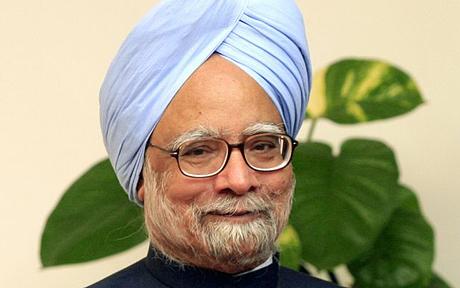
New Delhi, Oct 19: Civil nuclear liability issues posing hurdles in clinching a deal with Russia on acquiring two new reactors for Kudankulam project and sticky points over an agreement with China to avoid army face offs on the border await resolution as Prime Minister Manmohan Singh embarks on a five-day visit to the two countries on Sunday.
Hopeful of reaching according on both the issues, officials are said to be working over time to negotiate a mutually acceptable solution so that the deals can be signed during the visit to Moscow and Beijing.
14th annual summit
Dr. Singh, who will be paying an official visit to Moscow, will be participating in the 14th annual summit with Russian President Vladmir Putin on Monday, his fifth in Moscow.
Official sources said in a bid to assuage Russian concerns on the civil liability clause in the nuclear law in India New Delhi has made proposals outlining the parameters for taking insurance on the possible damage that could arise in case of an accident.
They include the quantum of liability on suppliers of equipment both foreign and Indian, which has been made clear that it is not unlimited.
Russia has been opposed to application of the nuclear liability law on the reactors for the proposed III and IV units in Kudankulam power project since the original scheme was conceived under an inter-government accord.
Public sector General Insurance Corporation (GIC) has been tasked to work with the Department of Atomic Energy (DAE) to work on quantifying the damage and the liability on suppliers of equipment, including the reactors.
Kudankulam accord
Sources are confident that the accord on Unit III and IV will be clinched during Dr. Singh’s visit to Moscow.
The visit to Russia also signifies the deep strategic partnership between the two countries over the years in defence, science and technology and space.
India is also interested in expanding cooperation in the hydro carbons with ONGC’s overseas arm OVL seeking new opportunities in exploration of gas and oil in Russia.
OVL is already participating in two projects as 20 per cent partner in the Sakhalin one project and as 100 per cent owner and operator of Imperial Energy in Tomsk Region.
After talks and a working lunch with Mr. Putin on Oct 21, the Prime Minister will be conferred with an Honorary Doctorate by the Moscow State Institute of International Relations (MGIMO).
A customary joint statement will be issued at the end of the visit during which a few agreements will be signed in areas like science and technology, energy efficiency and standards. Also on the margins of the Summit, there will be a meeting of the newly-constitute CEOs Council.
Last year, there was a 24 per cent rise in bilateral trade crossing $ 11 billion in 2012 for the first time.
Investment is emerging as an important focus of bilateral trade.
China visit
From Moscow, the Prime Minister flies to Beijing on October 22 for a meeting with his counterpart Li Keqiang on October 23, his second in six months. He will be hosted a luncheon banquet.
Dr. Singh will also be meeting President Xi Jinpeng, who will host a dinner banquet, a rare honour for an Indian leader after such a courtesy was extended to Jawaharlal Nehru in the fifties.
Border issues
The focus of the visit to China will be the proposed landmark Border Defence Cooperation Agreement (BDCA) to avoid face offs between the two armies along the disputed Line of Actual Control, which officials are hopeful of clinching next week.
The BDCA, which provides for ‘no tailing’ of each other and ‘no shooting’ by troops of both sides, is expected to boost steps to maintain peace, tranquillity and status quo on the border with China.
Coming against the backdrop of the longest face off in Depsang valley in Ladakh this summer, where PLA troops stayed put for over 20 days, it will be a step forward over the 2005 accord that set out standard operating procedures and be part of the confidence building mechanism between the two countries.


Comments
Add new comment