



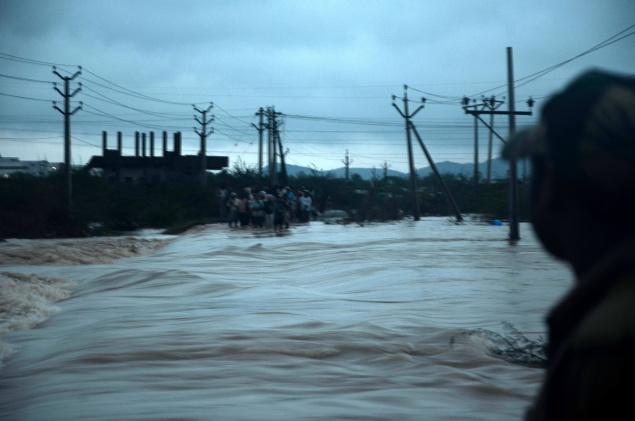
Hyderabad, Oct 25: Heavy rains triggered by northeast monsoon and a low pressure area over Bay of Bengal lashed several parts of Andhra Pradesh for the fourth consecutive day today, prompting authorities to evacuate thousands of people from low-lying areas.
According to official figures, 12 people have been killed in various rain-related incidents in the state and crops in 2.5 lakh hectares have suffered damages till yesterday.
Low lying areas continued to remain under water in number of towns and villages, particularly in coastal Andhra and Rayalaseema.
Hundreds of houses have been damaged due to the rainfall, rendering many people homeless.Thousands of people have been evacuated from their homes and shifted to emergency relief camps.
"The situation is very grim as the entire delta area is completely inundated. Drains and tanks are overflowing and there is a threat of breaches occurring at some places because of the nonstop rain," Guntur district Collector S Suresh Kumar told PTI over phone.
In Guntur district, 36 relief camps have been opened for 11,000 people who were evacuated from rain-ravaged villages, he said.
Six lift-irrigation scheme workers, who were stuck in flood at Chilakaluripet and Yedlapadu since yesterday, were rescued today with the help of National Disaster Response Force personnel, the collector said.
River Krishna is in spate with a heavy inflow of floodwater.
Consequently, 70 crest gates were lifted at Prakasam Barrage in Vijayawada to discharge 1.18 lakh cusecs of water into the Bay of Bengal.
In Srikakulam district in north coastal Andhra, more than 45,000 persons have been shifted to relief camps as heavy rains continue to lash the district.
Several rivers including Vamsasadhara and Bahuda in north coastal Andhra and rivulets were in spate at many other places.
The heavy rains disrupted buses and train services in north coastal Andhra.
Hyderabad and various parts of Telangana also received heavy rainfall for the last few days, which led to water logging on roads and also several residential colonies.
The heavy downpour and waterlogging resulted in massive traffic jams making it difficult for vehicle drivers to find their way through.
As the railway track at Golantri remained under a sheet of two-feet of water, train services between Visakhapatnam and Bhubaneswar were cancelled.
In East Godavari district, headquarters town Kakinada remained submerged, throwing life out of gear.
Incessant rains have also left Hyderabad-Secunderabad twin cities battered.
Chief Minister N Kiran Kumar Reddy spoke to the collectors of Srikakulam, Prakasam, Guntur and others districts late last night and directed them to give top priority to rescue operations, shifting people to safer places and organising other relief measures, official sources said here today.
He directed the officials to help the farmers and take steps to strengthen bunds of tanks and other water bodies.
The CM also asked the chief secretary to coordinate with the National Disaster Response Force (NDRF) police, fire and other emergency personnel in rescue and relief operations.


Comments
Add new comment