



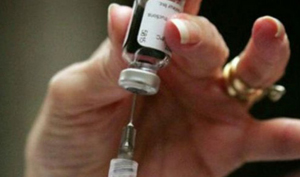
Global HIV vaccine closer to reality

October 25, 2013

Global_HIV
Washington, Oct 25: Scientists have found that bioinformatically optimised HIV vaccine antigens may help design a global HIV vaccine.

A scientific team led by Beth Israel Deaconess Medical Center (BIDMC) conducted the study in monkeys.

"A global HIV vaccine would offer major biomedical and practical advantages over most other HIV vaccine candidates, which are limited to certain regions of the world," said lead author Dan H Barouch, Professor of Medicine at Harvard Medical School.

"To our knowledge, this study represents the first evaluation of the protective efficacy of a candidate global HIV antigen strategy in nonhuman primates," said Barouch.

Researchers demonstrated for the first time that mosaic HIV vaccine antigens can afford partial protection in rhesus monkeys against challenges with a stringent simian-human immunodeficiency virus.

These mosaic vaccine antigens have been developed for optimal immunologic coverage of global HIV diversity.

Barouch and his team studied the immunogenicity of HIV mosaic Env/Gag/Pol antigens administered to monkeys using viral vectors. Env, Gag, and Pol are three major HIV proteins.

After immunisation, the monkeys were repetitively exposed to multiple simian-human immunodeficiency virus challenges and the investigators evaluated the ability of the vaccines to block infection.

Although most animals immunised with the mosaic HIV vaccine became infected by the end of the study, the researchers observed an 87 to 90 per cent reduction in monkeys' probability of becoming infected each time they were exposed to the virus.

In contrast, monkeys that received sham vaccines became infected more quickly.

"These findings indicate that these optimised vaccine antigens can afford partial protection in a stringent animal model," said Barouch.

The investigators found that the immunised monkeys mounted antibody responses against diverse strains of HIV noting, "protection was dependent on several different types of antibody responses, suggesting that the coordinated activity of multiple antibody functions may contribute to protection against difficult-to-neutralise viruses."

The monkeys also mounted cellular immune responses to multiple regions of the virus.

"These data suggest a path forward for the development of a global HIV vaccine and give us hope that such a vaccine might indeed be possible," said Barouch.

"We are planning to advance this HIV vaccine candidate into clinical trials next year," he added. The study was published in the journal Cell.

Comments

Add new comment

  • Coastaldigest.com reserves the right to delete or block any comments.
  • Coastaldigset.com is not responsible for its readers’ comments.
  • Comments that are abusive, incendiary or irrelevant are strictly prohibited.
  • Please use a genuine email ID and provide your name to avoid reject.
News Network
December 2,2025

A major upgrade in safety and monitoring is planned for Haj 2026, with every Indian pilgrim set to receive a Haj Suvidha smart wristband linked to the official Haj Suvidha mobile app. The initiative aims to support pilgrims—especially senior citizens—who may struggle with smartphones during the 45-day journey.

What the Smart Wristband Will Do

Officials said the device will come with:
•    Location tracking
•    Pedometer
•    SOS emergency button
•    Qibla compass
•    Prayer timings
•    Basic health monitoring

SP Tiwari, secretary of the UP State Haj Committee, said the goal is to make the pilgrimage safer and more comfortable.

“Most Hajis are elderly and not comfortable with mobile apps,” he said. “The smartwatch will help locate pilgrims who forget their way or cannot communicate their location.”

The wristbands will be monitored by the Consulate General of India in Saudi Arabia, similar to mobile tracking via the Haj Suvidha App.

Free Distribution and Training

•    Smart wristbands will be given free of cost.
•    Training for pilgrims will be conducted between January and February 2026.
•    Sample units will reach state Haj committees soon.
•    Final devices will be distributed as pilgrims begin their journey.

New Rules for Accommodation

Two major decisions have also been finalised for Haj 2026:
1.    Separate rooms for men and women – including married couples. They may stay on the same floor but must occupy different rooms, following stricter Saudi guidelines.
2.    Cooking banned – gas cylinders will not be allowed; all meals will be provided through official catering services arranged by the Haj Committee of India.

These decisions were finalised during a meeting of the Haj Committee of India and state representatives in Mumbai.

Haj Suvidha App Launched Earlier

The government launched the Haj Suvidha App in 2024, offering:

•    Training modules
•    Accommodation and flight details
•    Baggage information
•    SOS and translation tools
•    Grievance redressal

Haj 2026 Quota and Key States

•    India’s total Haj quota for 2026: 1,75,025 pilgrims
•    70% (1,25,000) allotted to the Haj Committee of India
•    30% (around 50,000) reserved for Haj Group Organisers

Uttar Pradesh has the largest allocation (around 30,000 seats), though approximately 18,000 pilgrims are expected to go this year. States with high pilgrim numbers include Kerala, Maharashtra and Gujarat.

Dates of Haj 2026

The pilgrimage is scheduled to take place from 24 May to 29 May, 2026 (tentative).
Haj is one of the five pillars of Islam and is mandatory for Muslims who meet the required conditions.

Comments

Add new comment

  • Coastaldigest.com reserves the right to delete or block any comments.
  • Coastaldigset.com is not responsible for its readers’ comments.
  • Comments that are abusive, incendiary or irrelevant are strictly prohibited.
  • Please use a genuine email ID and provide your name to avoid reject.