



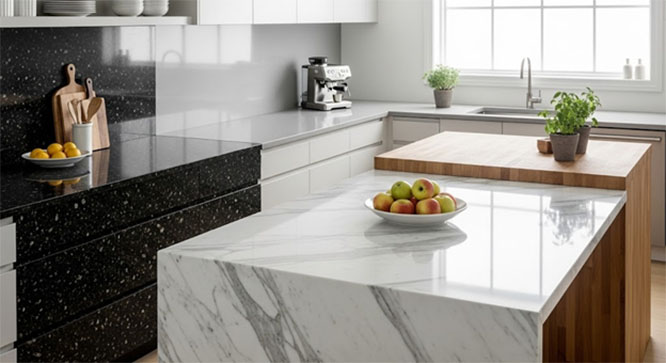
Selecting the right surface material is one of the most critical decisions when building or renovating a home. From kitchens to bathrooms and every space in between, your choice influences durability, hygiene, aesthetics, and ease of maintenance. For decades, the conversation has revolved around traditional materials such as quartz, marble, and granite. While these materials have long been the benchmark for elegance and strength, evolving lifestyle demands such as higher hygiene standards, longer-lasting durability, and effortless maintenance have highlighted their limitations. This is where a new contender steps in.
Meet Neotra: a next-generation engineered surface designed to combine the timeless beauty of natural stone with cutting-edge performance. In this comparison, we’ll explore why Neotra for kitchen countertops and other applications is rapidly becoming the smarter alternative to traditional slab materials.
What Are Traditional Slab Materials?
Before looking at why Neotra is revolutionising the market space, let’s first review what traditional options offer and where they fall short.
● Quartz: Engineered stone made from natural quartz crystals mixed with resin and pigments. Known for being non-porous and relatively durable, it remains a popular choice for countertops and vanities.
● Marble: A natural stone known for its elegance and classic veining. However, it is highly porous and easily stained, requiring extra care.
● Granite: Another natural stone, granite is durable and heat-resistant but requires sealing to prevent stains.
● Ceramic or Tile Slabs: Cost-effective and easy to customise, but prone to chipping and grout line issues.
While these traditional materials each have their strengths, they all carry drawbacks—whether in hygiene, durability, or maintenance. That’s why Neotra offers a smarter, more advanced solution that addresses these gaps without compromise.
Where Does Neotra Stand as a Surface Material?
Neotra is a next-generation engineered surface designed for the demands of modern living. It delivers the elegance of natural stone combined with state-of-the-art performance features such as superior hygiene, scratch resistance, and effortless maintenance. In short, Neotra represents the perfect union of beauty and technology.
Now, let’s examine how Neotra compares to quartz, marble, granite, and other traditional options across key performance factors.
1. Hygiene and Safety
One of the top priorities in modern homes, especially post-2020, is hygiene. Surfaces need to be safe for food preparation, resistant to bacteria, and easy to keep clean.
● Quartz: Non-porous, which helps resist bacteria, but offers no active antimicrobial protection. Requires regular cleaning with non-abrasive products.
● Marble/Granite: Both are porous and can absorb liquids, leading to bacterial growth if not sealed properly. Marble is particularly vulnerable to acids and staining.
● Neotra: Engineered with advanced antibacterial, antiviral, antifungal, and anti-algae properties, Neotra actively inhibits microbial growth. Its non-porous, liquid-repellent structure ensures that spills do not seep in, delivering superior hygiene for every home.
2. Durability and Scratch Resistance
Your home’s surfaces should be able to take a beating, withstand cutting, sliding pots, and everyday impact, while staying beautiful.
● Quartz: Durable, but can scratch with sharp knives or heavy use. Heat can also cause discolouration.
● Marble: Prone to scratching, especially with sharp or heavy kitchenware. A soft stone that chips easily.
● Granite: Strong and scratch-resistant, but not immune to wear over time.
● Neotra: With patented Neo Senso and Neo-Forte technology by premium Brands like Neotrastones, Neotra combines a soft-touch feel with remarkable scratch and abrasion resistance. Scoring 8+ on the Mohs hardness scale, it endures years of heavy use without losing its flawless look.
3. Heat and Fire Resistance
Kitchen surfaces, in particular, need to withstand sudden temperature changes and direct heat.
● Quartz: Contains resin, which can scorch or discolour under high heat.
● Marble/Granite: Natural stone can withstand moderate heat but may crack with sudden temperature changes.
● Neotra: Fully heat-resistant and fire-resistant, you can safely place hot pots, pans, or trays directly on the surface without fear of damage.
4. Maintenance and Cleaning
Modern homeowners want surfaces that are easy to clean and don’t require constant upkeep.
● Quartz: Low maintenance but sensitive to harsh chemicals and abrasive cleaners.
● Marble: Requires sealing and frequent polishing. Stains easily and is sensitive to acids like lemon juice and vinegar.
● Granite: Requires periodic sealing. It can get dull over time.
● Neotra: Resistant to detergents, cleaning agents, and chemicals. No sealing or polishing needed. A simple wipe with a soft cloth is enough to keep it clean.
5. Aesthetic Appeal
Looks matter, especially in spaces like kitchens, bathrooms, and dining areas where design meets functionality.
● Quartz: Offers a wide variety of colours and patterns but often lacks the richness of natural textures.
● Marble: Undeniably beautiful but inconsistent in patterning and vulnerable to fading.
● Granite: Strong visual appeal with natural variation.
● Neotra: Combines the elegance of natural stone with modern colour palettes and seamless finishes. Available in a wide range of tones, textures, and matte or glossy finishes that are fade-resistant and timeless.
6. Food-Safe Certification
Food safety is essential for kitchens, especially those with kids or elderly family members.
● Quartz: Generally safe, but not all slabs are food-contact certified.
● Marble: Not recommended for direct food contact due to porosity and chemical reactivity.
● Granite: Can be food-safe when sealed properly, but sealing must be maintained.
● Neotra: Fully safe for direct food contact with certification. Its non-toxic surface is ideal for meal prep, baking, and daily use.
7. Environmental and Health Considerations
In an era of eco-conscious living, more people are asking: Is my surface safe for my health and the planet?
● Quartz: Uses resins that may emit VOCs (volatile organic compounds) if not properly manufactured.
● Marble/Granite: Natural but mined, which may not be environmentally sustainable.
● Neotra: Free from formaldehyde, harmful particles, and toxic emissions. A clean, green material that aligns with modern sustainability goals.
8. Versatility of Application
Can your surface be used in more places than just the kitchen?
● Quartz/Marble: Commonly used for countertops, but limitations exist when it comes to outdoor or high-traffic commercial applications.
● Neotra: Ideal for kitchen countertops, bathroom vanities, wall cladding, utility areas, tabletops, and even outdoor kitchens, thanks to its frost and UV resistance.
Final Verdict: Neotra vs Quartz Slabs and Traditional Stones
If you want a future-ready home that prioritises durability, hygiene, and effortless style, Neotra stands out as the superior choice. Our comparison of Neotra vs quartz and other traditional materials shows how it excels where older options fall short.
For those who refuse to compromise whether on aesthetics, performance, or sustainability Neotra delivers it all.


Comments
Add new comment