'No way back' in Myanmar's crucible of communal hate

Agencies
September 25, 2017

Myanmar, Sept 25: Hindus once sold food to Rohingyas, spoke the same language and even cut the hair of their Muslim neighbours. But co-existence among the collage of ethnicities in Myanmar's Rakhine state has been ruptured -- perhaps irreversibly -- by the bloodshed of the last month.

Violence has periodically cut through the western state, where communal rivalries have been sharpened by British colonial meddling, chicanery by Myanmar's army and a fierce dispute over who does -- and does not -- belong in Rakhine.

But the events of August 25, when raids by Rohingya militants unleashed a swirl of violence across the north, have sunk Rakhine to new depths of hate.

"All of our family died in the village... we will not go back," said Chaw Shaw Chaw Thee, one of the hundreds of displaced Hindus seeking shelter in the state capital Sittwe.

The 20-year-old said she lost 23 family members as Rohingya militants swarmed the clutch of Hindu villages in Kha Maung Seik, near the Bangladesh border.

On Sunday the army said 28 badly-decomposed bodies of Hindu men, women and children had been pulled from two mass graves in the same area.

It was not immediately clear if they belonged to Chaw Shaw Chaw Thee's family. Heavily pregnant when she fled, she gave birth at a disused football stadium in Sittwe, where hundreds of traumatised Hindus now sleep on grubby mats in the overcrowded concourse.

An army lockdown has made it impossible to independently verify what happened in the villages of northern Rakhine, an area dominated by Rohingya Muslims who are a minority elsewhere in the mainly Buddhist country.

But allegations, carved along ethnic lines, are spinning out as conspiracy and competing for identity claims override empathy between former neighbours.

Hindus, who make up less than one percent of Rakhine's population, accuse Rohingya of massacring them, burning their homes and kidnapping women for marriage.

Meanwhile, the Rohingya, some 430,000 of whom have fled to Bangladesh, trade accusations with ethnic Rakhine Buddhists of grisly mob attacks and army "clearance operations" that have emptied their villages.

Small ethnic groups such as the Mro, Thet and Diagnet have also been caught up in the killings and chaos of the last month.

"We were barbers for Muslims, our women sold things in Muslim villages, I had Muslim friends, we had no problems," said Kyaw Kyaw Naing, a 34-year-old Hindu who can dance across linguistic divides in Hindi, Rakhine, Burmese and Rohingya.

Community ties in what is also Myanmar's poorest state have now unravelled. "We want to go back, but we will not if the Muslims are there."

Last week Myanmar's leader Aung san Suu Kyi told the international community that Rohingya refugees were welcome back if they were properly "verified".

But delivering on that promise will be almost impossible in a country where the status of the Rohingya is incendiary.

The Rohingya say they are a distinct ethnic group whose roots stretch back centuries.

Myanmar's powerful military insists they are "Bengalis" who were first brought to the country by British colonisers and have continued to pour in illegally ever since.

"It can't be solved in the short-term... to be stable and harmonious could take decades," Oo Hla Saw, a lawmaker for the Arakan National Party, which represents Rakhine Buddhists, told AFP.

Rakhine's history is bitterly contested and flecked by rivalries. Once a proud a Buddhist kingdom with a deep Muslim influence from trade and settlement, Rakhine's demographics were overhauled by British colonial administrators.

They shunted in large numbers of Hindu Indians and Bengali Muslims as farm hands to an area already populated by a soup of ethnicities including the Rohingya and Rakhine.

The Japanese invasion during World War II saw Rakhine clash with Rohingya, who were perceived to have been favoured by the retreating British.

Since 1962 the military has kindled anti-Rohingya sentiment, painting itself as the protector of the Buddhist faith from conquest by Islam.

Three major campaigns -- in 1978, the early 90s and now -- have driven Rohingya from Myanmar in huge numbers.

The army, which ran the country for 50 years and still has its hands on key levers of power, has also gradually rubbed out the group's legal status.

A 1982 law stripped Rohingya of citizenship, subjecting them to suffocating controls on everything from where they can travel to how many children they can have.

"The army wants to clear the Muslim community from Rakhine state," says Kyaw Min, a Rohingya and former MP, who has had his citizenship revoked.

"The intention is to drive down the Rohingya population. They have achieved that in the south of Rakhine, now they are targeting the north." Repression has fed Rohingya militancy, according to analysts.

Last month a government-backed commission on Rakhine's troubles, led by former UN chief Kofi Annan, urged "all communities to move beyond entrenched historical narratives".

But a few hours after its report was published, the militants attacked, sparking a ferocious military response that the UN believes amounts to "ethnic cleansing".

The report also urged the government to boost the economy to uplift a poor population and build community bonds.

Business ties and personal relations once defied communal lines, with Rohingya who could not legally own property relying on Rakhine neighbours to secure deeds for them on the sly.

Now the fearful displaced inside Rakhine say there is no way they can ever again live alongside Rohingya neighbours.

Khin Saw Nyo, 48, an ethnic Rakhine, said nearby Muslim villagers suddenly turned on her community near the Bangladesh border, forcing them to flee to the mountains.

"We will die if we go back," she told AFP from inside a monastery sheltering refugees in Sittwe, adding Rohingya militants are still preparing to strike. "They warned us to eat well... they said the next time we will not escape."

Comments

Add new comment

  • Coastaldigest.com reserves the right to delete or block any comments.
  • Coastaldigset.com is not responsible for its readers’ comments.
  • Comments that are abusive, incendiary or irrelevant are strictly prohibited.
  • Please use a genuine email ID and provide your name to avoid reject.
News Network
November 28,2025

ministerPM.jpg

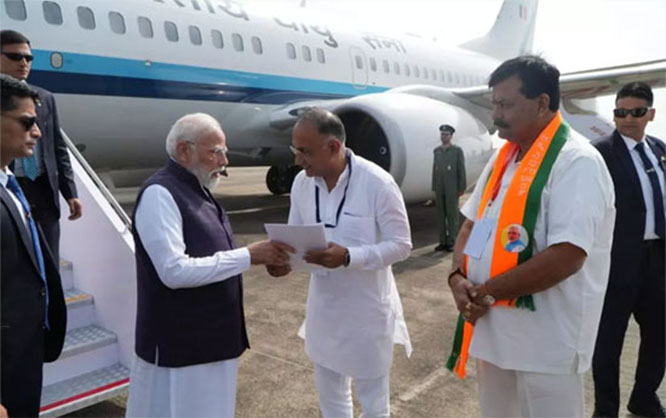
Mangaluru, Nov 28: Karnataka Health Minister and Dakshina Kannada district in-charge minister Dinesh Gundu Rao on Friday handed over Chief Minister Siddaramaiah’s letter to Prime Minister Narendra Modi, highlighting the severe distress faced by farmers due to crashing crop prices.

PM Modi arrived at the Mangaluru International Airport en route to Udupi, where Gundu Rao welcomed him and submitted the letter. The chief minister’s message stressed that farmers are suffering heavy losses because maize and green gram are being bought far below the Minimum Support Price (MSP). The state urged the Centre to immediately begin procurement at MSP.

According to the letter, Karnataka has a bumper harvest this year—over 54.74 lakh metric tons of maize and 1.98 lakh metric tons of green gram—yet farmers are unable to secure fair prices. Against the MSP of ₹2,400/MT for maize and ₹8,768/MT for green gram, market rates have plunged to ₹1,600–₹1,800 and ₹5,400 respectively.

The chief minister has requested the Centre to:

• Direct NAFED, FCI and NCCF to start MSP procurement immediately.
• Ensure ethanol units purchase maize directly from farmers or FPOs.
• Increase Karnataka’s ethanol allocation, citing high production capacity.
• Stop maize imports, which have depressed domestic prices.
• Relax quality norms for green gram, allowing up to 10% discoloration due to rains.

The letter stresses that MSP is crucial for farmer dignity and income stability and calls for swift central intervention to prevent a deepening crisis.

Comments

Add new comment

  • Coastaldigest.com reserves the right to delete or block any comments.
  • Coastaldigset.com is not responsible for its readers’ comments.
  • Comments that are abusive, incendiary or irrelevant are strictly prohibited.
  • Please use a genuine email ID and provide your name to avoid reject.
News Network
November 24,2025

israelsyra.jpg

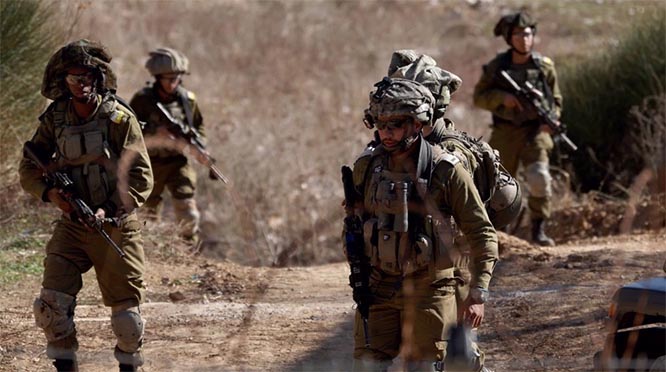
Israeli forces have pushed over the Syrian frontier, erecting a checkpoint and stopping vehicles in the southwestern city of Quneitra, in yet another breach of the Arab country’s sovereignty.

The violation took place on Sunday, when the troops made their way across the border, setting up the outpost near the Ain al-Bayda junction in northern Quneitra, Syrian outlets reported.

According to the al-Ikhbariya paper, an Israeli detachment positioned itself at the junction, halting cars and conducting searches.

The Syrian Arab News Agency (SANA) reported that three Israeli military vehicles then moved further into the northern countryside, deploying between the town of Jubata al-Khashab and the villages of Ofaniya and Ain al-Bayda. The agency added that a separate Israeli unit mounted a new incursion in the central region, approaching the villages of Umm Batina and al-Ajraf.

Residents said such activities have surged in recent months, pointing to Israeli advances onto farmland, leveling of extensive forested areas, arrests, and spread of mobile checkpoints.

The Israeli regime began markedly increasing its military aggression against Syria last year.

The escalation coincided with increasingly ferocious onslaughts throughout the country by the so-called Hay'at Tahrir al-Sham (HTS) Takfiri terrorist group, which the government of President Bashar al-Assad had confined to northwestern Syria. The HTS, however, managed to overthrow the government as the Israeli attacks would pummel the country’s civilian and defensive infrastructure.

Various reports have shown that, during the escalation, the regime conducted more than 1,000 airstrikes on the Syrian territory and over 400 ground raids into the south.

Following the collapse of the Assad government, Tel Aviv also widened its grip over the occupied Golan Heights by taking control of a demilitarized buffer zone, in defiance of a 1974 Disengagement Agreement. Earlier this month, senior Israeli officials, including Prime Minister Benjamin Netanyahu, visited the buffer zone, prompting expressions of alarm on the part of the United Nations.

The United States, the regime’s biggest ally, has, meanwhile, been fraternizing the HTS head Abu Mohammed al-Jolani amid the widely reported prospect of rapprochement with Tel Aviv.

Comments

Add new comment

  • Coastaldigest.com reserves the right to delete or block any comments.
  • Coastaldigset.com is not responsible for its readers’ comments.
  • Comments that are abusive, incendiary or irrelevant are strictly prohibited.
  • Please use a genuine email ID and provide your name to avoid reject.
News Network
December 2,2025

Mangaluru, Dec 2: Mangaluru International Airport responded to a medical emergency late on Monday night. Air India Express flight IX 522, travelling from Riyadh to Thiruvananthapuram, was diverted to Mangaluru Airport after a passenger in his late 30s experienced a medical emergency on board.

The Airport’s Operations Control Centre received an alert regarding the passenger’s health condition. The airport activated its emergency response protocol, mobilising the airport medical team and coordinating with stakeholders including CISF, immigration, and customs. 

Upon landing, airport medical personnel attended to the passenger, assessed his condition, and arranged to shift him to a local tertiary-care hospital for further treatment. The passenger’s relatives accompanied the passenger, who incidentally received necessary medical care on board, which helped stabilise the situation.

Following the handling of the emergency, the flight departed for Thiruvananthapuram at 2:05 am on Tuesday.

"We appreciate the cooperation of all parties involved, and this incident reaffirms our ongoing commitment to prioritising passenger safety and readiness to respond to unforeseen emergencies with professionalism and care," the Airport spokesperson said. 

Comments

Add new comment

  • Coastaldigest.com reserves the right to delete or block any comments.
  • Coastaldigset.com is not responsible for its readers’ comments.
  • Comments that are abusive, incendiary or irrelevant are strictly prohibited.
  • Please use a genuine email ID and provide your name to avoid reject.