



Only 1,744 tests per million: India's corona testing rate is one of the lowest in the world

Agencies
May 23, 2020

New Delhi, May 23: The nationwide lockdown will no longer help India in its fight against COVID-19, and in its place community-driven containment, isolation and quarantine strategies have to be brought into play, leading virologist Shahid Jameel said.

The recipient of Shanti Swarup Bhatnagar Prize for Science and Technology also stressed that testing should be carried out vigorously to identify coronavirus hotspots and isolate those areas.

"Our current testing rate at 1,744 tests per million population is one of the lowest in the world. We should deploy both antibody tests and confirmatory PCR tests. This will tell us about pockets of ongoing infection and past (recovered) infection. This will provide data to open up gradually and let economic activity resume," Jameel told PTI in an interview.

He stressed that testing has to be dynamic to continuously monitor red, orange and green zones and change these based on that data.

About community transmission of COVID-19 in India, Jameel said the country reached that stage long ago.

"We reached community transmission a long time ago. It's just that the health authorities are not admitting it. Even ICMR's own study of SARI (severe acute respiratory illness) showed that about 40 per cent of those who tested positive for SARS-CoV-2 did not have any history of overseas travel or contact to a known case. If this is not community transmission, then what is?" he posed.

Lockdown bought India time in its fight against coronavirus, but continuing it is unlikely to yield any further dividend, Jameel said.

"Instead, community-driven local lockdowns, isolations and quarantines have to come into play. Building trust is most important so that people follow rules. A public health problem cannot be dealt with as a law-and-order problem."

The nationwide lockdown, initially imposed from March 25 to April 14, has been extended thrice and will continue at least till May 31. The virus has claimed 3,720 lives and infected over 1.25 lakh people in the country so far.

Jameel has expertise in the fields of molecular biology, infectious diseases, and biotechnology. He is the CEO of Wellcome Trust/Department of Biotechnology's India Alliance and is best known for extensive research in Hepatitis E virus and HIV.

He said COVID-19 will eventually be controlled through herd immunity, which is acquired in two ways – when a sufficient fraction of the population gets infected and recovers, and with vaccination.

"It is estimated that for SARS-CoV-2 at least 60 per cent of the population would have to be infected and recovered, or vaccinated. This will happen over the course of the next few years," Jameel said.

Herd immunity is reached when the majority of a population becomes immune to an infectious disease, either because they have become infected and recovered, or through vaccination. When that happens, the disease is less likely to spread to people who aren't immune, because there just aren't enough infectious carriers.

"India has 1.38 billion people, a population density of about 400/sq km and a healthcare system ranked at 143 in the world. If we allow 60 per cent people to get infected quickly in the hopes of herd immunity, that would mean 830 million infections," Jameel said.

"If 15 per cent need hospitalization that means about 125 million isolation beds (we have 0.3 million). If five per cent need oxygen and ventilatory support, this amounts to about 42 million oxygen support and ICU beds; we have 0.1 million oxygen support beds and 34,000 ICU beds. This would overwhelm the healthcare system causing mayhem," he said.

Jameel said if the population level mortality is 0.5 per cent that would mean 40 lakh deaths. "Are we prepared to pay this price for herd immunity in the short term? Clearly not," he said.

He said it is unlikely that a vaccine would be available by the end of the year.

"Even then, we don't know yet how long it would give protection – weeks, months, one year, a few years? I don't think we will return to pre-coronavirus days for at least the next 3-5 years. This is also a chance to evaluate if we want to return to those unsustainable, environment-damaging ways. COVID-19 is a timely warning to reform our way of living," he said.

Jameel said it is hard to predict but plausible that COVID-19 would return in second or third wave.

"Later waves come when we don't understand the disease and become lax. A comparison to Spanish Flu is not entirely valid because in 1918 no one knew what caused it. No one had seen a virus till the mid-1930s as the electron microscope needed to view those was invented in 1931," he said.

"Today we know a lot more about the pathogen, its genetic makeup, how it transmits and how to prevent it. We need to be sensible and follow expert advice," he said.

If there is any scientific evidence linking deforestation, rapid urbanisation, climate change with pandemics like COVID-19, he said zoonotic viruses -- those that jump from animals to humans -- happen so when wild animal–human contacts increase.

"Deforestation destroys animal habitats bringing them closer to humans. When you cut forests, bats come to roost on trees closer to human habitations. Their viruses in secretions/stool get transmitted to domestic animals and on to humans. This happened clearly with Nipah virus outbreak in Malaysia in 1997-98 from fruit bats to pigs to humans," he said.

"COVID-19 possibly arose in wet animal markets due to dietary habits that bring all kinds of live and dead wild animals in close contact with humans," Jameel added.

Comments

Add new comment

  • Coastaldigest.com reserves the right to delete or block any comments.
  • Coastaldigset.com is not responsible for its readers’ comments.
  • Comments that are abusive, incendiary or irrelevant are strictly prohibited.
  • Please use a genuine email ID and provide your name to avoid reject.
News Network
December 4,2025

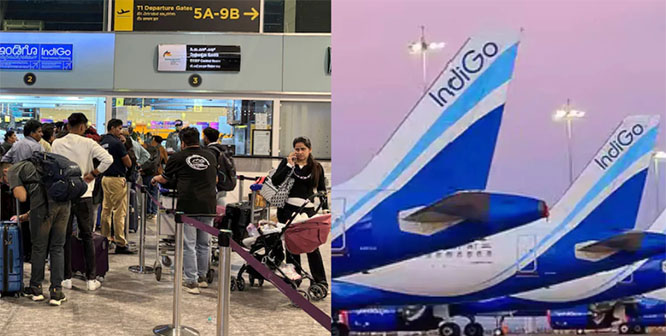
indigocrisis.jpg

Angry outbursts, long queues, and desperate appeals filled airports across India today as IndiGo grappled with a severe operational breakdown. Hundreds of flights have been cancelled or delayed, leaving thousands of passengers stranded through the night and forcing many to spend long hours at helpdesks.

Social media was flooded with videos of fliers pleading for assistance, accusing the airline of misleading updates, and demanding accommodation after being stuck for 10 to 12 hours at airports such as Hyderabad and Bengaluru.

What Triggered the Meltdown?

IndiGo has attributed the widespread disruption to “a multitude of unforeseen operational challenges.” These include:

•    Minor technology glitches
•    Winter-season schedule adjustments
•    Bad weather
•    Congestion in the aviation network
•    New crew rostering rules (Flight Duty Time Limitations or FDTL)

Among these, the most disruptive has been the implementation of the updated FDTL norms introduced by the Directorate General of Civil Aviation (DGCA) in January 2024.

These rules were designed to reduce pilot fatigue and improve passenger safety. Key changes include:

•    Longer weekly rest periods for flight crew
•    A revised definition of “night,” extending it by an extra hour
•    Tighter caps on flight duty timing and night landings
•    Cutting night shifts for pilots and crew from six per roster cycle to just two

Once these norms became fully enforceable, airlines were required to overhaul rosters well in advance. For IndiGo, this triggered a sudden shortage of crew available for duty, leading to cascading delays and cancellations.

Why IndiGo Was Hit the Hardest

IndiGo is India’s largest airline by a wide margin, operating over 2,200 flights daily. That’s roughly double the number operated by Air India.

When an airline of this size experiences even a 10–20% disruption, it translates to 200–400 flights being delayed or grounded — producing massive spillover effects across the country.

IndiGo also relies heavily on high-frequency overnight operations, a model typical of low-cost carriers that aim to maximise aircraft utilisation and reduce downtime. The stricter FDTL norms clash with these overnight-heavy schedules, forcing the airline to pull back services.

Aviation bodies have also criticised IndiGo’s preparedness. The Airline Pilots' Association of India (ALPA) said airlines were given a two-year window to plan for the new rules but “started preparing rather late.” IndiGo, it said, failed to rebuild crew rosters 15 days in advance as required.

The Federation of Indian Pilots (FIP) went further, calling the crisis the result of IndiGo’s “prolonged and unorthodox lean manpower strategy,” and alleging that the airline adopted a hiring freeze even as it knew the new rules would require more careful staffing.

How Many Flights Are Affected?

In the past 48 hours, over 300 flights have been cancelled. At least 100 more are expected to be cancelled today.

City-wise impact:

•    Hyderabad: 33 expected cancellations; several fliers stranded overnight
•    Bengaluru: over 70 expected cancellations
•    Delhi, Mumbai, Chennai, Kolkata: widespread delays and missed connections

Passengers shared distressing accounts online.

One customer at Hyderabad airport said they waited from 6 PM to 9 AM with “no action taken” regarding their delayed Pune flight. Another said IndiGo repeatedly told them the crew was “arriving soon,” only for the delay to stretch over 12 hours.

IndiGo has apologised for the disruption and promised that operations will stabilise within 48 hours, adding that “calibrated adjustments” are being made to contain the chaos.

What Should Passengers Do Now?

For those flying in the next few days, especially with IndiGo, here are key precautions:

1. Keep Checking Flight Status
Monitor your flight closely before leaving for the airport, as delays may be announced last-minute.

2. Arrive Early
Expect long queues at counters and security due to crowding and rescheduling.

3. Carry Essentials
Pack snacks, water, basic medicines, chargers, and items for children or senior citizens. Extended waiting times should be anticipated.

4. Use Flexible Booking Options
If you booked tickets with a free-date-change or cancellation option, consider using them.
If you haven’t booked yet, prefer refundable or flexible fares, or even consider alternate airlines.

5. Follow IndiGo’s Updates
Keep an eye on IndiGo’s official social media channels and contact customer support for rebooking and refund queries.

What Needs to Change?

Pilot groups have raised concerns not just about staffing but also the planning practices behind it.
The Federation of Indian Pilots accused IndiGo of:

•    Imposing an unexplained hiring freeze despite knowing the FDTL changes were coming
•    Entering non-poaching agreements that limited talent movement
•    Keeping pilot pay frozen
•    Underestimating the need to restructure operations in advance

They have urged DGCA to approve seasonal schedules only after airlines prove they have adequate pilot strength under the new norms.

ALPA also warned that some airlines might be using the delays as an “immature pressure tactic” to push DGCA for relaxations in the new rules — which, if granted, could compromise the very safety standards the norms were meant to protect.

Both pilot bodies stressed that no exemption should dilute safety, and any deviations should be based solely on scientific risk assessment.

Is a Solution in Sight?

While IndiGo says normalcy will return within two days, aviation experts believe that fully stabilising operations could take longer, depending on how quickly the airline can:
•    Re-align rosters
•    Mobilise rested crew
•    Boost staffing
•    Adjust its winter schedule to match regulatory requirements
Passengers are advised to remain prepared for continued delays over the next few days as the airline works through its backlog. 

Comments

Add new comment

  • Coastaldigest.com reserves the right to delete or block any comments.
  • Coastaldigset.com is not responsible for its readers’ comments.
  • Comments that are abusive, incendiary or irrelevant are strictly prohibited.
  • Please use a genuine email ID and provide your name to avoid reject.