Over 100 Indian CEOs to attend World Economic Forum

Agencies
January 20, 2019

Davos, Jan 20: The rich and powerful from across the globe will flock to this ski resort town on the Swiss Alps for five days beginning Monday to discuss what's ailing the world amid fears of the global economy sleepwalking into a crisis, with more than 100 CEOs from India expected to be in attendance.

While ongoing political and economic issues in their respective countries have already led to several top leaders, including the US President Donald Trump, Britain's Theresa May, France's Emmanuel Macron and Russia's Vladimir Putin, deciding to stay away from this annual jamboree, many participants believe their absence has further underlined the need for an immediate brain-storming over the imminent risks faced by the world.

Those expected to attend include German Chancellor Angela Merkel, Swiss President Ueli Maurer, Japan's Shinzo Abe, Italy's Giuseppe Conte and Israel's Benjamin Netanyahu among more than 30 heads of state/government, as also CEOs of global corporations, central bankers, economists, civil society leaders, media heads, celebrities and heads of international organisations like IMF, WTO, OECD and World Bank, among more than 3,000 participants.

From India, Finance Minister Arun Jaitley as also his cabinet colleague Dharmendra Pradhan have dropped out and so has Andhra Pradesh Chief Minister N Chandrababu Naidu and Maharashtra Chief Minister Devendra Fadnavis.

The political leaders from India attending the event include Madhya Pradesh Chief Minister Kamal Nath, Union Commerce and Industry Minister Suresh Prabhu, Andhra Pradesh minister Lokesh Nara and Punjab minister Manpreet Badal.

There are a number of Indian corporate honchos among the registered participants, including Gautam Adani, Mukesh Ambani (with wife Nita and children Akash and Isha), Sanjiv Bajaj, N Chandrasekaran, Sajjan Jindal, Anand Mahindra, Sunil Mittal, Nandan Nilekani, Salil Parekh, Azim Premji and son Rishad, Ravi Ruia and Ajay Singh.

Celebrity film producer and director Karan Johar, as also former RBI Governor Raghuram Rajan, New Development Bank President K V Kamath and IMF Chief Economist Gita Gopinath are also expected to be there.

Microsoft's Indian-origin CEO Satya Nadella will be among the co-chairs of the 2019 edition of this annual congregation of world leaders from January 21-25.

He would be joined by six young leaders under the age of 30 as co-chairs -- Basima Abdulrahman from Iraq, Juan David Aristizabal from Colombia, Sweden's Noura Berrouba, Julia Luscombe from the US, Mohammed Hassan Mohamud from Kenya and Japan's Akira Sakano.

The theme of the event would be 'Globalization 4.0: Shaping a Global Architecture in the Age of the Fourth Industrial Revolution', which would have several India-focussed sessions. Besides, India's political scenario may hog the limelight, with the event taking place ahead of the national elections.

According to Geneva-based WEF, which describes itself as a public-private partnership for international cooperation, the leaders at this annual summit would discuss how globalisation can work as well as identify new models for peace, inclusiveness and sustainability, while the top agenda would also include climate change and international governance.

Some of the key issues likely to be deliberated upon include top global risks identified by the WEF in its annual pre-Davos survey, including rising geopolitical and geoeconomic tensions.

The WEF has warned that worsening international relations are hindering a collective will to tackle these concerns. The report also flagged massive incidents of data fraud and large-scale cyber attacks among the biggest risks in terms of likelihood, while it also listed increasing polarisation of societies and growing wealth disparity among the key concerns.

The report, based on a survey of nearly 1,000 experts and decision-makers from across the world, said that nine out of ten respondents expect the economy to worsen due to rising geopolitical tensions.

"This fourth wave of globalisation needs to be human-centred, inclusive and sustainable. We are entering a period of profound global instability brought on by the technological disruption of the Fourth Industrial Revolution and the realignment of geo-economics and geopolitical forces," WEF's Founder and Executive Chairman Klaus Schwab said.

"We need principals from all stakeholder groups in Davos to summon the imagination and commitment necessary to tackle it," he added.

There would be more than 350 official sessions during the five-day event and the meeting will host over 900 civil society and 1,700 business leaders.

The event would also be attended by CEOs of a large number of MNCs, including Adidas, Rio Tinto, Embraer, AXA, Societe Generale, Total, Allianz, Bayer, Deutsche Bank, Lufthansa, KPMG, Siemens, Generali, Hitachi, Nomura, Sumitomo, IKEA, Royal Dutch Shell, Telenor, Alibaba, Credit Suisse, Nestle, Novartis, UBS, Barclays, BP, Standard Chartered, Unilever, Bank of America, Cargill, Citi, Cisco, Dell, IBM, Morgan Stanley, PepsiCo, Pfizer, Coca-Cola and Visa.

Besides the official sessions, industry body CII and several other Indian groups have also lined up their own meetings on the sidelines.

At a session on emerging markets outlook, discussions would be about whether policymakers are equipped to avert a hard economic landing with highly-leveraged emerging market economies feeling the pinch from growing protectionism and tightening monetary conditions in the US.

Another session would focus on 'India and the World', which would cover the country's emergence as a compelling growth story and the questions being raised about its long-term sustainability due to a falling rupee, volatile external financial markets, worsening current account deficit and stress in the banking sector.

One official session would discuss India's consumer markets and how its lessons can be applied to other fast-growth economies.


Comments

Add new comment

  • Coastaldigest.com reserves the right to delete or block any comments.
  • Coastaldigset.com is not responsible for its readers’ comments.
  • Comments that are abusive, incendiary or irrelevant are strictly prohibited.
  • Please use a genuine email ID and provide your name to avoid reject.
News Network
November 30,2025

girlnomore.jpg

Mangaluru, Nov 30: A 22-year-old college student succumbed to her injuries at a private hospital in Mangaluru today, days after she was hit by a goods tempo while crossing a road in Padubidri.

The deceased has been identified as Preksha, a resident of Nadsalu Billitota in Padubidri. The fatal incident occurred as Preksha, who was returning home after completing her examination, attempted to cross the service road towards Mangaluru. She was struck by a goods tempo approaching from the Udupi side, causing her to fall and sustain a severe head injury.

Prompt action from local residents ensured she received immediate first aid before being rushed to a hospital in Mangaluru for specialised treatment. Despite medical efforts, she passed away while undergoing care.

Preksha was a student at Karavali College, Vamanjoor on the outskirts of Mangaluru city. The tragedy is compounded by the fact that she belonged to a financially vulnerable family, having previously lost her father. She is survived by her mother and brother.

A case related to the accident has been registered at the Padubidri police station, and an investigation is underway to determine the exact circumstances that led to the collision. The incident highlights the growing concerns over road safety, particularly on busy service roads, and serves as a tragic reminder of the human cost of traffic accidents.

Comments

Add new comment

  • Coastaldigest.com reserves the right to delete or block any comments.
  • Coastaldigset.com is not responsible for its readers’ comments.
  • Comments that are abusive, incendiary or irrelevant are strictly prohibited.
  • Please use a genuine email ID and provide your name to avoid reject.
News Network
December 4,2025

indigocrisis.jpg

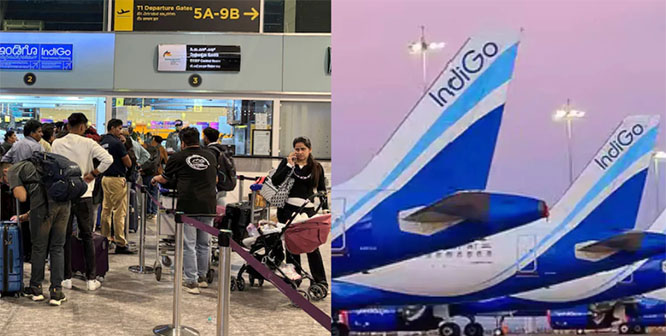
Angry outbursts, long queues, and desperate appeals filled airports across India today as IndiGo grappled with a severe operational breakdown. Hundreds of flights have been cancelled or delayed, leaving thousands of passengers stranded through the night and forcing many to spend long hours at helpdesks.

Social media was flooded with videos of fliers pleading for assistance, accusing the airline of misleading updates, and demanding accommodation after being stuck for 10 to 12 hours at airports such as Hyderabad and Bengaluru.

What Triggered the Meltdown?

IndiGo has attributed the widespread disruption to “a multitude of unforeseen operational challenges.” These include:

•    Minor technology glitches
•    Winter-season schedule adjustments
•    Bad weather
•    Congestion in the aviation network
•    New crew rostering rules (Flight Duty Time Limitations or FDTL)

Among these, the most disruptive has been the implementation of the updated FDTL norms introduced by the Directorate General of Civil Aviation (DGCA) in January 2024.

These rules were designed to reduce pilot fatigue and improve passenger safety. Key changes include:

•    Longer weekly rest periods for flight crew
•    A revised definition of “night,” extending it by an extra hour
•    Tighter caps on flight duty timing and night landings
•    Cutting night shifts for pilots and crew from six per roster cycle to just two

Once these norms became fully enforceable, airlines were required to overhaul rosters well in advance. For IndiGo, this triggered a sudden shortage of crew available for duty, leading to cascading delays and cancellations.

Why IndiGo Was Hit the Hardest

IndiGo is India’s largest airline by a wide margin, operating over 2,200 flights daily. That’s roughly double the number operated by Air India.

When an airline of this size experiences even a 10–20% disruption, it translates to 200–400 flights being delayed or grounded — producing massive spillover effects across the country.

IndiGo also relies heavily on high-frequency overnight operations, a model typical of low-cost carriers that aim to maximise aircraft utilisation and reduce downtime. The stricter FDTL norms clash with these overnight-heavy schedules, forcing the airline to pull back services.

Aviation bodies have also criticised IndiGo’s preparedness. The Airline Pilots' Association of India (ALPA) said airlines were given a two-year window to plan for the new rules but “started preparing rather late.” IndiGo, it said, failed to rebuild crew rosters 15 days in advance as required.

The Federation of Indian Pilots (FIP) went further, calling the crisis the result of IndiGo’s “prolonged and unorthodox lean manpower strategy,” and alleging that the airline adopted a hiring freeze even as it knew the new rules would require more careful staffing.

How Many Flights Are Affected?

In the past 48 hours, over 300 flights have been cancelled. At least 100 more are expected to be cancelled today.

City-wise impact:

•    Hyderabad: 33 expected cancellations; several fliers stranded overnight
•    Bengaluru: over 70 expected cancellations
•    Delhi, Mumbai, Chennai, Kolkata: widespread delays and missed connections

Passengers shared distressing accounts online.

One customer at Hyderabad airport said they waited from 6 PM to 9 AM with “no action taken” regarding their delayed Pune flight. Another said IndiGo repeatedly told them the crew was “arriving soon,” only for the delay to stretch over 12 hours.

IndiGo has apologised for the disruption and promised that operations will stabilise within 48 hours, adding that “calibrated adjustments” are being made to contain the chaos.

What Should Passengers Do Now?

For those flying in the next few days, especially with IndiGo, here are key precautions:

1. Keep Checking Flight Status
Monitor your flight closely before leaving for the airport, as delays may be announced last-minute.

2. Arrive Early
Expect long queues at counters and security due to crowding and rescheduling.

3. Carry Essentials
Pack snacks, water, basic medicines, chargers, and items for children or senior citizens. Extended waiting times should be anticipated.

4. Use Flexible Booking Options
If you booked tickets with a free-date-change or cancellation option, consider using them.
If you haven’t booked yet, prefer refundable or flexible fares, or even consider alternate airlines.

5. Follow IndiGo’s Updates
Keep an eye on IndiGo’s official social media channels and contact customer support for rebooking and refund queries.

What Needs to Change?

Pilot groups have raised concerns not just about staffing but also the planning practices behind it.
The Federation of Indian Pilots accused IndiGo of:

•    Imposing an unexplained hiring freeze despite knowing the FDTL changes were coming
•    Entering non-poaching agreements that limited talent movement
•    Keeping pilot pay frozen
•    Underestimating the need to restructure operations in advance

They have urged DGCA to approve seasonal schedules only after airlines prove they have adequate pilot strength under the new norms.

ALPA also warned that some airlines might be using the delays as an “immature pressure tactic” to push DGCA for relaxations in the new rules — which, if granted, could compromise the very safety standards the norms were meant to protect.

Both pilot bodies stressed that no exemption should dilute safety, and any deviations should be based solely on scientific risk assessment.

Is a Solution in Sight?

While IndiGo says normalcy will return within two days, aviation experts believe that fully stabilising operations could take longer, depending on how quickly the airline can:
•    Re-align rosters
•    Mobilise rested crew
•    Boost staffing
•    Adjust its winter schedule to match regulatory requirements
Passengers are advised to remain prepared for continued delays over the next few days as the airline works through its backlog. 

Comments

Add new comment

  • Coastaldigest.com reserves the right to delete or block any comments.
  • Coastaldigset.com is not responsible for its readers’ comments.
  • Comments that are abusive, incendiary or irrelevant are strictly prohibited.
  • Please use a genuine email ID and provide your name to avoid reject.