Pak calls on army to deploy in capital after protest bloodshed

News Network
November 26, 2017

Islamabad, Nov 26: Pakistan's government called on the powerful military to deploy in the capital Islamabad Saturday after deadly unrest broke out when police moved to dislodge an Islamist protest that has paralysed the city for weeks.

At least six people were killed and some 190 injured -- around 137 of whom were security personnel -- in fierce clashes as police tried to disperse the demonstration earlier Saturday.

Security forces fired tear gas and rubber bullets and demonstrators blocked roads and burned police vehicles around the site of the sit-in. As the violence intensified, protests sprouted in the major cities of Lahore and Karachi, as well as smaller towns across the country.

"According to figures we have, at least six people were killed in violence today," Deeba Shahnaz, a spokeswoman for the Provincial Rescue department, told AFP. A security official also confirmed the death toll.

Authorities had been attempting to clear a relatively small protest by the little-known hardline group Tehreek-i-Labaik Ya Rasool Allah Pakistan (TLYRAP) that has blocked a main highway into Islamabad since November 6, causing hours-long traffic snarls and enraging citizens.

It was not clear how many protesters remained in the streets of the capital late Saturday.

There had been roughly 2,000 as the operation began, but AFP reporters said dozens more were arriving throughout the day. Many were galvanised by posts on social media, despite apparent efforts to block sites including Twitter.

Police and paramilitary forces retreated following the clashes, with the Islamabad Capital Territory authorities making the request for the army to step in soon after.

An interior ministry order said the federal government had authorised the deployment of "sufficient troops" to "control law and order" in the city until further notice.

There was no immediate comment from military officials and no sign of troops in the streets late Saturday.

The demonstrations have threatened the beleaguered Pakistan Muslim League (PML-N) government ahead of a general election due to be held next year.

The PML-N is already reeling from a Supreme Court decision to oust former prime minister Nawaz Sharif over graft allegations in the summer, while finance minister Ishaq Dar -- also embroiled in a corruption scandal -- has taken indefinite medical leave.

Sharif had repeatedly clashed with the military, which has ruled Pakistan for half of its 70-year history.

Analysts and critics accused the government of bungling its response to the protests, with authorities hesitating for days over fears of violence as the city's commuters seethed in the traffic choked streets.

During the unrest Pakistan's media regulator barred local TV channels from broadcasting live images.

Twitter said it was "monitoring" reports of the government blocking the site, adding "We... hope service will be fully restored soon".

The TLYRAP are demanding that Pakistan's law minister Zahid Hamid resign over a hastily-abandoned amendment to the oath that election candidates must swear.

Demonstrators have linked it to blasphemy -- a highly contentious issue in Muslim Pakistan -- and claim the oath was softened to enable the participation of Ahmadis, a long-persecuted Islamic minority sect.

Earlier, police in Karachi said some 200 protesters had blockaded a major road in the southern port, with at least 27 injured -- including 22 people with gunshot wounds -- brought to hospital, according to doctors.

Markets and shops were shuttered in the megacity, Pakistan's commercial hub, as alarmed residents stayed inside, while hardline clerics urged more people to take to the streets.

An AFP journalist in Lahore, the capital of Punjab province, said a main artery road was closed by police due to protests. Smaller rallies were reported in other towns across the country.

Earlier in the day Pakistan's powerful military chief phoned the prime minister Shahid Khaqan Abbasi to urge the situation be handled "peacefully".

General Qamar Javed Bajwa called for both sides to avoid violence "as it is not in national interest", army spokesman Major General Asif Ghafoor said on Twitter.

The protesters come from the Barelvi sect of Islam that has strong ties to Sufism, a mystical branch of the religion that is seen as moderate.

However the execution in 2016 of Barelvi follower Mumtaz Qadri -- who assassinated liberal Punjab governor Salman Taseer over his stance on the country's blasphemy laws -- led members of the group to take a more hardline stance against any moves to reform the legislation.

"These people already had a grudge against the government and the government just provided them the opportunity to vent out their anger," said political analyst Hasan Askari.

But weeks of inaction from authorities sparked the wrath of Pakistan's judiciary, with the Supreme Court issuing a blistering statement earlier in the week and the Islamabad High Court threatening to hold government officials in contempt.

Analysts said the government had allowed a minor issue to grow into a headline-grabbing and potentially dangerous situation.

Even before Saturday's clashes the sit-in had cost the life of an eight-year-old child whose ambulance could not reach a hospital in time due to the blocked roads.

"Politically driven procrastination has its own costs and this is what the government is paying," analyst Imtiaz Gul told AFP, adding that the situation was "explosive".

 

Comments

Add new comment

  • Coastaldigest.com reserves the right to delete or block any comments.
  • Coastaldigset.com is not responsible for its readers’ comments.
  • Comments that are abusive, incendiary or irrelevant are strictly prohibited.
  • Please use a genuine email ID and provide your name to avoid reject.
News Network
November 29,2025

DKSsiddu.jpg

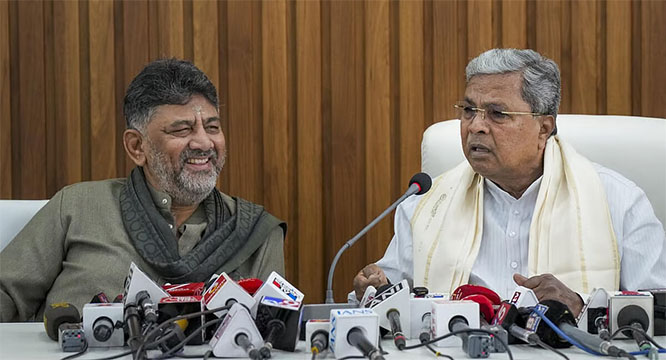
New Delhi: Karnataka chief minister Siddaramaiah and deputy CM DK Shivakumar on Saturday put up a dramatic display of unity at a closely watched joint press briefing, firmly dismissing weeks of speculation about a power-sharing tussle within the Congress. With the high command nudging both leaders to sit together and settle the dust, the meeting became a political spectacle, ending with the duo declaring that there was “no confusion, no differences.”

Calling the reports of a rift “manufactured confusion,” Siddaramaiah said the talks had gone smoothly, even joking about their breakfast. “Breakfast was very good. All three of us enjoyed it,” he said. “We want to end this confusion once and for all. For local elections and for 2028, our mission is clear — Congress must return to power. There is no difference between me and DKS, not now, not before.”

He blamed the media for fuelling rumours and reiterated absolute adherence to the party leadership. “From tomorrow, let there be no confusion. What the high command says, we will follow.”

Siddaramaiah also assured that the Assembly session starting December 8 would run smoothly and vowed that Congress would take on the BJP and JD(S) “together.”

Shivakumar echoed the chief minister word for word, stressing loyalty and discipline. “People have given us a massive mandate. It is our duty to deliver,” he said. “This government was formed under Siddaramaiah’s leadership. We both have complete trust in the high command. If they tell me to wait, I will wait.”

He added that the two leaders had discussed strategy for the 2028 Assembly elections. “Whatever the CM says, I agree. We are loyal soldiers of the party. The party may be facing challenges nationally, but we will keep it strong in Karnataka.”

Shivakumar also said Siddaramaiah would soon visit his home for lunch or dinner — another symbolic gesture meant to underline their unity.

Both leaders later posted on social media describing the breakfast meeting as “productive” and focused on “Karnataka’s priorities.”

The BJP, however, rejected the show of camaraderie as “pure bunkum,” accusing Congress of trying to paper over an internal power struggle. But Siddaramaiah and Shivakumar insisted their united front would continue — and that there was “no confusion” within the state leadership.

Comments

Add new comment

  • Coastaldigest.com reserves the right to delete or block any comments.
  • Coastaldigset.com is not responsible for its readers’ comments.
  • Comments that are abusive, incendiary or irrelevant are strictly prohibited.
  • Please use a genuine email ID and provide your name to avoid reject.
News Network
December 4,2025

indigocrisis.jpg

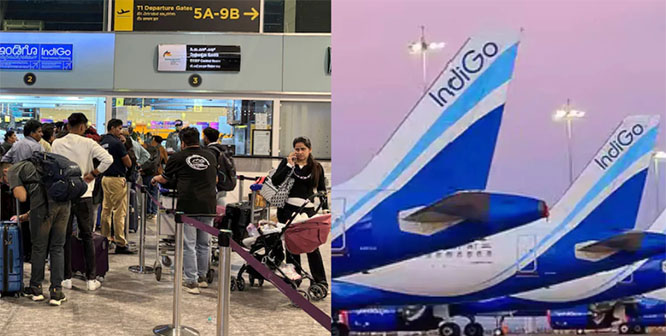
Angry outbursts, long queues, and desperate appeals filled airports across India today as IndiGo grappled with a severe operational breakdown. Hundreds of flights have been cancelled or delayed, leaving thousands of passengers stranded through the night and forcing many to spend long hours at helpdesks.

Social media was flooded with videos of fliers pleading for assistance, accusing the airline of misleading updates, and demanding accommodation after being stuck for 10 to 12 hours at airports such as Hyderabad and Bengaluru.

What Triggered the Meltdown?

IndiGo has attributed the widespread disruption to “a multitude of unforeseen operational challenges.” These include:

•    Minor technology glitches
•    Winter-season schedule adjustments
•    Bad weather
•    Congestion in the aviation network
•    New crew rostering rules (Flight Duty Time Limitations or FDTL)

Among these, the most disruptive has been the implementation of the updated FDTL norms introduced by the Directorate General of Civil Aviation (DGCA) in January 2024.

These rules were designed to reduce pilot fatigue and improve passenger safety. Key changes include:

•    Longer weekly rest periods for flight crew
•    A revised definition of “night,” extending it by an extra hour
•    Tighter caps on flight duty timing and night landings
•    Cutting night shifts for pilots and crew from six per roster cycle to just two

Once these norms became fully enforceable, airlines were required to overhaul rosters well in advance. For IndiGo, this triggered a sudden shortage of crew available for duty, leading to cascading delays and cancellations.

Why IndiGo Was Hit the Hardest

IndiGo is India’s largest airline by a wide margin, operating over 2,200 flights daily. That’s roughly double the number operated by Air India.

When an airline of this size experiences even a 10–20% disruption, it translates to 200–400 flights being delayed or grounded — producing massive spillover effects across the country.

IndiGo also relies heavily on high-frequency overnight operations, a model typical of low-cost carriers that aim to maximise aircraft utilisation and reduce downtime. The stricter FDTL norms clash with these overnight-heavy schedules, forcing the airline to pull back services.

Aviation bodies have also criticised IndiGo’s preparedness. The Airline Pilots' Association of India (ALPA) said airlines were given a two-year window to plan for the new rules but “started preparing rather late.” IndiGo, it said, failed to rebuild crew rosters 15 days in advance as required.

The Federation of Indian Pilots (FIP) went further, calling the crisis the result of IndiGo’s “prolonged and unorthodox lean manpower strategy,” and alleging that the airline adopted a hiring freeze even as it knew the new rules would require more careful staffing.

How Many Flights Are Affected?

In the past 48 hours, over 300 flights have been cancelled. At least 100 more are expected to be cancelled today.

City-wise impact:

•    Hyderabad: 33 expected cancellations; several fliers stranded overnight
•    Bengaluru: over 70 expected cancellations
•    Delhi, Mumbai, Chennai, Kolkata: widespread delays and missed connections

Passengers shared distressing accounts online.

One customer at Hyderabad airport said they waited from 6 PM to 9 AM with “no action taken” regarding their delayed Pune flight. Another said IndiGo repeatedly told them the crew was “arriving soon,” only for the delay to stretch over 12 hours.

IndiGo has apologised for the disruption and promised that operations will stabilise within 48 hours, adding that “calibrated adjustments” are being made to contain the chaos.

What Should Passengers Do Now?

For those flying in the next few days, especially with IndiGo, here are key precautions:

1. Keep Checking Flight Status
Monitor your flight closely before leaving for the airport, as delays may be announced last-minute.

2. Arrive Early
Expect long queues at counters and security due to crowding and rescheduling.

3. Carry Essentials
Pack snacks, water, basic medicines, chargers, and items for children or senior citizens. Extended waiting times should be anticipated.

4. Use Flexible Booking Options
If you booked tickets with a free-date-change or cancellation option, consider using them.
If you haven’t booked yet, prefer refundable or flexible fares, or even consider alternate airlines.

5. Follow IndiGo’s Updates
Keep an eye on IndiGo’s official social media channels and contact customer support for rebooking and refund queries.

What Needs to Change?

Pilot groups have raised concerns not just about staffing but also the planning practices behind it.
The Federation of Indian Pilots accused IndiGo of:

•    Imposing an unexplained hiring freeze despite knowing the FDTL changes were coming
•    Entering non-poaching agreements that limited talent movement
•    Keeping pilot pay frozen
•    Underestimating the need to restructure operations in advance

They have urged DGCA to approve seasonal schedules only after airlines prove they have adequate pilot strength under the new norms.

ALPA also warned that some airlines might be using the delays as an “immature pressure tactic” to push DGCA for relaxations in the new rules — which, if granted, could compromise the very safety standards the norms were meant to protect.

Both pilot bodies stressed that no exemption should dilute safety, and any deviations should be based solely on scientific risk assessment.

Is a Solution in Sight?

While IndiGo says normalcy will return within two days, aviation experts believe that fully stabilising operations could take longer, depending on how quickly the airline can:
•    Re-align rosters
•    Mobilise rested crew
•    Boost staffing
•    Adjust its winter schedule to match regulatory requirements
Passengers are advised to remain prepared for continued delays over the next few days as the airline works through its backlog. 

Comments

Add new comment

  • Coastaldigest.com reserves the right to delete or block any comments.
  • Coastaldigset.com is not responsible for its readers’ comments.
  • Comments that are abusive, incendiary or irrelevant are strictly prohibited.
  • Please use a genuine email ID and provide your name to avoid reject.