PM Modi, US President Trump discuss Iran, trade, defence, 5G

Agencies
June 28, 2019

Jun 28: Prime Minister Narendra Modi on Friday held talks with US President Donald Trump and discussed various bilateral and global issues including Iran, 5G communications networks, trade and defence ahead of the G-20 Summit.

Modi thanked Trump for expressing his "love towards India" in a letter recently delivered by US Secretary of State Mike Pompeo.

The Prime Minister said that he wants to discuss Iran, 5G, bilateral relations and defence ties with Trump.

The US reimposed sanctions on Iran in November after pulling out of a 2015 nuclear accord between Tehran and six world powers. To reduce Iran's crude oil export to zero, the US ended on May 2 waivers that had allowed the top buyers of Iranian oil, including India, to continue their imports for six months.

India, complying with the US sanctions, has ended all imports of oil from Iran.

Trump congratulated Modi on his election victory and said that the two countries would work together in many areas including military.

"It was a big victory, you deserve it, you have done a great job. We have big things to announce. In terms of trade, in terms of manufacturing, we would be discussing 5G. I congratulate you and I look forward to talks," Trump said.

"We have become great friends and our countries have never been closer. I can say that with surety. We will work together in many ways including military, we'll be discussing trade today," he said.

On Iran, Trump said: "We have a lot of time. There's no rush, they can take their time. There is absolutely no time pressure".

"PM @narendramodi and @POTUS held talks on the sidelines of the #G20 Summit in Osaka. Both leaders discussed various bilateral and global issues," the Prime Minister's Office said in a tweet.

The two leaders met shortly after the Japan-America-India trilateral meeting during which Modi highlighted "the importance India attaches to" the grouping.

The Modi-Trump meeting assumes significance as the US president, championing his 'America First' policy, has been a vocal critic of India for levying "tremendously high" duties on US products.

Before his arrival in Japan on Thursday, Trump tweeted, "I look forward to speaking with Prime Minister (Narendra) Modi about the fact that India, for years having put very high Tariffs against the United States, just recently increased the Tariffs even further. This is unacceptable and the Tariffs must be withdrawn!"

This was Modi's first meeting with Trump after the BJP's landslide win in the parliamentary election.

India has raised tariffs on 28 items, including almond, pulses and walnut, exported from the US in retaliation to America's withdrawal of preferential access for Indian products.

The Trump administration wants Prime Minister Modi to lower the trade barriers and embrace "fair and reciprocal" trade.

Trump has also criticised India's high import tariff on the iconic Harley Davidson motorcycles as "unacceptable" though acknowledging that his "good friend" Prime Minister Modi has reduced it from 100 per cent to 50 per cent.

Last February, India slashed the customs duty on imported motorcycles like Harley-Davidson to 50 per cent after Trump called it "unfair" and threatened to increase the tariff on import of Indian bikes to the US.

The government on June 21 last year decided to impose these duties in retaliation to the US decision of significantly hiking customs duties on certain steel and aluminium products.

America, in March last year, imposed 25 per cent tariff on steel and a 10 per cent import duty on aluminium products.

Comments

Add new comment

  • Coastaldigest.com reserves the right to delete or block any comments.
  • Coastaldigset.com is not responsible for its readers’ comments.
  • Comments that are abusive, incendiary or irrelevant are strictly prohibited.
  • Please use a genuine email ID and provide your name to avoid reject.
News Network
December 7,2025

envoy.jpg

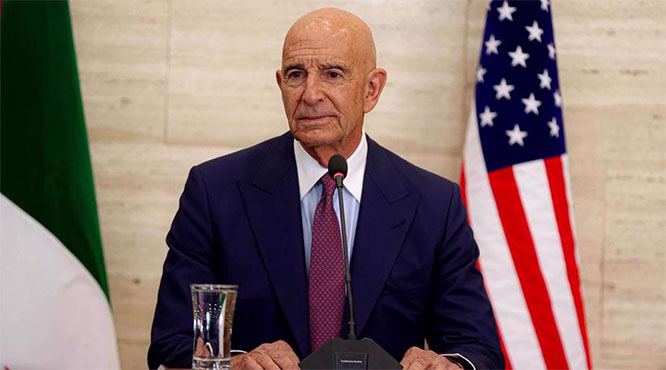
Since 1946, the United States has attempted 93 coups or “regime change” operations across the world — including two in Iran, US Special Envoy for Syria Tom Barrack has admitted.

Speaking to the UAE-based IMI Media Group, in remarks published by The National, Barrack said Washington tried twice to overthrow the Iranian government but failed both times. 

“For (Trump) then to be imputed with regime change — we had two regime changes in Iran already. Neither one worked. So I think wisely leave it to the region to solve,” said Barrack, who also serves as the US ambassador to Turkey.

His comments come six months after the US joined Israel in airstrikes against Iran during ongoing indirect nuclear negotiations between Tehran and Washington.

On June 13, Israel launched an attack on Iran that killed at least 1,064 people and hit civilian infrastructure. Days later, the United States targeted three nuclear facilities — Fordow, Natanz and Isfahan — in what Iran called a clear violation of international law. Iranian retaliation eventually forced a halt to the assault on June 24.

Barrack further claimed that US President Donald Trump and Foreign Secretary Marco Rubio are “not into regime change” and prefer a regional approach driven by Middle Eastern countries themselves. According to him, regional dialogue and non-interference by outside powers offer a more durable path forward.

He added that Washington is still open to an agreement with Tehran if Iranian authorities show “seriousness” and willingness to engage constructively.

However, Iran maintains the US has not shown readiness for meaningful talks. In an interview with Japan’s Kyodo News, Iranian Foreign Minister Abbas Araghchi said negotiations could advance only if Washington acknowledges Iran’s right to peaceful nuclear energy and lifts unilateral sanctions.

Comments

Add new comment

  • Coastaldigest.com reserves the right to delete or block any comments.
  • Coastaldigset.com is not responsible for its readers’ comments.
  • Comments that are abusive, incendiary or irrelevant are strictly prohibited.
  • Please use a genuine email ID and provide your name to avoid reject.
News Network
November 24,2025

israelsyra.jpg

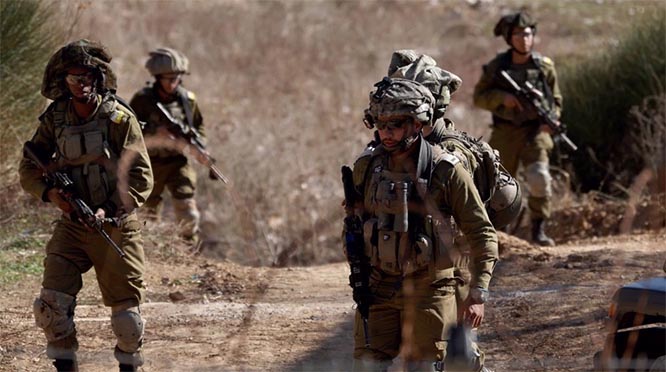
Israeli forces have pushed over the Syrian frontier, erecting a checkpoint and stopping vehicles in the southwestern city of Quneitra, in yet another breach of the Arab country’s sovereignty.

The violation took place on Sunday, when the troops made their way across the border, setting up the outpost near the Ain al-Bayda junction in northern Quneitra, Syrian outlets reported.

According to the al-Ikhbariya paper, an Israeli detachment positioned itself at the junction, halting cars and conducting searches.

The Syrian Arab News Agency (SANA) reported that three Israeli military vehicles then moved further into the northern countryside, deploying between the town of Jubata al-Khashab and the villages of Ofaniya and Ain al-Bayda. The agency added that a separate Israeli unit mounted a new incursion in the central region, approaching the villages of Umm Batina and al-Ajraf.

Residents said such activities have surged in recent months, pointing to Israeli advances onto farmland, leveling of extensive forested areas, arrests, and spread of mobile checkpoints.

The Israeli regime began markedly increasing its military aggression against Syria last year.

The escalation coincided with increasingly ferocious onslaughts throughout the country by the so-called Hay'at Tahrir al-Sham (HTS) Takfiri terrorist group, which the government of President Bashar al-Assad had confined to northwestern Syria. The HTS, however, managed to overthrow the government as the Israeli attacks would pummel the country’s civilian and defensive infrastructure.

Various reports have shown that, during the escalation, the regime conducted more than 1,000 airstrikes on the Syrian territory and over 400 ground raids into the south.

Following the collapse of the Assad government, Tel Aviv also widened its grip over the occupied Golan Heights by taking control of a demilitarized buffer zone, in defiance of a 1974 Disengagement Agreement. Earlier this month, senior Israeli officials, including Prime Minister Benjamin Netanyahu, visited the buffer zone, prompting expressions of alarm on the part of the United Nations.

The United States, the regime’s biggest ally, has, meanwhile, been fraternizing the HTS head Abu Mohammed al-Jolani amid the widely reported prospect of rapprochement with Tel Aviv.

Comments

Add new comment

  • Coastaldigest.com reserves the right to delete or block any comments.
  • Coastaldigset.com is not responsible for its readers’ comments.
  • Comments that are abusive, incendiary or irrelevant are strictly prohibited.
  • Please use a genuine email ID and provide your name to avoid reject.