



Putin storms to victory, to rule Russia as President six more years

Agencies
March 19, 2018

Moscow, Mar 19: Vladimir Putin cruised to victory in Russia's presidential election on Sunday, giving him at least another six years in power as Moscow's relations with the West become increasingly strained.

Putin, who has ruled Russia for almost two decades, recorded his best ever election performance with more than 76 percent of the vote, but the opposition cried foul.

Monitors reported ballot stuffing and other cases of alleged fraud as the Kremlin pushed for a high turnout to give greater legitimacy to Putin's historic fourth term.

The Russian strongman ran against seven other candidates, but his most vocal critic Alexei Navalny was barred from the ballot for legal reasons and the final outcome was never in doubt.

"I see in this (result) the confidence and hope of our people," Putin said in an address to a crowd of supporters on a square next to the Kremlin after exit polls put him on track for a resounding victory.

"Our thoughts will turn to the future of our great country and the future of our children," said the man who is already Russia's longest-serving leader since Stalin.

About 107 million Russians were eligible to cast ballots and in its latest update on participation, three hours before polls closed in Moscow, the central election commission said turnout was at 60 percent.

Authorities used both the carrot and the stick to boost engagement in the polls.

Selfie competitions, giveaways, food festivals and children's entertainers were laid on at polling stations in a bid to create a festive atmosphere around the election.

But employees of state and private companies reported coming under pressure to vote, while students were threatened with problems in their exams or even expulsion if they did not take part, according to the independent Novaya Gazeta newspaper.

According to central election commission data with 90 percent of ballots counted, Putin took 76.4 percent of the vote, well ahead of his nearest competitor Communist Party candidate Pavel Grudinin who was on 12 percent.

Ultra-nationalist firebrand Vladimir Zhirinovsky took around 6 percent, former reality TV presenter Ksenia Sobchak was on 1.5 percent and other candidates were on less than a single percentage point each.

The election was held as Russia faces increasing isolation on the world stage over a spy poisoning in Britain and a fresh round of US sanctions just as it gears up for the football World Cup in the summer.

Navalny -- who called on his supporters to boycott the "fake" vote and sent more than 33,000 observers across the country to see how official turnout figures differed from those of monitors -- said there had been "unprecedented violations".

His lawyer Ivan Zhdanov said the actual national turnout at 1700 GMT, when polls closed in Moscow, was 55 percent, according to data collected by monitors.

Navalny's opposition movement and the non-governmental election monitor Golos reported ballot stuffing, repeat voting and Putin supporters being bussed into polling stations en masse.

One election commission worker in the Republic of Dagestan, which traditionally registers extremely high official turnout figures, told AFP around 50 men entered the station where he was working and physically assaulted an observer before stuffing a ballot box.

But the electoral commission dismissed most concerns, saying monitors sometimes misinterpret what they see.

Runner-up Grudinin said the elections had been "dishonest" in comments carried by news agencies following early results.

Among the first world leaders to congratulate Putin was Chinese President Xi Jinping, who has just been handed a second term himself and has gained a path to indefinite rule after presidential term limits were lifted last week.

"China is willing to work with Russia to keep promoting China-Russia relations to a higher level, provide the driving force for respective national development in both countries, and promote regional and global peace and tranquillity," Xi said in his message.

Since first being elected president in 2000, Putin has stamped his total authority on the world's biggest country, muzzling opposition, putting television under state control and reasserting Moscow's standing abroad.

The 65-year-old former KGB officer used an otherwise lacklustre presidential campaign to emphasise Russia's role as a major world power, boasting of its "invincible" new nuclear weapons in a pre-election speech.

Most people who spoke to AFP on Sunday said they voted for Putin, praising him for restoring stability and national pride after the humiliating collapse of the Soviet Union.

"Of course I'm for Putin, he's a leader," said Olga Matyunina, a 65-year-old retired economist.

"After he brought Crimea back, he became a hero to me."

Sunday marked four years since Putin signed a treaty declaring Crimea to be part of Russia in a move that triggered a pro-Kremlin insurgency in east Ukraine, a conflict that has claimed more than 10,000 lives.

Ahead of the vote, a new crisis broke out with the West as Britain implicated Putin in the poisoning of former double agent Sergei Skripal with a Soviet-designed nerve agent.

In response, London expelled 23 Russian diplomats, prompting a tit-for-tat move by Moscow. Also this week, Washington hit Russia with sanctions for trying to influence the 2016 US election.

After his victory, Putin dismissed claims Russia was behind the poisoning in Britain as "drivel, rubbish, nonsense" but said Moscow was ready to cooperate with London in the probe.

Putin's previous Kremlin term was marked by a crackdown on the opposition after huge protests, the Ukraine conflict, military intervention in Syria and the introduction of Western sanctions that contributed to a fall in living standards.

The president has said he will use his fourth term to address a litany of domestic problems including widespread poverty and poor healthcare.

Election officials flew to far-flung regions to collect votes from indigenous herders, while cosmonaut Anton Shkaplerov -- the only Russian currently aboard the International Space Station -- cast his ballot by proxy.

Comments

Add new comment

  • Coastaldigest.com reserves the right to delete or block any comments.
  • Coastaldigset.com is not responsible for its readers’ comments.
  • Comments that are abusive, incendiary or irrelevant are strictly prohibited.
  • Please use a genuine email ID and provide your name to avoid reject.
News Network
February 1,2026

US President Donald Trump on Saturday claimed that the government of India led by Prime Minister Narendra Modi has made a deal to buy Venezuelan oil, as opposed to purchasing it from Iran.

"We've already made that deal, the concept of the deal," he told reporters on Air Force One.

Trump had imposed 25% tariffs on countries buying Venezuelan oil, including India, in March 2025. He had also hit India with tariffs for buying Russian oil, saying it was "funding" President Vladimir Putin's war against Ukraine.

Trump has said that the US has taken control of the oil-rich Venezuela after capturing former President Nicolas Maduro in January.

A fleet of 18 ships loaded with crude oil bound for refineries in Texas, Louisiana, and Mississippi in January, the most since December 2024, according to a report by the news agency Bloomberg.

Combined crude deliveries to the US will reach about 2,75,000 barrels a day, more than doubling volumes seen in December last year. Shipments to China, which averaged 4,00,000 barrels a day last year, fell to zero in January.

PM Modi, Venezuelan President Agree To Expand Ties

Prime Minister Narendra Modi and Venezuela's acting President Delcy Rodriguez spoke on Friday and agreed to take the bilateral relations to "new heights" in the years ahead.

It was the first phone call between the two leaders since the capture of Maduro and his wife by the US on January 3.

"Spoke with Acting President of Venezuela, Ms. Delcy Rodriguez. We agreed to further deepen and expand our bilateral partnership in all areas, with a shared vision of taking India-Venezuela relations to new heights in the years ahead," PM Modi said in a post on X.

A statement from Prime Minister Modi's office said the two leaders agreed to further expand and deepen the India-Venezuela partnership in all areas, including trade and investment, energy, digital technology, health, agriculture, and people-to-people ties.

They exchanged views on various regional and global issues of mutual interest and underscored the importance of their close cooperation for the Global South, the statement said.

Rodriguez also said that they discussed partnerships in the fields of agriculture, science and technology, mining, and tourism, as well as the pharmaceutical and automotive industries.

Comments

Add new comment

  • Coastaldigest.com reserves the right to delete or block any comments.
  • Coastaldigset.com is not responsible for its readers’ comments.
  • Comments that are abusive, incendiary or irrelevant are strictly prohibited.
  • Please use a genuine email ID and provide your name to avoid reject.
News Network
February 4,2026

gaming.jpg

Ghaziabad: In a tragic incident, three sisters aged 12, 14 and 16 died after jumping from the ninth floor of their apartment in Uttar Pradesh’s Ghaziabad in the early hours of Wednesday. The girls allegedly took the extreme step after becoming deeply obsessed with an online Korean task-based game.

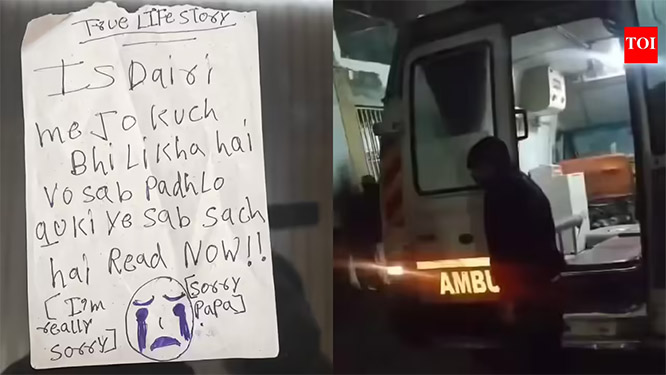
The incident occurred around 2.15 am at a high-rise apartment complex in Bharat City. Before jumping, the sisters — Pakhi (12), Prachi (14) and Vishika (16) — left behind a handwritten note that read, “Sorry, Papa.”

According to police, the girls went to the balcony, bolted the door from inside and jumped one after another. Their screams and the sound alerted their parents, neighbours and security guards. By the time the parents broke open the balcony door, all three had died.

“When we reached the spot, we confirmed that three minor girls, daughters of Chetan Kumar, had died after jumping from the building,” said Assistant Commissioner of Police Atul Kumar Singh.

Visuals from the scene on Wednesday morning showed the bodies lying on the ground, their mother wailing in grief, and stunned neighbours gathering at the complex.

Police said the sisters were heavily influenced by Korean culture and were addicted to an online “Korean love game”, though no specific game has been identified so far. Investigators are examining an eight-page suicide note written in a pocket diary, detailing the girls’ mobile and gaming activities.

“Read everything written in this diary because all of it is true. I’m really sorry. Sorry, Papa,” the note said, accompanied by a hand-drawn crying emoji.

Their father, Chetan Kumar, told police that the girls had even adopted Korean names and had gradually withdrawn from school and daily activities. “They used to say, ‘Korea is our life, Korea is our biggest love. We cannot give it up,’” he said, breaking down.

Police said the parents had recently restricted the girls’ mobile phone usage, which may have triggered distress. “The investigation has not revealed the name of any particular game, but it is evident that the girls were deeply influenced by Korean culture, as mentioned in the suicide note,” said senior police officer Nimish Patel.

The sisters reportedly did everything together, including eating and bathing. Their gaming addiction is believed to have begun during the COVID-19 pandemic, after which they became irregular at school and eventually stopped attending altogether.

Police also revealed that Chetan Kumar is married to two sisters and lives with both wives and their children, all daughters. Two of the deceased girls were daughters of one wife, while the third was their half-sister.

Further investigation is underway.

Comments

Add new comment

  • Coastaldigest.com reserves the right to delete or block any comments.
  • Coastaldigset.com is not responsible for its readers’ comments.
  • Comments that are abusive, incendiary or irrelevant are strictly prohibited.
  • Please use a genuine email ID and provide your name to avoid reject.
News Network
January 23,2026

Mangaluru: The Karnataka Government Polytechnic (KPT), Mangaluru, has achieved autonomous status from the All India Council for Technical Education (AICTE), becoming the first government polytechnic in the country to receive such recognition in its 78-year history. The status was granted by AICTE, New Delhi, and subsequently approved by the Karnataka Board of Technical Education in October last year.

Officials said the autonomy was conferred a few months ago. Until recently, AICTE extended autonomous status only to engineering colleges, excluding diploma institutions. However, with a renewed national focus on skill development, several government polytechnics across India have now been granted autonomy.

KPT, the second-largest polytechnic in Karnataka, was established in 1946 with four branches and has since expanded to offer eight diploma programmes, including computer science and polymer technology. The institution is spread across a 19-acre campus.

Ravindra M Keni, the first dean of the institution, told The Times of India that AICTE had proposed autonomous status for polytechnic institutions that are over 25 years old. “Many colleges applied. In the first round, 100 institutions were shortlisted, which was further narrowed down to 15 in the second round. We have already completed one semester after becoming an autonomous institution,” he said. He added that nearly 500 students are admitted annually across eight three-year diploma courses.

Explaining the factors that helped KPT secure autonomy, Keni said the institution has consistently recorded 100 per cent admissions and placements for its graduates. He also noted its strong performance in sports, with the college emerging champions for 12 consecutive years, along with active student participation in NCC and NSS activities.

Autonomous status allows KPT to design industry-oriented curricula, conduct examinations, prepare question papers, and manage academic documentation independently. The institution can also directly collaborate with industries and receive priority funding from AICTE or the Ministry of Education. While academic autonomy has been granted, financial control will continue to rest with the state government.

“There will be separate committees for examinations, question paper setting, boards of studies, and boards of examiners. The institution will now have the freedom to conduct admissions without government notifications and issue its own marks cards,” Keni said, adding that new academic initiatives would be planned after a year of functioning under the autonomous framework.

Comments

Add new comment

  • Coastaldigest.com reserves the right to delete or block any comments.
  • Coastaldigset.com is not responsible for its readers’ comments.
  • Comments that are abusive, incendiary or irrelevant are strictly prohibited.
  • Please use a genuine email ID and provide your name to avoid reject.