2nd scaled-down hajj of covid era witnesses highest levels of health precautions

News Network
July 18, 2021

Makkah, July 18: Hajj pilgrims streamed out of the holy city of Makkah Sunday, launching the rituals of the great pilgrimage which Saudi Arabia is holding in a scaled-down form for a second year to ward off coronavirus.

Saudi Arabia is allowing only 60,000 fully vaccinated citizens and residents of the kingdom to take part, far from the vast crowds that descend on Mecca in normal times, when the ritual draws some 2.5 million pilgrims.

Since Saturday, groups of pilgrims have been performing the "tawaf" at Makkah's Grand Mosque, circling the Kaaba, a large cubic structure draped in golden-embroidered black cloth towards which Muslims around the world pray.

After that, pilgrims have been making their way to the Valley of Mina, where they will spend the night.

"46,000 pilgrims have arrived in Mina," Deputy Minister of Hajj and Umrah Abdelfattah bin Suleiman Mashat told AFP on Sunday morning.

"The number of women participating in the Hajj this year exceeds 40 percent," he added.

Mina sits in a narrow valley surrounded by rocky mountains, and is transformed each year into a vast encampment for pilgrims.

"Public health teams are monitoring the health status of pilgrims around the clock upon their arrival in Mecca," said Sari Asiri, director of the hajj and umrah department at the health ministry.

Anyone found to be infected would be taken to isolation facilities, he added.

In the high point of the hajj, worshippers will on Monday climb Mount Arafat.

Also known as the "Mount of Mercy", it is the site where it is believed that the Prophet Mohammed delivered his final sermon.

Worshippers will undertake hours of prayers and Quranic recitals.

After descending the following day, they will gather pebbles and perform the symbolic "stoning of the devil".

The hajj, usually one of the world's largest annual religious gatherings, is one of the five pillars of Islam and must be undertaken by all Muslims with the means at least once in their lives.

This year's pilgrimage is larger than the pared-down version staged in 2020 but drastically smaller than in normal times, creating resentment among Muslims abroad who are barred once again.

Participants were chosen from more than 558,000 applicants through an online vetting system, with the event confined to fully vaccinated adults aged 18-65 with no chronic illnesses, according to the hajj ministry. 

"I thank God that we received approval to come, even though we did not expect it because of the small number of pilgrims," said Abdulaziz bin Mahmoud, an 18-year-old Saudi.

Saddaf Ghafour, a 40-year-old Pakistani woman travelling with her friend, was among the increasing number of women making the pilgrimage without a male "guardian", which was a requirement until recently.

"It is a privilege to perform hajj among a very limited number of pilgrims," she said.

Saudi Arabia has so far recorded more than 507,000 coronavirus infections, including over 8,000 deaths. Some 20 million vaccine doses have been administered in the country of over 34 million people.

The hajj, which typically packs large crowds into congested religious sites, is potentially a super-spreader event for the virus. 

But the hajj ministry has said it is working on the "highest levels of health precautions" in light of the pandemic and the emergence of new variants.

Pilgrims are being divided into groups of just 20 "to restrict any exposure to only those 20, limiting the spread of infection", ministry undersecretary Mohammad al-Bijawi said.

Aside from strict social distancing measures, authorities have introduced a "smart hajj card" to allow contact-free access to camps, hotels and the buses to ferry pilgrims around religious sites.

The hajj went ahead last year on the smallest scale in modern history.

Authorities initially said only 1,000 pilgrims would be allowed, although local media said up to 10,000 eventually took part.

No infections were reported as authorities set up multiple health facilities, mobile clinics and ambulances to cater for the pilgrims, who were taken to the religious sites in small batches.

Comments

Add new comment

  • Coastaldigest.com reserves the right to delete or block any comments.
  • Coastaldigset.com is not responsible for its readers’ comments.
  • Comments that are abusive, incendiary or irrelevant are strictly prohibited.
  • Please use a genuine email ID and provide your name to avoid reject.
News Network
November 24,2025

israelsyra.jpg

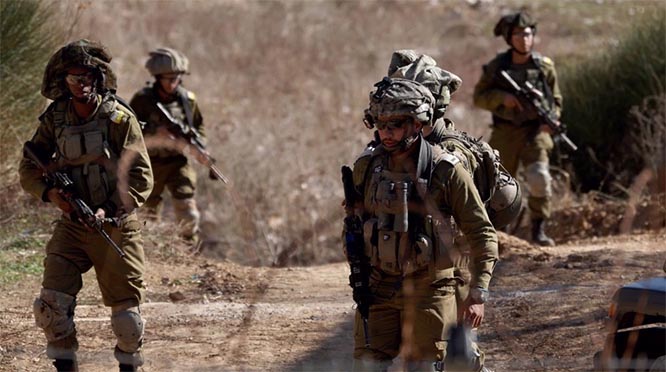
Israeli forces have pushed over the Syrian frontier, erecting a checkpoint and stopping vehicles in the southwestern city of Quneitra, in yet another breach of the Arab country’s sovereignty.

The violation took place on Sunday, when the troops made their way across the border, setting up the outpost near the Ain al-Bayda junction in northern Quneitra, Syrian outlets reported.

According to the al-Ikhbariya paper, an Israeli detachment positioned itself at the junction, halting cars and conducting searches.

The Syrian Arab News Agency (SANA) reported that three Israeli military vehicles then moved further into the northern countryside, deploying between the town of Jubata al-Khashab and the villages of Ofaniya and Ain al-Bayda. The agency added that a separate Israeli unit mounted a new incursion in the central region, approaching the villages of Umm Batina and al-Ajraf.

Residents said such activities have surged in recent months, pointing to Israeli advances onto farmland, leveling of extensive forested areas, arrests, and spread of mobile checkpoints.

The Israeli regime began markedly increasing its military aggression against Syria last year.

The escalation coincided with increasingly ferocious onslaughts throughout the country by the so-called Hay'at Tahrir al-Sham (HTS) Takfiri terrorist group, which the government of President Bashar al-Assad had confined to northwestern Syria. The HTS, however, managed to overthrow the government as the Israeli attacks would pummel the country’s civilian and defensive infrastructure.

Various reports have shown that, during the escalation, the regime conducted more than 1,000 airstrikes on the Syrian territory and over 400 ground raids into the south.

Following the collapse of the Assad government, Tel Aviv also widened its grip over the occupied Golan Heights by taking control of a demilitarized buffer zone, in defiance of a 1974 Disengagement Agreement. Earlier this month, senior Israeli officials, including Prime Minister Benjamin Netanyahu, visited the buffer zone, prompting expressions of alarm on the part of the United Nations.

The United States, the regime’s biggest ally, has, meanwhile, been fraternizing the HTS head Abu Mohammed al-Jolani amid the widely reported prospect of rapprochement with Tel Aviv.

Comments

Add new comment

  • Coastaldigest.com reserves the right to delete or block any comments.
  • Coastaldigset.com is not responsible for its readers’ comments.
  • Comments that are abusive, incendiary or irrelevant are strictly prohibited.
  • Please use a genuine email ID and provide your name to avoid reject.
News Network
December 3,2025

arrival.jpg

Mangaluru, Dec 3: A group of Congress workers gathered at the Mangaluru International Airport on Wednesday to welcome AICC general secretary K C Venugopal, but the reception quickly turned into a display of support for Deputy Chief Minister D K Shivakumar.

Venugopal arrived in the city to participate in the centenary commemoration of the historic dialogue between Mahatma Gandhi and Narayana Guru. The event, organised by the Sivagiri Mutt, Varkala, in association with the Mangalore University Sri Narayana Guru Study Chair, is being held on the university’s Konaje campus.

KPCC general secretary Mithun Rai and several party workers had assembled at the airport to receive Venugopal. However, the moment he stepped out, workers began raising slogans backing Shivakumar.

The university programme will be inaugurated by Chief Minister Siddaramaiah.

This show of support comes just a day after Siddaramaiah remarked that Shivakumar would lead the government “when the high command decides.” The chief minister made the comment after a breakfast meeting at Shivakumar’s residence—another public display of camaraderie between the two leaders amid ongoing attempts by the party high command to downplay their leadership rivalry.

Comments

Add new comment

  • Coastaldigest.com reserves the right to delete or block any comments.
  • Coastaldigset.com is not responsible for its readers’ comments.
  • Comments that are abusive, incendiary or irrelevant are strictly prohibited.
  • Please use a genuine email ID and provide your name to avoid reject.
News Network
December 4,2025

Mangaluru: Chaos erupted at Mangaluru International Airport (MIA) after IndiGo flight 6E 5150, bound for Mumbai, was repeatedly delayed and ultimately cancelled, leaving around 100 passengers stranded overnight. The incident highlights the ongoing country-wide operational disruptions affecting the airline, largely due to the implementation of new Flight Duty Time Limitations (FDTL) norms for crew.

The flight was initially scheduled for 9:25 PM on Tuesday but was first postponed to 11:40 PM, then midnight, before being cancelled around 3:00 AM. Passengers expressed frustration over last-minute communication and the lack of clarity, with elderly and ailing travellers particularly affected. “Though the airline arranged food, there was no proper communication, leaving us confused,” said one family member.

An IndiGo executive at MIA cited the FDTL rules, designed to prevent pilot fatigue by limiting crew working hours, as the cause of the cancellation. While alternative arrangements, including hotel stays, were offered, about 100 passengers chose to remain at the airport, creating tension. A replacement flight was arranged but also faced delays due to the same constraints, finally departing for Mumbai around 1:45 PM on Wednesday. Passengers either flew, requested refunds, or postponed their travel.

The Mangaluru delay is part of a broader crisis for IndiGo. The airline has been forced to make “calibrated schedule adjustments”—a euphemism for widespread cancellations and delays—after stricter FDTL norms came into effect on November 1.

While an IndiGo spokesperson acknowledged unavoidable flight disruptions due to technology issues, operational requirements, and the updated crew rostering rules, the DGCA has intervened, summoning senior airline officials to explain the chaos and outline corrective measures.

The ripple effect has been felt across the country, with major hubs like Bengaluru and Mumbai reporting numerous cancellations. The Mangaluru incident underscores the systemic operational strain currently confronting India’s largest carrier, leaving passengers nationwide grappling with uncertainty and delays.

Comments

Add new comment

  • Coastaldigest.com reserves the right to delete or block any comments.
  • Coastaldigset.com is not responsible for its readers’ comments.
  • Comments that are abusive, incendiary or irrelevant are strictly prohibited.
  • Please use a genuine email ID and provide your name to avoid reject.