Rohingya violence: UN medics see evidence of rape by Myanmar army

Agencies
September 24, 2017

Bangladesh, Sept 24: Doctors treating some of the 429,000 Rohingya Muslims who have fled to Bangladesh from Myanmar in recent weeks have seen dozens of women with injuries consistent with violent sexual attacks, U.N. clinicians and other health workers said. The medics’ accounts, backed in some cases by medical notes reviewed by Reuters, lend weight to repeated allegations, ranging from molestation to gang rape, levelled by women from the stateless minority group against Myanmar’s armed forces.

Myanmar officials have mostly dismissed such allegations as militant propaganda designed to defame its military, which they say is engaged in legitimate counterinsurgency operations and under orders to protect civilians. Zaw Htay, spokesman for Myanmar’s de facto leader Aung San Suu Kyi, said the authorities would investigate any allegations brought to them. “Those rape victim women should come to us,” he said. “We will give full security to them. We will investigate and we will take action.”

Suu Kyi herself has not commented on the numerous allegations of sexual assault committed by the military against Rohingya women made public since late last year. Violence erupted in Myanmar’s northwestern Rakhine state following attacks on security forces by Rohingya militants last October. Further attacks on Aug. 25 provoked a renewed military offensive the United Nations has called “ethnic cleansing”.

Reuters spoke with eight health and protection workers in Bangladesh’s Cox’s Bazar district who between them said they had treated more than 25 individual rape cases since late August.

The medics say they do not attempt to establish definitively what happened to their patients, but have seen an unmistakeable pattern in the stories and physical symptoms of dozens of women, who invariably say Myanmar soldiers were the perpetrators. It is rare for UN doctors and aid agencies to speak about rape allegedly committed by a state’s armed forces, given the sensitivity of the matter.

“Inhuman attack”

Doctors at a clinic run by the UN’s International Organization for Migration (IOM) at the Leda makeshift refugee say they treated hundreds of women with injuries they said were from violent sexual assaults during the army operation in October and November.

There have been fewer rapes reported among the influx of refugees since August, said Dr. Niranta Kumar, the clinic’s health coordinator, but those they have seen have injuries suggesting “more aggressive” attacks on women. Several health workers suggested that, whereas in October many women had initially remained in their villages believing the army sweeps were only targeting Rohingya men, this time most had fled at the first sign of military activity.

Doctors at the Leda clinic showed a Reuters reporter three case files, without divulging the identity of the patients. One said a 20-year-old woman was treated on Sept. 10, seven days after she said she was raped by a soldier in Myanmar. Handwritten notes say she said soldiers had “pulled her hair” and a “gun used to beat her” before raping her.

Examinations often find injuries suggesting forced penetration, beating and even what looked like intentional cutting of the genitals, doctors said. “We found skin marks, it showed a very forceful attack, an inhuman attack,” said IOM medical officer Dr Tasnuba Nourin.

She had seen incidents of vaginal tearing, bite marks and signs that seemed to show a firearm was used to penetrate women, she said. Among the new influx of Rohingya she had treated at least five women who appeared to have been recently raped, she said, adding that in each case the physical injuries observed were consistent with the patient’s account of what had happened.

“Fraction of the cases”

At Bangladesh government clinics supported by U.N. agencies in the Ukhia area, doctors reported treating 19 women who had been raped, said Dr. Misbah Uddin Ahmed, head of the main health complex there, citing reports from female clinicians.

“The evidence included bite marks, tearing of the vagina, these sorts of things,” he said. In one day alone, Sept. 14, six women showed up at one of the clinics, all saying they were sexually assaulted. “They all said Myanmar army had done this.” An IOM doctor who asked not to be identified, working at one of those clinics near the Kutapalong refugee camp, said a woman who crossed from Myanmar in late August said she was raped by at least seven soldiers.

“She was extremely weak and traumatized and said she struggled to make it to the clinic,” the doctor said. “She had a laceration on the vagina.” The doctor treated 15 of the 19 cases of women who appeared to have been raped, and another eight women who had been physically assaulted. Some were given emergency contraceptives, and all were given treatment to reduce the risk of contracting HIV and jabs against hepatitis. Symptoms included bite marks over the arms and back, tearing and laceration on the vagina and vaginal bleeding, the doctor said.

Internal reports compiled by aid agencies in Cox’s Bazar recorded that 49 “SGBV survivors” were identified in just four days between Aug. 28-31. SGBV, or sexual and gender-based violence is used to refer to only cases of rape, according to U.N. doctors. Data for reported rape cases was not available for other dates. A situation report from aid agencies says more than 350 people had been referred for “life-saving care” relating to gender-based violence – a broad term that includes rape, attempted rape and molestation, as well as emotional abuse and denial of resources based on gender – since Aug. 25. It did not refer to the perpetrators. Kate White, emergency medical coordinator for Médecins Sans Frontières (MSF) in Cox’s Bazar said the charity had treated at least 23 cases of sexual and gender-based violence including gang-rape and sexual assault since Aug. 25. “This is a fraction of the cases that are likely to be out there,” she said.

“Rape as a weapon”

Reuters first reported allegations of mass rape of Rohingya women within days of militant attacks in northern Rakhine in October. The same reports were also heard by U.N. investigators who visited Bangladesh in January.

A report of the UN Secretary General in April said the sexual assaults were “apparently employed systematically to humiliate and terrorize their community”. Before her rise to power last year Suu Kyi had spoken of rape being used as a tool of division in the country’s myriad ethnic conflicts.

“It is used as a weapon by armed forces to intimidate the ethnic nationalities and to divide our country, this is how I see it,” she said in 2011 in a video message to a conference on sexual violence in conflict. Her spokesman Zaw Htay said there was “nothing to say” when asked if her view had changed since then. “Everything should be according to the rule of law,” he said. “The military leaders also have said they will take action.”

Comments

Add new comment

  • Coastaldigest.com reserves the right to delete or block any comments.
  • Coastaldigset.com is not responsible for its readers’ comments.
  • Comments that are abusive, incendiary or irrelevant are strictly prohibited.
  • Please use a genuine email ID and provide your name to avoid reject.
News Network
December 4,2025

indigoflight.jpg

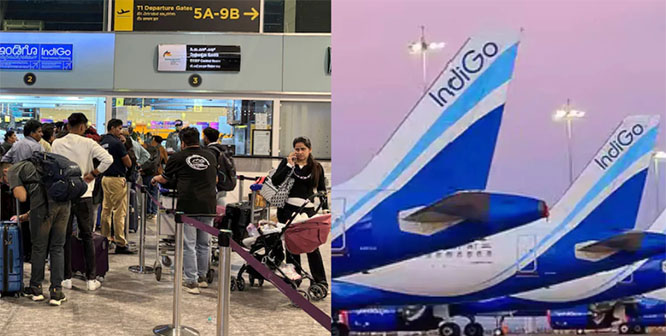
Domestic carrier IndiGo has cancelled over 180 flights from three major airports — Mumbai, Delhi and Bengaluru — on Thursday, December 4, as the airline struggles to secure the required crew to operate its flights in the wake of new flight-duty and rest-period norms for pilots.

While the number of cancellations at Mumbai airport stands at 86 (41 arrivals and 45 departures) for the day, at Bengaluru, 73 flights have been cancelled, including 41 arrivals, according to a PTI report that quoted sources.

"IndiGo cancelled over 180 flights on Thursday at three airports-Mumbai, Delhi and Bengaluru," the source told the news agency.

Besides, it had cancelled as many as 33 flights at Delhi airport for Thursday, the source said, adding, "The number of cancellations is expected to be higher by the end of the day."

The Gurugram-based airline's On-Time Performance (OTP) nosedived to 19.7 per cent at six key airports — Delhi, Mumbai, Chennai, Kolkata, Bengaluru and Hyderabad — on December 3, as it struggled to get the required crew to operate its services, down from almost half of December 2, when it was 35 per cent.

"IndiGo has been facing acute crew shortage since the implementation of the second phase of the FDTL (Flight Duty Time Limitations) norms, leading to cancellations and huge delays in its operations across the airports," a source had told PTI on Wednesday.

Chaos continued at several major airports for the third day on Thursday because of the cancellations.

A spokesperson for the Kempegowda International Airport (KIA) in Bengaluru said that 73 IndiGo flights had been cancelled on Thursday.

At least 150 flights were cancelled and dozens of others delayed on Wednesday, airport sources said, leaving thousands of travellers stranded, according to news agency Reuters.

The Directorate General of Civil Aviation (DGCA) has said it is investigating IndiGo flight disruptions and has asked the airline to submit the reasons for the current situation, as well as its plans to reduce flight cancellations and delays.

It may be mentioned here that the pilots' body, Federation of Indian Pilots (FIP), has alleged that IndiGo, despite getting a two-year preparatory window before the full implementation of new flight duty and rest period norms for cockpit crew, "inexplicably" adopted a "hiring freeze".

The FIP said it has urged the safety regulator, the DGCA, not to approve airlines' seasonal flight schedules unless they have adequate staff to operate their services "safely and reliably" in accordance with the New Flight Duty Time Limitations (FDTL) norms.

In a letter to the DGCA late on Wednesday, the FIP urged the DGCA to consider re-evaluating and reallocating slots to other airlines, which have the capacity to operate them without disruption during the peak holiday and fog season if IndiGo continues to "fail in delivering on its commitments to passengers due to its own avoidable staffing shortages."

Comments

Add new comment

  • Coastaldigest.com reserves the right to delete or block any comments.
  • Coastaldigset.com is not responsible for its readers’ comments.
  • Comments that are abusive, incendiary or irrelevant are strictly prohibited.
  • Please use a genuine email ID and provide your name to avoid reject.
News Network
December 4,2025

indigocrisis.jpg

Angry outbursts, long queues, and desperate appeals filled airports across India today as IndiGo grappled with a severe operational breakdown. Hundreds of flights have been cancelled or delayed, leaving thousands of passengers stranded through the night and forcing many to spend long hours at helpdesks.

Social media was flooded with videos of fliers pleading for assistance, accusing the airline of misleading updates, and demanding accommodation after being stuck for 10 to 12 hours at airports such as Hyderabad and Bengaluru.

What Triggered the Meltdown?

IndiGo has attributed the widespread disruption to “a multitude of unforeseen operational challenges.” These include:

•    Minor technology glitches
•    Winter-season schedule adjustments
•    Bad weather
•    Congestion in the aviation network
•    New crew rostering rules (Flight Duty Time Limitations or FDTL)

Among these, the most disruptive has been the implementation of the updated FDTL norms introduced by the Directorate General of Civil Aviation (DGCA) in January 2024.

These rules were designed to reduce pilot fatigue and improve passenger safety. Key changes include:

•    Longer weekly rest periods for flight crew
•    A revised definition of “night,” extending it by an extra hour
•    Tighter caps on flight duty timing and night landings
•    Cutting night shifts for pilots and crew from six per roster cycle to just two

Once these norms became fully enforceable, airlines were required to overhaul rosters well in advance. For IndiGo, this triggered a sudden shortage of crew available for duty, leading to cascading delays and cancellations.

Why IndiGo Was Hit the Hardest

IndiGo is India’s largest airline by a wide margin, operating over 2,200 flights daily. That’s roughly double the number operated by Air India.

When an airline of this size experiences even a 10–20% disruption, it translates to 200–400 flights being delayed or grounded — producing massive spillover effects across the country.

IndiGo also relies heavily on high-frequency overnight operations, a model typical of low-cost carriers that aim to maximise aircraft utilisation and reduce downtime. The stricter FDTL norms clash with these overnight-heavy schedules, forcing the airline to pull back services.

Aviation bodies have also criticised IndiGo’s preparedness. The Airline Pilots' Association of India (ALPA) said airlines were given a two-year window to plan for the new rules but “started preparing rather late.” IndiGo, it said, failed to rebuild crew rosters 15 days in advance as required.

The Federation of Indian Pilots (FIP) went further, calling the crisis the result of IndiGo’s “prolonged and unorthodox lean manpower strategy,” and alleging that the airline adopted a hiring freeze even as it knew the new rules would require more careful staffing.

How Many Flights Are Affected?

In the past 48 hours, over 300 flights have been cancelled. At least 100 more are expected to be cancelled today.

City-wise impact:

•    Hyderabad: 33 expected cancellations; several fliers stranded overnight
•    Bengaluru: over 70 expected cancellations
•    Delhi, Mumbai, Chennai, Kolkata: widespread delays and missed connections

Passengers shared distressing accounts online.

One customer at Hyderabad airport said they waited from 6 PM to 9 AM with “no action taken” regarding their delayed Pune flight. Another said IndiGo repeatedly told them the crew was “arriving soon,” only for the delay to stretch over 12 hours.

IndiGo has apologised for the disruption and promised that operations will stabilise within 48 hours, adding that “calibrated adjustments” are being made to contain the chaos.

What Should Passengers Do Now?

For those flying in the next few days, especially with IndiGo, here are key precautions:

1. Keep Checking Flight Status
Monitor your flight closely before leaving for the airport, as delays may be announced last-minute.

2. Arrive Early
Expect long queues at counters and security due to crowding and rescheduling.

3. Carry Essentials
Pack snacks, water, basic medicines, chargers, and items for children or senior citizens. Extended waiting times should be anticipated.

4. Use Flexible Booking Options
If you booked tickets with a free-date-change or cancellation option, consider using them.
If you haven’t booked yet, prefer refundable or flexible fares, or even consider alternate airlines.

5. Follow IndiGo’s Updates
Keep an eye on IndiGo’s official social media channels and contact customer support for rebooking and refund queries.

What Needs to Change?

Pilot groups have raised concerns not just about staffing but also the planning practices behind it.
The Federation of Indian Pilots accused IndiGo of:

•    Imposing an unexplained hiring freeze despite knowing the FDTL changes were coming
•    Entering non-poaching agreements that limited talent movement
•    Keeping pilot pay frozen
•    Underestimating the need to restructure operations in advance

They have urged DGCA to approve seasonal schedules only after airlines prove they have adequate pilot strength under the new norms.

ALPA also warned that some airlines might be using the delays as an “immature pressure tactic” to push DGCA for relaxations in the new rules — which, if granted, could compromise the very safety standards the norms were meant to protect.

Both pilot bodies stressed that no exemption should dilute safety, and any deviations should be based solely on scientific risk assessment.

Is a Solution in Sight?

While IndiGo says normalcy will return within two days, aviation experts believe that fully stabilising operations could take longer, depending on how quickly the airline can:
•    Re-align rosters
•    Mobilise rested crew
•    Boost staffing
•    Adjust its winter schedule to match regulatory requirements
Passengers are advised to remain prepared for continued delays over the next few days as the airline works through its backlog. 

Comments

Add new comment

  • Coastaldigest.com reserves the right to delete or block any comments.
  • Coastaldigset.com is not responsible for its readers’ comments.
  • Comments that are abusive, incendiary or irrelevant are strictly prohibited.
  • Please use a genuine email ID and provide your name to avoid reject.
News Network
December 2,2025

Puttur: The long-cherished dream of a government medical college in Puttur has moved a decisive step closer to reality, with the Karnataka State Finance Department granting its official approval for the construction of a new 300-bed hospital.

Puttur MLA Ashok Kumar Rai announced the crucial development to reporters on Monday, confirming that the official communication from the finance department was issued on November 27. This 300-bed facility is intended to be the cornerstone for the establishment of the government medical college, a project announced in the state budget.

Fast-Track Implementation

The MLA outlined an aggressive timeline for the project:

•    A Detailed Project Report (DPR) for the hospital is expected to be ready within 45 days.

•    The tender process for the construction will be completed within two months.

Following the completion of the tender process, Chief Minister Siddaramaiah is scheduled to lay the foundation stone for the project.

"Setting up a medical college in Puttur is a historical decision by the Congress government in Karnataka," Rai stated. The project has an estimated budget allocation of Rs 1,000 crore for the medical college.

Focus on Medical Education Department

The MLA highlighted a key strategic move: requesting the government to implement the hospital construction through the Medical Education Department instead of the Health and Family Welfare Department. This is intended to streamline the entire process of establishing the full medical college, ensuring the facilities—including labs, operation theatres, and other necessary infrastructure—adhere to the strict guidelines set by the Medical Council of India (MCI). The proposed site for the project is in Bannur.

Rai also took the opportunity to address political criticism, stating that the government has fulfilled its promise despite "apprehensions" and "mocking and criticising" from opposition parties who had failed to take similar initiatives when they were in power. "Chief Minister Siddaramaiah has kept his word," he added.

Comments

Add new comment

  • Coastaldigest.com reserves the right to delete or block any comments.
  • Coastaldigset.com is not responsible for its readers’ comments.
  • Comments that are abusive, incendiary or irrelevant are strictly prohibited.
  • Please use a genuine email ID and provide your name to avoid reject.