Saudi Approves IPO of Aramco, World's Most Profitable Company

News Network
November 3, 2019

Dhahran, Nov 3: Saudi Aramco said Sunday it will list on the Riyadh stock exchange in what could be the world's largest IPO, underpinning Crown Prince Mohammed bin Salman's ambitions to overhaul the kingdom's oil-reliant economy.
After years of delays, Saudi Aramco finally fired the starting gun on the stock market debut, saying it was a "significant milestone" in the history of the energy giant which pumps 10 per cent of the world's oil.

With analysts saying that Aramco could be valued at up to $1.7 trillion, the initial public offering (IPO) could be the world's biggest, depending on how much of the company it decides to sell.

"Today marks a significant milestone in the history of the company and important progress towards delivering Saudi Vision 2030, the kingdom's blueprint for sustained economic diversification and growth," Aramco chairman Yasir al-Rumayyan said.

"Since its formation, Saudi Aramco has become critical to global energy supply," he said in a statement.

The final offer price and the number of shares to be sold "will be determined at the end of the book-building period", said the firm, which is headquartered in the eastern city of Dhahran.

Aramco had initially been expected to sell a total of five per cent on two exchanges, with a first listing of two per cent on the Tadawul Saudi bourse followed by a three per cent listing on an overseas exchange.

The company made no mention Sunday of a foreign listing but it did say that the Riyadh offering was open to institutional investors as well as Saudi individuals, foreigners resident in the kingdom and other Gulf citizens.

The world's most profitable company also released its results for the nine months to September, saying net profits came in at $68 billion. Aramco only began releasing interim financial results recently.

Its 2018 net profit of $111.1 billion is higher than the profits of Apple, Google and Exxon Mobil combined.

'Integral Component'

The listing forms the linchpin of Prince Mohammed's ambitious plans to overhaul the oil-reliant economy, with tens of billions of dollars needed to fund megaprojects and new industries.

First suggested by the kingdom's de facto ruler in 2016, the IPO was delayed several times reportedly due to his dissatisfaction with the valuation of the firm, which fell short of the hoped for $2 trillion.

Last week, Energy Intelligence cited sources as saying they expect the Saudis to settle on a valuation of $1.6 trillion to $1.7 trillion for the firm.

If confirmed, that would imply the kingdom is ready to accept a compromise of less than the $2 trillion that Prince Mohammed has long insisted the state oil giant is worth.

It remains to be seen whether Saudi authorities are able to find "a compromise between the crown prince's stated preference and market realities in their valuation of Aramco," said Kristian Ulrichsen, a fellow at Rice University's Baker Institute in the United States.

"As the process has been delayed repeatedly and built up as such an integral component of the crown prince's plan to transform Saudi Arabia, international investors will pay very close attention to how Aramco performs on the domestic exchange," Mr Ulrichsen told news agency AFP.

Aramco, which pumps around 10 per cent of the world's oil, is the most profitable company globally and is seen as the kingdom's crown jewel and the backbone of its economic and social stability.

Saudi Arabia has boosted efforts to woo investors to the long-awaited stock market debut by announcing an annual dividend of $75 billion, according to the company's website.

Riyadh is also reportedly seeking to get wealthy Saudi families to buy a stake in the company while some Saudi commentators have sought to promote investment in the stock as a patriotic duty.

However, Aramco executives have encountered scepticism among institutional investors in London and New York on questions about the firm's transparency, governance practices and targeted valuation, sources have told AFP.

"An important function of the domestic IPO is to project confidence in the company towards the international market, but doing it domestically encounters no meaningful obstacle, comparable to doing an international listing," said Cinzia Bianco, Gulf research fellow at the European Council on Foreign Relations.

"It allows Prince Mohammed to show he keeps his promises and gets things done, another step to reassure international investors that the IPO will happen after all," Bianco said.

Saudi Arabia's market regulator approved on Sunday Saudi Aramco's application to list on the domestic stock market as the kingdom seeks to diversify and create the world's most valuable listed company.

The statement did not give a timeframe or say how much Aramco would sell, but sources have told news agency Reuters the oil company could sell 1-2 per cent of its shares on the local bourse, raising as much $20 billion-$40 billion.

Confirmation of the share sale in Saudi Arabian Oil Co, or Aramco, as the oil giant is usually known, comes about seven weeks after crippling attacks on its oil facilities, underlining Saudi Arabia's determination to push on with the listing regardless.

The IPO of the world's most profitable company is designed to turbo charge Crown Prince Mohammed bin Salman's economic reform agenda by raising billions to diversify the kingdom, whose dependency on oil was highlighted by the production impact of the September 14 attacks.

The Capital Market Authority said its board "has issued its resolution approving the Saudi Arabian Oil Company (Saudi Aramco) ... application for the registration and offering of part of its shares."

CMA said the approval would remain valid for six months.

The listing announcement had been expected on October 20 but was delayed after advisers said they needed more time to lock in cornerstone investors, three sources told Reuters.

To help get the deal done, Saudi Arabia is relying on easy credit for retail investors and hefty contributions from rich locals.

Prince Mohammed gave the green light on Friday for the IPO to go ahead, Reuters reported, citing sources.

Although Crown Prince Mohammed put a $2-trillion valuation on the company in early 2016, bankers and company insiders say Aramco's value is closer to $1.5 trillion.

A growing movement to fight climate change and embrace new "green" technologies have put some fund managers, particularly in Europe and the United States, off the oil and gas sector.

At a valuation of $1.5 trillion, Aramco would still be worth at least 50 per cent more than the world's most valuable companies, Microsoft and Apple, which each have a market capitalisation of about $1 trillion.

But a 1 per cent sale would 'only' raise around $15 billion for Saudi coffers, less than the $25 billion generated by Chinese e-commerce giant Alibaba in its record-breaking IPO in 2014.

It would rank Aramco as the 11th biggest IPO of all time, Refinitiv data show.

A sale of 2 per cent of Aramco shares at a $1.5-trillion valuation would make it the biggest IPO of all time, beating Alibaba's.

The prospect of the world's largest oil company selling a piece of itself has had Wall Street on tenterhooks since Crown Prince Mohammed flagged it three years ago.

Initial hopes for a blockbuster international listing of about 5 per cent were dashed when the share sale was halted last year amid debate over where to list Aramco overseas.

Aramco said the IPO timetable was delayed because it began a process to acquire a 70 per cent stake in petrochemicals maker Saudi Basic Industries Corp.

IPO preparations were revived over the summer after Aramco attracted huge interest in its first international bond sale, seen as a pre-IPO relationship-building exercise with investors.

The bond sale forced the secretive company to reveal its finances for the first time, including net income of $111 billion, over a third bigger than the combined net income of the five super majors Exxon Mobil, Royal Dutch/Shell, BP, Chevron and Total.

Oil majors have been raising payouts to shareholders to counter rising pressure from climate activism.

Aramco has said it will pay a base dividend of $75 billion, which at a valuation of $1.5 trillion would mean a dividend yield of 5 per cent, below those offered by competitors such as Exxon Mobil Corp and Royal Dutch Shell.

Shell's dividend yield is over 6 per cent and Exxon's over 5 per cent, according to Refinitiv data.

Adverse Impact

The September attacks on Aramco's largest oil plant, which shut off about 5 per cent of global supply, raised questions about the vulnerability of Aramco's oil fields, plants and exports amid deepening regional tensions.

In its April bond prospectus, Aramco noted that any disruption to its processing facilities could harm its business.

The potential threat to the company's valuation presents a challenge for Yasser al-Rumayyan, head of the kingdom's sovereign wealth fund, who became Aramco chairman in September.

Al-Rumayyan replaced former energy minister Khalid al-Falih in a move to separate Aramco from the ministry ahead of an IPO.

Aramco hired nine banks as joint global coordinators to lead the IPO, including JPMorgan, Morgan Stanley and Saudi Arabia's National Commercial Bank. It added a number of banks as book-runners.

Comments

Add new comment

  • Coastaldigest.com reserves the right to delete or block any comments.
  • Coastaldigset.com is not responsible for its readers’ comments.
  • Comments that are abusive, incendiary or irrelevant are strictly prohibited.
  • Please use a genuine email ID and provide your name to avoid reject.
News Network
November 24,2025

lebanon.jpg

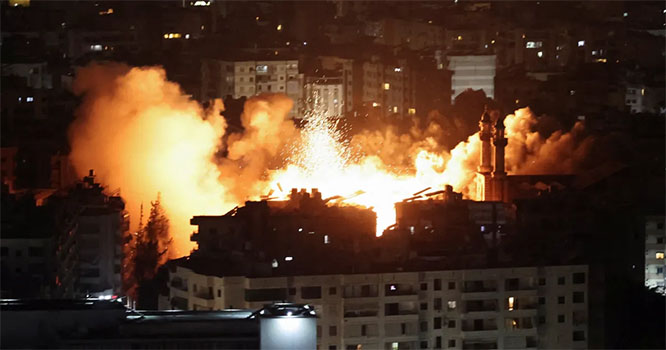
Israel has launched a new act of aggression on a residential neighborhood in Lebanon's capital, Beirut, killing and injuring about two dozen civilians.

The Israeli regime's military said in a statement that its forces carried out a so-called precise strike in a residential apartment in Dahiyeh in the southern suburbs of Beirut on Sunday.

The aggression targeted residential areas, killing at least five people and injuring more than 28 people, Lebanon's Health Ministry said. 

Hezbollah announced the martyrdom of senior Hezbollah commander Haytham Ali Tabatabai and four resistance fighters.

Lebanese President Michel Aoun condemned the airstrike, calling it a clear demonstration of Tel Aviv’s disregard for repeated international calls to halt violations on Lebanese soil.

“Israel refuses to implement international resolutions and all efforts aimed at ending the escalation and restoring stability,” Aoun said, urging the international community to take action to prevent further aggression.

The Palestinian Islamic Jihad movement also condemned the attack, holding the international community accountable. 

“The international community bears responsibility and continues to provide cover for these attacks as long as it does not restrain the occupiers,” said Ali Abu Shahin, a member of the group’s political bureau.

Israeli prime minister Benjamin Netanyahu’s office announced that the Israeli army carried out a strike “in the heart of Beirut."

Netanyahu reportedly approved the operation following recommendations from top Israeli security officials.

Two senior US officials commented on the Israeli strike.

The first official said that Israel did not notify Americans in advance about the attack. "We were informed immediately after the strike was carried out."

The second senior official said that the "US knew for several days that Israel was planning to escalate its strikes in Lebanon, but did not know in advance the timing, location, or target of the strike."

Speaking from the site of the Israeli strike, Lebanese MP Ali Ammar condemned the attack as part of a broader campaign of aggression that has targeted "all of Lebanon since the Washington-sponsored ceasefire."

He stated that "any attack on Lebanon is a violation of red lines; this aggression is part and parcel of the entity that targets Lebanon's dignity, sovereignty, and security of citizens."

Ammar went on to say the resistance is responding with "utmost wisdom, patience, and will confront the enemy at the appropriate time."

"Unfortunately, the enemy is emboldened to commit its aggression by voices within Lebanon that have turned themselves into tools that support its aggression," he added.

The Israeli attack on the southern suburbs of the Lebanese capital is the latest blatant violation of the ceasefire Israel signed with Hezbollah in November 2024, which was intended to end hostilities that had escalated into full-scale war.

An Israeli strike on the Ain al-Hilweh camp near Sidon in southern Lebanon late Tuesday killed at least 14 people. It wounded several others, including young students, according to the Lebanese health ministry.

The military claimed the attack targeted “a Hamas training compound” used to plan and carry out attacks against the regime -- a claim that has frequently been made without evidence.

Hamas rejected the allegations as “a blatant lie aimed at justifying the massacre,” stating it had “no military installations in the Palestinian camps in Lebanon” and that the targeted site was merely “an open sports field.”

According to Lebanese authorities, Israeli attacks have killed approximately 4,000 people and displaced more than 1.2 million residents across the country since October 2023.

Comments

Add new comment

  • Coastaldigest.com reserves the right to delete or block any comments.
  • Coastaldigset.com is not responsible for its readers’ comments.
  • Comments that are abusive, incendiary or irrelevant are strictly prohibited.
  • Please use a genuine email ID and provide your name to avoid reject.
News Network
December 4,2025

indigoflight.jpg

Domestic carrier IndiGo has cancelled over 180 flights from three major airports — Mumbai, Delhi and Bengaluru — on Thursday, December 4, as the airline struggles to secure the required crew to operate its flights in the wake of new flight-duty and rest-period norms for pilots.

While the number of cancellations at Mumbai airport stands at 86 (41 arrivals and 45 departures) for the day, at Bengaluru, 73 flights have been cancelled, including 41 arrivals, according to a PTI report that quoted sources.

"IndiGo cancelled over 180 flights on Thursday at three airports-Mumbai, Delhi and Bengaluru," the source told the news agency.

Besides, it had cancelled as many as 33 flights at Delhi airport for Thursday, the source said, adding, "The number of cancellations is expected to be higher by the end of the day."

The Gurugram-based airline's On-Time Performance (OTP) nosedived to 19.7 per cent at six key airports — Delhi, Mumbai, Chennai, Kolkata, Bengaluru and Hyderabad — on December 3, as it struggled to get the required crew to operate its services, down from almost half of December 2, when it was 35 per cent.

"IndiGo has been facing acute crew shortage since the implementation of the second phase of the FDTL (Flight Duty Time Limitations) norms, leading to cancellations and huge delays in its operations across the airports," a source had told PTI on Wednesday.

Chaos continued at several major airports for the third day on Thursday because of the cancellations.

A spokesperson for the Kempegowda International Airport (KIA) in Bengaluru said that 73 IndiGo flights had been cancelled on Thursday.

At least 150 flights were cancelled and dozens of others delayed on Wednesday, airport sources said, leaving thousands of travellers stranded, according to news agency Reuters.

The Directorate General of Civil Aviation (DGCA) has said it is investigating IndiGo flight disruptions and has asked the airline to submit the reasons for the current situation, as well as its plans to reduce flight cancellations and delays.

It may be mentioned here that the pilots' body, Federation of Indian Pilots (FIP), has alleged that IndiGo, despite getting a two-year preparatory window before the full implementation of new flight duty and rest period norms for cockpit crew, "inexplicably" adopted a "hiring freeze".

The FIP said it has urged the safety regulator, the DGCA, not to approve airlines' seasonal flight schedules unless they have adequate staff to operate their services "safely and reliably" in accordance with the New Flight Duty Time Limitations (FDTL) norms.

In a letter to the DGCA late on Wednesday, the FIP urged the DGCA to consider re-evaluating and reallocating slots to other airlines, which have the capacity to operate them without disruption during the peak holiday and fog season if IndiGo continues to "fail in delivering on its commitments to passengers due to its own avoidable staffing shortages."

Comments

Add new comment

  • Coastaldigest.com reserves the right to delete or block any comments.
  • Coastaldigset.com is not responsible for its readers’ comments.
  • Comments that are abusive, incendiary or irrelevant are strictly prohibited.
  • Please use a genuine email ID and provide your name to avoid reject.
News Network
November 27,2025

imrankhan.jpg

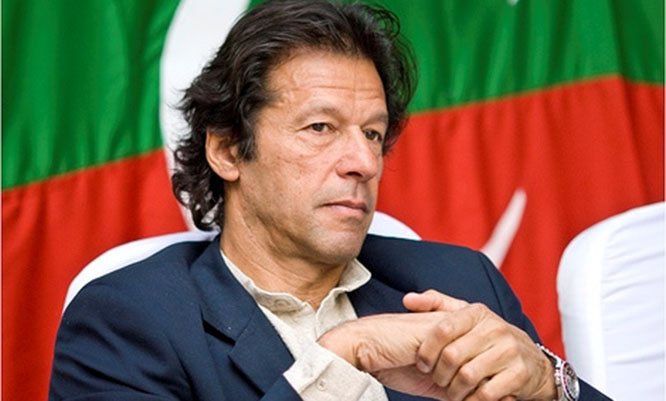
Authorities at Pakistan’s high-security Adiala Jail in Rawalpindi on Wednesday dismissed speculation about the condition of imprisoned former Pakistan Prime Minister Imran Khan, rejecting rumours that he had been moved out of the facility or was in danger. Officials said Khan was in “good health” and described the viral death claims as “baseless.”

“There is no truth to reports about his transfer from Adiala Jail,” the Rawalpindi prison administration said in a statement, according to Geo News. “He is fully healthy and receiving complete medical attention.”

Amid swirling rumours on social media, Imran Khan’s party, Pakistan Tehreek-e-Insaf (PTI), urged the federal government to issue an official clarification and demanded that authorities allow his family to meet him immediately, Dawn reported.

The frenzy began after Khan’s three sisters called for an impartial probe into what they described as a “brutal” police assault on them and other PTI supporters outside Adiala Jail last week. Soon after, several social media handles circulated unverified claims alleging that Khan had been “killed” inside the prison.

The rumours intensified when a handle named “Afghanistan Times” claimed that “credible sources” had confirmed Khan’s “murder” and that his body had been moved out of the jail — allegations that have not been verified by any credible agency.

Imran Khan, PTI’s patron-in-chief, has been lodged in the Rawalpindi prison since August 2023 in multiple cases. For over a month, an undeclared restriction has prevented family members and senior PTI leaders from meeting him. Khyber-Pakhtunkhwa Chief Minister Sohail Afridi has reportedly been denied access despite making seven attempts.

In a letter to Punjab Police Chief Usman Anwar, Khan’s sisters — Noreen Niazi, Aleema Khan, and Dr. Uzma Khan — said they were “peacefully protesting” outside the jail when police allegedly launched an unprovoked assault after streetlights were switched off.

“At 71, I was seized by my hair, thrown to the ground and dragged across the road,” Noreen Niazi said, alleging that other women present were also slapped and manhandled.

Adiala Jail officials reiterated that speculation over Imran Khan’s health was unfounded and insisted that his well-being was being ensured, Geo News reported.

Comments

Add new comment

  • Coastaldigest.com reserves the right to delete or block any comments.
  • Coastaldigset.com is not responsible for its readers’ comments.
  • Comments that are abusive, incendiary or irrelevant are strictly prohibited.
  • Please use a genuine email ID and provide your name to avoid reject.