



Saudi Arabia eases travel restrictions on women to boost employment

Agencies
August 21, 2019

Riyadh, Aug 21: Saudi Arabia on Tuesday began implementing a landmark reform allowing women over the age of 21 to receive passports and travel abroad without permission from a male "guardian", authorities said.

The reform, announced earlier this month, weakens the restrictive guardianship system that has long been a symbol of repression against women.

"The passport department has started receiving applications for women aged 21 and above to issue or renew passports and to travel outside the kingdom without permission," the department said on Twitter.

Women in the kingdom have long required permission from their male "guardians" -- husband, father and other male relatives -- for these tasks, a restriction that drew international censure.

The reform comes after high-profile attempts by women to escape alleged guardianship abuse despite a string of reforms by Crown Prince Mohammed bin Salman, including a landmark decree last year that overturned the world's only ban on women drivers.

In other changes unveiled earlier this month, Saudi women were also granted the right to officially register childbirth, marriage or divorce and to be recognised as a guardian to children who are minors -- same as men.

The reforms were widely celebrated in the kingdom, but they also drew backlash from arch-conservatives, many of whom shared old video sermons on social media by Saudi clerics advocating guardianship laws.

Some also denounced the change as "unIslamic" in a society that traditionally sees men as protectors of women.

The reform comes as the OPEC petroleum producer reels from low oil prices and seeks to boost employment opportunities for women -- currently facing chronic joblessness.

Comments

Add new comment

  • Coastaldigest.com reserves the right to delete or block any comments.
  • Coastaldigset.com is not responsible for its readers’ comments.
  • Comments that are abusive, incendiary or irrelevant are strictly prohibited.
  • Please use a genuine email ID and provide your name to avoid reject.
News Network
December 7,2025

SHRIMP.jpg

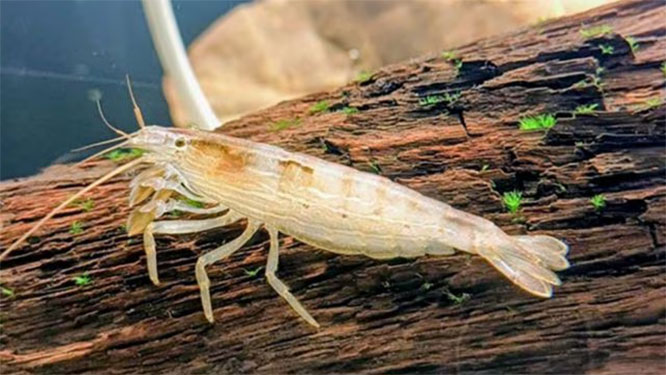
Mangaluru, Dec 7: A rare bamboo shrimp has been rediscovered on mainland India more than 70 years after it was last reported, confirming for the first time the presence of Atyopsis spinipes in the country. The find was made by researchers from the Centre for Climate Change Studies at Sathyabama Institute of Science and Technology, Chennai, during surveys in Karnataka and Odisha.

The team — shrimp expert Dr S Prakash, PhD scholar K Kunjulakshmi, and Mangaluru-based researcher Maclean Antony Santos — combined field surveys, ecological assessments and DNA analysis to identify the elusive species. Their findings, published in Zootaxa, resolve decades of taxonomic confusion stemming from a 1951 report that misidentified the species as Atyopsis moluccensis without strong evidence.

The shrimp has now been confirmed at two locations: the Mulki–Pavanje estuary near Mangaluru and the Kuakhai River in Bhubaneswar. Historical specimens from the Andaman Islands, previously labelled as A. moluccensis, were also found to be misidentified and actually belong to A. spinipes.

The rediscovery began after an aquarium hobbyist in Odisha spotted a shrimp in 2022, prompting systematic surveys across Udupi, Karwar and Mangaluru. Four female specimens were collected in Mulki and one in Odisha, all genetically matching.

Researchers warn the species may exist in very small, vulnerable populations as freshwater habitats face increasing pressure from pollution, sand mining and infrastructure development. All verified specimens have been deposited with the Zoological Survey of India for future reference.

Comments

Add new comment

  • Coastaldigest.com reserves the right to delete or block any comments.
  • Coastaldigset.com is not responsible for its readers’ comments.
  • Comments that are abusive, incendiary or irrelevant are strictly prohibited.
  • Please use a genuine email ID and provide your name to avoid reject.