Saudi Arabia lifts ban on women driving

Arab News
June 24, 2018

Jun 24: Women throughout Saudi Arabia waited for the stroke of midnight, turned the keys in the ignition, fired up their engines — and hit the road to a bright new future.

It was the moment they had waited for since King Salman issued the royal decree on September 26, 2017, to lift the driving ban on women.

Just after midnight on Saturday and in the first minutes of Sunday, Samah Algosaibi grabbed the keys to her family’s 1959 Corvette C1 and drove out of the driveway of her beach house in Khobar.

“We are witnessing history in the making as we look toward the dawn of a promising future,” said Algosaibi, the first female board member of Ahmad Hamad Algosaibi & Bros.

“As a businesswoman in Saudi Arabia, I am grateful for the women’s empowerment movement taking place. Today, I am honored to be sitting behind the wheel of change.”

Another woman to hit the road after midnight was Lina Almaeena, a member of the Saudi Shoura Council. “It feels very liberating,” she said about driving her mother’s Lexus.

Almaeena, also the co-founder and director of Jeddah United Sports Co, had exchanged her UAE license for a Saudi one.

“I am thrilled!” Sarah Alwassia, 35, a nutritionist in Jeddah, told Arab News. “I learnt how to drive 18 years ago in the States where I got my driving license. I can’t believe that the day to drive in my own home town has come.”

Alwassia obtained her first American license when she was 18 years old in 2000, and had it exchanged for a Saudi license on June 6 in Jeddah. She explained that she is a mother, and this change provided comfort for her and her family. It also comes with various benefits, such as taking quick action in emergencies, and economic benefits such as saving money instead of paying for a driver when she needs to run errands.

“I will be driving my kids to school and picking them up in comfort and privacy,” she said.

Women in the Kingdom commented on how this event is changing the course of their lives. “Independence is a huge thing for me,” Alwassia said. “Driving is one small part of it. I am very optimistic of the change that our loving country has made.” 

Alwassia applauds the efforts the country has made to support women. “I am confident that driving in the beginning will be pleasant, since our country has made all of the effort to support women and to protect them.

“I think our society was looking forward for this change, and I am sure the majority will adapt fast.

“I feel safe, our country did everything to make this transition pleasant and safe for every woman behind the wheel. I am really thankful to witness this historic moment and I am so happy for all the women in Saudi Arabia, especially my daughters.”

Sahar Nasief, 64, a retired lecturer from the European languages and Literature Department at King Abdulaziz University, said: “Nothing could describe my feelings. I can't wait to get on the road.”

Nasief received a very special gift from Ford for this occasion.

“They gave me a 2018 Expedition to drive for three days, a Mustang California Special,” she told Arab News.

Nasief obtained her Saudi license on June 7. She also holds a British license and two American licenses. “Now, I have my national license too,” she said.

She also said the lifting of the ban provided a sense of relief. “I feel that I can practice one of my rights, and I don't have to live at the mercy of my driver any more.”

Society has been demanding such a change for years, “as it will take the physical and economic burden off most men.”

Pointing to the anti-harassment law, Nasief said: “I feel very confident especially after announcing the strict harassment law.”

Joumana Mattar, 36, a Jordanian interior designer, exchanged her Jordanian driver’s license and obtained a Saudi one on June 11.

“I had my Jordanian license since I was 18 years old, and the moment I heard about the opening of exchanging foreign licenses, I immediately booked an appointment,” she said.

Mattar said she looks forward to the change in so many ways. “I'm finally in control of my time, schedule and privacy.”

Mattar said she is both confident and anxious about the event. “I'm anxious only for feeling that I'm part of a huge first step for women driving in the Kingdom, but I'm confident also because of the support that I'm getting from my husband and family.

“Every first step is the hardest. Society is facing a huge change, but I'm positive because this change is done and supported by the government and Vision 2030.”

Mattar said she feels secure now. “I'm in control of any case I'm facing.”

Comments

Add new comment

  • Coastaldigest.com reserves the right to delete or block any comments.
  • Coastaldigset.com is not responsible for its readers’ comments.
  • Comments that are abusive, incendiary or irrelevant are strictly prohibited.
  • Please use a genuine email ID and provide your name to avoid reject.
News Network
December 2,2025

A major upgrade in safety and monitoring is planned for Haj 2026, with every Indian pilgrim set to receive a Haj Suvidha smart wristband linked to the official Haj Suvidha mobile app. The initiative aims to support pilgrims—especially senior citizens—who may struggle with smartphones during the 45-day journey.

What the Smart Wristband Will Do

Officials said the device will come with:
•    Location tracking
•    Pedometer
•    SOS emergency button
•    Qibla compass
•    Prayer timings
•    Basic health monitoring

SP Tiwari, secretary of the UP State Haj Committee, said the goal is to make the pilgrimage safer and more comfortable.

“Most Hajis are elderly and not comfortable with mobile apps,” he said. “The smartwatch will help locate pilgrims who forget their way or cannot communicate their location.”

The wristbands will be monitored by the Consulate General of India in Saudi Arabia, similar to mobile tracking via the Haj Suvidha App.

Free Distribution and Training

•    Smart wristbands will be given free of cost.
•    Training for pilgrims will be conducted between January and February 2026.
•    Sample units will reach state Haj committees soon.
•    Final devices will be distributed as pilgrims begin their journey.

New Rules for Accommodation

Two major decisions have also been finalised for Haj 2026:
1.    Separate rooms for men and women – including married couples. They may stay on the same floor but must occupy different rooms, following stricter Saudi guidelines.
2.    Cooking banned – gas cylinders will not be allowed; all meals will be provided through official catering services arranged by the Haj Committee of India.

These decisions were finalised during a meeting of the Haj Committee of India and state representatives in Mumbai.

Haj Suvidha App Launched Earlier

The government launched the Haj Suvidha App in 2024, offering:

•    Training modules
•    Accommodation and flight details
•    Baggage information
•    SOS and translation tools
•    Grievance redressal

Haj 2026 Quota and Key States

•    India’s total Haj quota for 2026: 1,75,025 pilgrims
•    70% (1,25,000) allotted to the Haj Committee of India
•    30% (around 50,000) reserved for Haj Group Organisers

Uttar Pradesh has the largest allocation (around 30,000 seats), though approximately 18,000 pilgrims are expected to go this year. States with high pilgrim numbers include Kerala, Maharashtra and Gujarat.

Dates of Haj 2026

The pilgrimage is scheduled to take place from 24 May to 29 May, 2026 (tentative).
Haj is one of the five pillars of Islam and is mandatory for Muslims who meet the required conditions.

Comments

Add new comment

  • Coastaldigest.com reserves the right to delete or block any comments.
  • Coastaldigset.com is not responsible for its readers’ comments.
  • Comments that are abusive, incendiary or irrelevant are strictly prohibited.
  • Please use a genuine email ID and provide your name to avoid reject.
News Network
December 7,2025

envoy.jpg

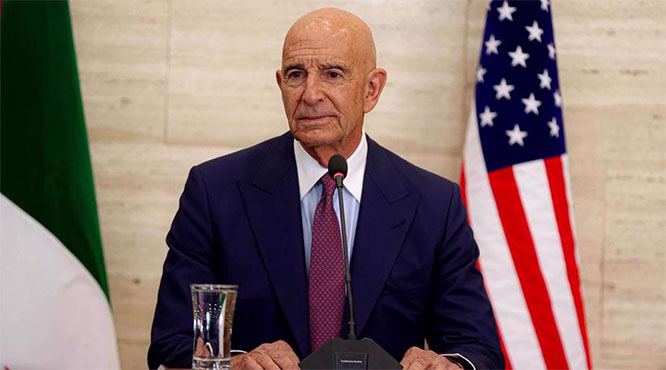
Since 1946, the United States has attempted 93 coups or “regime change” operations across the world — including two in Iran, US Special Envoy for Syria Tom Barrack has admitted.

Speaking to the UAE-based IMI Media Group, in remarks published by The National, Barrack said Washington tried twice to overthrow the Iranian government but failed both times. 

“For (Trump) then to be imputed with regime change — we had two regime changes in Iran already. Neither one worked. So I think wisely leave it to the region to solve,” said Barrack, who also serves as the US ambassador to Turkey.

His comments come six months after the US joined Israel in airstrikes against Iran during ongoing indirect nuclear negotiations between Tehran and Washington.

On June 13, Israel launched an attack on Iran that killed at least 1,064 people and hit civilian infrastructure. Days later, the United States targeted three nuclear facilities — Fordow, Natanz and Isfahan — in what Iran called a clear violation of international law. Iranian retaliation eventually forced a halt to the assault on June 24.

Barrack further claimed that US President Donald Trump and Foreign Secretary Marco Rubio are “not into regime change” and prefer a regional approach driven by Middle Eastern countries themselves. According to him, regional dialogue and non-interference by outside powers offer a more durable path forward.

He added that Washington is still open to an agreement with Tehran if Iranian authorities show “seriousness” and willingness to engage constructively.

However, Iran maintains the US has not shown readiness for meaningful talks. In an interview with Japan’s Kyodo News, Iranian Foreign Minister Abbas Araghchi said negotiations could advance only if Washington acknowledges Iran’s right to peaceful nuclear energy and lifts unilateral sanctions.

Comments

Add new comment

  • Coastaldigest.com reserves the right to delete or block any comments.
  • Coastaldigset.com is not responsible for its readers’ comments.
  • Comments that are abusive, incendiary or irrelevant are strictly prohibited.
  • Please use a genuine email ID and provide your name to avoid reject.
News Network
November 24,2025

lebanon.jpg

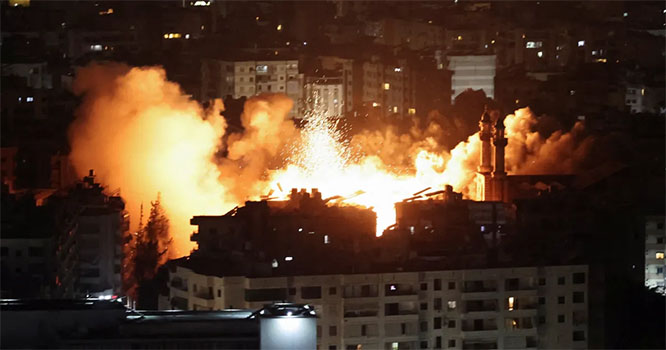
Israel has launched a new act of aggression on a residential neighborhood in Lebanon's capital, Beirut, killing and injuring about two dozen civilians.

The Israeli regime's military said in a statement that its forces carried out a so-called precise strike in a residential apartment in Dahiyeh in the southern suburbs of Beirut on Sunday.

The aggression targeted residential areas, killing at least five people and injuring more than 28 people, Lebanon's Health Ministry said. 

Hezbollah announced the martyrdom of senior Hezbollah commander Haytham Ali Tabatabai and four resistance fighters.

Lebanese President Michel Aoun condemned the airstrike, calling it a clear demonstration of Tel Aviv’s disregard for repeated international calls to halt violations on Lebanese soil.

“Israel refuses to implement international resolutions and all efforts aimed at ending the escalation and restoring stability,” Aoun said, urging the international community to take action to prevent further aggression.

The Palestinian Islamic Jihad movement also condemned the attack, holding the international community accountable. 

“The international community bears responsibility and continues to provide cover for these attacks as long as it does not restrain the occupiers,” said Ali Abu Shahin, a member of the group’s political bureau.

Israeli prime minister Benjamin Netanyahu’s office announced that the Israeli army carried out a strike “in the heart of Beirut."

Netanyahu reportedly approved the operation following recommendations from top Israeli security officials.

Two senior US officials commented on the Israeli strike.

The first official said that Israel did not notify Americans in advance about the attack. "We were informed immediately after the strike was carried out."

The second senior official said that the "US knew for several days that Israel was planning to escalate its strikes in Lebanon, but did not know in advance the timing, location, or target of the strike."

Speaking from the site of the Israeli strike, Lebanese MP Ali Ammar condemned the attack as part of a broader campaign of aggression that has targeted "all of Lebanon since the Washington-sponsored ceasefire."

He stated that "any attack on Lebanon is a violation of red lines; this aggression is part and parcel of the entity that targets Lebanon's dignity, sovereignty, and security of citizens."

Ammar went on to say the resistance is responding with "utmost wisdom, patience, and will confront the enemy at the appropriate time."

"Unfortunately, the enemy is emboldened to commit its aggression by voices within Lebanon that have turned themselves into tools that support its aggression," he added.

The Israeli attack on the southern suburbs of the Lebanese capital is the latest blatant violation of the ceasefire Israel signed with Hezbollah in November 2024, which was intended to end hostilities that had escalated into full-scale war.

An Israeli strike on the Ain al-Hilweh camp near Sidon in southern Lebanon late Tuesday killed at least 14 people. It wounded several others, including young students, according to the Lebanese health ministry.

The military claimed the attack targeted “a Hamas training compound” used to plan and carry out attacks against the regime -- a claim that has frequently been made without evidence.

Hamas rejected the allegations as “a blatant lie aimed at justifying the massacre,” stating it had “no military installations in the Palestinian camps in Lebanon” and that the targeted site was merely “an open sports field.”

According to Lebanese authorities, Israeli attacks have killed approximately 4,000 people and displaced more than 1.2 million residents across the country since October 2023.

Comments

Add new comment

  • Coastaldigest.com reserves the right to delete or block any comments.
  • Coastaldigset.com is not responsible for its readers’ comments.
  • Comments that are abusive, incendiary or irrelevant are strictly prohibited.
  • Please use a genuine email ID and provide your name to avoid reject.