Saudi Aramco eclipses Apple as world’s top-earning company

Agencies
April 2, 2019

Dubai, Apr 2: Saudi Aramco, the world’s biggest oil producer, made core earnings of $224 billion last year, almost three times as much as Apple, figures from the state-owned company showed on Monday ahead of its debut international bond issue.
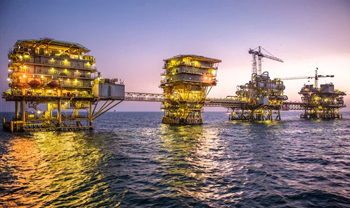
Aramco revealed its financials in order to obtain a public rating and start issuing public international bonds.

Despite the huge profit, the state-owned oil giant was rated by credit agencies at par with Saudi Arabia, meaning the Kingdom’s economy will weigh on Aramco’s cost of borrowing as it prepares its bond market debut.

Saudi energy minister Khalid Al-Falih said earlier this year the planned bond sale would raise around $10 billion, but banking sources said the transaction could be larger.

Rating agencies Fitch and Moody’s rated Aramco A+ and A1 respectively, but both said that without sovereign rating constraints Aramco would be in the same league as better-rated international oil companies like Exxon Mobil, Chevron and Shell.

Fitch put Aramco’s standalone credit profile at “AA+.”

Credit ratings allow investors to compare and assess the credit quality of bond issuers and their debt securities, and are important in determining how much borrowers have to pay.

The planned bond deal is Aramco’s inaugural transaction in international markets. It still plans to launch an initial public stock offering or IPO in 2021, expected to generate $100 billion, having postponed its flotation from 2018.

“Saudi Aramco has many characteristics of a Aaa-rated corporate, with minimal debt relative to cash flows, large scale of production, market leadership and access in Saudi Arabia to one of the world’s largest hydrocarbon reserves,” said Rehan Akbar, senior credit officer at Moody’s.

The group has 257 billion barrels of oil equivalent, representing over 50 years of reserves based on current production levels, according to a company presentation given to investors and seen by Reuters.

Aramco will start meeting international bond investors this week for the much anticipated debt transaction, expected to attract hefty demand from global investors.

The planned bond sale follows the announced acquisition of a 70 percent stake in Saudi Basic Industries Corp. (SABIC), the world’s fourth-largest petrochemicals maker, from Saudi Arabia’s Public Investment Fund (PIF), in a deal worth $69.1 billion.

The bond sale, which may be split into tranches with maturities ranging from three to 30 years, is not linked to the SABIC acquisition, Aramco said.

Aramco intends to pay for the acquisition in tranches, with 50 percent at the closing of the transaction and the remainder over a two-year period, from internal cash generation and, potentially, other resources, the company said in its presentation.

Aramco had earnings before interest, tax and depreciation (EBITDA) of $224 billion in 2018. By contrast Apple, which according to Forbes was the world’s top company in terms of profits last year, had normalized core earnings, or EBITDA, of $81.8 billion.

Moody's Investors Service said Aramco posted a net profit of $111.1 billion in 2018 — far higher than the combined net earnings of the five international oil majors — and generated $359.9 billion in revenues. Last year, Apple posted nearly $50 billion in net profits.

“Saudi Aramco has an extremely strong liquidity position,” Moody’s said, with $48.8 billion in cash against $27 billion in reported debt.

“The company’s balance sheet leverage has been conservatively managed,” said the agency, adding it has $46.8 billion of bank facilities, of which about $25.5 billion was still available.

Aramco representatives will meet with investors in Asia, Europe and the US through Friday, April 5, according to a document issued by one of the banks leading the deal.

The roadshow has no planned stop in the Middle East, showing the transaction is mostly aimed at international buyers.

“The blue-chip company is extremely profitable, free cash flow positive, has low leverage and strong reserves for the future, making it a compelling investment case for global investors,” said Parth Kikani, fixed income director at Emirates NBD Asset Management.

Aramco is presenting itself to global investors as an “anchor of global energy” and a global energy provider of systemic importance, producing one of every eight barrels of global crude, according to the investor presentation.

It had $86 billion in free cash flow at the end of 2018.

The SABIC acquisition, at the heart of Aramco’s push to expand in the downstream business, will not impact Aramco’s rating, the company said in the presentation.

Aramco has hired Lazard as financial adviser for the planned bond deal, and JP Morgan and Morgan Stanley as global coordinators. They are joined by Citigroup, Goldman Sachs, HSBC and NCB Capital as bookrunners.


Comments

Add new comment

  • Coastaldigest.com reserves the right to delete or block any comments.
  • Coastaldigset.com is not responsible for its readers’ comments.
  • Comments that are abusive, incendiary or irrelevant are strictly prohibited.
  • Please use a genuine email ID and provide your name to avoid reject.
News Network
November 27,2025

imrankhan.jpg

Authorities at Pakistan’s high-security Adiala Jail in Rawalpindi on Wednesday dismissed speculation about the condition of imprisoned former Pakistan Prime Minister Imran Khan, rejecting rumours that he had been moved out of the facility or was in danger. Officials said Khan was in “good health” and described the viral death claims as “baseless.”

“There is no truth to reports about his transfer from Adiala Jail,” the Rawalpindi prison administration said in a statement, according to Geo News. “He is fully healthy and receiving complete medical attention.”

Amid swirling rumours on social media, Imran Khan’s party, Pakistan Tehreek-e-Insaf (PTI), urged the federal government to issue an official clarification and demanded that authorities allow his family to meet him immediately, Dawn reported.

The frenzy began after Khan’s three sisters called for an impartial probe into what they described as a “brutal” police assault on them and other PTI supporters outside Adiala Jail last week. Soon after, several social media handles circulated unverified claims alleging that Khan had been “killed” inside the prison.

The rumours intensified when a handle named “Afghanistan Times” claimed that “credible sources” had confirmed Khan’s “murder” and that his body had been moved out of the jail — allegations that have not been verified by any credible agency.

Imran Khan, PTI’s patron-in-chief, has been lodged in the Rawalpindi prison since August 2023 in multiple cases. For over a month, an undeclared restriction has prevented family members and senior PTI leaders from meeting him. Khyber-Pakhtunkhwa Chief Minister Sohail Afridi has reportedly been denied access despite making seven attempts.

In a letter to Punjab Police Chief Usman Anwar, Khan’s sisters — Noreen Niazi, Aleema Khan, and Dr. Uzma Khan — said they were “peacefully protesting” outside the jail when police allegedly launched an unprovoked assault after streetlights were switched off.

“At 71, I was seized by my hair, thrown to the ground and dragged across the road,” Noreen Niazi said, alleging that other women present were also slapped and manhandled.

Adiala Jail officials reiterated that speculation over Imran Khan’s health was unfounded and insisted that his well-being was being ensured, Geo News reported.

Comments

Add new comment

  • Coastaldigest.com reserves the right to delete or block any comments.
  • Coastaldigset.com is not responsible for its readers’ comments.
  • Comments that are abusive, incendiary or irrelevant are strictly prohibited.
  • Please use a genuine email ID and provide your name to avoid reject.
News Network
December 6,2025

pilot.jpg

New Delhi: IndiGo, India’s largest airline, faced major operational turbulence this week after failing to prepare for new pilot-fatigue regulations issued by the Directorate General of Civil Aviation (DGCA). The stricter rules—designed to improve flight safety—took effect in phases through 2024, with the latest implementation on November 1. IndiGo has acknowledged that inadequate roster planning led to widespread cancellations and delays.

Below are the key DGCA rules that affected IndiGo’s operations:

1. Longer Mandatory Weekly Rest

Weekly rest for pilots has been increased from 36 hours to 48 hours.

The government says the extended break is essential to curb cumulative fatigue. This rule remains in force despite the current crisis.

2. Cap on Night Landings

Pilots can now perform only two night landings per week—a steep reduction from the earlier limit of six.

Night hours, defined as midnight to early morning, are considered the least alert period for pilots.

Given the disruptions, this rule has been temporarily relaxed for IndiGo until February 10.

3. Reduced Maximum Night Flight Duty

Flight duty that stretches into the night is now capped at 10 hours.

This measure has also been kept on hold for IndiGo until February 10 to stabilize operations.

4. Weekly Rest Cannot Be Replaced With Personal Leave

Airlines can no longer count a pilot’s personal leave as part of the mandatory 48-hour rest.

Pilots say this closes a loophole that previously reduced actual rest time.

Currently, all airlines are exempt from this rule to normalise travel.

5. Mandatory Fatigue Monitoring

Airlines must submit quarterly fatigue reports along with corrective actions to DGCA.

This system aims to create a transparent fatigue-tracking framework across the industry.

The DGCA has stressed that these rules were crafted to strengthen flight safety and align India with global fatigue-management standards. The temporary relaxations are expected to remain until February 2025, giving IndiGo time to stabilise its schedules and restore normal air travel.

Comments

Add new comment

  • Coastaldigest.com reserves the right to delete or block any comments.
  • Coastaldigset.com is not responsible for its readers’ comments.
  • Comments that are abusive, incendiary or irrelevant are strictly prohibited.
  • Please use a genuine email ID and provide your name to avoid reject.
News Network
December 3,2025

indigo.jpg

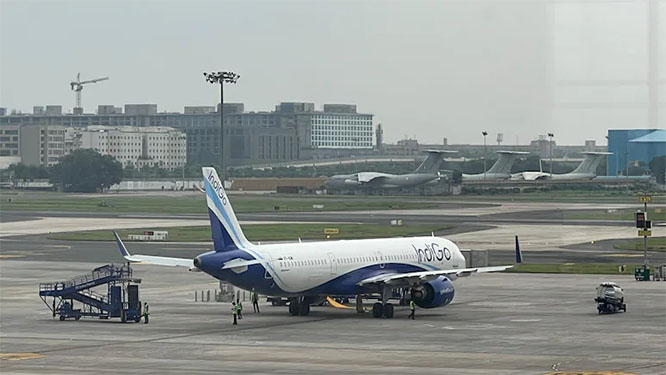
IndiGo, India’s largest airline, is battling one of its worst operational disruptions in recent years, with hundreds of delays and cancellations throwing domestic travel into chaos.

Government data on Tuesday showed its on-time performance plunging to 35%, an unusual dip for a carrier long associated with punctuality.

By Wednesday afternoon, airports in Delhi, Mumbai, Bengaluru and Hyderabad had collectively reported close to 200 cancellations, stranding travellers across the country.

Crew Shortage After New Duty Norms

A major trigger behind the meltdown is a severe crew shortage, especially among pilots, following the rollout of revised Flight Duty Time Limitation (FDTL) norms last month.

The rules mandate longer rest hours and more humane rosters — a shift IndiGo has struggled to incorporate across its vast network.

Sources said several flights were grounded due to lack of cabin crew, while some delays stretched upwards of eight hours.

With IndiGo controlling over 60% of India’s domestic aviation market, the ripple effect has impacted airports nationwide.

IndiGo Issues Apology, Lists “Compounding Factors”

In a statement, IndiGo acknowledged the large-scale disruption:

“We sincerely apologise to customers. A series of unforeseen operational challenges — technology glitches, winter schedule changes, adverse weather, system congestion and updated FDTL norms — created a compounding impact that could not have been anticipated.”

To stabilise operations, the airline has begun calibrated schedule adjustments for the next 48 hours, aiming to restore punctuality. Affected passengers are being offered refunds or alternate travel arrangements, IndiGo said.

What the FDTL Rules Require

The FDTL norms, designed to reduce pilot fatigue, cap duty and flying hours as follows:
•    Maximum 8 hours of flying per day
•    35 hours per week
•    125 hours per month
•    1,000 hours per year

Crew must also receive rest equalling twice the flight duration, with a minimum 10-hour rest period in any 24-hour window.

The DGCA introduced these limits to enhance flight safety.

Hyderabad: 33 Flights Cancelled, Long Queues Reported

Hyderabad’s Rajiv Gandhi International Airport saw heavy early-morning crowds as 33 IndiGo flights (arrivals and departures) were cancelled.

The airport clarified on X that operations were normal, advising passengers to contact IndiGo directly for latest flight status.

Cancellations included flights to and from Visakhapatnam, Goa, Ahmedabad, Delhi, Bengaluru, Chennai, Madurai, Hubli, Bhopal and Bhubaneswar.

Bengaluru: 42 Flights Disrupted

Bengaluru’s Kempegowda International Airport recorded 42 cancellations — 22 arrivals and 20 departures — affecting routes to Delhi, Mumbai, Chennai, Hyderabad, Goa, Kolkata and Lucknow.

Passengers Vent on Social Media

Irate travellers took to X to share their experiences. One passenger stranded in Hyderabad wrote: “I have been here since 3 a.m. and missed an important meeting.”

Another said: “My flight was pushed from 1:55 PM to 2:55 PM and now 4:35 PM. I was informed only three minutes before entering the airport.”

Delhi Airport Hit by Tech Glitch

At Delhi Airport, the disruption deepened due to a slowdown in the Amadeus system — used for reservations, check-ins and departure control.

The technical issue led to longer queues and sluggish processing, adding to delays already worsened by staff shortages.

Comments

Add new comment

  • Coastaldigest.com reserves the right to delete or block any comments.
  • Coastaldigset.com is not responsible for its readers’ comments.
  • Comments that are abusive, incendiary or irrelevant are strictly prohibited.
  • Please use a genuine email ID and provide your name to avoid reject.