Saudi: Expats welcome ‘green card’ but say questions need to be answered

Arab News
May 16, 2019

Jeddah, May 16: The Saudi Cabinet has given formal approval to the Privileged Iqama residency scheme, widely known as the Saudi “green card.”

The scheme will enable expatriates to permanently reside, own property and invest their assets in the Kingdom.

A special committee has been given 90 days to determine regulations governing the scheme, including fees for applicants, conditions and procedures, and a schedule of benefits.   

The scheme has been welcomed by expats in the Kingdom.

Lia Cidalia Da Graca Espiguinha, a 38-year-old Portugese licenced child care provider, said that the decision was “good for the country.”

“A lot of people wish to be here working, and a lot of people want to know the country better and they want to come to Saudi Arabia; so I think it is good for all,” she said. “It is good for the people that want to come and good for the country because it will bring money.”

However, Yawar Hussein, a 27-year-old software technician based in Jeddah, believes qualifying candidates should not be grouped into a single category.

“My parents came from India 35 years ago. They sacrificed a lot of their life for this country. My brothers and sisters were all born here. I can say that in many ways I feel more Saudi than Indian. I hope this ‘green card’ iqama will offer some exemptions or discounts for us expats that were born and have only ever lived in one country — the Kingdom of Saudi Arabia.”

Mohammed Abu Omar, a 47-year-old branding consultant from Yemen, believes that it is still too early to form a definite opinion, but nevertheless believes it is a step in the right direction.

“I believe it is still early, as we have no clue who will be eligible for this or not. Also, there is the question of the fees. Will this cater only to those who have large bank accounts? But overall, this is great news of course. This should have been done decades ago. God-willing, it benefits this wonderful country, because the (expat) people have a lot to offer, and the contribution will be massive. So, the way I see it, this opportunity should open up the market for hiring more local people as the demand will rise with everyone having the opportunity and right to own their own business. But these laborers are actually the majority of people who are sending money out of the Kingdom, and if this (green card) is catered to them, surely they will begin to reinvest back into the country instead.”

And while many expat workers have welcomed the news, some, such as Bangladeshi driver, Ameen Udeen, say they will be unaffected by the decision.

“This ‘Privileged Iqama’ means nothing to me as a Bangladeshi driver who makes SR2,000 a month (of which I send most back home). I haven’t heard what the fees will be but they say that it will be very costly. I’m sure that I will not be able to afford it. For me, this new iqama is not meant for us drivers, house-helpers and laborers. Surely we cannot afford the benefits given our salary,” he said.

The Saudi Shoura Council voted for a new residency permit for qualifying expatriates, the “Privileged Iqama,” giving them the right to permanently live, work and own their own business and property in the Kingdom.

The permit scheme will enable Saudi Arabia to attract investors, Commerce and Investment Minister Dr. Majid Al-Qassabi said.

Al-Qassabi noted that the scheme is similar to residential practices around the world, attracting quality residents to the Kingdom while protecting the interests of Saudi citizens.

Ibrahim Al-Omar, governor of the Saudi Arabian General Investment Authority (SAGIA), said: “Our aim is to attract innovators from across the world to live and work in Saudi Arabia — and this reform will play a significant role in doing so. These investors and entrepreneurs will help to drive private-sector growth.”

“It is important that stakeholders understand that Saudi Arabia offers significant long-term opportunities,” he said. “We want to attract people who will build a foundation and a network in Saudi Arabia, and who will play a role in the future development of the Saudi economy and benefit from the growth opportunities it presents.”

Comments

Add new comment

  • Coastaldigest.com reserves the right to delete or block any comments.
  • Coastaldigset.com is not responsible for its readers’ comments.
  • Comments that are abusive, incendiary or irrelevant are strictly prohibited.
  • Please use a genuine email ID and provide your name to avoid reject.
News Network
November 24,2025

israelsyra.jpg

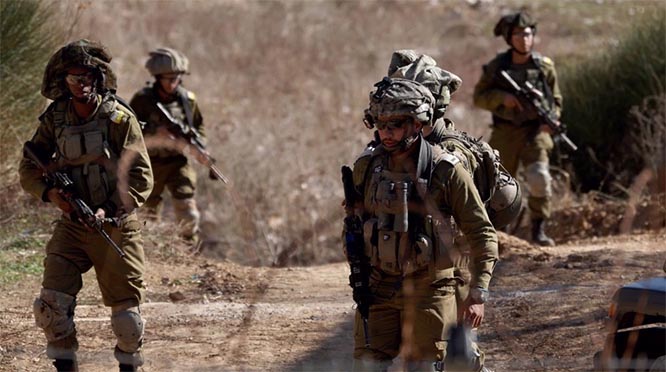
Israeli forces have pushed over the Syrian frontier, erecting a checkpoint and stopping vehicles in the southwestern city of Quneitra, in yet another breach of the Arab country’s sovereignty.

The violation took place on Sunday, when the troops made their way across the border, setting up the outpost near the Ain al-Bayda junction in northern Quneitra, Syrian outlets reported.

According to the al-Ikhbariya paper, an Israeli detachment positioned itself at the junction, halting cars and conducting searches.

The Syrian Arab News Agency (SANA) reported that three Israeli military vehicles then moved further into the northern countryside, deploying between the town of Jubata al-Khashab and the villages of Ofaniya and Ain al-Bayda. The agency added that a separate Israeli unit mounted a new incursion in the central region, approaching the villages of Umm Batina and al-Ajraf.

Residents said such activities have surged in recent months, pointing to Israeli advances onto farmland, leveling of extensive forested areas, arrests, and spread of mobile checkpoints.

The Israeli regime began markedly increasing its military aggression against Syria last year.

The escalation coincided with increasingly ferocious onslaughts throughout the country by the so-called Hay'at Tahrir al-Sham (HTS) Takfiri terrorist group, which the government of President Bashar al-Assad had confined to northwestern Syria. The HTS, however, managed to overthrow the government as the Israeli attacks would pummel the country’s civilian and defensive infrastructure.

Various reports have shown that, during the escalation, the regime conducted more than 1,000 airstrikes on the Syrian territory and over 400 ground raids into the south.

Following the collapse of the Assad government, Tel Aviv also widened its grip over the occupied Golan Heights by taking control of a demilitarized buffer zone, in defiance of a 1974 Disengagement Agreement. Earlier this month, senior Israeli officials, including Prime Minister Benjamin Netanyahu, visited the buffer zone, prompting expressions of alarm on the part of the United Nations.

The United States, the regime’s biggest ally, has, meanwhile, been fraternizing the HTS head Abu Mohammed al-Jolani amid the widely reported prospect of rapprochement with Tel Aviv.

Comments

Add new comment

  • Coastaldigest.com reserves the right to delete or block any comments.
  • Coastaldigset.com is not responsible for its readers’ comments.
  • Comments that are abusive, incendiary or irrelevant are strictly prohibited.
  • Please use a genuine email ID and provide your name to avoid reject.
News Network
November 24,2025

lebanon.jpg

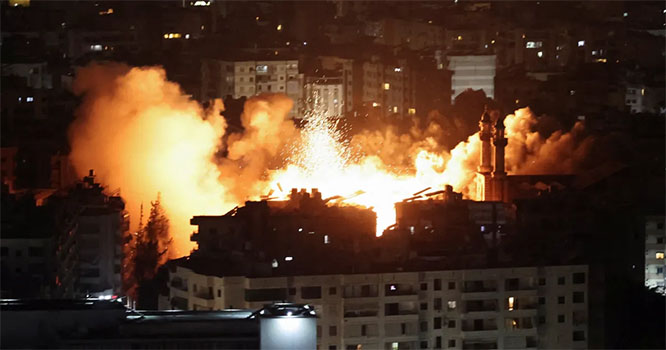
Israel has launched a new act of aggression on a residential neighborhood in Lebanon's capital, Beirut, killing and injuring about two dozen civilians.

The Israeli regime's military said in a statement that its forces carried out a so-called precise strike in a residential apartment in Dahiyeh in the southern suburbs of Beirut on Sunday.

The aggression targeted residential areas, killing at least five people and injuring more than 28 people, Lebanon's Health Ministry said. 

Hezbollah announced the martyrdom of senior Hezbollah commander Haytham Ali Tabatabai and four resistance fighters.

Lebanese President Michel Aoun condemned the airstrike, calling it a clear demonstration of Tel Aviv’s disregard for repeated international calls to halt violations on Lebanese soil.

“Israel refuses to implement international resolutions and all efforts aimed at ending the escalation and restoring stability,” Aoun said, urging the international community to take action to prevent further aggression.

The Palestinian Islamic Jihad movement also condemned the attack, holding the international community accountable. 

“The international community bears responsibility and continues to provide cover for these attacks as long as it does not restrain the occupiers,” said Ali Abu Shahin, a member of the group’s political bureau.

Israeli prime minister Benjamin Netanyahu’s office announced that the Israeli army carried out a strike “in the heart of Beirut."

Netanyahu reportedly approved the operation following recommendations from top Israeli security officials.

Two senior US officials commented on the Israeli strike.

The first official said that Israel did not notify Americans in advance about the attack. "We were informed immediately after the strike was carried out."

The second senior official said that the "US knew for several days that Israel was planning to escalate its strikes in Lebanon, but did not know in advance the timing, location, or target of the strike."

Speaking from the site of the Israeli strike, Lebanese MP Ali Ammar condemned the attack as part of a broader campaign of aggression that has targeted "all of Lebanon since the Washington-sponsored ceasefire."

He stated that "any attack on Lebanon is a violation of red lines; this aggression is part and parcel of the entity that targets Lebanon's dignity, sovereignty, and security of citizens."

Ammar went on to say the resistance is responding with "utmost wisdom, patience, and will confront the enemy at the appropriate time."

"Unfortunately, the enemy is emboldened to commit its aggression by voices within Lebanon that have turned themselves into tools that support its aggression," he added.

The Israeli attack on the southern suburbs of the Lebanese capital is the latest blatant violation of the ceasefire Israel signed with Hezbollah in November 2024, which was intended to end hostilities that had escalated into full-scale war.

An Israeli strike on the Ain al-Hilweh camp near Sidon in southern Lebanon late Tuesday killed at least 14 people. It wounded several others, including young students, according to the Lebanese health ministry.

The military claimed the attack targeted “a Hamas training compound” used to plan and carry out attacks against the regime -- a claim that has frequently been made without evidence.

Hamas rejected the allegations as “a blatant lie aimed at justifying the massacre,” stating it had “no military installations in the Palestinian camps in Lebanon” and that the targeted site was merely “an open sports field.”

According to Lebanese authorities, Israeli attacks have killed approximately 4,000 people and displaced more than 1.2 million residents across the country since October 2023.

Comments

Add new comment

  • Coastaldigest.com reserves the right to delete or block any comments.
  • Coastaldigset.com is not responsible for its readers’ comments.
  • Comments that are abusive, incendiary or irrelevant are strictly prohibited.
  • Please use a genuine email ID and provide your name to avoid reject.