Saudi to extract uranium for self-sufficient nuclear program

Agencies
October 31, 2017

Abu Dhabi, Oct 31: Saudi Arabia plans to extract uranium domestically as part of its nuclear power program and sees this as a step toward “self-sufficiency” in producing atomic fuel, a senior official said on Monday.

Extracting its own uranium also makes sense from an economic point of view, said Hashim bin Abdullah Yamani, head of the Saudi government agency tasked with the nuclear plans, the King Abdullah City for Atomic and Renewable Energy (KACARE).

The Kingdom says it wants to tap atomic power for peaceful purposes only in order to diversify its energy supply, and will award a construction contract for its first two nuclear reactors by the end of 2018.

“Regarding the production of uranium in the Kingdom, this is a program which is our first step toward self-sufficiency in producing nuclear fuel,” Yamani told a conference organized by the International Atomic Energy Agency (IAEA). “We utilize the uranium ore that has been proven to be economically efficient.”

Atomic reactors need uranium enriched to around 5 percent purity, but the same technology in this process can also be used to enrich the heavy metal to higher, weapons-grade levels.

Saudi Arabia would be the second country in the Arab Gulf region to tap nuclear after the UAE, which is set to start up its first, South Korean-built reactor in 2018. The UAE has committed not to enrich uranium itself and not to reprocess spent fuel.

Industry sources have told Reuters Saudi Arabia is reaching out to potential vendors from South Korea, China, France, Russia, Japan and the US for its first two reactors.

The plans have received extra momentum as part of Saudi Arabia’s Vision 2030, an ambitious economic reform program launched last year by Crown Prince Mohammed bin Salman.

Yamani said Saudi Arabia will soon pass laws for its nuclear program, and will have set up all of the regulations for its nuclear regulator by the third quarter of 2018.

“The IAEA also has been requested to conduct an integrated review of our nuclear infrastructure during the second quarter of 2018,” he said, which will allow the agency to assess efforts to prepare Saudi infrastructure “to introduce nuclear power for peaceful purposes.”

Saudi Arabia is considering building some 17.6 gigawatts of nuclear capacity by 2032, the equivalent of about 17 reactors, making it one of the strongest prospects for an industry struggling after the 2011 nuclear disaster in Japan.

Preliminary studies have estimated Saudi Arabia has around 60,000 tons of uranium ore, Maher Al-Odan, the chief atomic energy officer of KACARE, said at an electricity forum in Riyadh on Oct 11.

Comments

Add new comment

  • Coastaldigest.com reserves the right to delete or block any comments.
  • Coastaldigset.com is not responsible for its readers’ comments.
  • Comments that are abusive, incendiary or irrelevant are strictly prohibited.
  • Please use a genuine email ID and provide your name to avoid reject.
News Network
November 24,2025

israelsyra.jpg

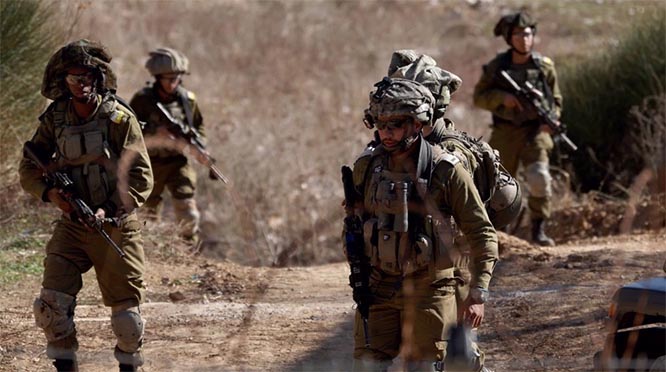
Israeli forces have pushed over the Syrian frontier, erecting a checkpoint and stopping vehicles in the southwestern city of Quneitra, in yet another breach of the Arab country’s sovereignty.

The violation took place on Sunday, when the troops made their way across the border, setting up the outpost near the Ain al-Bayda junction in northern Quneitra, Syrian outlets reported.

According to the al-Ikhbariya paper, an Israeli detachment positioned itself at the junction, halting cars and conducting searches.

The Syrian Arab News Agency (SANA) reported that three Israeli military vehicles then moved further into the northern countryside, deploying between the town of Jubata al-Khashab and the villages of Ofaniya and Ain al-Bayda. The agency added that a separate Israeli unit mounted a new incursion in the central region, approaching the villages of Umm Batina and al-Ajraf.

Residents said such activities have surged in recent months, pointing to Israeli advances onto farmland, leveling of extensive forested areas, arrests, and spread of mobile checkpoints.

The Israeli regime began markedly increasing its military aggression against Syria last year.

The escalation coincided with increasingly ferocious onslaughts throughout the country by the so-called Hay'at Tahrir al-Sham (HTS) Takfiri terrorist group, which the government of President Bashar al-Assad had confined to northwestern Syria. The HTS, however, managed to overthrow the government as the Israeli attacks would pummel the country’s civilian and defensive infrastructure.

Various reports have shown that, during the escalation, the regime conducted more than 1,000 airstrikes on the Syrian territory and over 400 ground raids into the south.

Following the collapse of the Assad government, Tel Aviv also widened its grip over the occupied Golan Heights by taking control of a demilitarized buffer zone, in defiance of a 1974 Disengagement Agreement. Earlier this month, senior Israeli officials, including Prime Minister Benjamin Netanyahu, visited the buffer zone, prompting expressions of alarm on the part of the United Nations.

The United States, the regime’s biggest ally, has, meanwhile, been fraternizing the HTS head Abu Mohammed al-Jolani amid the widely reported prospect of rapprochement with Tel Aviv.

Comments

Add new comment

  • Coastaldigest.com reserves the right to delete or block any comments.
  • Coastaldigset.com is not responsible for its readers’ comments.
  • Comments that are abusive, incendiary or irrelevant are strictly prohibited.
  • Please use a genuine email ID and provide your name to avoid reject.
News Network
November 28,2025

fire.jpg

Several Syrians were killed and more than two dozen others injured in Israeli strikes on the outskirts of Damascus, amid intensified incursions by the occupying regime since the fall of former president Bashar al-Assad and the rise of Hayat Tahrir al-Sham (HTS) rule.

Syrian state TV reported that the casualties occurred during an overnight Israeli assault involving helicopters and drones on the town of Beit Jinn in the Damascus countryside. The attack followed an Israeli military unit’s entry into the town, where they were surrounded by local residents, leading to gunfire and direct confrontations.

According to the report, “The occupation army’s helicopters and artillery shelled Beit Jinn, located at the foothills of Mount Hermon, resulting in 13 martyrs and 25 injured civilians.” The broadcaster did not specify the full extent of damage.

Al-Ikhbariyah Syria confirmed that the shelling coincided with Israeli soldiers entering Beit Jinn, while artillery pounded surrounding areas. The broadcaster stated that the escalation began after local residents clashed with an Israeli patrol that had infiltrated the southern town and “kidnapped” three young men.

Following a two-hour exchange of heavy fire, Israeli forces withdrew and repositioned on the hill of Butt al-Warda at the town’s outskirts.

Israeli media acknowledged that six soldiers were wounded in the clashes—three of them seriously—describing the confrontation as a “sudden ambush” that forced the deployment of reserve units and air support to secure an exit route. No further details were provided.

The aggression has fueled renewed displacement from Beit Jinn, with residents fleeing to nearby villages amid increasingly frequent Israeli attacks.

The raid came just a day after Israeli troops carried out another ground incursion into Umm al-Luqas village in Quneitra province. According to SANA, an Israeli unit in four vehicles entered the village, raided several homes, and later withdrew.

Syria condemned the repeated incursions as violations of the 1974 Disengagement Agreement and UN resolutions, urging the international community to enforce compliance and pressure Israel to halt its operations and withdraw fully.

Israel has expanded its attacks across Syrian territory following the collapse of the Assad government last year. Prime Minister Benjamin Netanyahu has reportedly instructed his forces to push deeper into Syrian territory and seize strategic positions.

Meanwhile, critics say the HTS-led interim government’s inaction and growing normalization gestures toward Israel have emboldened Tel Aviv to intensify its military operations. HTS, formerly linked to al-Qaeda, seized control of Damascus last December, formally ending Assad’s rule.

Comments

Add new comment

  • Coastaldigest.com reserves the right to delete or block any comments.
  • Coastaldigset.com is not responsible for its readers’ comments.
  • Comments that are abusive, incendiary or irrelevant are strictly prohibited.
  • Please use a genuine email ID and provide your name to avoid reject.
News Network
December 2,2025

DKSsiddu.jpg

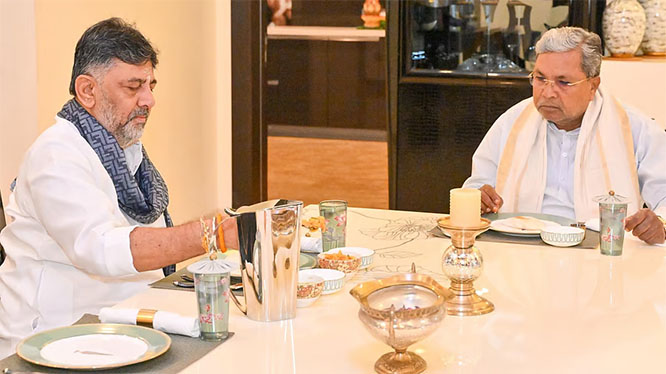
Bengaluru: 'Nati koli saaru' (country chicken curry) considered one of Chief Minister Siddaramaiah’s favourites along with steaming hot idlis was on the breakfast menu at Deputy CM D K Shivakumar’s residence on Tuesday, according to official sources.

The spread also included 'nati koli' fry, vada and pongal, among other items, they said.

In an apparent show of unity, Siddaramaiah visited Shivakumar’s residence for breakfast, just days after the two leaders shared a meal amid a simmering power tussle in the state Congress.

Siddaramaiah drove to the Deputy CM’s residence in Sadashivanagar, where he was received by Shivakumar and his brother D K Suresh, who is a former Congress MP.

Suresh and Kunigal MLA H D Ranganath, a relative of Shivakumar, joined them for breakfast, which featured a mix of vegetarian and non-vegetarian dishes.

Speaking to reporters later, Siddaramaiah said Shivakumar had invited him during his visit to the CM’s residence for breakfast on Saturday.

Asked about the difference between the two meals, the chief minister said, "At his (Shivakumar’s) house it was non-veg, while at my house it was veg. He is a vegetarian, I am a non-vegetarian. I had not prepared non-veg. I told DK to get chicken from the village as you won’t get the original in Bengaluru."

Shivakumar said he had initially invited Siddaramaiah to his residence, but the CM had suggested visiting his place first and reciprocating later. "It was a vegetarian breakfast at the CM’s house on Saturday," he noted.

"Today, I invited him (the CM) to my house. He enjoyed the breakfast, which had his Mysuru taste," Shivakumar added. At this point, Siddaramaiah remarked that Shivakumar’s wife is also from Mysuru.

Saturday’s breakfast at Siddaramaiah’s official residence, held as part of efforts by the Congress high command to ease tensions in the leadership dispute between the two, reportedly included idlis and sambar, according to official sources.

Comments

Add new comment

  • Coastaldigest.com reserves the right to delete or block any comments.
  • Coastaldigset.com is not responsible for its readers’ comments.
  • Comments that are abusive, incendiary or irrelevant are strictly prohibited.
  • Please use a genuine email ID and provide your name to avoid reject.