



Saudi, Kuwait, UAE approve $2.5bn aid package for Jordan

Arab News
June 11, 2018

Jeddah, Jun 11: Saudi Arabia, Kuwait and the United Arab Emirates agreed on Monday to provide an economic aid package worth $2.5 billion for Jordan, which is facing an economic crisis following anti-austerity protests.

The package, announced at a summit of the four nations in the holy city of Makkah, will include a deposit in the Jordanian central bank, World Bank guarantees, budgetary support over five years and financing for development projects, said a summit communique carried by the Saudi Press Agency.

The summit, called by Saudi King Salman, was attended by Jordan’s King Abdullah II along with UAE's Prime Minister Sheikh Mohammed bin Rashid Al-Maktoum and Kuwaiti Emir Sheikh Sabah Al-Ahmad Al-Jaber Al-Sabah.

King Salman called the meeting to garner support for ally Jordan, which had been rocked by mass protests against price rises and a proposed tax hike in recent days.

The statement noted that funding for Jordan's economic crisis comes from contributory funds for development projects in the Kingdom.

Following the meeting, King Abdullah II offered his gratitude to King Salman, Kuwait and the UAE for their support. Jordan is struggling to curb its debt after securing a $723 million loan from the International Monetary Fund (IMF) in 2016.

Austerity measures tied to the loan have seen prices of basic necessities rise across the Kingdom of Jordan — culminating in a week of angry protests over tax proposals that forced prime minister Hani Mulki to resign.

The authorities on Thursday announced they were withdrawing the unpopular legislation, but still face a mammoth task to balance popular demands with the need to reduce the public debt burden.

Jordan blames its economic woes on instability rocking the region and the burden of hosting hundreds of thousands of refugees from war-torn Syria, complaining it has not received enough international support.

The World Bank says Jordan has “weak growth prospects” this year, while 18.5 percent of the working age population is unemployed.

Saudi Arabia and the United States are two of the major donors providing vital economic assistance to Jordan.

Comments

Add new comment

  • Coastaldigest.com reserves the right to delete or block any comments.
  • Coastaldigset.com is not responsible for its readers’ comments.
  • Comments that are abusive, incendiary or irrelevant are strictly prohibited.
  • Please use a genuine email ID and provide your name to avoid reject.
News Network
November 24,2025

israelsyra.jpg

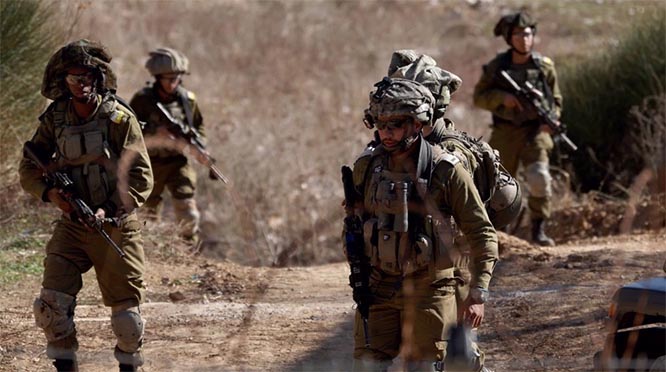
Israeli forces have pushed over the Syrian frontier, erecting a checkpoint and stopping vehicles in the southwestern city of Quneitra, in yet another breach of the Arab country’s sovereignty.

The violation took place on Sunday, when the troops made their way across the border, setting up the outpost near the Ain al-Bayda junction in northern Quneitra, Syrian outlets reported.

According to the al-Ikhbariya paper, an Israeli detachment positioned itself at the junction, halting cars and conducting searches.

The Syrian Arab News Agency (SANA) reported that three Israeli military vehicles then moved further into the northern countryside, deploying between the town of Jubata al-Khashab and the villages of Ofaniya and Ain al-Bayda. The agency added that a separate Israeli unit mounted a new incursion in the central region, approaching the villages of Umm Batina and al-Ajraf.

Residents said such activities have surged in recent months, pointing to Israeli advances onto farmland, leveling of extensive forested areas, arrests, and spread of mobile checkpoints.

The Israeli regime began markedly increasing its military aggression against Syria last year.

The escalation coincided with increasingly ferocious onslaughts throughout the country by the so-called Hay'at Tahrir al-Sham (HTS) Takfiri terrorist group, which the government of President Bashar al-Assad had confined to northwestern Syria. The HTS, however, managed to overthrow the government as the Israeli attacks would pummel the country’s civilian and defensive infrastructure.

Various reports have shown that, during the escalation, the regime conducted more than 1,000 airstrikes on the Syrian territory and over 400 ground raids into the south.

Following the collapse of the Assad government, Tel Aviv also widened its grip over the occupied Golan Heights by taking control of a demilitarized buffer zone, in defiance of a 1974 Disengagement Agreement. Earlier this month, senior Israeli officials, including Prime Minister Benjamin Netanyahu, visited the buffer zone, prompting expressions of alarm on the part of the United Nations.

The United States, the regime’s biggest ally, has, meanwhile, been fraternizing the HTS head Abu Mohammed al-Jolani amid the widely reported prospect of rapprochement with Tel Aviv.

Comments

Add new comment

  • Coastaldigest.com reserves the right to delete or block any comments.
  • Coastaldigset.com is not responsible for its readers’ comments.
  • Comments that are abusive, incendiary or irrelevant are strictly prohibited.
  • Please use a genuine email ID and provide your name to avoid reject.