



Survey reveals broad-mindedness of Muslims, discrimination by others in EU

Agencies
September 21, 2017

Vienna, Sept 21: A survey of Muslims in 15 European Union countries finds most are willing to embrace non-Muslims, but often feel rebuffed by the majority populations of the places they live.
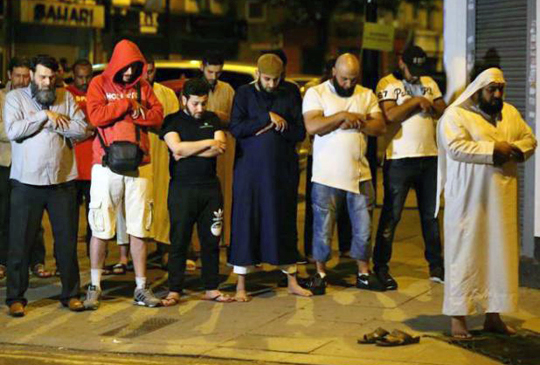
The findings released Thursday by the European Union Agency for Fundamental Rights reflect the views of 10,527 Muslim immigrants and children of immigrants who were interviewed between October 2015 and July 2016.

Nine out of 10 of those surveyed reported having non-Muslim friends and 92 per cent said they tended to feel comfortable with neighbors of a different religious background.

But more than half 53 per cent said they had felt discriminated against when they looked for housing because of their names. On the employment front, 35 per cent of the women who had looked for work felt discriminated against because of their clothing, compared to 4 per cent for men.

The people surveyed were over age 16 and had been living for at least a year in Austria, Belgium, Cyprus, Germany, Denmark, Greece, Spain, Finland, France, Italy, Malta, the Netherlands, Sweden, Slovenia and the United Kingdom. Other findings from the survey included:

Nearly half of the respondents did not find interfaith marriage objectionable, with 48 per cent reporting they would feel "totally comfortable" with a family member marrying a non-Muslim.

While 17 per cent said they would feel uncomfortable in that situation, the authors of the report summarizing the survey results said that compares with 30 per cent of non- Muslims who said they would be uncomfortable if their child had a romantic relationship with a Muslim.

Outreach is often met with rejection and hostility. At the time of their survey interviews, 27 per cent of respondents said they had experienced harassment because of their Muslim backgrounds during the previous 12 months.

Another 2 per cent reported being physically assaulted. Of the Muslim women who wore headscarves or face veils, 31 per cent reported harassment. Inappropriate staring or offensive gestures were reported by 39 per cent of the women who wore the coverings, while 22 per cent said they were targets of offensive comments and 2 per cent said they were physically attacked.

Comments

Add new comment

  • Coastaldigest.com reserves the right to delete or block any comments.
  • Coastaldigset.com is not responsible for its readers’ comments.
  • Comments that are abusive, incendiary or irrelevant are strictly prohibited.
  • Please use a genuine email ID and provide your name to avoid reject.
News Network
December 7,2025

envoy.jpg

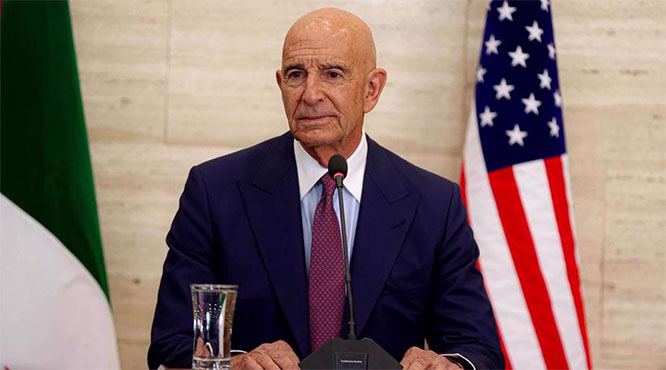
Since 1946, the United States has attempted 93 coups or “regime change” operations across the world — including two in Iran, US Special Envoy for Syria Tom Barrack has admitted.

Speaking to the UAE-based IMI Media Group, in remarks published by The National, Barrack said Washington tried twice to overthrow the Iranian government but failed both times. 

“For (Trump) then to be imputed with regime change — we had two regime changes in Iran already. Neither one worked. So I think wisely leave it to the region to solve,” said Barrack, who also serves as the US ambassador to Turkey.

His comments come six months after the US joined Israel in airstrikes against Iran during ongoing indirect nuclear negotiations between Tehran and Washington.

On June 13, Israel launched an attack on Iran that killed at least 1,064 people and hit civilian infrastructure. Days later, the United States targeted three nuclear facilities — Fordow, Natanz and Isfahan — in what Iran called a clear violation of international law. Iranian retaliation eventually forced a halt to the assault on June 24.

Barrack further claimed that US President Donald Trump and Foreign Secretary Marco Rubio are “not into regime change” and prefer a regional approach driven by Middle Eastern countries themselves. According to him, regional dialogue and non-interference by outside powers offer a more durable path forward.

He added that Washington is still open to an agreement with Tehran if Iranian authorities show “seriousness” and willingness to engage constructively.

However, Iran maintains the US has not shown readiness for meaningful talks. In an interview with Japan’s Kyodo News, Iranian Foreign Minister Abbas Araghchi said negotiations could advance only if Washington acknowledges Iran’s right to peaceful nuclear energy and lifts unilateral sanctions.

Comments

Add new comment

  • Coastaldigest.com reserves the right to delete or block any comments.
  • Coastaldigset.com is not responsible for its readers’ comments.
  • Comments that are abusive, incendiary or irrelevant are strictly prohibited.
  • Please use a genuine email ID and provide your name to avoid reject.