Tamarind seed protein has potential to cure Chikungunya: IIT-R study

Agencies
November 14, 2018

New Delhi, Nov 14: Two professors at Indian Institute of Technology (IIT) Roorkee claimed to have discovered a protein in tamarind seeds that has anti-viral properties and can potentially be used to develop medication for chikungunya.

The research group at IIT Roorkee has filed a patent for an antiviral composition containing this tamarind antiviral protein and is now developing tamarind-based therapeutic agents for chikungunya.

"Tamarind is known for various medicinal properties in India and is a excellent Ayurvedic food. The fruits, seeds, leaves and roots bark of the tamarind tree have been used to treat abdominal pain, diarrhoea and dysentery, bacterial infections and parasitic infestations, wounds, constipation and inflammation," said one of the professors, Shaily Tomar.

Lectin, a diverse group of proteins derived from plant sources, are known to bind to glycan sugars. Its use as antiviral has been extensively studied for a range of viruses, including HIV and HPV.

The IIT professors, in a study, have shown that a lectin derived from tamarind seeds bind to glycans or sugar molecules having N-acetylglucosamine (NAG) on the capsule of viruses, thereby preventing the entry of the virus into the host cells.

The researchers have isolated lectin from tamarind seeds using chromatography and have studied the binding of the lectin molecules to the glycan in the viral capsule by a process called Enzyme-Linked ImmunoSorbent Assay (ELISA).

"Not only did the chikungunya virus lose 64 per cent of its infectivity on treatment with the lectin, but the levels of viral RNA in the cells were also found to reduce to nearly 45 per cent. This study has, for the first time, evaluated the antiviral use of tamarind seed-derived lectin having specificity for NAG and assessed its ability to block the entry step of the virus," Tomar added.

"Antiviral drugs and vaccines against most alphaviruses, including chikungunya are still not available in the market, and preventive measures are currently the only route to managing diseases caused by such viruses," said professor Pravindra Kumar, who is also part of the research.

Comments

Add new comment

  • Coastaldigest.com reserves the right to delete or block any comments.
  • Coastaldigset.com is not responsible for its readers’ comments.
  • Comments that are abusive, incendiary or irrelevant are strictly prohibited.
  • Please use a genuine email ID and provide your name to avoid reject.
News Network
December 2,2025

DKSsiddu.jpg

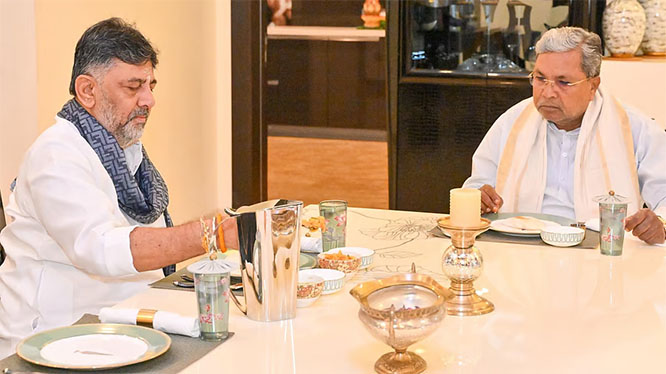
Bengaluru: 'Nati koli saaru' (country chicken curry) considered one of Chief Minister Siddaramaiah’s favourites along with steaming hot idlis was on the breakfast menu at Deputy CM D K Shivakumar’s residence on Tuesday, according to official sources.

The spread also included 'nati koli' fry, vada and pongal, among other items, they said.

In an apparent show of unity, Siddaramaiah visited Shivakumar’s residence for breakfast, just days after the two leaders shared a meal amid a simmering power tussle in the state Congress.

Siddaramaiah drove to the Deputy CM’s residence in Sadashivanagar, where he was received by Shivakumar and his brother D K Suresh, who is a former Congress MP.

Suresh and Kunigal MLA H D Ranganath, a relative of Shivakumar, joined them for breakfast, which featured a mix of vegetarian and non-vegetarian dishes.

Speaking to reporters later, Siddaramaiah said Shivakumar had invited him during his visit to the CM’s residence for breakfast on Saturday.

Asked about the difference between the two meals, the chief minister said, "At his (Shivakumar’s) house it was non-veg, while at my house it was veg. He is a vegetarian, I am a non-vegetarian. I had not prepared non-veg. I told DK to get chicken from the village as you won’t get the original in Bengaluru."

Shivakumar said he had initially invited Siddaramaiah to his residence, but the CM had suggested visiting his place first and reciprocating later. "It was a vegetarian breakfast at the CM’s house on Saturday," he noted.

"Today, I invited him (the CM) to my house. He enjoyed the breakfast, which had his Mysuru taste," Shivakumar added. At this point, Siddaramaiah remarked that Shivakumar’s wife is also from Mysuru.

Saturday’s breakfast at Siddaramaiah’s official residence, held as part of efforts by the Congress high command to ease tensions in the leadership dispute between the two, reportedly included idlis and sambar, according to official sources.

Comments

Add new comment

  • Coastaldigest.com reserves the right to delete or block any comments.
  • Coastaldigset.com is not responsible for its readers’ comments.
  • Comments that are abusive, incendiary or irrelevant are strictly prohibited.
  • Please use a genuine email ID and provide your name to avoid reject.
News Network
December 4,2025

Mangaluru: Chaos erupted at Mangaluru International Airport (MIA) after IndiGo flight 6E 5150, bound for Mumbai, was repeatedly delayed and ultimately cancelled, leaving around 100 passengers stranded overnight. The incident highlights the ongoing country-wide operational disruptions affecting the airline, largely due to the implementation of new Flight Duty Time Limitations (FDTL) norms for crew.

The flight was initially scheduled for 9:25 PM on Tuesday but was first postponed to 11:40 PM, then midnight, before being cancelled around 3:00 AM. Passengers expressed frustration over last-minute communication and the lack of clarity, with elderly and ailing travellers particularly affected. “Though the airline arranged food, there was no proper communication, leaving us confused,” said one family member.

An IndiGo executive at MIA cited the FDTL rules, designed to prevent pilot fatigue by limiting crew working hours, as the cause of the cancellation. While alternative arrangements, including hotel stays, were offered, about 100 passengers chose to remain at the airport, creating tension. A replacement flight was arranged but also faced delays due to the same constraints, finally departing for Mumbai around 1:45 PM on Wednesday. Passengers either flew, requested refunds, or postponed their travel.

The Mangaluru delay is part of a broader crisis for IndiGo. The airline has been forced to make “calibrated schedule adjustments”—a euphemism for widespread cancellations and delays—after stricter FDTL norms came into effect on November 1.

While an IndiGo spokesperson acknowledged unavoidable flight disruptions due to technology issues, operational requirements, and the updated crew rostering rules, the DGCA has intervened, summoning senior airline officials to explain the chaos and outline corrective measures.

The ripple effect has been felt across the country, with major hubs like Bengaluru and Mumbai reporting numerous cancellations. The Mangaluru incident underscores the systemic operational strain currently confronting India’s largest carrier, leaving passengers nationwide grappling with uncertainty and delays.

Comments

Add new comment

  • Coastaldigest.com reserves the right to delete or block any comments.
  • Coastaldigset.com is not responsible for its readers’ comments.
  • Comments that are abusive, incendiary or irrelevant are strictly prohibited.
  • Please use a genuine email ID and provide your name to avoid reject.
News Network
December 7,2025

SHRIMP.jpg

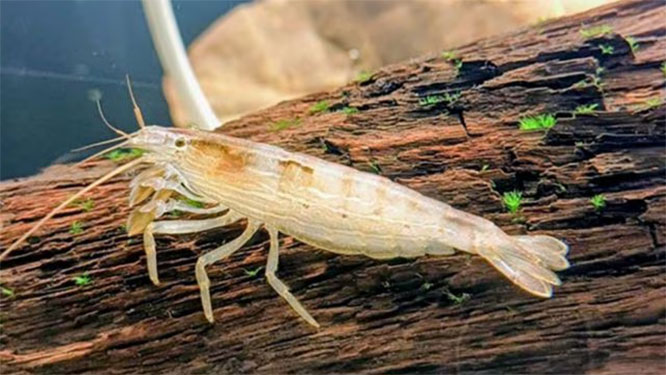
Mangaluru, Dec 7: A rare bamboo shrimp has been rediscovered on mainland India more than 70 years after it was last reported, confirming for the first time the presence of Atyopsis spinipes in the country. The find was made by researchers from the Centre for Climate Change Studies at Sathyabama Institute of Science and Technology, Chennai, during surveys in Karnataka and Odisha.

The team — shrimp expert Dr S Prakash, PhD scholar K Kunjulakshmi, and Mangaluru-based researcher Maclean Antony Santos — combined field surveys, ecological assessments and DNA analysis to identify the elusive species. Their findings, published in Zootaxa, resolve decades of taxonomic confusion stemming from a 1951 report that misidentified the species as Atyopsis moluccensis without strong evidence.

The shrimp has now been confirmed at two locations: the Mulki–Pavanje estuary near Mangaluru and the Kuakhai River in Bhubaneswar. Historical specimens from the Andaman Islands, previously labelled as A. moluccensis, were also found to be misidentified and actually belong to A. spinipes.

The rediscovery began after an aquarium hobbyist in Odisha spotted a shrimp in 2022, prompting systematic surveys across Udupi, Karwar and Mangaluru. Four female specimens were collected in Mulki and one in Odisha, all genetically matching.

Researchers warn the species may exist in very small, vulnerable populations as freshwater habitats face increasing pressure from pollution, sand mining and infrastructure development. All verified specimens have been deposited with the Zoological Survey of India for future reference.

Comments

Add new comment

  • Coastaldigest.com reserves the right to delete or block any comments.
  • Coastaldigset.com is not responsible for its readers’ comments.
  • Comments that are abusive, incendiary or irrelevant are strictly prohibited.
  • Please use a genuine email ID and provide your name to avoid reject.