



Why is this billionaire Modi being called a conman?

Agencies
February 16, 2018

Nirav Modi's rise to fame and fortune was meteoric. The Indian billionaire left his mark almost everywhere. On Hollywood red carpets, his diamonds have sparkled on the necklines and dangled from the earlobes of actors and models like Kate Winslet, Dakota Johnson and Rosie Huntington-Whiteley.

Back in India, billboards above the traffic jams of New Delhi bear the image of Priyanka Chopra, a Bollywood star and former Miss World who is fast becoming a household name in the United States, also adorned with Modi's jewels.

But on Thursday, officials at the nation's federal investigative agency announced it was looking for Modi as law enforcement officials fanned out to raid his jewellery stores and other businesses in Mumbai and New Delhi.
Central Bureau of Investigation (CBI) officials told reporters the agency had on February 4 issued a lookout circular in the country for Modi, who they say had left four weeks earlier.

Nirav Modi, who has a net worth of some $1.8 billion according to Forbes magazine rankings, has not yet responded to the allegations.

His flagship company, Firestar Diamond, has said it had no involvement in the case.

The setback in Nirav Modi's climb to fame and fortune was abrupt, even by the rough-and-tumble standards of one of the world's fastest growing major economies.Recently, when asked how he planned to raise funds to add new stores, he seemed unconcerned.

"All options are open," he said, sitting in his cavernous Mumbai office. "We could use internal accruals. We can take loans from banks or we could do an initial public offering." But last month, India's second-largest state-run lender filed a criminal complaint with the CBI that accused Modi and others of defrauding the bank and causing it a loss of 2.8 billion rupees ($43.8 million).

Then on Thursday, the same bank, Punjab National Bank , publicly alleged that Modi was involved with a much larger fraud case: $1.77 billion from a single branch stretching back to 2011.

The news was a shock for the circles in which Nirav Modi moved.

As recently as last month, he was at the World Economic Forum in Davos. Indian media carried a group photograph with Prime Minister Narendra Modi in the foreground and Nirav Modi, who is no relation, grinning between rows of Indian business leaders behind him.

"Top industrialists invited him home to display his collections," said a Mumbai investment banker at a US-based firm who has worked directly with Modi's company. "There was a personal touch in everything he sold. Nirav Modi is a brand." A senior member at Bharat Diamond Bourse, a Mumbai-based industry body with more than 13,000 members, sketched a similar profile of Modi.

"In one of the industry meetings in 2013 he said that when people wear a Cartier ring they don't say it's a diamond ring, they say it's Cartier," said the member, who did not want to be named. "He always wanted people to say they are 'wearing Nirav Modi'."

The beginning

Modi grew up in Antwerp, Belgium, in a diamond-dealing family. In 1990, at the age of 19, he moved to Mumbai.
Nine years later, Modi started his own company, Firestar Diamond Ltd., selling loose stones. He employed fewer than a dozen people at the time. By last year, the number was more than 2,000.

Born in India and raised in Antwerp, the diamond capital of the world, Modi is a third-generation diamantaire.

Modi grew up in the thick of the diamond business, but described as a soft-spoken and unassuming man by those who know him, aspired to be a music conductor.

But it was not music that he finally pursued, he joined the family business of his maternal uncle at Gitanjali Gems Ltd in Bombay (Mumbai) at 19 after dropping out the of University of Pennsylvania’s Wharton School. Uncle Mehul Choksi, chairman, Gitanjali Gems, is one of the four accused in the ongoing CBI investigation, although he has denied being associated with any of Modi’s companies.

It was his initial nine years at Gitanjali Gems in the 1990s that laid the foundation for Modi’s own jewellery business.

Modi’s tryst with jewellery design happened by chance, in 2009, when he was persuaded to design a pair of earrings for a friend.

Within a year he went on to become the first Indian to feature on the cover of a Christie’s auction catalogue in 2010 for a Golconda diamond necklace that fetched $3.56 million at its auction in Hong Kong. In October 2012, his Riviere Diamond Necklace was sold for $5.1 million at a Sotheby’s auction in Hong Kong. In 2013, Modi entered the Forbes list of billionaires.

Today, the brand manages to hold its own among rivals like the century-old Van Cleef and Arpels and Richemont SA’s Cartier, and his clients include Hollywood star Kate Winslet who wore diamond creations by the jewellery designer for her red-carpet walk at the 2016 Oscars. In addition, many of India’s biggest business families have been buying diamonds from him for years.

Modi is ranked 1,234 in Forbes’s world’s billionaires list for 2017, and 85 in India. His financial worth is estimated at $1.73 billion through his jewellery design and retail businesses, according to the Forbes website.

At the peak

Firestar Group, the parent company Modi controls as a majority shareholder, saw its revenue grow over three years from 103 billion rupees (about $1.6 billion at current rates) to some 147 billion rupees ($2.3 billion) by the 2016-17 fiscal year, according to figures previously provided by the company.

In 2010, Modi launched an eponymous jewellery business branded NIRAV MODI, in capitals, with the tagline "Haut Diamantaire". New boutiques in Las Vegas and Hawaii have since been added to a stable that stretches from New York to London to Beijing.

He became a man whose diamond necklaces were sold, with his name attached, by Sotheby's. "Pure feminine elegance," says a Hong Kong auction catalogue note of one 85.33 carat diamond necklace.

The auction house posted an online slideshow of jewellery-on-stars at the 2017 Oscars and highlighted supermodel Karlie Kloss having "a major Nirav Modi moment with her diamond 'Mughal' choker." But the celebrity links could be starting to break.

A spokesperson for Chopra, the film star, said in a statement: "She is currently seeking legal opinion with respect to terminating her contract with the brand in light of allegations of financial fraud against Nirav Modi."

The fall

Punjab National Bank, India's second-largest state-run lender, sought to soothe investors on Thursday after the discovery of a $1.77 billion scam at a single branch sent its shares plunging and raised fears about the scale of fraud in the sector.

Investigators launched raids across Mumbai and New Delhi, targeting offices and homes linked to Nirav Modi. The steep fall has wiped off $1.27 billion from PNB's market capitalisation in the past two days.

The billionaire jeweller left India on January 1, before a police case was registered against him later that month, a federal police source said. His current whereabouts are unknown.

Law minister Ravi Shankar Prasad said the authorities had seized assets worth 13 billion rupees ($203 million) from Modi and initiated action to revoke his passport.

PNB's Mehta said Nirav Modi had written to the bank about a possible repayment, but had not yet come up with any concrete plan.

Comments

Add new comment

  • Coastaldigest.com reserves the right to delete or block any comments.
  • Coastaldigset.com is not responsible for its readers’ comments.
  • Comments that are abusive, incendiary or irrelevant are strictly prohibited.
  • Please use a genuine email ID and provide your name to avoid reject.
News Network
December 4,2025

indigocrisis.jpg

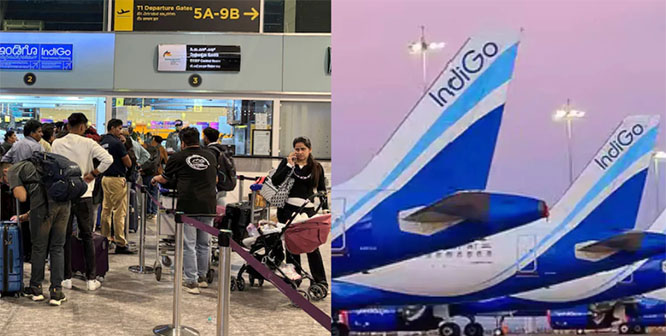
Angry outbursts, long queues, and desperate appeals filled airports across India today as IndiGo grappled with a severe operational breakdown. Hundreds of flights have been cancelled or delayed, leaving thousands of passengers stranded through the night and forcing many to spend long hours at helpdesks.

Social media was flooded with videos of fliers pleading for assistance, accusing the airline of misleading updates, and demanding accommodation after being stuck for 10 to 12 hours at airports such as Hyderabad and Bengaluru.

What Triggered the Meltdown?

IndiGo has attributed the widespread disruption to “a multitude of unforeseen operational challenges.” These include:

•    Minor technology glitches
•    Winter-season schedule adjustments
•    Bad weather
•    Congestion in the aviation network
•    New crew rostering rules (Flight Duty Time Limitations or FDTL)

Among these, the most disruptive has been the implementation of the updated FDTL norms introduced by the Directorate General of Civil Aviation (DGCA) in January 2024.

These rules were designed to reduce pilot fatigue and improve passenger safety. Key changes include:

•    Longer weekly rest periods for flight crew
•    A revised definition of “night,” extending it by an extra hour
•    Tighter caps on flight duty timing and night landings
•    Cutting night shifts for pilots and crew from six per roster cycle to just two

Once these norms became fully enforceable, airlines were required to overhaul rosters well in advance. For IndiGo, this triggered a sudden shortage of crew available for duty, leading to cascading delays and cancellations.

Why IndiGo Was Hit the Hardest

IndiGo is India’s largest airline by a wide margin, operating over 2,200 flights daily. That’s roughly double the number operated by Air India.

When an airline of this size experiences even a 10–20% disruption, it translates to 200–400 flights being delayed or grounded — producing massive spillover effects across the country.

IndiGo also relies heavily on high-frequency overnight operations, a model typical of low-cost carriers that aim to maximise aircraft utilisation and reduce downtime. The stricter FDTL norms clash with these overnight-heavy schedules, forcing the airline to pull back services.

Aviation bodies have also criticised IndiGo’s preparedness. The Airline Pilots' Association of India (ALPA) said airlines were given a two-year window to plan for the new rules but “started preparing rather late.” IndiGo, it said, failed to rebuild crew rosters 15 days in advance as required.

The Federation of Indian Pilots (FIP) went further, calling the crisis the result of IndiGo’s “prolonged and unorthodox lean manpower strategy,” and alleging that the airline adopted a hiring freeze even as it knew the new rules would require more careful staffing.

How Many Flights Are Affected?

In the past 48 hours, over 300 flights have been cancelled. At least 100 more are expected to be cancelled today.

City-wise impact:

•    Hyderabad: 33 expected cancellations; several fliers stranded overnight
•    Bengaluru: over 70 expected cancellations
•    Delhi, Mumbai, Chennai, Kolkata: widespread delays and missed connections

Passengers shared distressing accounts online.

One customer at Hyderabad airport said they waited from 6 PM to 9 AM with “no action taken” regarding their delayed Pune flight. Another said IndiGo repeatedly told them the crew was “arriving soon,” only for the delay to stretch over 12 hours.

IndiGo has apologised for the disruption and promised that operations will stabilise within 48 hours, adding that “calibrated adjustments” are being made to contain the chaos.

What Should Passengers Do Now?

For those flying in the next few days, especially with IndiGo, here are key precautions:

1. Keep Checking Flight Status
Monitor your flight closely before leaving for the airport, as delays may be announced last-minute.

2. Arrive Early
Expect long queues at counters and security due to crowding and rescheduling.

3. Carry Essentials
Pack snacks, water, basic medicines, chargers, and items for children or senior citizens. Extended waiting times should be anticipated.

4. Use Flexible Booking Options
If you booked tickets with a free-date-change or cancellation option, consider using them.
If you haven’t booked yet, prefer refundable or flexible fares, or even consider alternate airlines.

5. Follow IndiGo’s Updates
Keep an eye on IndiGo’s official social media channels and contact customer support for rebooking and refund queries.

What Needs to Change?

Pilot groups have raised concerns not just about staffing but also the planning practices behind it.
The Federation of Indian Pilots accused IndiGo of:

•    Imposing an unexplained hiring freeze despite knowing the FDTL changes were coming
•    Entering non-poaching agreements that limited talent movement
•    Keeping pilot pay frozen
•    Underestimating the need to restructure operations in advance

They have urged DGCA to approve seasonal schedules only after airlines prove they have adequate pilot strength under the new norms.

ALPA also warned that some airlines might be using the delays as an “immature pressure tactic” to push DGCA for relaxations in the new rules — which, if granted, could compromise the very safety standards the norms were meant to protect.

Both pilot bodies stressed that no exemption should dilute safety, and any deviations should be based solely on scientific risk assessment.

Is a Solution in Sight?

While IndiGo says normalcy will return within two days, aviation experts believe that fully stabilising operations could take longer, depending on how quickly the airline can:
•    Re-align rosters
•    Mobilise rested crew
•    Boost staffing
•    Adjust its winter schedule to match regulatory requirements
Passengers are advised to remain prepared for continued delays over the next few days as the airline works through its backlog. 

Comments

Add new comment

  • Coastaldigest.com reserves the right to delete or block any comments.
  • Coastaldigset.com is not responsible for its readers’ comments.
  • Comments that are abusive, incendiary or irrelevant are strictly prohibited.
  • Please use a genuine email ID and provide your name to avoid reject.
News Network
November 30,2025

The United Nations Committee against Torture (CAT) has condemned the Israeli regime for enforcing a policy of “organized torture” against Palestinians.

In a report published on Friday, CAT stated that the occupying regime enforces a deliberate policy of “organized and widespread torture and ill-treatment” against Palestinian abductees, particularly since October 7, 2023, when Israel launched its genocidal war on Gaza.

The committee expressed “deep concern over repeated severe beatings, dog attacks, electrocution, water-boarding, use of prolonged stress positions [and] sexual violence” inflicted on Palestinians.

Palestinian prisoners were degraded by “being made to act like animals or being urinated on,” systematically denied medical care, and subjected to excessive restraints, “in some cases resulting in amputation,” the report added.

CAT also condemned the routine application of “unlawful combatants law” to justify the prolonged detention without trial of thousands of Palestinian men, women, and children.

More than 10,000 Palestinians, including women and children, are currently held in Israeli prisons, according to Palestinian and international human rights groups, with 3,474 Palestinians in “administrative detention,” meaning they are imprisoned without trial for indefinite periods.

The report highlighted the “high proportion of children who are currently detained without charge or on remand,” noting that while Israel sets the age of criminal responsibility at 12, even younger children have been abducted.

Children designated as security prisoners face severe restrictions on family contact, may be subjected to solitary confinement, and are denied access to education, in clear violation of international law.

The committee further suggested that Israel’s policies across the Occupied Territories constitute collective torture against the Palestinian population.

“A range of policies adopted by Israel in the course of its continued unlawful presence in the Occupied Palestinian Territory amounts to cruel, inhuman or degrading living conditions for the Palestinian population,” the report said.

On Thursday, the Palestinian resistance movement Hamas condemned the systematic killing and torture of Palestinian abductees in Israeli prisons, urging international action to halt these abuses.

Citing human rights data, Hamas stated that 94 Palestinians have been killed in Israeli prisons since the start of Tel Aviv’s genocidal war on Gaza.

“This reflects an organized criminal approach that has turned these prisons into direct killing grounds to eliminate our people,” the resistance movement said.

Hamas called on the international community, the UN, and human rights organizations to immediately pressure Israel to end crimes against prisoners and uphold their rights as guaranteed by all international conventions and norms.

Comments

Add new comment

  • Coastaldigest.com reserves the right to delete or block any comments.
  • Coastaldigset.com is not responsible for its readers’ comments.
  • Comments that are abusive, incendiary or irrelevant are strictly prohibited.
  • Please use a genuine email ID and provide your name to avoid reject.
News Network
December 6,2025

pilot.jpg

New Delhi: IndiGo, India’s largest airline, faced major operational turbulence this week after failing to prepare for new pilot-fatigue regulations issued by the Directorate General of Civil Aviation (DGCA). The stricter rules—designed to improve flight safety—took effect in phases through 2024, with the latest implementation on November 1. IndiGo has acknowledged that inadequate roster planning led to widespread cancellations and delays.

Below are the key DGCA rules that affected IndiGo’s operations:

1. Longer Mandatory Weekly Rest

Weekly rest for pilots has been increased from 36 hours to 48 hours.

The government says the extended break is essential to curb cumulative fatigue. This rule remains in force despite the current crisis.

2. Cap on Night Landings

Pilots can now perform only two night landings per week—a steep reduction from the earlier limit of six.

Night hours, defined as midnight to early morning, are considered the least alert period for pilots.

Given the disruptions, this rule has been temporarily relaxed for IndiGo until February 10.

3. Reduced Maximum Night Flight Duty

Flight duty that stretches into the night is now capped at 10 hours.

This measure has also been kept on hold for IndiGo until February 10 to stabilize operations.

4. Weekly Rest Cannot Be Replaced With Personal Leave

Airlines can no longer count a pilot’s personal leave as part of the mandatory 48-hour rest.

Pilots say this closes a loophole that previously reduced actual rest time.

Currently, all airlines are exempt from this rule to normalise travel.

5. Mandatory Fatigue Monitoring

Airlines must submit quarterly fatigue reports along with corrective actions to DGCA.

This system aims to create a transparent fatigue-tracking framework across the industry.

The DGCA has stressed that these rules were crafted to strengthen flight safety and align India with global fatigue-management standards. The temporary relaxations are expected to remain until February 2025, giving IndiGo time to stabilise its schedules and restore normal air travel.

Comments

Add new comment

  • Coastaldigest.com reserves the right to delete or block any comments.
  • Coastaldigset.com is not responsible for its readers’ comments.
  • Comments that are abusive, incendiary or irrelevant are strictly prohibited.
  • Please use a genuine email ID and provide your name to avoid reject.
