After covid-19, the next big killer could be heatwaves, warns UN

June 23, 2021

United Nations, June 23: Searing, unrelenting heat scorches large swathes of the Earth, killing millions who have no means to escape. Shade is useless, and shallow bodies of water are warmer than the blood coursing through people's veins.

This is a scene from a new sci-fi novel, but the suffocating horror it describes may be closer to science than fiction, according to a draft UN report that warns of dire consequences for billions if global warming continues unchecked.

Earlier climate models suggested it would take nearly another century of unabated carbon pollution to spawn heatwaves exceeding the absolute limit of human tolerance.

But updated projections warn of unprecedented killer heatwaves on the near horizon, according to a 4,000-page Intergovernmental Panel on Climate Change (IPCC) report, seen exclusively by AFP before its scheduled release in February 2022.

The chilling report by the UN's climate science advisory panel paints a grim -- and deadly -- picture for a warming planet.

If the world warms by 1.5 degrees Celsius -- 0.4 degrees above today's level -- 14 per cent of the population will be exposed to severe heatwaves at least once every five years, "a significant increase in heatwave magnitude", the report says.

Going up half a degree would add another 1.7 billion people.

Worst hit will be burgeoning megacities in the developing world that generate additional heat of their own, from Karachi to Kinshasa, Manila to Mumbai, Lagos to Manaus.

It's not just thermometer readings that make a difference -- heat becomes more deadly when combined with high humidity.

It is easier, in other words, to survive a high temperature day if the air is bone-dry than it is to survive a lower temperature day with very high humidity.

That steam-bath mix has its own yardstick, known as wet-bulb temperature.
Experts say that healthy human adults cannot survive if wet-bulb temperatures (TW) exceed 35 degrees Celsius, even in the shade with an unlimited supply of drinking water.

"When wet-bulb temperatures are extremely high, there is so much moisture in the air that sweating becomes ineffective at removing the body's excess heat," said Colin Raymond, lead author of a recent study on heatwaves in the Gulf.

"At some point, perhaps after six or more hours, this will lead to organ failure and death in the absence of access to artificial cooling."

We've already seen the impact of deadly, humid heat at far lower thresholds, especially among the elderly and infirm.

Two heatwaves in India and Pakistan that hit 30 degrees Celsius TW in 2015 left more than 4,000 people dead.

And the 2003 heatwave that killed more than 50,000 people in western Europe registered wet-bulb temperatures only in the high 20s.

Blistering heatwaves across the northern hemisphere in 2019 -- the second warmest year on record for the planet -- also caused a large number of excess deaths, but wet-bulb data is still lacking.

Research from the Institute for Health Metrics and Evaluation (IHME) reports just over 300,000 heat-related deaths worldwide from all causes in 2019.

Some 37 per cent of heat-related deaths -- just over 100,000 -- can be blamed on global warming, according to researchers led by Antonio Gasparrini at the London School of Hygiene & Tropical Medicine.

In half-a-dozen countries -- Brazil, Peru, Colombia, the Philippines, Kuwait and Guatemala -- the per centage was 60 per cent or more.

Most of these deaths were probably caused by heat stroke, heart attacks and dehydration from heavy sweating, and many could likely have been prevented.

Dangerous spikes above 27 degrees Celsius TW have already more than doubled since 1979, according to Raymond's findings.

His study predicts wet-bulb temperatures will "regularly exceed" 35 degrees Celsius TW at some locations in the next several decades if the planet warms 2.5 degrees above preindustrial levels.

Human activity has driven global temperatures up 1.1 degrees Celsius so far.

The 2015 Paris Agreement calls for capping the increase at "well below" two degrees Celsius, and 1.5 degrees if possible.

Even if those targets are met, hundreds of millions of city dwellers in sub-Saharan Africa, as well as South and Southeast Asia, will likely be afflicted by at least 30 deadly heat days every year by 2080, the IPCC report says.

"In these regions, the population of cities is growing dramatically and the threat of deadly heat is looming," said Steffen Lohrey, lead author of a study, still under peer review, cited in the report.

His calculations, Lohrey added, do not even take into account the so-called urban heat island effect, which adds 1.5 degrees Celsius on average during heatwaves compared to surrounding areas.

Heat-absorbing tarmac and buildings, exhaust from air conditioning, and the sheer density of urban living all contribute to this increase in cities.

Sub-Saharan Africa is especially vulnerable to lethal heatwaves, in large part because it is least prepared to cope with them.

"Both real-world observations and climate modelling show sub-Saharan Africa as a hotspot for heatwave activity," said Luke Harrington, a postdoctoral researcher at the University of Oxford's Environmental Change Institute.

In central China and central Asia, meanwhile, "extreme wet-bulb temperatures are expected to approach and possibly exceed physiological thresholds for human adaptability", the IPCC warns.

The Mediterranean is also vulnerable to deadly incursions of hot weather.

"In Europe, up to 200 million people will be at high risk of heat stress by mid-century if the world warms up to two degrees Celsius until 2100," the report says.

Crucial to mortality rates is the ability of the population to adapt, explains Jeff Stanaway, a researcher at IHME.

"There is a greater sensitivity to heat in western Europe than in North America," he told AFP.

"That's because in North America everyone has air conditioning and well-insulated, modern buildings. It's just a difference in infrastructure."

But as with so many climate change impacts, the effects of heatwaves are not felt evenly by all.

In some developing countries, economic development is not keeping up with the cost of cooling the population, exposing a race between warming and the capacity to adapt to it.

One researcher has dubbed this the "global cooling gap".

A study of adaptation techniques in the Vietnamese capital Hanoi found that many people don't use the air conditioners in their bedrooms because they cost too much to run. Some wrap themselves in wet sheets before they go to sleep instead.

Ultimately, high heat will destroy more lives indirectly rather than by reaching levels at which the body simply shuts down, the IPCC report suggests.

Higher temperatures will spread disease vectors, reduce crop yields and nutrient values, slash labour productivity and make outdoor manual labour a life-threatening activity.

Experts say the worst impacts could be avoided if global warming is capped as close to 1.5 degrees Celsius as possible, in line with the Paris Agreement.

But even then, with temperatures rising twice the global average in many regions, some severe impacts are baked in.

"Today's children will witness more days with extreme heat when manual labour outside is physiologically impossible," the IPCC report warns. 

 

Comments

Add new comment

  • Coastaldigest.com reserves the right to delete or block any comments.
  • Coastaldigset.com is not responsible for its readers’ comments.
  • Comments that are abusive, incendiary or irrelevant are strictly prohibited.
  • Please use a genuine email ID and provide your name to avoid reject.
News Network
December 5,2025

indigoCEO.jpg

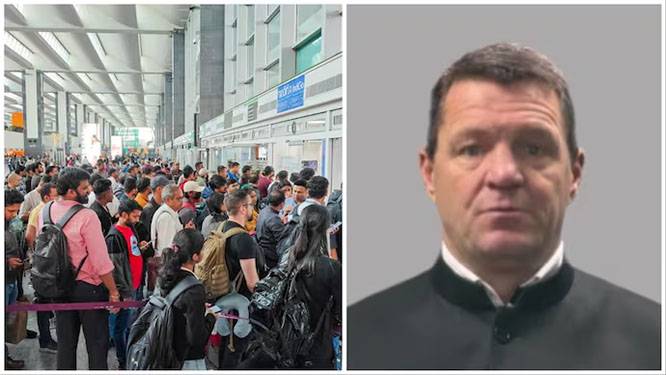
New Delhi, Dec 5: IndiGo CEO Pieter Elbers issued a public apology this evening after more than a thousand flights were cancelled today, making it the "most severely impacted day" in terms of cancellations. The biggest airline of the country cancelled "more than half" of its daily number of flights on Friday, said Elbers. He also said that even though the crisis will persist on Saturday, the airline anticipates fewer than 1,000 flight cancellations.

"Full normalisation is expected between December 10 and 15, though IndiGo cautions that recovery will take time due to the scale of operations," the IndiGo CEO said. 

IndiGo operates around 2,300 domestic and international flights daily.

Pieter Elbers, while apologising for the major inconvenience due to delays and cancellations, said the situation is a result of various causes.

The crisis at IndiGo stems from new regulations that boost pilots' weekly rest requirements by 12 hours to 48 and allow only two night-time landings per week, down from six. IndiGo has attributed the mass cancellations to "misjudgment and planning gaps".

Elbers also listed three lines of action that the airline will adopt to address the issue.

"Firstly, customer communication and addressing your needs, for this, messages have been sent on social media. And just now, a more detailed communication with information, refunds, cancellations and other customer support measures was sent," he said.

The airline has also stepped up its call centre capacity.

"Secondly, due to yesterday's situation, we had customers stranded mostly at the nation's largest airports. Our focus was for all of them to be able to travel today itself, which will be achieved. For this, we also ask customers whose flights are cancelled not to come to the airports as notifications are sent," the CEO said.

"Thirdly, cancellations were made for today to align our crew and planes to be where they need to start tomorrow morning afresh. Earlier measures of the last few days, regrettable, have proven not to be enough, but we have decided today to reboot all our systems and schedules, resulting in the highest numbers of cancellations so far, but imperative for progressive improvements starting from tomorrow," he added.

As airports witnessed chaotic scenes, the Directorate General of Civil Aviation (DGCA) stepped in to grant IndiGo a temporary exemption from stricter night duty rules for pilots. It also allowed substitution of leaves with a weekly rest period. 

Civil Aviation Minister Ram Mohan Naidu has said a high-level inquiry will be ordered and accountability will be fixed.

Comments

Add new comment

  • Coastaldigest.com reserves the right to delete or block any comments.
  • Coastaldigset.com is not responsible for its readers’ comments.
  • Comments that are abusive, incendiary or irrelevant are strictly prohibited.
  • Please use a genuine email ID and provide your name to avoid reject.
News Network
December 2,2025

A major upgrade in safety and monitoring is planned for Haj 2026, with every Indian pilgrim set to receive a Haj Suvidha smart wristband linked to the official Haj Suvidha mobile app. The initiative aims to support pilgrims—especially senior citizens—who may struggle with smartphones during the 45-day journey.

What the Smart Wristband Will Do

Officials said the device will come with:
•    Location tracking
•    Pedometer
•    SOS emergency button
•    Qibla compass
•    Prayer timings
•    Basic health monitoring

SP Tiwari, secretary of the UP State Haj Committee, said the goal is to make the pilgrimage safer and more comfortable.

“Most Hajis are elderly and not comfortable with mobile apps,” he said. “The smartwatch will help locate pilgrims who forget their way or cannot communicate their location.”

The wristbands will be monitored by the Consulate General of India in Saudi Arabia, similar to mobile tracking via the Haj Suvidha App.

Free Distribution and Training

•    Smart wristbands will be given free of cost.
•    Training for pilgrims will be conducted between January and February 2026.
•    Sample units will reach state Haj committees soon.
•    Final devices will be distributed as pilgrims begin their journey.

New Rules for Accommodation

Two major decisions have also been finalised for Haj 2026:
1.    Separate rooms for men and women – including married couples. They may stay on the same floor but must occupy different rooms, following stricter Saudi guidelines.
2.    Cooking banned – gas cylinders will not be allowed; all meals will be provided through official catering services arranged by the Haj Committee of India.

These decisions were finalised during a meeting of the Haj Committee of India and state representatives in Mumbai.

Haj Suvidha App Launched Earlier

The government launched the Haj Suvidha App in 2024, offering:

•    Training modules
•    Accommodation and flight details
•    Baggage information
•    SOS and translation tools
•    Grievance redressal

Haj 2026 Quota and Key States

•    India’s total Haj quota for 2026: 1,75,025 pilgrims
•    70% (1,25,000) allotted to the Haj Committee of India
•    30% (around 50,000) reserved for Haj Group Organisers

Uttar Pradesh has the largest allocation (around 30,000 seats), though approximately 18,000 pilgrims are expected to go this year. States with high pilgrim numbers include Kerala, Maharashtra and Gujarat.

Dates of Haj 2026

The pilgrimage is scheduled to take place from 24 May to 29 May, 2026 (tentative).
Haj is one of the five pillars of Islam and is mandatory for Muslims who meet the required conditions.

Comments

Add new comment

  • Coastaldigest.com reserves the right to delete or block any comments.
  • Coastaldigset.com is not responsible for its readers’ comments.
  • Comments that are abusive, incendiary or irrelevant are strictly prohibited.
  • Please use a genuine email ID and provide your name to avoid reject.
News Network
November 22,2025

gaza.jpg

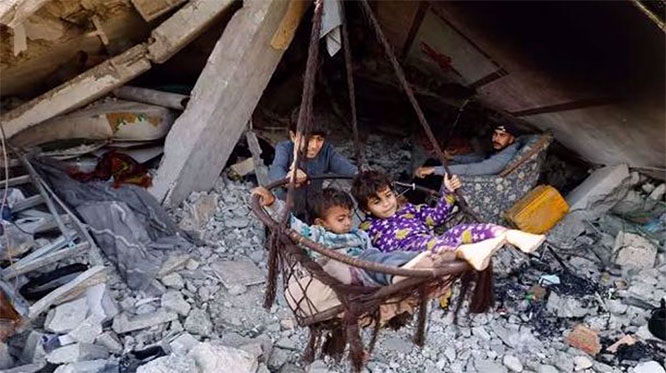
The Israeli regime’s forces have killed two Palestinian children in the Gaza Strip every day since the ceasefire began in early October, UNICEF has warned.

The UN children’s agency said on Friday that Israeli forces continue to attack Palestinians in Gaza even though the agreement was meant to stop the killing.

“Since 11 October, while the ceasefire has been in effect, at least 67 children have been killed in conflict-related incidents in the Gaza Strip. Dozens more have been injured. That is an average of almost two children killed every day since the ceasefire took effect,” UNICEF spokesperson Ricardo Pires said in Geneva, reminding that each number in the statistics represents a child whose life had ended violently.

“These are not statistics,” he said. “Each child had a story, a family, and a future that was stolen from them.”

Data from Palestinian factions, human rights groups, and government bodies recorded since the US-brokered ceasefire deal went into effect on October 10 show that Israeli forces have carried out numerous attacks, each constituting a separate ceasefire violation.

UNICEF teams say they repeatedly continue to witness heart-wrenching scenes of fearful Palestinian children sleeping outdoors with amputated limbs, while others live as orphans in flooded, makeshift shelters.

“I saw this myself in August. There is no safe place for them. The world cannot normalize their suffering,” Pires said, lamenting that the UN could “do a lot more if the aid that is really needed was entering faster.”

The UNICEF spokesperson warned that with the advent of winter, the risks for hundreds of thousands of displaced children will increase.

He warned, “The stakes are incredibly high” for children as winter acts as a threat multiplier, where children have no heating, no insulation, and few blankets. He said respiratory infections rise.

“Too many children have already paid the highest price,” Pires said. “Too many are still paying it, even under a ceasefire. The world promised them it would stop and that we would protect them.”

“Now we must act like it,” the UNICEF spokesperson added.

Since the Israeli regime launched its genocidal war against Palestinians in Gaza in October 2023, it has killed nearly 70,000 people in the territory, most of them women and children, and injured over 170,000 more, while reducing most of the structures in the enclave to rubble.

Comments

Add new comment

  • Coastaldigest.com reserves the right to delete or block any comments.
  • Coastaldigset.com is not responsible for its readers’ comments.
  • Comments that are abusive, incendiary or irrelevant are strictly prohibited.
  • Please use a genuine email ID and provide your name to avoid reject.