Egypt gears up for 'Golden Parade' of pharaohs

News Network
April 3, 2021

pharaoh.jpg

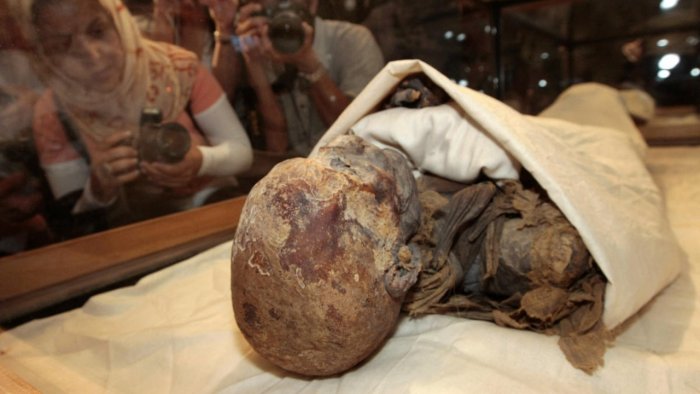
Cairo, Apr 3: The mummified remains of 22 Egyptian pharaohs, including the most powerful ancient queen, are to be paraded through the streets of Cairo Saturday, in a procession to a new resting place.

Under the watchful eyes of security forces, the mummies will be moved seven kilometres (four miles) across the capital from the iconic Egyptian Museum, where most have resided undisturbed for over a century, to the new National Museum of Egyptian Civilisation.

Dubbed the Pharaohs' Golden Parade, the 18 kings and four queens will travel in order, oldest first, each aboard a separate float decorated in ancient Egyptian style.

The interior ministry said both pedestrians and vehicles would be barred from Tahrir Square, site of the current museum, and other sections of the parade route, ahead of the 6:00 pm (1600 GMT) start.

"The whole world will be watching," said Egyptian archaeologist and former antiquities minister Zahi Hawass, who will commentate as the event unfolds live on state television.

"This is an important 40 minutes in the life of the city of Cairo."

Seqenenre Tao II, "the Brave", who reigned over southern Egypt some 1,600 years before Christ, will be on the first chariot, while Ramses IX, who reigned in the 12th century BC, will be at the rear.

Ramses II and Queen Hatshepsut, the most powerful female pharaoh, will also make the journey.

Emblazoned with the name of their allotted sovereign, the gold-coloured carriages will be fitted with shock absorbers for the trip, to ensure none of the precious cargos are accidentally disturbed.

Discovered near Luxor from 1881 onwards, most of the mummies have lain in the Egyptian Museum since the early 1900s.

Fascinating new details of the pharaohs' lives are still emerging.

A recent high-tech study of Seqenenre Tao II, involving CT scans and 3D images of his hands and long-studied skull fractures, indicated that he was likely killed in a post-battle execution ceremony.

For their procession through Cairo's streets, the mummies will be in special containers filled with nitrogen, under conditions similar to their regular display cases.

The mummies will be showcased individually at the National Museum of Egyptian Civilisation, in an environment redolent of underground tombs.

They will be signposted by a brief biography and, in some cases, copies of CT scans.

Upon arrival, they will occupy "slightly upgraded cases," said Salima Ikram, professor of Egyptology at the American University in Cairo.

"The temperature and humidity control will be even better than it was in the old museum," added Ikram, a mummification specialist.

The mummies' re-housing "marks the end of much work to improve their conservation and exhibition," said UNESCO Director-General Audrey Azoulay.

"This raises emotions that go much further than the mere relocation of a collection -- we will see the history of Egyptian civilisation unfold before our eyes," she added.

The National Museum of Egyptian Civilisation was completed in 2010, and Hawass said he had planned to open it in 2012. But the process was delayed by the Arab Spring revolution of 2011 and subsequent turmoil.

The new museum opened its doors to limited exhibits from 2017 and will open fully on Sunday, before the mummies go on display to the general public from April 18.

In the coming months, the country is due to inaugurate another new showcase, the Grand Egyptian Museum, near the Giza pyramids.

It too will house pharaonic collections, including the celebrated treasure of Tutankhamun.

Discovered in 1922, the tomb of the young ruler, who took the throne briefly in the 14th century BC, contained treasures including gold and ivory.

A so-called "curse of the pharaoh" emerged in the wake of Tutankhamun's unearthing in 1922-23.

A key funder of the dig, Lord Carnarvon, died of blood poisoning months after the tomb was opened, while an early visitor likewise died abruptly in 1923.

With the planned parade coming only days after several disasters struck Egypt, some have inevitably speculated on social media about a new curse provoked by the latest move.

Recent days have seen a deadly rail collision and a building collapse in Cairo, while global headlines were dominated by the struggle to refloat the giant container ship MV Ever Given which blocked the Suez Canal for almost a week.


Comments

Add new comment

  • Coastaldigest.com reserves the right to delete or block any comments.
  • Coastaldigset.com is not responsible for its readers’ comments.
  • Comments that are abusive, incendiary or irrelevant are strictly prohibited.
  • Please use a genuine email ID and provide your name to avoid reject.
News Network
January 23,2026

Karnataka Governor Thaawarchand Gehlot read only three lines from the 122-paragraph address prepared by the Congress-led state government while addressing the joint session of the Legislature on Thursday, effectively bypassing large sections critical of the BJP-led Union government.

The omitted portions of the customary Governor’s address outlined what the state government described as a “suppressive situation in economic and policy matters” under India’s federal framework. The speech also sharply criticised the Centre’s move to replace the Mahatma Gandhi National Rural Employment Guarantee Act (MGNREGA) with the Viksit Bharat–Guarantee for Rozgar and Ajeevika Mission (Gramin) Act, commonly referred to as the VB-GRAM (G) Act.

Governor Gehlot had earlier conveyed his objection to several paragraphs that were explicitly critical of the Union government. On Thursday, he confined himself to the opening lines — “I extend a warm welcome to all of you to the joint session of the State legislature. I am extremely pleased to address this august House” — before jumping directly to the concluding sentence of the final paragraph.

He ended the address by reading the last line of paragraph 122: “Overall, my government is firmly committed to doubling the pace of the State’s economic, social and physical development. Jai Hind — Jai Karnataka.”

According to the prepared speech, the Karnataka government demanded the scrapping of the VB-GRAM (G) Act, describing it as “contractor-centric” and detrimental to rural livelihoods, and called for the full restoration of MGNREGA. The state government argued that the new law undermines decentralisation, weakens labour protections, and centralises decision-making in violation of constitutional norms.

Key points from the unread sections of the speech:

•    Karnataka facing a “suppressive” economic and policy environment within the federal system

•    Repeal of MGNREGA described as a blow to rural livelihoods

•    VB-GRAM (G) Act accused of protecting corporate and contractor interests

•    New law alleged to weaken decentralised governance

•    Decision-making said to be imposed by the Centre without consulting states

•    Rights of Adivasis, women, backward classes and agrarian communities curtailed

•    Labourers allegedly placed under contractor control

•    States facing mounting fiscal stress due to central policies

•    VB-GRAM (G) Act accused of enabling large-scale corruption

Comments

Add new comment

  • Coastaldigest.com reserves the right to delete or block any comments.
  • Coastaldigset.com is not responsible for its readers’ comments.
  • Comments that are abusive, incendiary or irrelevant are strictly prohibited.
  • Please use a genuine email ID and provide your name to avoid reject.
News Network
January 23,2026

modIKERALA.jpg

Prime Minister Narendra Modi, during his visit to Thiruvananthapuram on Friday, January 23, indicated that the Bharatiya Janata Party (BJP) is aiming to expand its political footprint in Kerala ahead of the Assembly elections scheduled in the coming months.

Speaking at a BJP-organised public meeting, Modi drew parallels between the party’s early electoral gains in Gujarat and its recent victory in the Thiruvananthapuram Municipal Corporation. The civic body win, which ended decades of Left control, was cited by the Prime Minister as a possible starting point for the party’s broader ambitions in the state.

Recalling BJP’s political trajectory in Gujarat, Modi said the party was largely insignificant before 1987 and received little media attention. He pointed out that the BJP’s first major breakthrough came with its victory in the Ahmedabad Municipal Corporation that year.

“Just as our journey in Gujarat began with one city, Kerala’s journey has also started with a single city,” Modi said, suggesting that the party’s municipal-level success could translate into wider electoral acceptance.

The Prime Minister alleged that successive governments led by the Left Democratic Front (LDF) and the United Democratic Front (UDF) had failed to adequately develop Thiruvananthapuram. He accused both fronts of corruption and neglect, claiming that basic infrastructure and facilities were denied to the capital city for decades.

According to Modi, the BJP’s control of the civic body represents a shift driven by public dissatisfaction with the existing political alternatives. He asserted that the BJP administration in Thiruvananthapuram had begun working towards development, though no specific details or timelines were outlined.

Addressing the gathering at Putharikandam Maidan, Modi said the BJP intended to project Thiruvananthapuram as a “model city,” reiterating his party’s commitment to governance-led change.

The Prime Minister’s visit to Kerala also included the inauguration of several development projects and the flagging off of new train services, as the BJP intensifies its political outreach in the poll-bound state.

Comments

Add new comment

  • Coastaldigest.com reserves the right to delete or block any comments.
  • Coastaldigset.com is not responsible for its readers’ comments.
  • Comments that are abusive, incendiary or irrelevant are strictly prohibited.
  • Please use a genuine email ID and provide your name to avoid reject.
News Network
January 23,2026

oscar.jpg

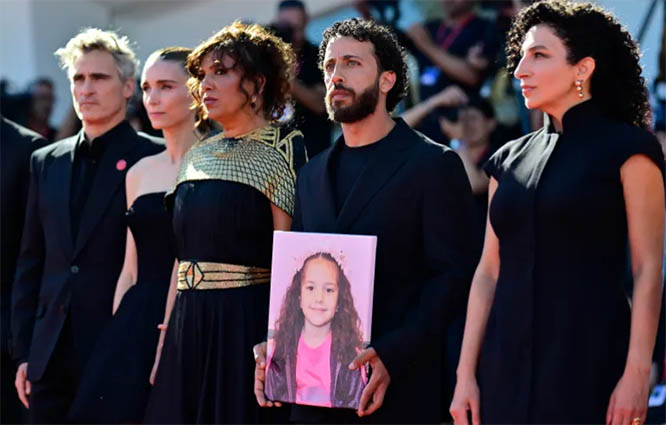
The Voice of Hind Rajab, inspired by the tragic final moments of a young Palestinian girl killed by Israeli fire in Gaza, has been nominated for an Academy Award in the Best International Feature Film category.

Directed by Tunisian filmmaker Kaouther Ben Hania, the film recounts the true story of five-year-old Hind Rajab, who lost her life in January 2024 while fleeing Israeli bombardment with her family.

The film features the real audio of Hind’s desperate call to the Palestinian Red Crescent Society, where she pleaded for help moments before the vehicle she was in was struck by 355 bullets.

The haunting narrative begins with a brief call made from the besieged Tel al-Hawa neighborhood of Gaza, where gunfire and armored vehicles drowned out every sound.

After witnessing the brutal killing of her family, she made a trembling call, her voice reduced to a whisper as she spoke of the massacre and her unbearable loneliness as the sole survivor.

Premiering at the Venice International Film Festival in September 2025, The Voice of Hind Rajab garnered widespread acclaim, receiving a record-setting 23-minute standing ovation and the Silver Lion Grand Jury Prize, the festival’s second-highest honor.

In her acceptance speech, Ben Hania dedicated the film to humanitarian workers and first responders in Gaza, emphasizing that Hind's voice symbolizes countless civilians affected by war.

She aims to give voice to victims often reduced to mere statistics, highlighting the broader suffering of civilians in war zones.

The film’s Oscar nomination underscores its powerful storytelling and ethical approach to depicting real-life tragedy, making it a crucial piece of contemporary cinema.

It serves not only as a narration of individual tragedy but also as an artistic and documentary response to the silence and censorship that often overshadow West Asian struggles and wars.

Using an innovative method she calls docufiction, Ben Hania bridges unvarnished reality and narrative structure, creating a work that is both artistically valuable and socially impactful.

Born in 1977 in Sidi Bouzid—later the epicenter of the Arab revolution—her background profoundly influenced her worldview and artistic approach.

She is a graduate of the Higher School of Audiovisual Arts of Tunis, Pantheon-Sorbonne University, and La Fémis in Paris, where her studies equipped her with the technical and theoretical tools needed to address complex subjects. 

Comments

Add new comment

  • Coastaldigest.com reserves the right to delete or block any comments.
  • Coastaldigset.com is not responsible for its readers’ comments.
  • Comments that are abusive, incendiary or irrelevant are strictly prohibited.
  • Please use a genuine email ID and provide your name to avoid reject.