Scientists see signs of lasting immunity to Covid-19, even after mild symptoms

News Network
August 17, 2020

immune.jpg

To the immune system, not all germs are equally memorable. But our body’s cells seem to be seriously studying up on the coronavirus.

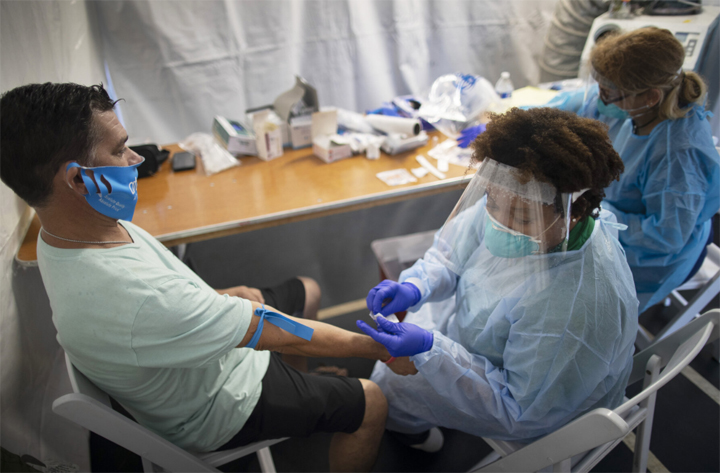
Scientists who have been monitoring immune responses to the virus are now starting to see encouraging signs of strong, lasting immunity, even in people who developed only mild symptoms of Covid-19, a flurry of new studies suggests. Disease-fighting antibodies, as well as immune cells, called B cells and T cells that are capable of recognizing the virus, appear to persist months after infections have resolved — an encouraging echo of the body’s enduring response to other viruses.

“Things are really working as they’re supposed to,” said Deepta Bhattacharya, an immunologist at the University of Arizona and an author on one of the new studies, which has not yet been peer-reviewed.

Although researchers cannot forecast how long these immune responses will last, many experts consider the data a welcome indication that the body’s most studious cells are doing their job — and will have a good chance of fending off the coronavirus, faster and more fervently than before, if exposed to it again.

“This is exactly what you would hope for,” said Marion Pepper, an immunologist at the University of Washington and an author on another of the new studies, which is currently under review at the journal Nature. “All the pieces are there to have a totally protective immune response.”

Protection against reinfection cannot be fully confirmed until there is proof that most people who encounter the virus a second time are actually able to keep it at bay, Pepper said. But the findings could help quell recent concerns over the virus’s ability to dupe the immune system into amnesia, leaving people vulnerable to repeat bouts of disease.

Researchers have yet to find unambiguous evidence that coronavirus reinfections are occurring, especially within the few months that the virus has been rippling through the human population. The prospect of immune memory “helps to explain that,” Pepper said.

In discussions about immune responses to the coronavirus, much of the conversation has focused on antibodies — Y-shaped proteins that can latch onto the surfaces of pathogens and block them from infecting cells. But antibodies represent just one wing of a complex and coordinated squadron of immune soldiers, each with its own unique modes of attack. Viruses that have already invaded cells, for instance, are cloaked from antibodies but are still vulnerable to killer T cells, which force infected cells to self-destruct. Another set of T cells, nicknamed “helpers,” can coax B cells to mature into antibody-making machines.

 (Yet another sector of the immune system assails pathogens within minutes of their arrival, while sending out signals called cytokines to mobilize forces from elsewhere in the body. Some evidence suggests that severe cases of Covid-19 may stem from this early process going awry.)

Antibodies also come with an expiration date: Because they are inanimate proteins and not living cells, they can’t replenish themselves, and so disappear from the blood just weeks or months after they are produced. Hoards of antibodies appear shortly after a virus has breached the body’s barriers, then wane as the threat dissipates. Most of the B cells that produce these early antibodies die off as well.

But even when not under siege, the body retains a battalion of longer-lived B cells that can churn out virus-fighting antibodies en masse, should they prove useful again. Some patrol the bloodstream, waiting to be triggered anew; others retreat into the bone marrow, generating small amounts of antibodies that are detectable years, sometimes decades, after an infection is over. Several studies, including those led by Bhattacharya and Pepper, have found antibodies capable of incapacitating the coronavirus lingering at low levels in the blood months after people have recovered from Covid-19.

“The antibodies decline, but they settle in what looks like a stable nadir,” which is observable about three months after symptoms start, Bhattacharya said. “The response looks perfectly durable.”

Seeing antibodies this long after infection is a strong indication that B cells are still chugging away in the bone marrow, Pepper said. She and her team were also able to pluck B cells that recognize the coronavirus from the blood of people who have recovered from mild cases of Covid-19 and grow them in the lab.

Multiple studies, including one published Friday in the journal Cell, have also managed to isolate coronavirus-attacking T cells from the blood of recovered individuals — long after symptoms have disappeared. When provoked with bits of the coronavirus in the lab, these T cells pumped out virus-fighting signalsand cloned themselves into fresh armies ready to confront a familiar foe. Some reports have noted that analyses of T cells could give researchers a glimpse into the immune response to the coronavirus, even in patients whose antibody levels have declined to a point where they are difficult to detect.

 “This is very promising,” said Smita Iyer, an immunologist at the University of California, Davis, who is studying immune responses to the coronavirus in rhesus macaques but was not involved in the new studies. “This calls for some optimism about herd immunity, and potentially a vaccine.”

Notably, several of the new studies are finding these powerful responses in people who did not develop severe cases of Covid-19, Iyer added. Some researchers have worried that infections that take a smaller toll on the body are less memorable to the immune system’s studious cells, which may prefer to invest their resources in more serious assaults. In some cases, the body could even jettison the viruses so quickly that it fails to catalogue them. “This paper suggests this is not true,” Iyer said. “You can still get durable immunity without suffering the consequences of infection.”

What has been observed in people who fought off mild cases of Covid-19 might not hold true for hospitalized patients, whose bodies struggle to marshal a balanced immune response to the virus, or those who were infected but had no symptoms at all. Research groups around the world are continuing to study the entire range of responses. But “the vast majority of the cases are these mild infections,” said Jason Netland, an immunologist at the University of Washington and an author on the paper under review at Nature. “If those people are going to be protected, that’s still good.”

This new spate of studies could also further assuage fears about how and when the pandemic will end. On Friday, updated guidance released by the Centers for Disease Control and Prevention was misinterpreted by several news reports that suggested immunity against the coronavirus might last only a few months. Experts quickly responded, noting the dangers of propagating such statements and pointing to the wealth of evidence that people who previously had the virus are probably at least partly protected from reinfection for at least three months, if not much longer.

Considered with other recent reports, the new data reinforce the idea that, “Yes, you do develop immunity to this virus and good immunity to this virus,” said Dr Eun-Hyung Lee, an immunologist at Emory University who was not involved in the studies. “That’s the message we want to get out there.”

Some illnesses, like the flu, can plague populations repeatedly. But that is at least partly attributable to the high mutation rates of influenza viruses, which can quickly make the pathogens unrecognizable to the immune system. Coronaviruses, in contrast, tend to change their appearance less readily from year to year.

Still, much remains unknown. Although these studies hint at the potential for protectiveness, they do not demonstrate protection in action, said Cheong-Hee Chang, an immunologist at the University of Michigan who was not involved in the new studies. “It’s hard to predict what’s going to happen,” Chang said. “Humans are so heterogeneous. There are so many factors coming into play.”

Comments

Add new comment

  • Coastaldigest.com reserves the right to delete or block any comments.
  • Coastaldigset.com is not responsible for its readers’ comments.
  • Comments that are abusive, incendiary or irrelevant are strictly prohibited.
  • Please use a genuine email ID and provide your name to avoid reject.
News Network
December 3,2025

indigo.jpg

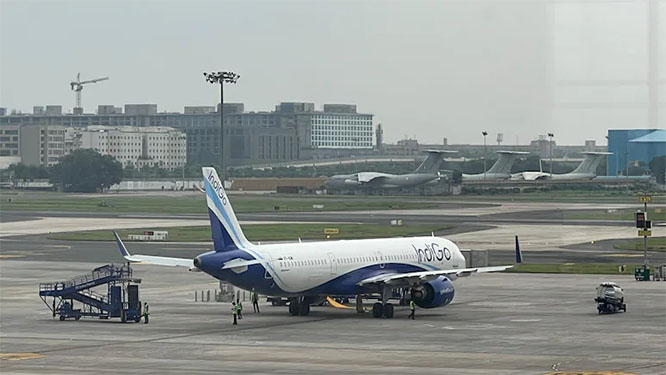
IndiGo, India’s largest airline, is battling one of its worst operational disruptions in recent years, with hundreds of delays and cancellations throwing domestic travel into chaos.

Government data on Tuesday showed its on-time performance plunging to 35%, an unusual dip for a carrier long associated with punctuality.

By Wednesday afternoon, airports in Delhi, Mumbai, Bengaluru and Hyderabad had collectively reported close to 200 cancellations, stranding travellers across the country.

Crew Shortage After New Duty Norms

A major trigger behind the meltdown is a severe crew shortage, especially among pilots, following the rollout of revised Flight Duty Time Limitation (FDTL) norms last month.

The rules mandate longer rest hours and more humane rosters — a shift IndiGo has struggled to incorporate across its vast network.

Sources said several flights were grounded due to lack of cabin crew, while some delays stretched upwards of eight hours.

With IndiGo controlling over 60% of India’s domestic aviation market, the ripple effect has impacted airports nationwide.

IndiGo Issues Apology, Lists “Compounding Factors”

In a statement, IndiGo acknowledged the large-scale disruption:

“We sincerely apologise to customers. A series of unforeseen operational challenges — technology glitches, winter schedule changes, adverse weather, system congestion and updated FDTL norms — created a compounding impact that could not have been anticipated.”

To stabilise operations, the airline has begun calibrated schedule adjustments for the next 48 hours, aiming to restore punctuality. Affected passengers are being offered refunds or alternate travel arrangements, IndiGo said.

What the FDTL Rules Require

The FDTL norms, designed to reduce pilot fatigue, cap duty and flying hours as follows:
•    Maximum 8 hours of flying per day
•    35 hours per week
•    125 hours per month
•    1,000 hours per year

Crew must also receive rest equalling twice the flight duration, with a minimum 10-hour rest period in any 24-hour window.

The DGCA introduced these limits to enhance flight safety.

Hyderabad: 33 Flights Cancelled, Long Queues Reported

Hyderabad’s Rajiv Gandhi International Airport saw heavy early-morning crowds as 33 IndiGo flights (arrivals and departures) were cancelled.

The airport clarified on X that operations were normal, advising passengers to contact IndiGo directly for latest flight status.

Cancellations included flights to and from Visakhapatnam, Goa, Ahmedabad, Delhi, Bengaluru, Chennai, Madurai, Hubli, Bhopal and Bhubaneswar.

Bengaluru: 42 Flights Disrupted

Bengaluru’s Kempegowda International Airport recorded 42 cancellations — 22 arrivals and 20 departures — affecting routes to Delhi, Mumbai, Chennai, Hyderabad, Goa, Kolkata and Lucknow.

Passengers Vent on Social Media

Irate travellers took to X to share their experiences. One passenger stranded in Hyderabad wrote: “I have been here since 3 a.m. and missed an important meeting.”

Another said: “My flight was pushed from 1:55 PM to 2:55 PM and now 4:35 PM. I was informed only three minutes before entering the airport.”

Delhi Airport Hit by Tech Glitch

At Delhi Airport, the disruption deepened due to a slowdown in the Amadeus system — used for reservations, check-ins and departure control.

The technical issue led to longer queues and sluggish processing, adding to delays already worsened by staff shortages.

Comments

Add new comment

  • Coastaldigest.com reserves the right to delete or block any comments.
  • Coastaldigset.com is not responsible for its readers’ comments.
  • Comments that are abusive, incendiary or irrelevant are strictly prohibited.
  • Please use a genuine email ID and provide your name to avoid reject.
P A Hameed Padubidri
November 26,2025

CD.jpg

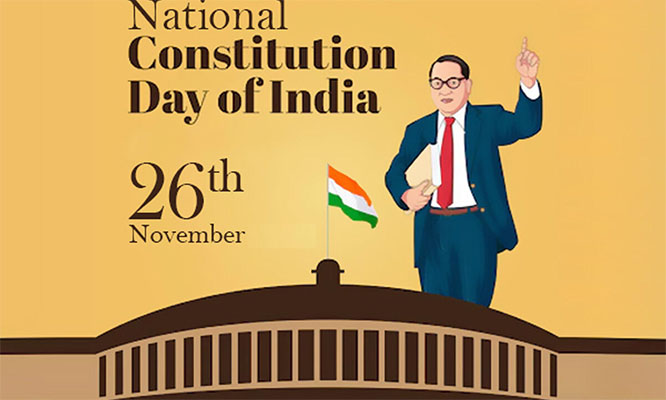
Constitution Day, also known as Samvidhan Divas, is observed every year on November 26 to honor the adoption of the Constitution of India and to recognize the visionary effort that shaped the world’s largest democracy.

Historical Background

It’s on November 26, 1949, the Constituent Assembly of India formally adopted the Constitution.This date is commemorated to acknowledge the completion of nearly three years of drafting, debate, and refinement.

On January 26, 1950, the Constitution came into force, marking India’s transition from a dominion to a sovereign republic.

The date 26 January was chosen to honor the “Purna Swaraj” declaration made in 1930 that marked the relentless efforts & sacrifices of the many. 

Why Constitution Day is Celebrated

* To honor & remember the framers of the Constitution, especially Dr. B. R. Ambedkar, the Chairman of the Drafting Committee, & many others. 

* To remind the citizens of the values, responsibilities, and rights enshrined in the Constitution.

* To promote constitutional values & literacy among students, institutions, and the general public.

* To reaffirm the nation’s commitment to justice, equality, liberty, fraternity and secular values. 

Vision and Significance of the Constitution

It establishes the fundamental political and legal framework for the nation.

Defines the structure, powers and functions of:
    •    The Executive
    •    The Legislature
    •    The Judiciary
    •    Guarantees a comprehensive set of Fundamental Rights, including:

-Equality before law
-Freedom of speech & expression
-Protection of life and personal liberty
-Freedom of religion
-Embeds Directive Principles of State Policy, guiding governance toward social justice and welfare.
-Introduces Fundamental Duties to ensure civic responsibility among citizens.

Key Features Celebrated on Constitution Day

-The Indian constitution is considered one of the longest written constitutions of the world. It’s systematically drafted considering almost all aspects that properly fits to the country. 

-Blend of multiple global constitutional principles while staying rooted in Indian values and realities.

-Framework that balances Federalism, Secularism, Democracy and Rule of Law. This makes everyone-from President to common man-below the law & are equal in the sight of law. 

-Another feature is that it’s based on built-in mechanisms for amendments, ensuring the Constitution grows with changing needs.

Message of the Day

The core ethos of this  Constitution Day is not merely about looking back at history-it’s a reminder of the continuous duty to protect democratic values, respect diversity and uphold the principles that define India as a sovereign, socialist, secular and democratic republic.

Happy Constitution Day to all my compatriots

Comments

Add new comment

  • Coastaldigest.com reserves the right to delete or block any comments.
  • Coastaldigset.com is not responsible for its readers’ comments.
  • Comments that are abusive, incendiary or irrelevant are strictly prohibited.
  • Please use a genuine email ID and provide your name to avoid reject.
News Network
December 1,2025

hindutvaboy.jpg

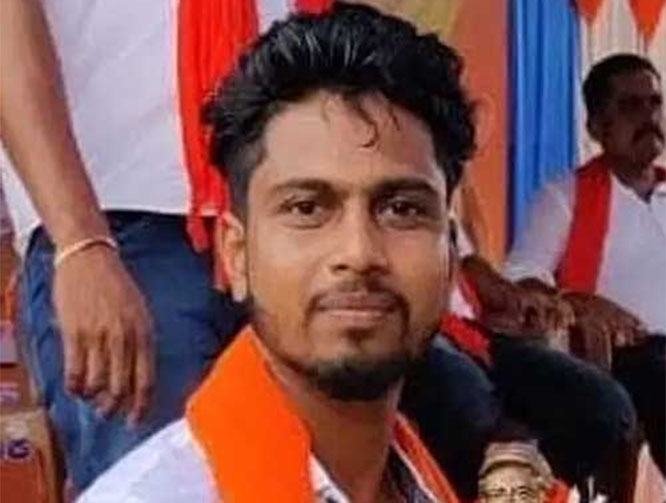
Udupi, Dec 1: A horrific case of alleged rape has unfolded in Udupi, where a worker from a Hindutva organisation, previously arrested and released on bail for harassing a young woman, is now accused of waylaying and sexually assaulting her.

The arrested individual has been identified as Pradeep Poojary (26), a member of the Hindu Jagarana Vedike's Nairkode unit in Perdur.

Poojary had allegedly been relentlessly harassing the young woman, pressuring her to marry him. When she bravely stood up to him and refused his demands, she filed a formal complaint at the Hiriyadka police station. He was subsequently arrested in that initial harassment case but was later granted bail.

According to police reports, driven by the same malicious grudge, Poojary allegedly intercepted the woman again on November 29. While she was walking through a deserted area, the accused is claimed to have threatened her by grabbing her neck. When she again refused to marry him, he allegedly proceeded to rape her.

The survivor immediately informed her family about the traumatic assault. Following this, her parents lodged a complaint at the Udupi women’s police station.

Police arrested Poojary again and produced him before the court. He has since been remanded to judicial custody.

Comments

Add new comment

  • Coastaldigest.com reserves the right to delete or block any comments.
  • Coastaldigset.com is not responsible for its readers’ comments.
  • Comments that are abusive, incendiary or irrelevant are strictly prohibited.
  • Please use a genuine email ID and provide your name to avoid reject.