Terrible floods in India cost $10 billion loss: UK charity report

Agencies
December 28, 2020

45+65.jpg

London, Dec 28: Fifteen extreme weather events, influenced by climate change, were identified globally this year, including the terrible floods that struck India cost $10 billion, killing 2,000, a UK charity report said on Monday.

The London-based Christian Aid's report, 'Counting the cost 2020: A year of climate breakdown', said 10 of those events cost $1.5 billion or more.

The US was hit by the highest costs due to the record-breaking hurricane season and fires.

Most of these estimates are based only on insured losses, meaning the true financial costs are likely to be higher.

While the report focuses on financial costs, which are usually higher in richer countries because they have more valuable property, some extreme weather events in 2020 were devastating in poorer countries, even though the price tag was lower.

South Sudan, for example, experienced one of its worst floods on record, which killed 138 people and destroyed the year's crops.

Some of the disasters hit fast, like cyclone Amphan, which struck the Bay of Bengal in May and caused losses valued at $13 billion in just a few days.

Other events unfolded over months, like floods in China and India, which had an estimated cost of $32 billion and $10 billion respectively.

Six of the 10 most costly events took place in Asia, five of them associated with an unusually rainy monsoon.

And in Africa, huge locust swarms ravaged crops and vegetation across several countries, causing damages estimated at $8.5 billion.

The outbreak has been linked to wet conditions brought about by unusual rains fuelled by climate change.

But the impact of extreme weather was felt all over the world. In Europe, two extra-tropical cyclones, Ciara and Alex, had a combined cost of almost $6 billion.

The US suffered from both a record-breaking hurricane season and a record-breaking fire season adding up to more than $60 billion in damages.

Some less populated places also suffered the consequences of a warming world.

In Siberia, a heat wave during the first half of the year set a record in the city of Verkhoyansk, with temperatures reaching 38 degrees Celsius.

A few months later, on the other side of the world, heat and drought drove the fires in Bolivia, Argentina, Paraguay and Brazil.

While there were no human casualties reported from these events, the destruction of these areas has a great impact on biodiversity and the planet's capacity to respond to a warmer world.

While climate change may have influenced all these events, many of the countries that bear little responsibility for global warming were affected.

This includes Nicaragua, which was hit by hurricane Iota, the strongest storm of the Atlantic hurricane season, and the Philippines, where typhoons Goni and Vamco made landfall almost back-to-back.

These extreme events highlight the need for urgent climate action.

The Paris Agreement, which set the goal of keeping temperature rise "well below" 2 degrees Celsius, and ideally 1.5 degrees, compared to pre-industrial levels, has just turned five years old.

It is critical that countries commit to bold new targets ahead of the next climate conference, which will take place in Glasgow in November 2021.

The report's author Kat Kramer, Christian Aid's climate policy lead, told IANS: "The Covid-19 pandemic has understandably been a major worry this year. For millions of people in vulnerable parts of the world, climate breakdown has compounded this.

"The good news is that, like the vaccine for Covid-19, we do know how to fix the climate crisis. We need to keep fossil fuels in the ground, boost clean energy investment and help those who are suffering on the frontline.

"Whether it be floods in Asia, locusts in Africa or storms in Europe and the Americas, climate change has continued to rage in 2020. It is vital that 2021 ushers in a new era of activity to turn this tide.

"With US President-elect Biden in the White House, social movements across the world calling for urgent action, post-Covid green recovery investment and a crucial UN climate summit hosted by the UK, there is a major opportunity for countries to put us on a path to a safe future."

Roxy Mathew Koll, climate scientist at the Indian Institute of Tropical Meteorology in Pune, said: "2020 was exceptionally warm, as far as the Indian Ocean is concerned. We saw record temperatures in the Arabian Sea and Bay of Bengal, straddling between 30-33 degrees Celsius.

"These high temperatures had the characteristics of marine heat waves that might have led to the rapid intensification of the pre-monsoon cyclones Amphan and Nisarga. Amphan was one of the strongest cyclones ever recorded in the Bay of Bengal during the pre-monsoon season."

M. Shahjahan Mondal, climate scientist and Director of the Institute of Flood and Water Management, Bangladesh University of Engineering and Technology, said: "Scientific evidence shows that the intensity of the tropical cyclones in the Bay of Bengal has been increasing over the past few years because of the temperature rise, and cyclone Amphan was one of the strongest ever recorded this year as a consequence.

"Moreover, the 2020 flood was one of the worst in the history (of Bangladesh), as more than a quarter of the country was under water."

"Not only is this linked with changing climatic conditions and global warming, but also linked with changing land-use patterns and deforestation. Unfortunately, the situation might be worsening in the coming years if we fail to achieve the Paris climate goal to restrict global warming under 1.5 degrees Celsius."


Comments

Add new comment

  • Coastaldigest.com reserves the right to delete or block any comments.
  • Coastaldigset.com is not responsible for its readers’ comments.
  • Comments that are abusive, incendiary or irrelevant are strictly prohibited.
  • Please use a genuine email ID and provide your name to avoid reject.
News Network
November 21,2025

malpe.jpg

Udupi: The Malpe Police have arrested two men from Uttar Pradesh for allegedly sharing classified information related to Indian Navy vessels with individuals in Pakistan, posing a serious threat to national security.

According to a complaint filed by the CEO of Udupi Cochin Shipyard, Malpe—an institution under the Union Ministry of Ports, Shipping and Waterways—the prime accused, Rohit (29), was working as an insulator through subcontractor M/S Shushma Marine Pvt Ltd. He had earlier served at Cochin Shipyard Limited in Kochi, Kerala, where naval ships are under construction.

Udupi SP Hariram Shankar said the accused had unlawfully shared, via WhatsApp, confidential identification numbers of Navy-related ships and other classified details while working in Kerala, allegedly for illegal gains.

After joining the Malpe shipyard unit, Rohit reportedly continued collecting sensitive information through a friend in Kochi and circulated it to unauthorised individuals, violating national security protocols and potentially endangering India’s sovereignty, unity, and integrity.

Based on the complaint, Malpe Police registered a case under Section 152 of the Bharatiya Nyaya Sanhita (BNS) and Sections 3 and 5 of the Official Secrets Act, 1923.

A police team led by Karkala Subdivision Assistant Superintendent of Police Harsha Priyamvada—along with PSI Anil Kumar D, ASI Harish, and PC Ravi Jadhav—conducted the investigation and arrested the two accused, identified as Rohit (29) and Santri (37), both residents of Sultanpur district, Uttar Pradesh.

The duo was produced before the court, which remanded them in judicial custody till December 3. Further investigation is in progress.

Comments

Add new comment

  • Coastaldigest.com reserves the right to delete or block any comments.
  • Coastaldigset.com is not responsible for its readers’ comments.
  • Comments that are abusive, incendiary or irrelevant are strictly prohibited.
  • Please use a genuine email ID and provide your name to avoid reject.
News Network
December 2,2025

DKSsiddu.jpg

Bengaluru: 'Nati koli saaru' (country chicken curry) considered one of Chief Minister Siddaramaiah’s favourites along with steaming hot idlis was on the breakfast menu at Deputy CM D K Shivakumar’s residence on Tuesday, according to official sources.

The spread also included 'nati koli' fry, vada and pongal, among other items, they said.

In an apparent show of unity, Siddaramaiah visited Shivakumar’s residence for breakfast, just days after the two leaders shared a meal amid a simmering power tussle in the state Congress.

Siddaramaiah drove to the Deputy CM’s residence in Sadashivanagar, where he was received by Shivakumar and his brother D K Suresh, who is a former Congress MP.

Suresh and Kunigal MLA H D Ranganath, a relative of Shivakumar, joined them for breakfast, which featured a mix of vegetarian and non-vegetarian dishes.

Speaking to reporters later, Siddaramaiah said Shivakumar had invited him during his visit to the CM’s residence for breakfast on Saturday.

Asked about the difference between the two meals, the chief minister said, "At his (Shivakumar’s) house it was non-veg, while at my house it was veg. He is a vegetarian, I am a non-vegetarian. I had not prepared non-veg. I told DK to get chicken from the village as you won’t get the original in Bengaluru."

Shivakumar said he had initially invited Siddaramaiah to his residence, but the CM had suggested visiting his place first and reciprocating later. "It was a vegetarian breakfast at the CM’s house on Saturday," he noted.

"Today, I invited him (the CM) to my house. He enjoyed the breakfast, which had his Mysuru taste," Shivakumar added. At this point, Siddaramaiah remarked that Shivakumar’s wife is also from Mysuru.

Saturday’s breakfast at Siddaramaiah’s official residence, held as part of efforts by the Congress high command to ease tensions in the leadership dispute between the two, reportedly included idlis and sambar, according to official sources.

Comments

Add new comment

  • Coastaldigest.com reserves the right to delete or block any comments.
  • Coastaldigset.com is not responsible for its readers’ comments.
  • Comments that are abusive, incendiary or irrelevant are strictly prohibited.
  • Please use a genuine email ID and provide your name to avoid reject.
News Network
November 24,2025

israelsyra.jpg

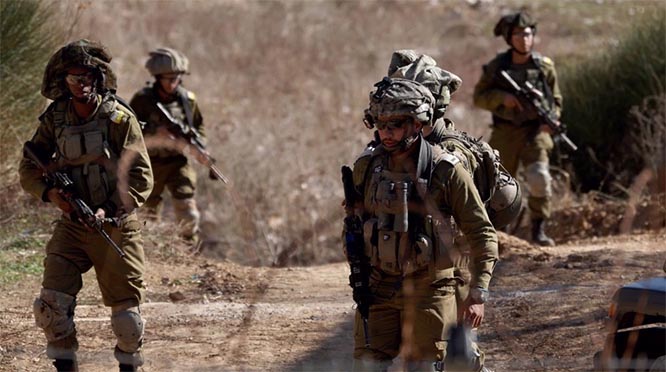
Israeli forces have pushed over the Syrian frontier, erecting a checkpoint and stopping vehicles in the southwestern city of Quneitra, in yet another breach of the Arab country’s sovereignty.

The violation took place on Sunday, when the troops made their way across the border, setting up the outpost near the Ain al-Bayda junction in northern Quneitra, Syrian outlets reported.

According to the al-Ikhbariya paper, an Israeli detachment positioned itself at the junction, halting cars and conducting searches.

The Syrian Arab News Agency (SANA) reported that three Israeli military vehicles then moved further into the northern countryside, deploying between the town of Jubata al-Khashab and the villages of Ofaniya and Ain al-Bayda. The agency added that a separate Israeli unit mounted a new incursion in the central region, approaching the villages of Umm Batina and al-Ajraf.

Residents said such activities have surged in recent months, pointing to Israeli advances onto farmland, leveling of extensive forested areas, arrests, and spread of mobile checkpoints.

The Israeli regime began markedly increasing its military aggression against Syria last year.

The escalation coincided with increasingly ferocious onslaughts throughout the country by the so-called Hay'at Tahrir al-Sham (HTS) Takfiri terrorist group, which the government of President Bashar al-Assad had confined to northwestern Syria. The HTS, however, managed to overthrow the government as the Israeli attacks would pummel the country’s civilian and defensive infrastructure.

Various reports have shown that, during the escalation, the regime conducted more than 1,000 airstrikes on the Syrian territory and over 400 ground raids into the south.

Following the collapse of the Assad government, Tel Aviv also widened its grip over the occupied Golan Heights by taking control of a demilitarized buffer zone, in defiance of a 1974 Disengagement Agreement. Earlier this month, senior Israeli officials, including Prime Minister Benjamin Netanyahu, visited the buffer zone, prompting expressions of alarm on the part of the United Nations.

The United States, the regime’s biggest ally, has, meanwhile, been fraternizing the HTS head Abu Mohammed al-Jolani amid the widely reported prospect of rapprochement with Tel Aviv.

Comments

Add new comment

  • Coastaldigest.com reserves the right to delete or block any comments.
  • Coastaldigset.com is not responsible for its readers’ comments.
  • Comments that are abusive, incendiary or irrelevant are strictly prohibited.
  • Please use a genuine email ID and provide your name to avoid reject.