A year after first coronavirus death in Wuhan, Covid source still a puzzle

News Network
January 10, 2021

Wuhan, Jan 10: It is the world’s most pressing scientific puzzle, but experts warn there may never be conclusive answers over the source of the coronavirus, after an investigative effort marked from the start by disarray, Chinese secrecy and international rancour.

January 11 marks the anniversary of China confirming its first death from Covid-19, a 61-year-old man who was a regular at the now-notorious Wuhan wet market.

Nearly two million deaths later, the pandemic is out of control across much of the world, leaving tens of millions ill, a pulverised global economy and recriminations flying between nations.

Yet China, which has broadly controlled the pandemic on its soil, is still frustrating independent attempts to trace the virus’ origins and the central question of how it jumped from animals to humans.

There is little dispute that the virus which brought the world to its knees sparked its first known outbreak in late 2019 at a wet market in the central Chinese city of Wuhan where wildlife was sold as food, and the pathogen is believed to have originated in an undetermined bat species.

But the trail ends there, clouded by a mishmash of subsequent clues that suggest its origins may predate Wuhan as well as conspiracy theories — amplified by US President Donald Trump — that it leaked from a Wuhan lab.

Establishing the source is vital for extinguishing future outbreaks early, leading virologists say, providing clues that can guide policy decisions on whether to cull animal populations, quarantine affected persons, or limit wildlife hunting and other human-animal interactions.

“If we can identify why they (viruses) keep emerging, we can reduce those underlying drivers,” said Peter Daszak, president of EcoHealth Alliance, a global NGO focused on infectious disease prevention.

China won early kudos for reporting the virus and releasing its gene sequence in a timely manner, compared with its cover-up of the 2002-03 SARS outbreak.

But there has also been secrecy and shifting stories.

Wuhan authorities initially tried to cover up the outbreak and later spent precious weeks denying human-to-human transmission.

Early on, Chinese officials declared flatly that the outbreak began at the Huanan Seafood Market in Wuhan.

But Chinese data in January 2020 showed that several of the first cases had no known links to the now-shuttered market, suggesting a source elsewhere.

China’s story morphed again last March when top Chinese disease control official Gao Fu said the market was not the source, but a “victim”, a place where the pathogen was merely amplified.

But China has since failed to publicly connect any dots, releasing scant information on animal and environmental samples taken at the market that could aid investigators, experts say.

And it has kept foreign experts at arm’s length, with a planned mission by World Health Organization virus sleuths now in limbo after China denied them entry.

On Saturday, a top Chinese health official said the country was now “ready” for the 10-strong team and opened the door to a visit to Wuhan.

Yet “the specific time is being determined”, National Health Commission vice minister Zeng Yixin told reporters.

What the scientists will be allowed to see or may expect to find a year on is also in doubt. Experts say authorities may have destroyed or scrubbed away crucial evidence in a panicked initial response.

“Every outbreak goes the same way. It’s chaotic and dysfunctional,” said Daszak.

“They didn’t do a great job on the animal investigation early on,” he added.

“In some ways, they were quite open, in others they were less than open.”

The reasons for China’s secrecy are unclear, but the ruling Communist Party has a history of suppressing politically damaging information.

Whistleblowers and citizen reporters who shared details of the terrifying early weeks of the virus on the internet have since been muzzled or jailed.

Beijing may want to hide regulatory or investigative lapses to avoid domestic embarrassment or global “blowback”, said Daniel Lucey, a Georgetown University epidemiologist who closely tracks global outbreaks.

The Wuhan market might not even be the issue, Lucey adds.

He notes that the virus was already spreading rapidly in Wuhan by December 2019, indicating that it was in circulation much earlier.

That’s because it may take months or even years for a virus to develop the necessary mutations to become highly contagious among humans.

The market-origin theory is “just not plausible whatsoever”, Lucey said.

“It occurred naturally and it had to have been many months earlier, perhaps a year, perhaps more than a year.”

Augmenting the doubt, in December China said the number of coronavirus cases circulating in Wuhan may have been 10 times higher early in the epidemic than revealed by official figures at the time.

The trail has now gone cold, with the drip of subsequent clues only adding to the confusion, including findings that the virus may have existed in Europe and Brazil before Wuhan’s outbreak, unconfirmed suggestions which China has seized upon to deflect blame.

Daszak remains hopeful the source can be found, especially after US President Donald Trump’s re-election loss.

He blames Trump for killing cooperation with China by politicising the virus — typified by his “China virus” label — and his administration’s promotion of the conspiracy theory that China created it in a lab, which scientists reject.

“I’m confident we will eventually find out the bat species it came from and the likely pathway,” Daszak said.

Others are less certain.

Diana Bell, a wildlife disease expert at the University of East Anglia who has studied the SARS virus, Ebola and other pathogens, said focusing on a particular origin species is misguided.

She says the overarching threat has already been exposed: a global wildlife trade that fosters a “combustible mix” of trafficked species, a known breeding ground for disease outbreaks.

“(The species) actually doesn’t matter. We don’t need to know the source, we just need to stop that sodding mixing of animals in markets,” she said.

“We need to stop the wildlife trade for human consumption.”

Comments

Add new comment

  • Coastaldigest.com reserves the right to delete or block any comments.
  • Coastaldigset.com is not responsible for its readers’ comments.
  • Comments that are abusive, incendiary or irrelevant are strictly prohibited.
  • Please use a genuine email ID and provide your name to avoid reject.
News Network
November 21,2025

Bantwal: A domestic dispute appears to have led to a violent confrontation in BC Road area, where the owner of a textile shop was allegedly attacked with a knife by his wife on Wednesday evening.

Krishna Kumar Somayaji, the owner of Somayaji Textiles, sustained serious injuries in the incident and was immediately taken to a hospital for treatment. He is currently receiving care in the intensive care unit and is reported to have survived the assault, according to police.

The Bantwal Town police have registered a case against Somayaji's wife, Jyothi KT, who has since been taken into custody.

Police stated that the complainant, Namita, an employee at the shop, reported the sequence of events. She stated that around 7 p.m. on Wednesday, the suspect entered the shop, wearing a burqa and disguised as a customer, before attacking Somayaji with a knife. The employee then transported the injured owner to a local hospital via an autorickshaw.

Superintendent of Police Arun K confirmed that an ongoing domestic dispute between Somayaji and his wife reportedly preceded the attack. Police noted that Jyothi KT had previously visited the shop and issued threats.

Based on the complaint, Bantwal Town police have registered a case under relevant sections of the Bharatiya Nyaya Sanhita (BNS) and the Indian Arms Act-1959. An investigation into the incident is currently underway.

Comments

Add new comment

  • Coastaldigest.com reserves the right to delete or block any comments.
  • Coastaldigset.com is not responsible for its readers’ comments.
  • Comments that are abusive, incendiary or irrelevant are strictly prohibited.
  • Please use a genuine email ID and provide your name to avoid reject.
News Network
December 4,2025

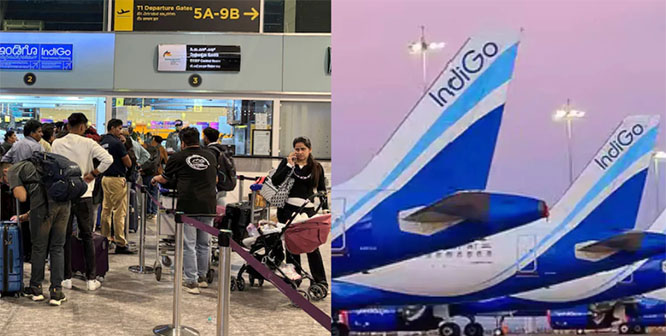
indigocrisis.jpg

Angry outbursts, long queues, and desperate appeals filled airports across India today as IndiGo grappled with a severe operational breakdown. Hundreds of flights have been cancelled or delayed, leaving thousands of passengers stranded through the night and forcing many to spend long hours at helpdesks.

Social media was flooded with videos of fliers pleading for assistance, accusing the airline of misleading updates, and demanding accommodation after being stuck for 10 to 12 hours at airports such as Hyderabad and Bengaluru.

What Triggered the Meltdown?

IndiGo has attributed the widespread disruption to “a multitude of unforeseen operational challenges.” These include:

•    Minor technology glitches
•    Winter-season schedule adjustments
•    Bad weather
•    Congestion in the aviation network
•    New crew rostering rules (Flight Duty Time Limitations or FDTL)

Among these, the most disruptive has been the implementation of the updated FDTL norms introduced by the Directorate General of Civil Aviation (DGCA) in January 2024.

These rules were designed to reduce pilot fatigue and improve passenger safety. Key changes include:

•    Longer weekly rest periods for flight crew
•    A revised definition of “night,” extending it by an extra hour
•    Tighter caps on flight duty timing and night landings
•    Cutting night shifts for pilots and crew from six per roster cycle to just two

Once these norms became fully enforceable, airlines were required to overhaul rosters well in advance. For IndiGo, this triggered a sudden shortage of crew available for duty, leading to cascading delays and cancellations.

Why IndiGo Was Hit the Hardest

IndiGo is India’s largest airline by a wide margin, operating over 2,200 flights daily. That’s roughly double the number operated by Air India.

When an airline of this size experiences even a 10–20% disruption, it translates to 200–400 flights being delayed or grounded — producing massive spillover effects across the country.

IndiGo also relies heavily on high-frequency overnight operations, a model typical of low-cost carriers that aim to maximise aircraft utilisation and reduce downtime. The stricter FDTL norms clash with these overnight-heavy schedules, forcing the airline to pull back services.

Aviation bodies have also criticised IndiGo’s preparedness. The Airline Pilots' Association of India (ALPA) said airlines were given a two-year window to plan for the new rules but “started preparing rather late.” IndiGo, it said, failed to rebuild crew rosters 15 days in advance as required.

The Federation of Indian Pilots (FIP) went further, calling the crisis the result of IndiGo’s “prolonged and unorthodox lean manpower strategy,” and alleging that the airline adopted a hiring freeze even as it knew the new rules would require more careful staffing.

How Many Flights Are Affected?

In the past 48 hours, over 300 flights have been cancelled. At least 100 more are expected to be cancelled today.

City-wise impact:

•    Hyderabad: 33 expected cancellations; several fliers stranded overnight
•    Bengaluru: over 70 expected cancellations
•    Delhi, Mumbai, Chennai, Kolkata: widespread delays and missed connections

Passengers shared distressing accounts online.

One customer at Hyderabad airport said they waited from 6 PM to 9 AM with “no action taken” regarding their delayed Pune flight. Another said IndiGo repeatedly told them the crew was “arriving soon,” only for the delay to stretch over 12 hours.

IndiGo has apologised for the disruption and promised that operations will stabilise within 48 hours, adding that “calibrated adjustments” are being made to contain the chaos.

What Should Passengers Do Now?

For those flying in the next few days, especially with IndiGo, here are key precautions:

1. Keep Checking Flight Status
Monitor your flight closely before leaving for the airport, as delays may be announced last-minute.

2. Arrive Early
Expect long queues at counters and security due to crowding and rescheduling.

3. Carry Essentials
Pack snacks, water, basic medicines, chargers, and items for children or senior citizens. Extended waiting times should be anticipated.

4. Use Flexible Booking Options
If you booked tickets with a free-date-change or cancellation option, consider using them.
If you haven’t booked yet, prefer refundable or flexible fares, or even consider alternate airlines.

5. Follow IndiGo’s Updates
Keep an eye on IndiGo’s official social media channels and contact customer support for rebooking and refund queries.

What Needs to Change?

Pilot groups have raised concerns not just about staffing but also the planning practices behind it.
The Federation of Indian Pilots accused IndiGo of:

•    Imposing an unexplained hiring freeze despite knowing the FDTL changes were coming
•    Entering non-poaching agreements that limited talent movement
•    Keeping pilot pay frozen
•    Underestimating the need to restructure operations in advance

They have urged DGCA to approve seasonal schedules only after airlines prove they have adequate pilot strength under the new norms.

ALPA also warned that some airlines might be using the delays as an “immature pressure tactic” to push DGCA for relaxations in the new rules — which, if granted, could compromise the very safety standards the norms were meant to protect.

Both pilot bodies stressed that no exemption should dilute safety, and any deviations should be based solely on scientific risk assessment.

Is a Solution in Sight?

While IndiGo says normalcy will return within two days, aviation experts believe that fully stabilising operations could take longer, depending on how quickly the airline can:
•    Re-align rosters
•    Mobilise rested crew
•    Boost staffing
•    Adjust its winter schedule to match regulatory requirements
Passengers are advised to remain prepared for continued delays over the next few days as the airline works through its backlog. 

Comments

Add new comment

  • Coastaldigest.com reserves the right to delete or block any comments.
  • Coastaldigset.com is not responsible for its readers’ comments.
  • Comments that are abusive, incendiary or irrelevant are strictly prohibited.
  • Please use a genuine email ID and provide your name to avoid reject.
News Network
November 24,2025

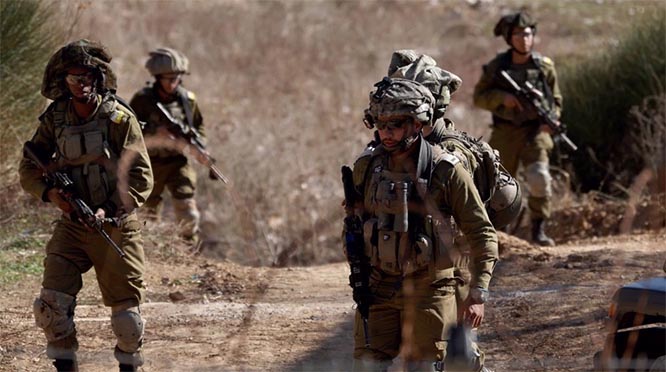
israelsyra.jpg

Israeli forces have pushed over the Syrian frontier, erecting a checkpoint and stopping vehicles in the southwestern city of Quneitra, in yet another breach of the Arab country’s sovereignty.

The violation took place on Sunday, when the troops made their way across the border, setting up the outpost near the Ain al-Bayda junction in northern Quneitra, Syrian outlets reported.

According to the al-Ikhbariya paper, an Israeli detachment positioned itself at the junction, halting cars and conducting searches.

The Syrian Arab News Agency (SANA) reported that three Israeli military vehicles then moved further into the northern countryside, deploying between the town of Jubata al-Khashab and the villages of Ofaniya and Ain al-Bayda. The agency added that a separate Israeli unit mounted a new incursion in the central region, approaching the villages of Umm Batina and al-Ajraf.

Residents said such activities have surged in recent months, pointing to Israeli advances onto farmland, leveling of extensive forested areas, arrests, and spread of mobile checkpoints.

The Israeli regime began markedly increasing its military aggression against Syria last year.

The escalation coincided with increasingly ferocious onslaughts throughout the country by the so-called Hay'at Tahrir al-Sham (HTS) Takfiri terrorist group, which the government of President Bashar al-Assad had confined to northwestern Syria. The HTS, however, managed to overthrow the government as the Israeli attacks would pummel the country’s civilian and defensive infrastructure.

Various reports have shown that, during the escalation, the regime conducted more than 1,000 airstrikes on the Syrian territory and over 400 ground raids into the south.

Following the collapse of the Assad government, Tel Aviv also widened its grip over the occupied Golan Heights by taking control of a demilitarized buffer zone, in defiance of a 1974 Disengagement Agreement. Earlier this month, senior Israeli officials, including Prime Minister Benjamin Netanyahu, visited the buffer zone, prompting expressions of alarm on the part of the United Nations.

The United States, the regime’s biggest ally, has, meanwhile, been fraternizing the HTS head Abu Mohammed al-Jolani amid the widely reported prospect of rapprochement with Tel Aviv.

Comments

Add new comment

  • Coastaldigest.com reserves the right to delete or block any comments.
  • Coastaldigset.com is not responsible for its readers’ comments.
  • Comments that are abusive, incendiary or irrelevant are strictly prohibited.
  • Please use a genuine email ID and provide your name to avoid reject.